

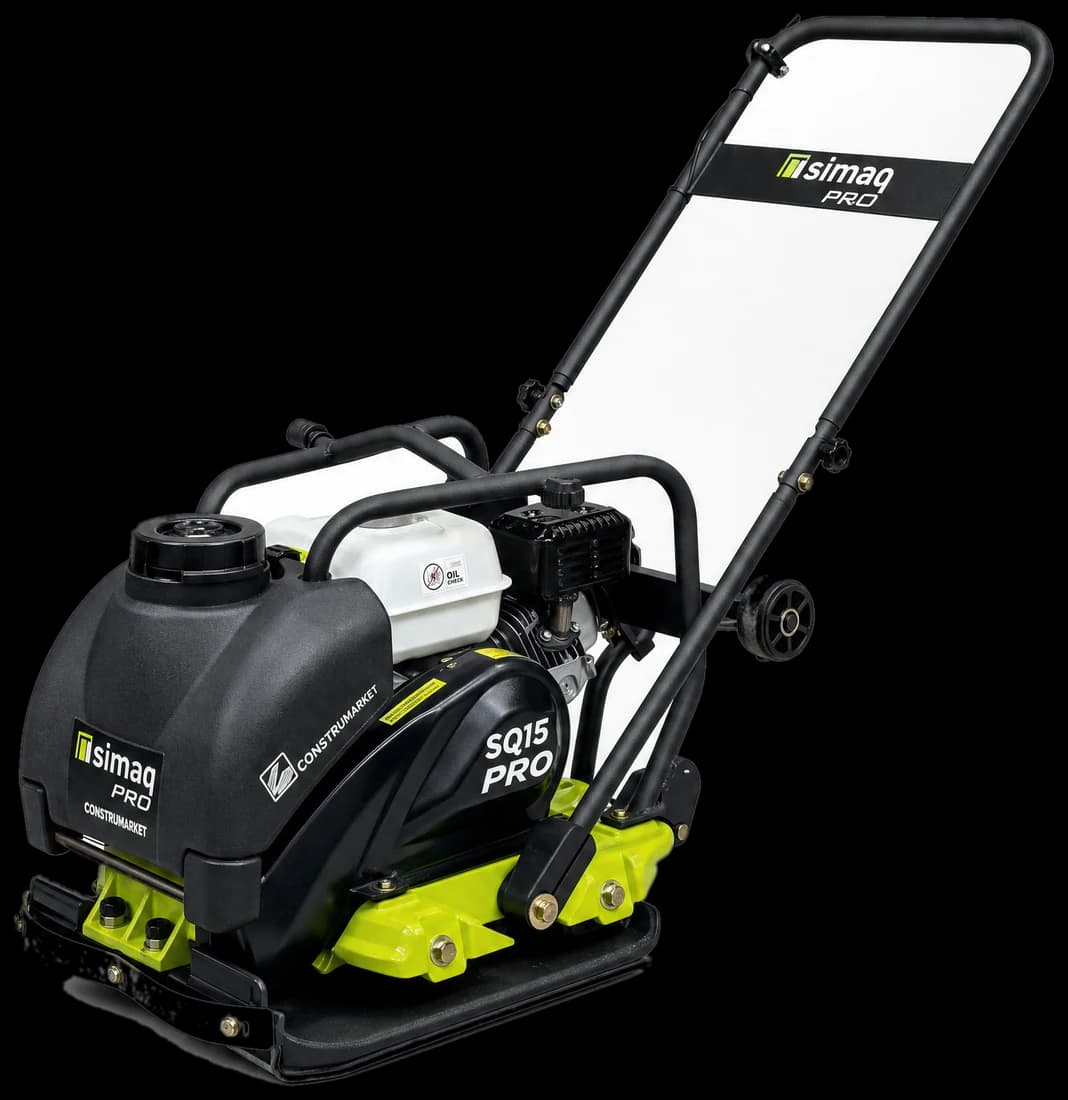
SQ15 PRO
Plate compactor SQ15 PRO
Even base and paver compaction, tireless feed.
View detailsSIMAQ School · Course
The soil decides. Learn which machine to use by soil type, and how lifts, passes and moisture work.
Answer two things and we'll tell you the exact machine and why.
The fundamental
Soil is three things mixed: grains, water and air. Grains don't compress and neither does water. The only thing you can drive out is air — and everything else follows from that.
With no water to lubricate, grains lock by friction and resist rearranging. However many passes you give, air voids stay trapped between them.
A film of water on each grain cuts friction just enough for them to slide and nest. Same machine, same effort, maximum density.
Water has filled the voids. Since it doesn't compress, now it's water stopping the grains from closing. The soil pumps under the roller instead of densifying.
Plot dry density against moisture and a hump appears: the Proctor curve. Its peak is the most that soil can give, and the moisture where it happens is the optimum. When a spec demands “95% of Proctor” it means that peak — and if moisture is off, that 95% doesn't exist that day.
Moisture on point100%of max Proctor
Here the soil gives everything it can. Passes now actually turn into density.
Note the difference between the two soils: granular peaks higher and earlier, with a sharp hump — easy to overshoot. Cohesive peaks lower, later, and flatter: more forgiving on moisture but never as dense. That's why a gravel base is specified differently from a clay embankment.
The theory
Sand, gravel and crushed base settle with high-frequency vibration: particles rearrange and air escapes. Vibratory plate or smooth roller.
Clay and silt don't respond to vibration: they need impact that kneads the soil. Jumping-jack rammer or padfoot roller. Mixing them up is the most common mistake.
| Machine | Soil | How it compacts | Best for |
|---|---|---|---|
| Vibratory plate | Granular | High-frequency vibration | Base, pavers, open areas |
| Rammer (jumping-jack) | Cohesive / trench | Impact (kneading) | Trenches, corners, clay |
| Smooth roller | Granular | Weight + vibration | Roadway, embankment, large area |
| Padfoot roller | Cohesive | Deep kneading | Cohesive embankment, trench |
| Pneumatic roller | Mixed / asphalt | Pressure + kneading (rubber tires) | Thin lifts, asphalt pavement |
Deeper
Each machine delivers energy differently — and reaches a different depth.
Depth of influence
Static
Static pressure and kneading, from the roller's weight alone.
Up to ~1 m
Depth of influence
Vibratory
Low amplitude, high frequency: ideal for granular and asphalt.
Up to ~2 m
Depth of influence
Impact
High amplitude, low frequency: kneads cohesive soil deep.
Over 2 m
It's measured against the Proctor test (the soil's maximum dry density at optimum moisture). Sites require a degree of compaction —usually ≥ 95% of Proctor— verified with in-situ density tests: sand cone or nuclear gauge. If it falls short: more passes needed, the lift is too thick, or the moisture is off.
Your machine
Energy dissipates with depth. Above a certain lift the machine densifies the top and leaves the bottom loose — and that shows up months later, when the floor sinks.
Sand, gravel, base. Compacted by vibration.
| Machine | Energy | Loose lift | Passes |
|---|---|---|---|
| SQRD L71 Ride-on roller 4.2 t | 40 kN · 150 N/cmpublished | 35–45 cm | 4 |
| SQRD L61 Ride-on roller 3 t | 2×30 kN · ≈12.5 kg/cm | 30–40 cm | 4 |
| SQ15 PRO Vibratory plate | 13.0 kN · 5,500 VPMpublished | 25–30 cm | 4 |
| SQRD L51 Ride-on roller 1.5 t | 22 kN · ≈8.3 kg/cm | 25–30 cm | 4 |
| SQ60 PRO 2 Rammer | 13.7 kN · 34×29 cm shoe | 20–25 cm | 3 |
| SQRPTRC L202 Padfoot (trench) | 70 kN · 1.53 t | 20–25 cm | 4 |
| SQRDPWB L102 Trench roller | 17 kN · ≈5.7 kg/cm | 20–25 cm | 4 |
| SQRDWB L34 Walk-behind tandem | 17 kN · ≈6.2 kg/cm | 20–25 cm | 4 |
| SQRD L41 Ride-on roller 0.8 t | 20 kN · ≈5.7 kg/cm | 20–25 cm | 4 |
“Loose lift” is the material thickness BEFORE compacting; after the passes it drops 15–25%. Ranges are guidance by machine class, derived from published specs.
No table knows your material. Before committing, compact a strip with the same soil, machine and site moisture, and test density after 2, 4, 6 and 8 passes.
Interactive
Move the controls and watch the density change.
Recommended: 20–30 cm per lift.
85%
Target ≥ 95%
Compact in 20–30 cm lifts: any thicker and the bottom never reaches density no matter how many passes. Watch moisture (optimum is the Proctor value). And passes have diminishing returns: the first does a lot, the sixth almost nothing.
The machine for your soil
Even base and paver compaction, tireless feed.
View details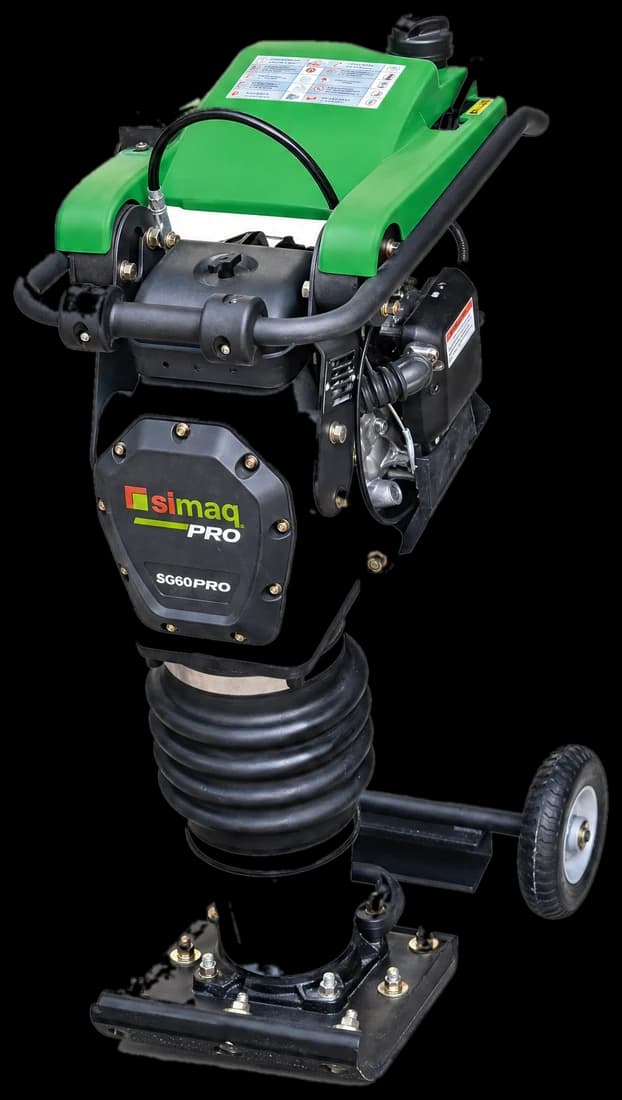
Soil density where the big roller won't fit.
View details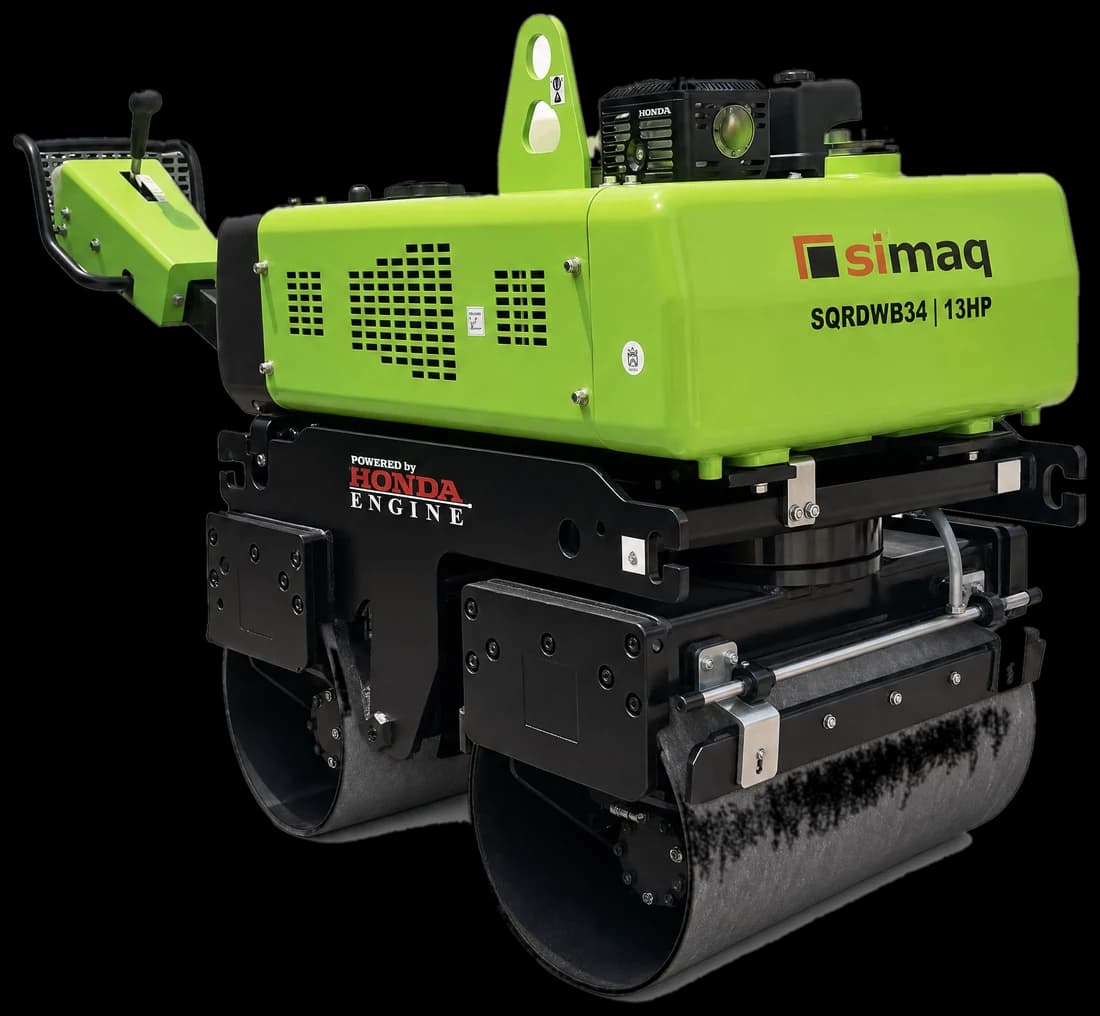
Double vibrating drum for asphalt and base.
View details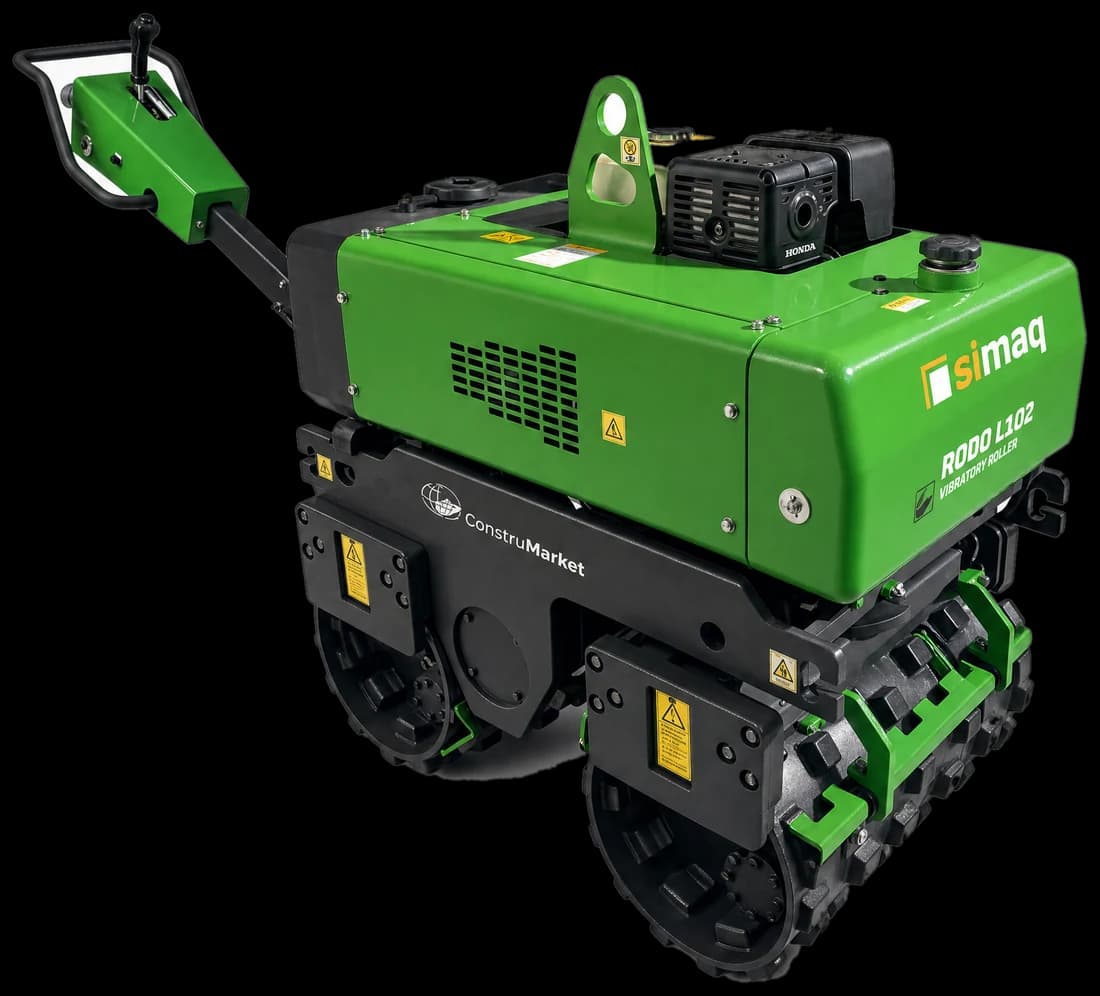
Compacts the trench floor, remote-control ready.
View detailsTell us about the job and we'll build the package. Same-day reply.