

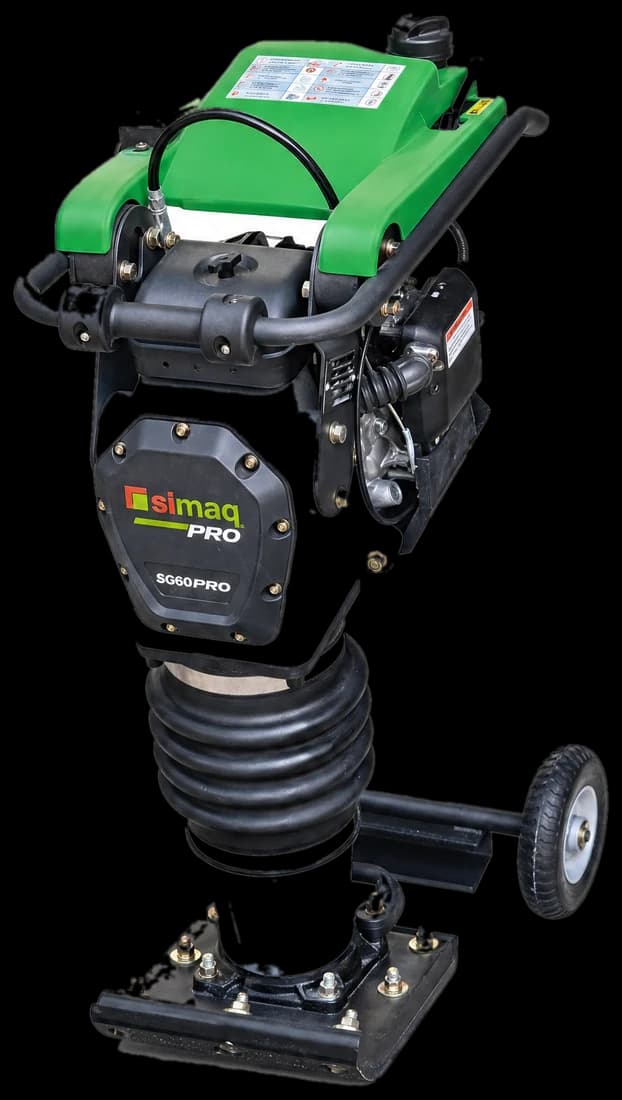
SQ60 PRO 2
Vibratory compactor SQ60 PRO 2
Soil density where the big roller won't fit.
View detailsFree tool · SIMAQ
Short answer
The soil decides. Granular (sand, gravel, base) compacts by vibration: vibratory plate or smooth roller. Cohesive (clay, silt) needs impact: rammer (jumping jack) or padfoot roller. In a narrow trench the rammer fits: its 34 cm shoe works from about 44 cm, the plate needs about 63 cm. Compact in 20–30 cm lifts with 3–4 passes. Example: 200 m² of 30 cm granular base → SQ15 PRO, ≈ 1.4 h per lift. Calculate yours below.
SIMAQ · Which compactor do I need for my soil?
The machine
Vibratory plate · SQ15 PRO
Granular soil = compacts by VIBRATION.
1 lift · 4 passes per lift · ≈ 1.4 h per lift (≈ 1.4 h total).
Rule: the smallest suitable machine that finishes each lift in one 8 h shift.
| Machine | Fit | Max lift | Lifts | h per lift |
|---|---|---|---|---|
| SQ15 PROVibratory plate | Ideal | 30 cm | 1 | ≈ 1.4 |
| SQRD L71Ride-on roller 4.2 t | Ideal | 45 cm | 1 | ≈ 0.2 |
| SQRD L61Ride-on roller 3 t | Ideal | 40 cm | 1 | ≈ 0.3 |
| SQRD L51Ride-on roller 1.5 t | Ideal | 30 cm | 1 | ≈ 0.4 |
| SQRD L41Ride-on roller 0.8 t | Ideal | 25 cm | 2 | ≈ 0.7 |
| SQRDWB L34Walk-behind tandem | Ideal | 25 cm | 2 | ≈ 0.7 |
| SQRDPWB L102Padfoot (trench) | Works | 25 cm | 2 | ≈ 0.7 |
| SQRPTRC L202Padfoot (trench) | Works | 25 cm | 2 | ≈ 0.7 |
| SQ60 PRO 2Rammer | Works | 25 cm | 2 | ≈ 2.7 |
Reference estimate. Max lift, passes and output come from the SIMAQ School table, computed from each machine's spec sheet. A test strip on your site has the final word.
Every result is a reference estimate. It doesn't replace a professional's design or supervision.
It depends on the soil. The plate compacts by vibration and works on granular soil (sand, gravel, base). The rammer (jumping jack) compacts by impact: it's the one for clay and silt, and the one that fits narrow trenches.
The rammer: its 34 cm shoe fits trenches from about 44 cm wide. The plate needs about 63 cm. For wider, longer trenches there are padfoot trench rollers.
The SIMAQ guide recommends 20–30 cm lifts: a thicker lift won't densify at the bottom however many passes you make. The exact max lift depends on machine and soil; the tool takes it from each machine's table.
As a rule, 3–4 passes per lift (more on mixed and cohesive soil with a roller). A test strip confirms the real number: density climbs fast on the first passes and then flattens.
Wet a handful and squeeze it: if it forms a sticky ball, it's cohesive (impact); if it crumbles, it's granular (vibration).
The machine for the job
Soil density where the big roller won't fit.
View details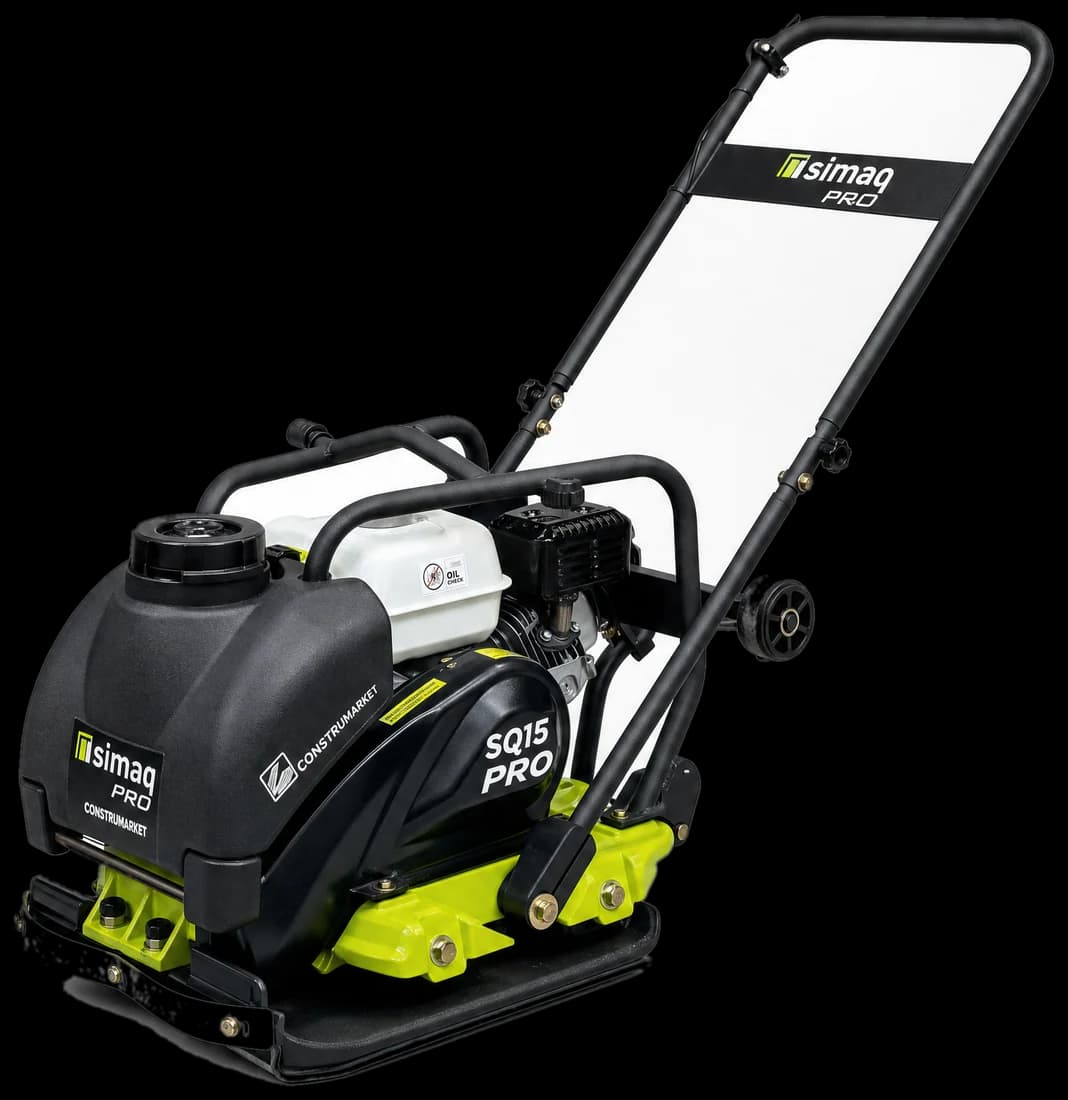
Even base and paver compaction, tireless feed.
View details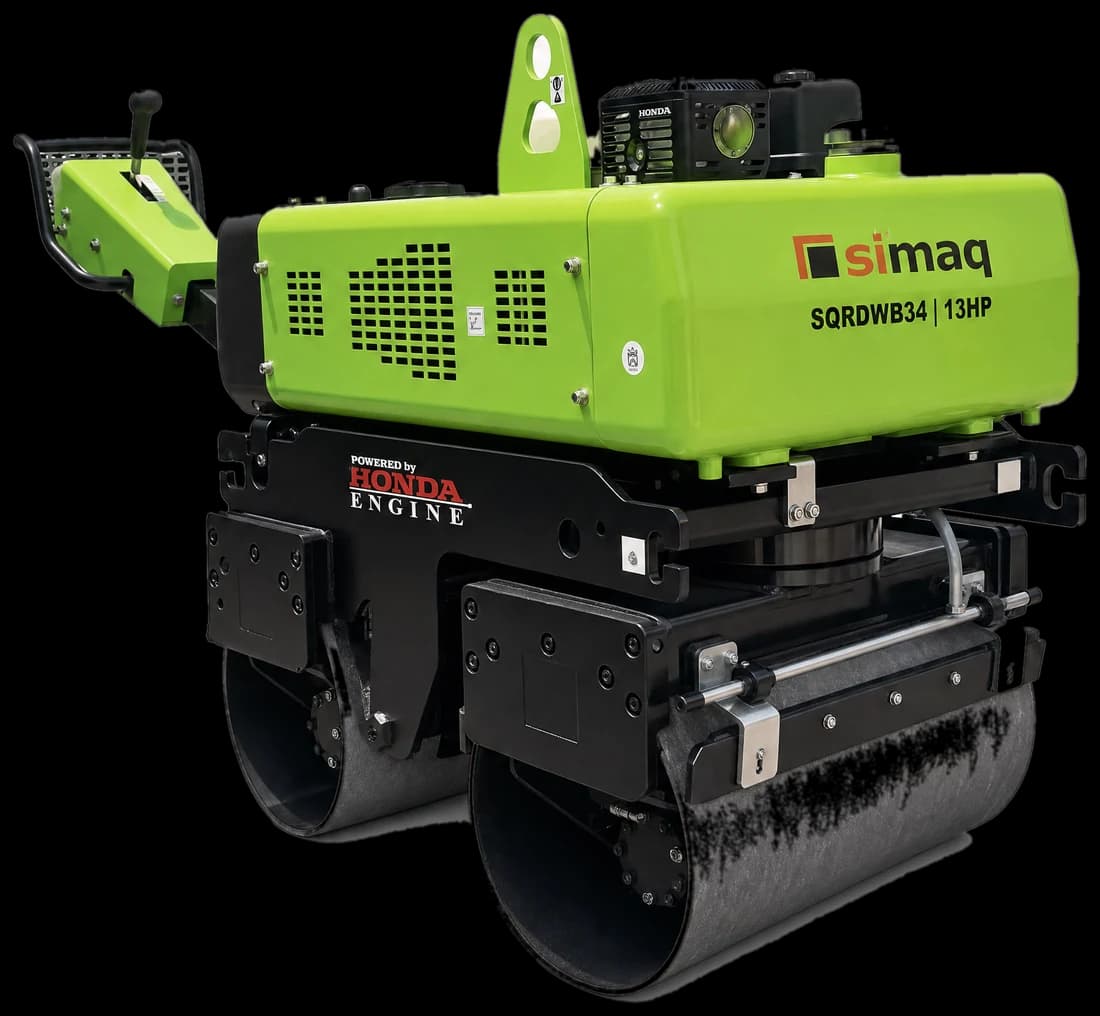
Double vibrating drum for asphalt and base.
View details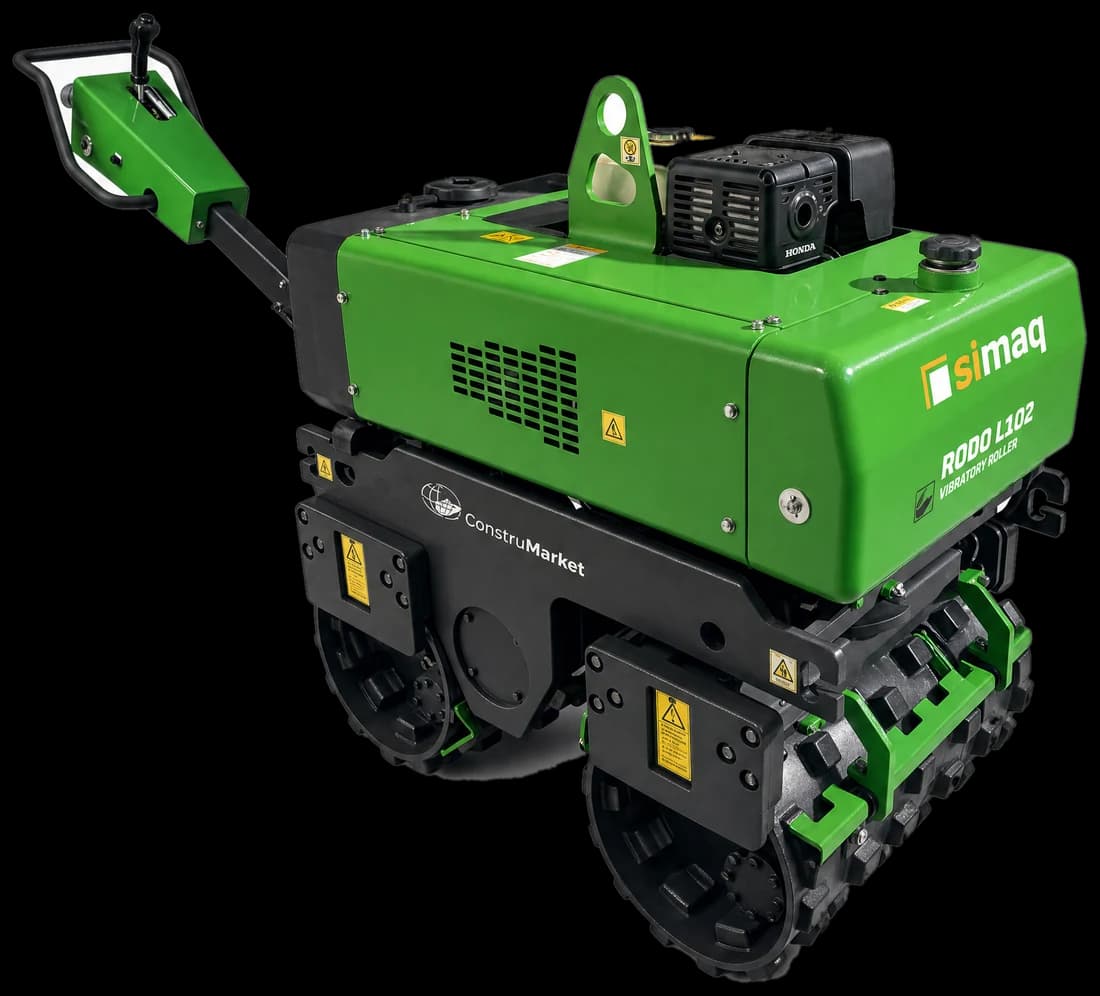
Compacts the trench floor, remote-control ready.
View details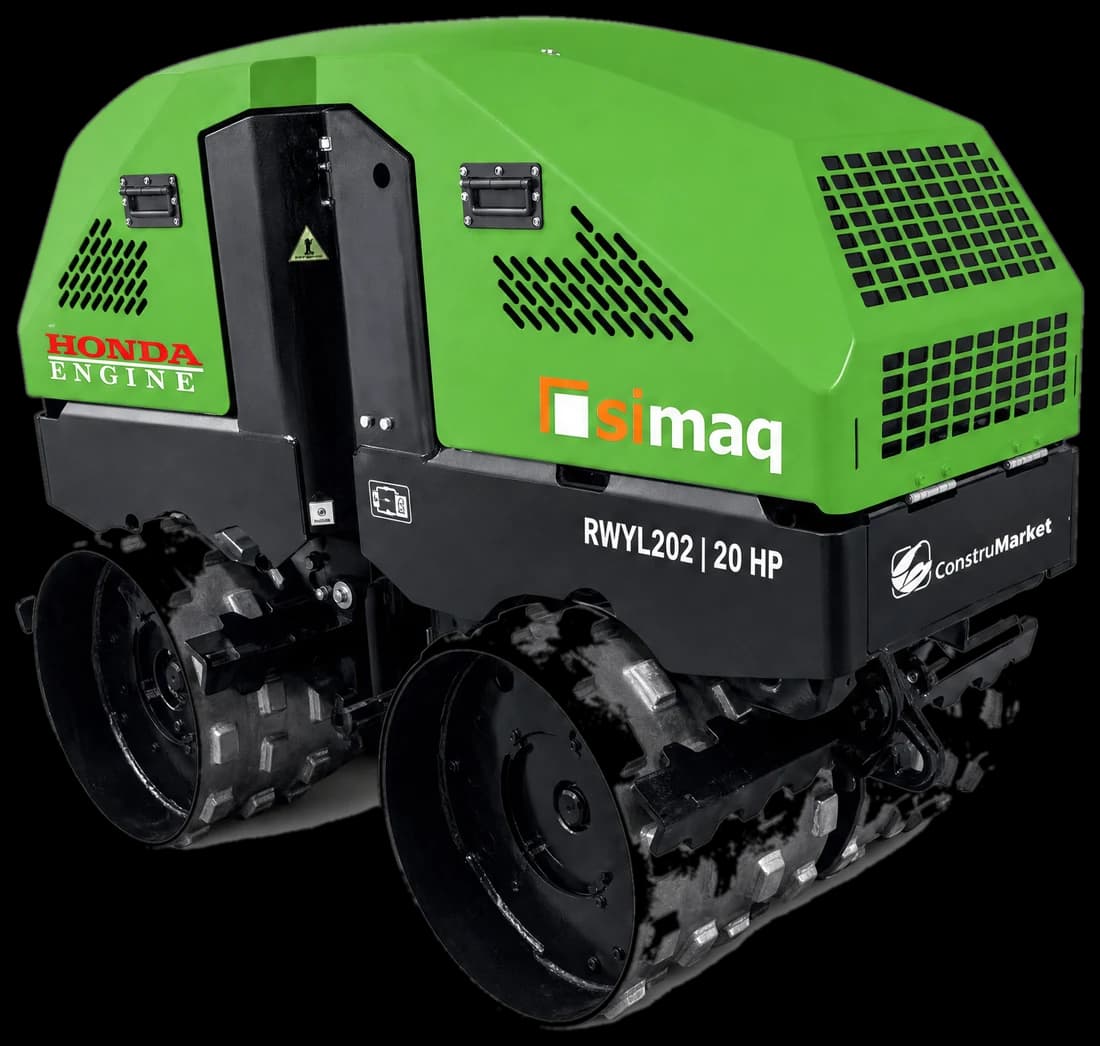
Compacts the trench floor, remote-control ready.
View details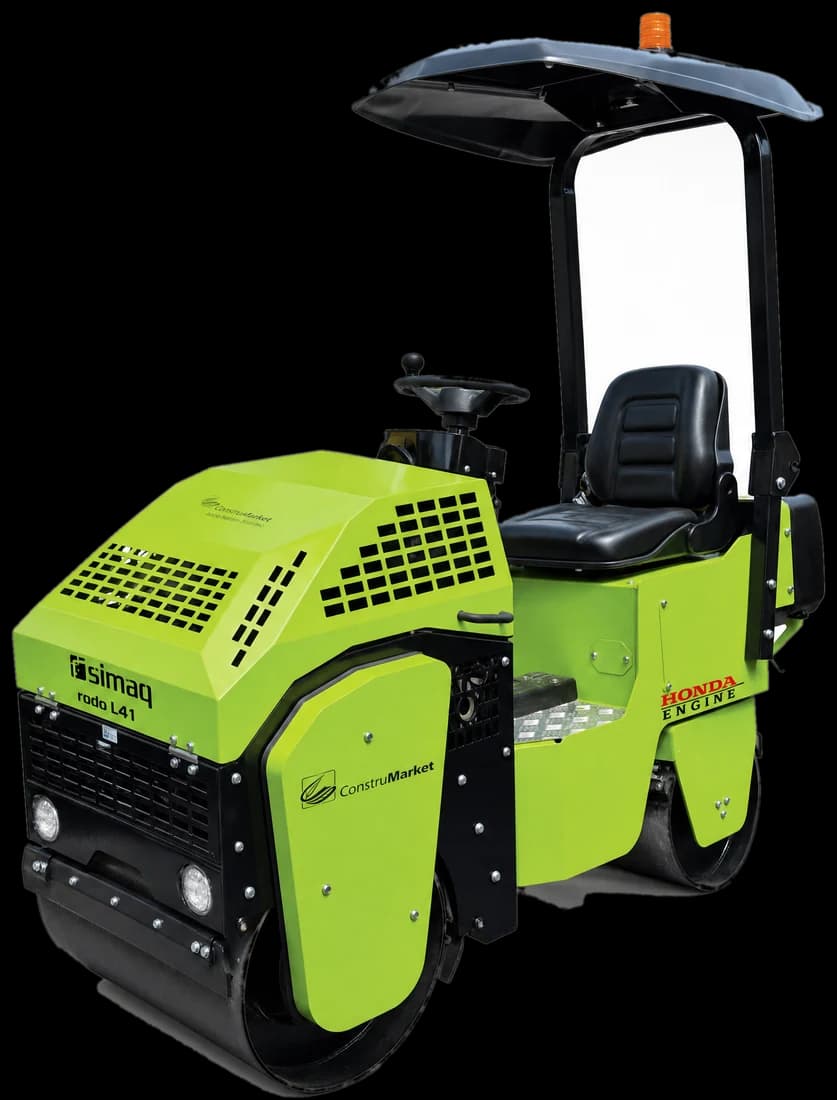
Ride-on power for embankment and roadwork.
View details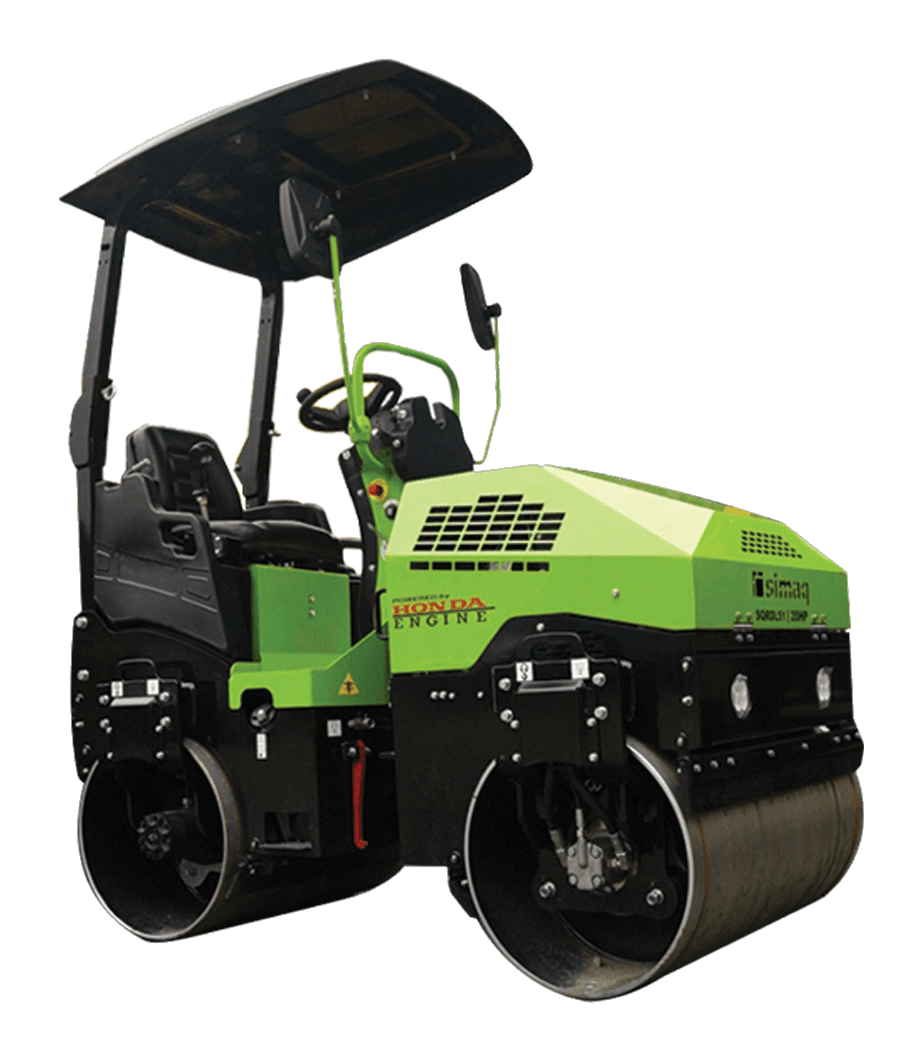
Ride-on power for embankment and roadwork.
View details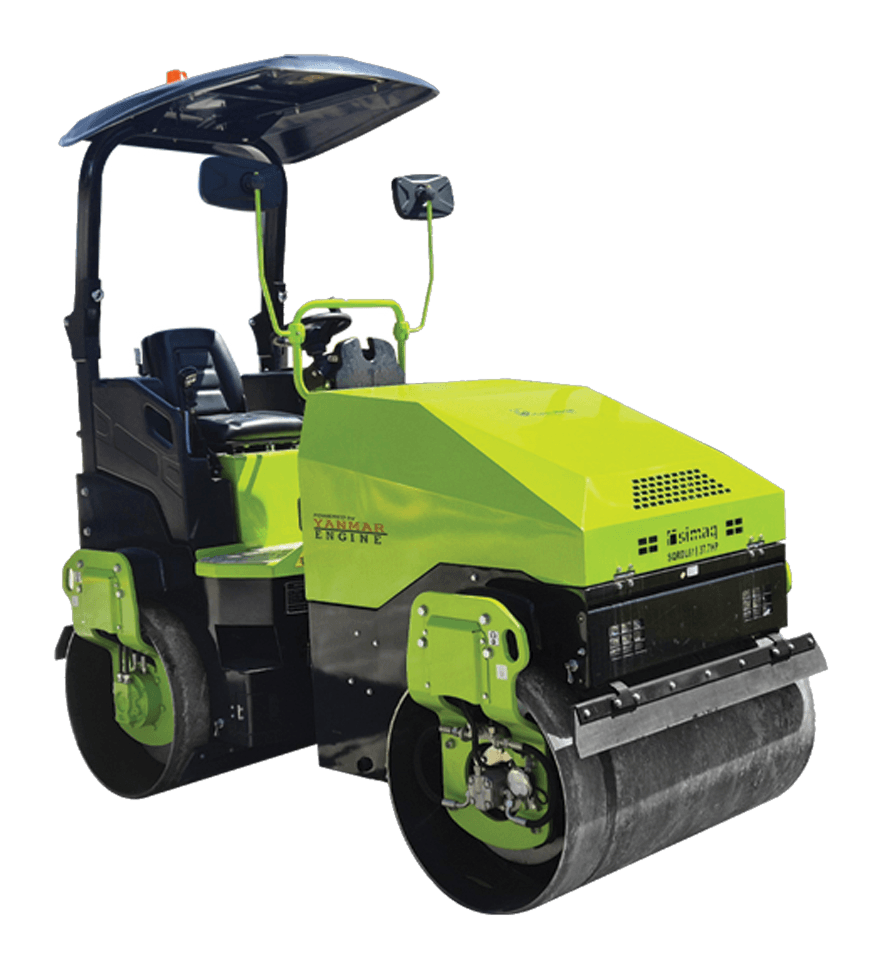
Ride-on power for embankment and roadwork.
View details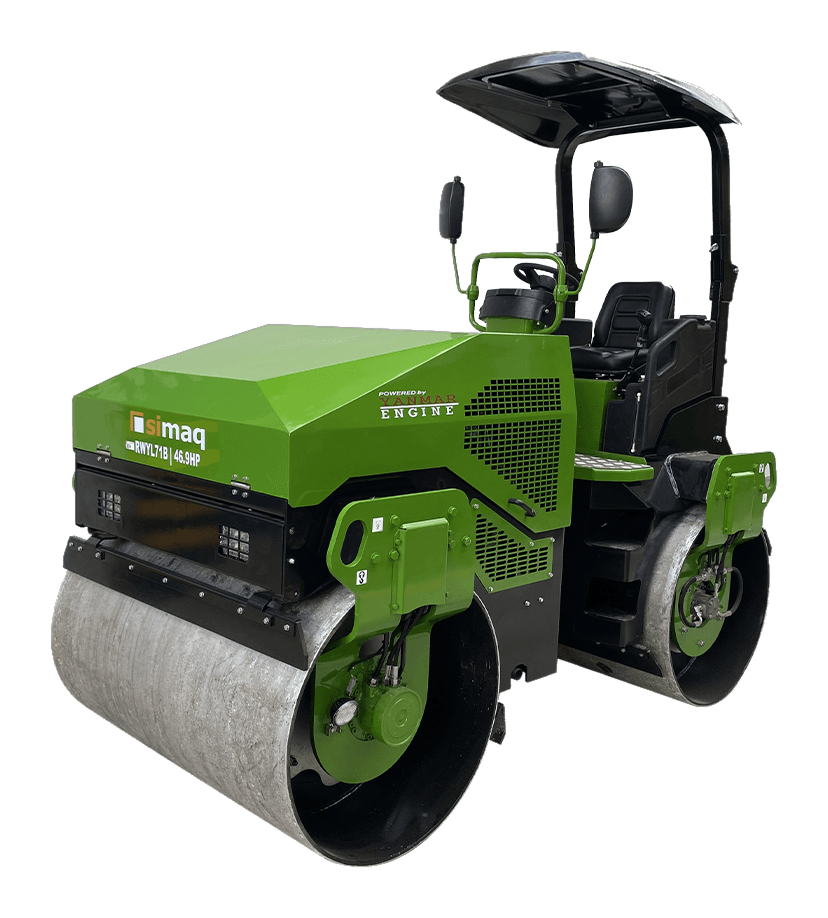
Ride-on power for embankment and roadwork.
View detailsSend us the result and an advisor contacts you during business hours.