Guide · 6 min
What is a plate compactor and what is it used for?
Also called: plate compactor, vibratory plate
By the SIMAQ technical team · Grupo ConstruMarket ·
Short answer
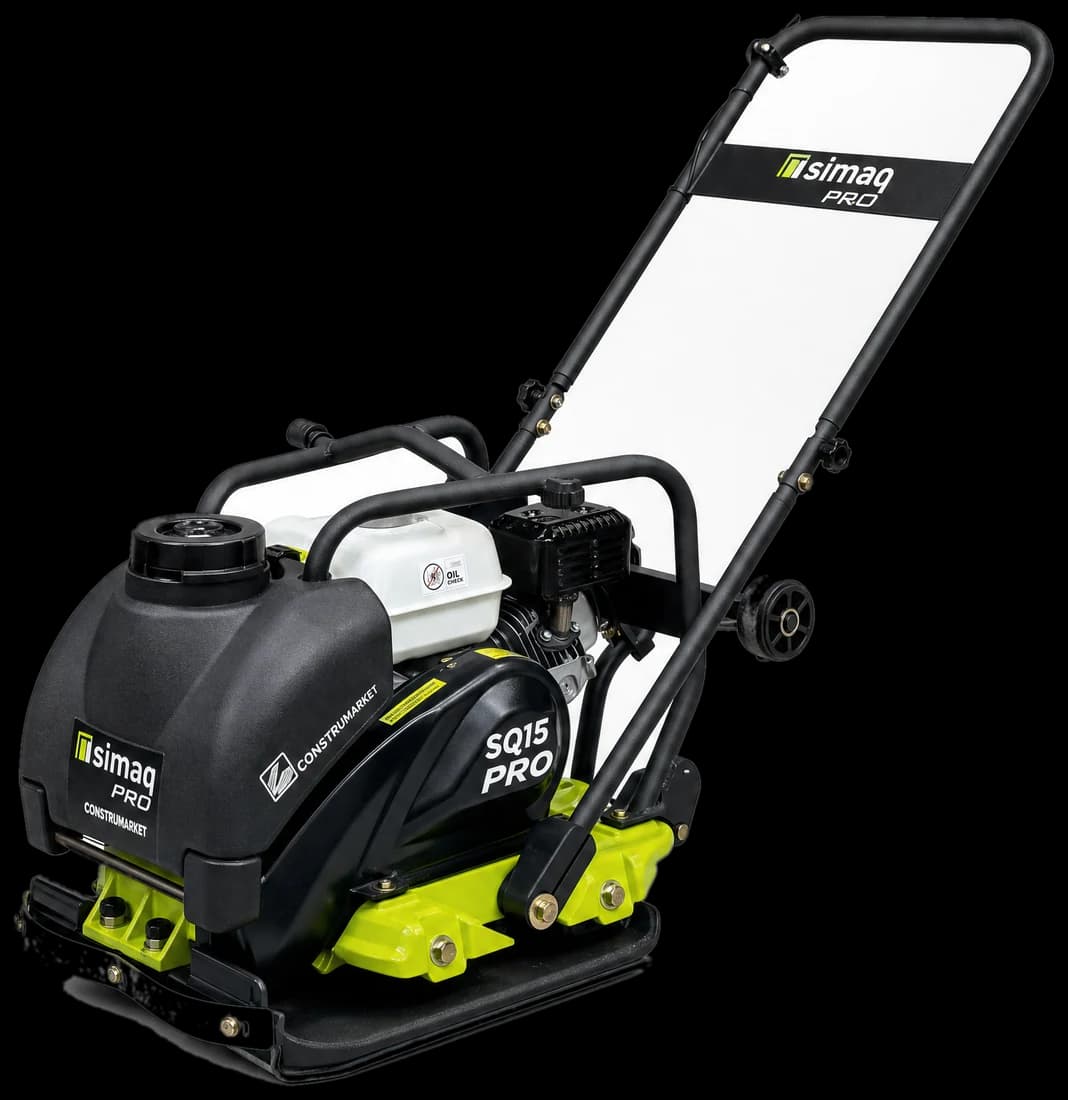
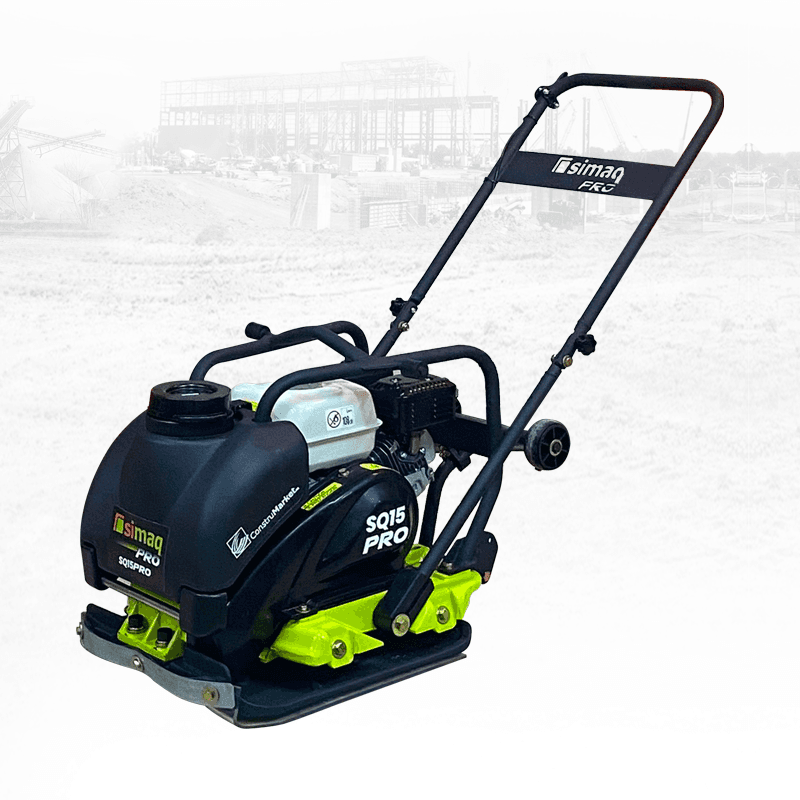
It's a plate compactor that vibrates at high frequency and moves itself forward. It's for compacting granular soil (sand, gravel, base), bedding pavers and sealing asphalt patches in open areas. It doesn't work on clay or in narrow trenches: that's rammer territory. The SIMAQ SQ15 PRO (Honda GX160) compacts up to 300 mm deep with a 530 × 500 mm plate.
compaction depth
VPM frequency
travel speed
How it works
An eccentric shakes the plate many times a minute (5,500 VPM on the SQ15 PRO). That vibration settles the soil grains, which pack together and leave fewer voids. That's why it works so well on granular material: sand and gravel rearrange under vibration.
Clay and silt are a different story: they're cohesive, they stick, and vibration doesn't settle them. They need impact.
The SQ15 PRO weighs 90 kg, delivers 13.0 kN of centrifugal force and travels at 24 m/min: it gets through yards, sidewalks and patching without wearing out the operator. Built-in wheels let you move it around the site.
What it's for
For pavers, the order is: compacted base, levelled sand bed, pavers laid, then the plate with the mat; finally, joint sand swept into the joints and one more pass.
- Granular bases and sub-bases for yards, sidewalks, parking lots and floors.
- Pavers: beds them into their sand layer; use the urethane mat (included with the SQ15 PRO) so they don't scratch.
- Asphalt patching and repairs: with the 12 L water tank and sprinkler kit, so the mix doesn't stick to the plate.
- Granular backfill around structures, in layers.
What it's not for
If your job mixes several of these cases, the usual answer is to combine machines: the plate for open granular work, and the rammer or roller for the rest.
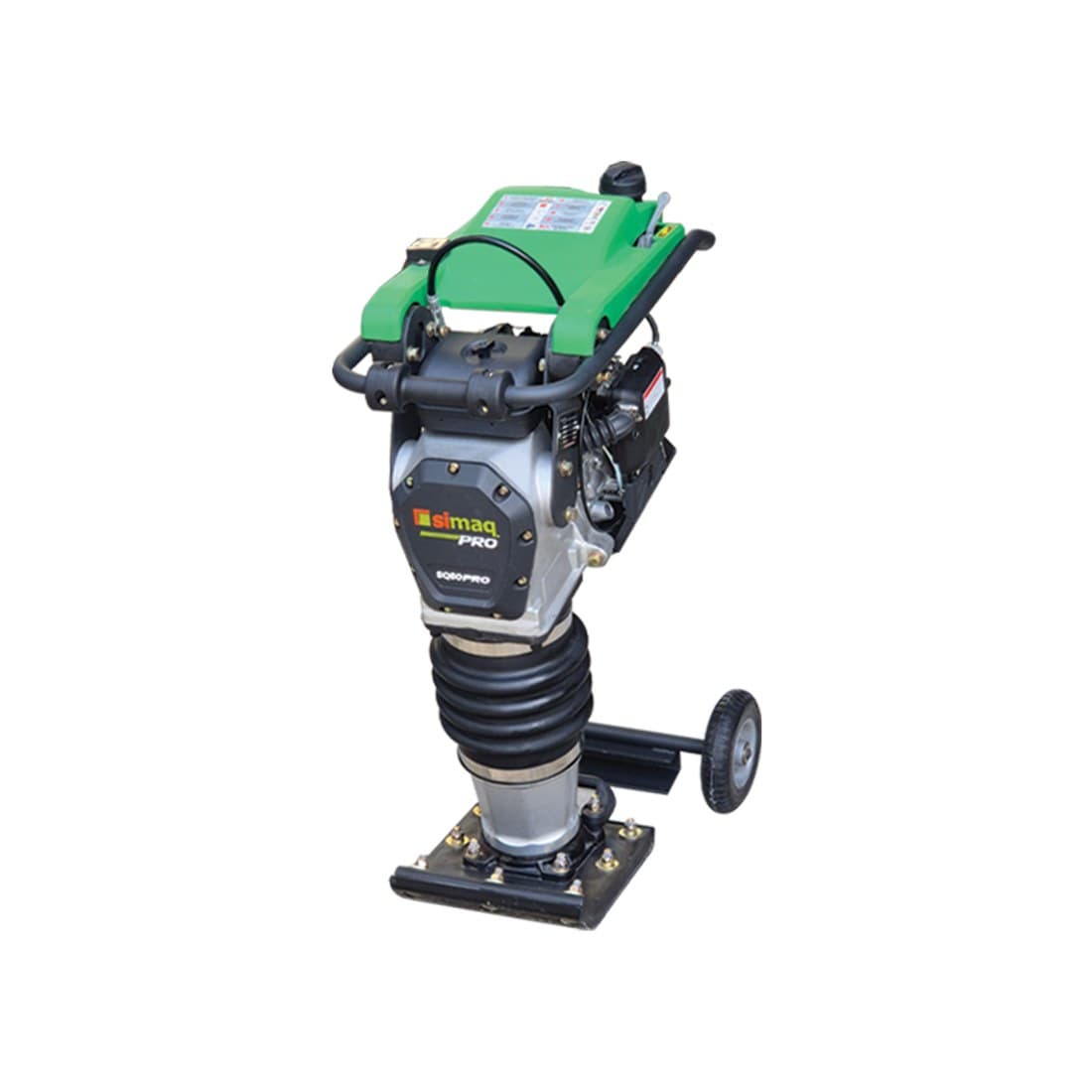
- Clay or silt → rammer, which compacts by impact.
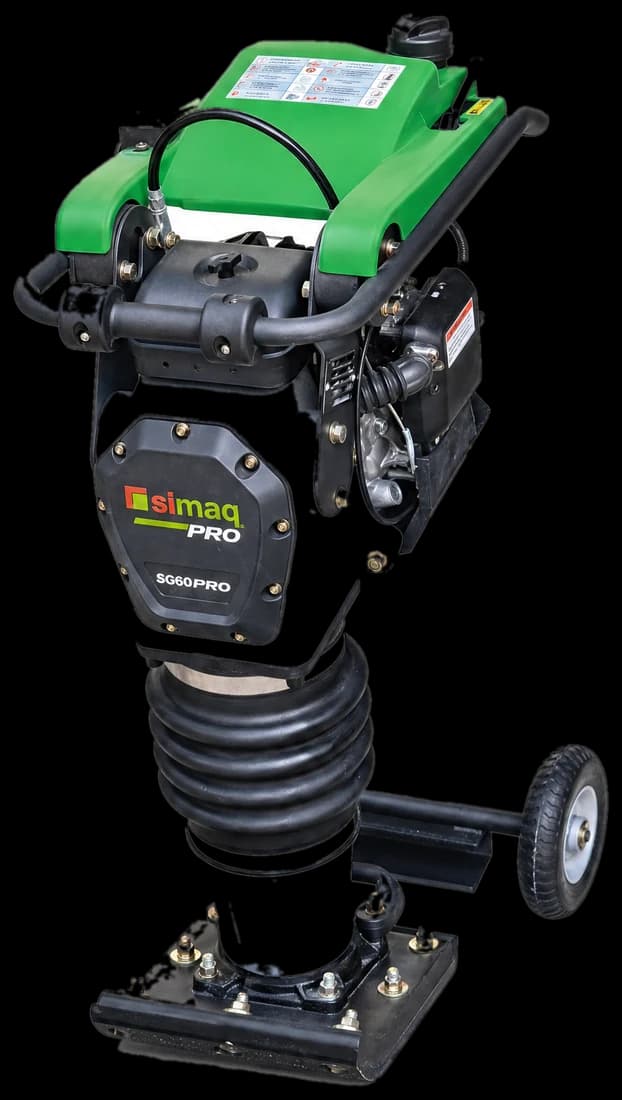
- Narrow trenches and next to pipe → rammer or trench roller.
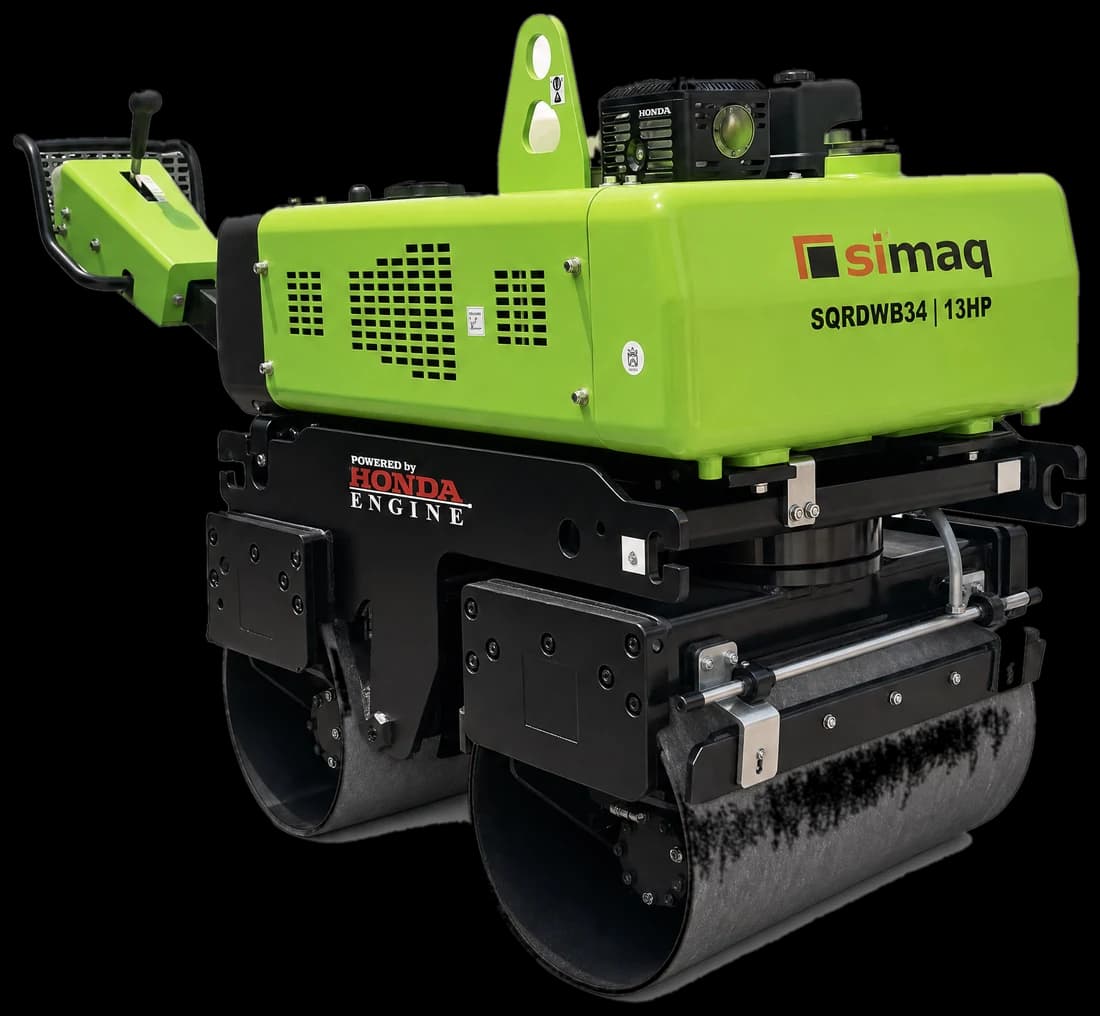
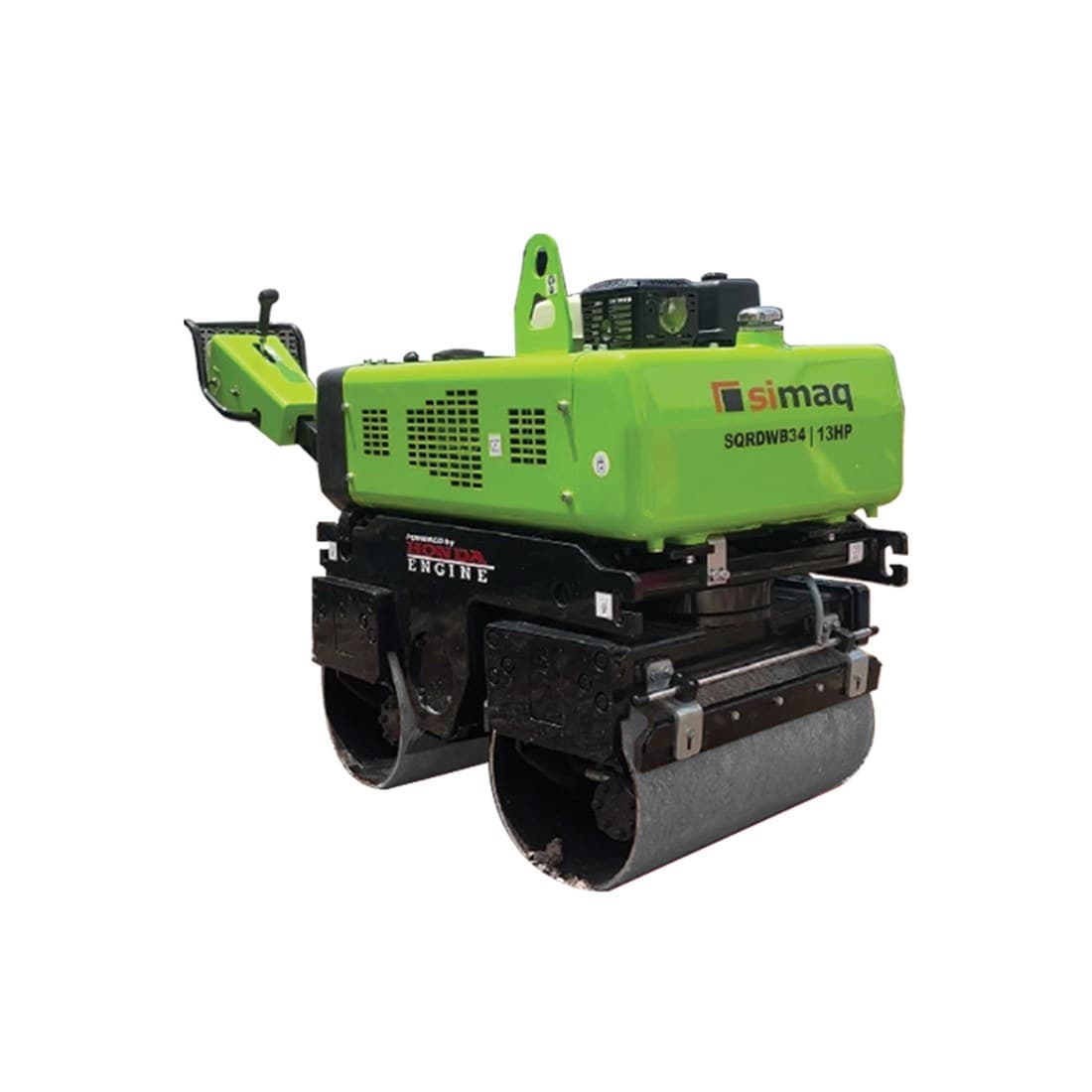
- Embankments and very large areas → roller: far more output per pass.
- Thick lifts: beyond the plate's reach, the bottom stays loose.
How to use it right
Mind the moisture: if the soil is very dry, wet it; if it's soaked, wait. At the wrong moisture you won't reach density no matter how many passes you make.
- Check oil, air filter and that the plate is clean; for asphalt, fill the water tank.
- Start and go to full throttle: at half throttle it skids and doesn't compact.
- Compact in straight strips overlapping about 15 cm, from the edges towards the centre.
- Lifts of 20 to 30 cm and 3 to 4 passes per lift, at the right moisture.
- On a slope, work from top to bottom, never across.
Plate, rammer or roller?
| If you have… | Use |
|---|---|
| Sand, gravel or base in an open area; pavers | SQ15 PRO plate compactor |
| Clay, a narrow trench, next to walls or pipe | SQ60 PRO 2 rammer |
| Embankment, street, asphalt over a large area | Roller (walk-behind or ride-on) |
Before you ask for a quote, have this ready
With this, an advisor in your country can recommend the right machine in a single conversation:
- What you'll compact: granular soil, pavers or asphalt patching.
- Approximate area and whether there are narrow spots.
- Whether there's clay or trenches, to add a rammer.
- Lift thickness.
- Country and city of the job.
Common mistakes
- Using it on clay expecting it to compact: cohesive soil doesn't respond to vibration.
- Running at half throttle.
- Compacting lifts that are too thick at once.
- Running it over pavers without the urethane mat.
- Working asphalt with the water off: the mix sticks to the plate.
Takeaway
The plate compactor rules granular soil, pavers and patching in open areas; for clay and trenches, a rammer; for large areas, a roller. The SQ15 PRO comes with a urethane mat, water tank and Pro-Club maintenance kit. Get a quote here and we'll confirm availability in your country.
Keep going
Frequently asked
How deep does a plate compactor compact?
The SQ15 PRO lists 300 mm compaction depth. In practice, work in 20 to 30 cm lifts with 3 to 4 passes.
Can a plate compactor be used on asphalt?
Yes, for patching and repairs: with the water on (12 L tank) so the mix doesn't stick. For full streets, a roller.
Does it work for pavers?
Yes. Use the urethane mat that comes with the SQ15 PRO so pavers don't scratch, and finish with joint sand.
Plate or rammer?
Plate for granular soil in open areas; rammer for clay, narrow trenches and next to walls or pipe.
What engine does the SQ15 PRO have?
A Honda GX160, 3.6 kW (5.5 HP). It weighs 90 kg and has built-in wheels to move it around the site.
What warranty does it have?
6 months, like the rest of the light equipment. It's activated by registering the machine.