Guide · 5 min
What is a «rodo» roller, and which one should you use? Roller types
Also called: roller, road roller, drum roller, compactor
By the SIMAQ technical team · Grupo ConstruMarket ·
Short answer
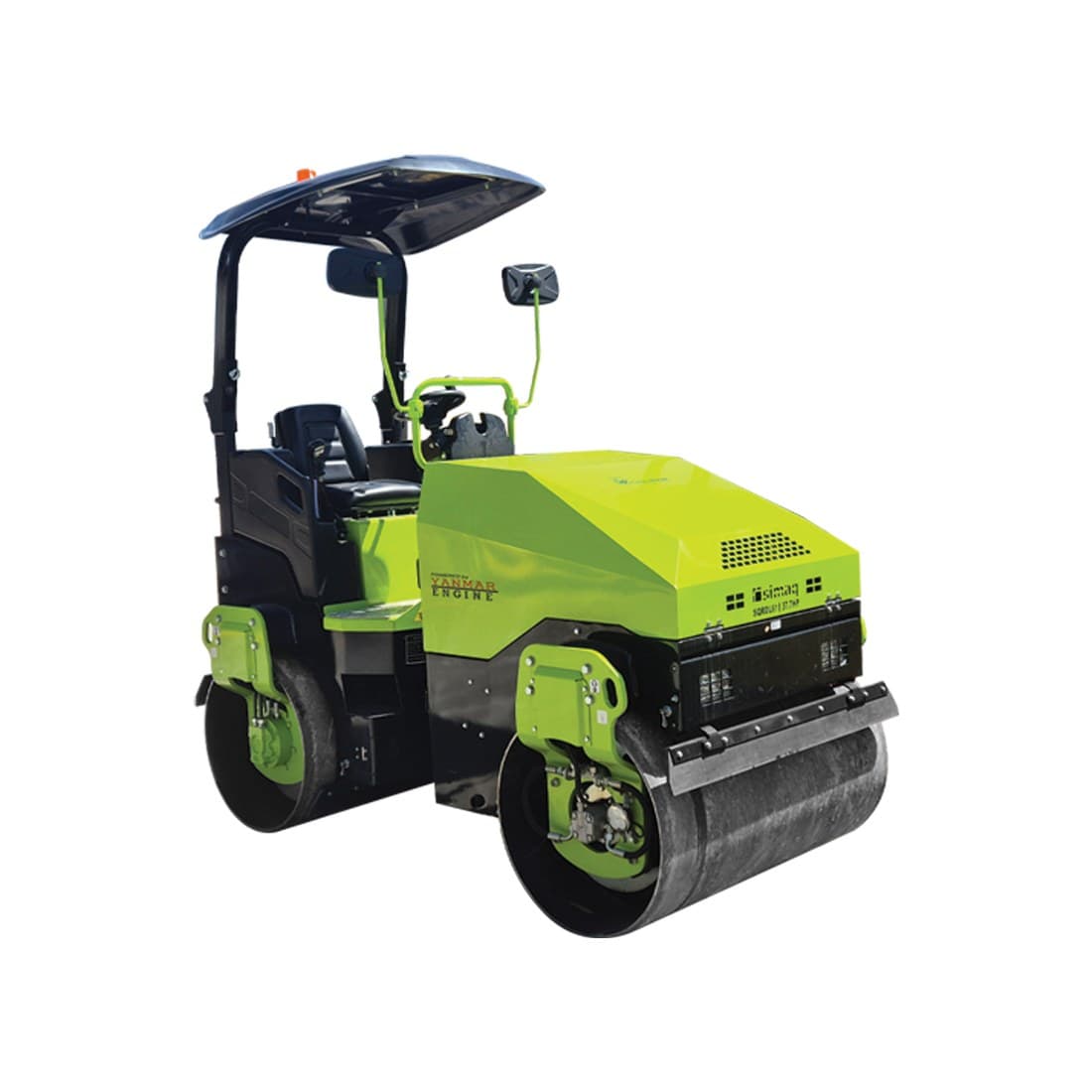
In Central America a «rodo» is a compaction roller: a machine with one or two steel drums that rolls over soil or asphalt and squeezes it with its weight and vibration. There are smooth-drum rollers, for granular soil and asphalt, and padfoot rollers, for clay; walk-behind, ride-on or remote-controlled. For patching and sidewalks, one under 1 t is enough (SIMAQ SQRDWB L34); for streets, a ride-on of 1.5 t or more (L51, L61, L71); and for clay trenches, a padfoot (L102 or L202). Heads-up: on site, «rodo» is also the scaffold caster wheel.
SIMAQ rollers
weight or rating
vibration frequency (spec sheets)
What a roller does and why it vibrates
Compacting means driving air out of soil or asphalt so it doesn't settle later. A roller does it with two forces: its weight, which squeezes, and drum vibration, which settles the particles. Every SIMAQ roller is vibratory: those whose spec sheet lists it run at 60 to 65 Hz, and on the smooth-drum ones centrifugal force goes from 17 kN (L34) to 40 kN (L71, both drums combined).
The question that decides the type of roller is the soil. The one that decides the size is the area. Both are in the diagram.
Smooth drum or padfoot
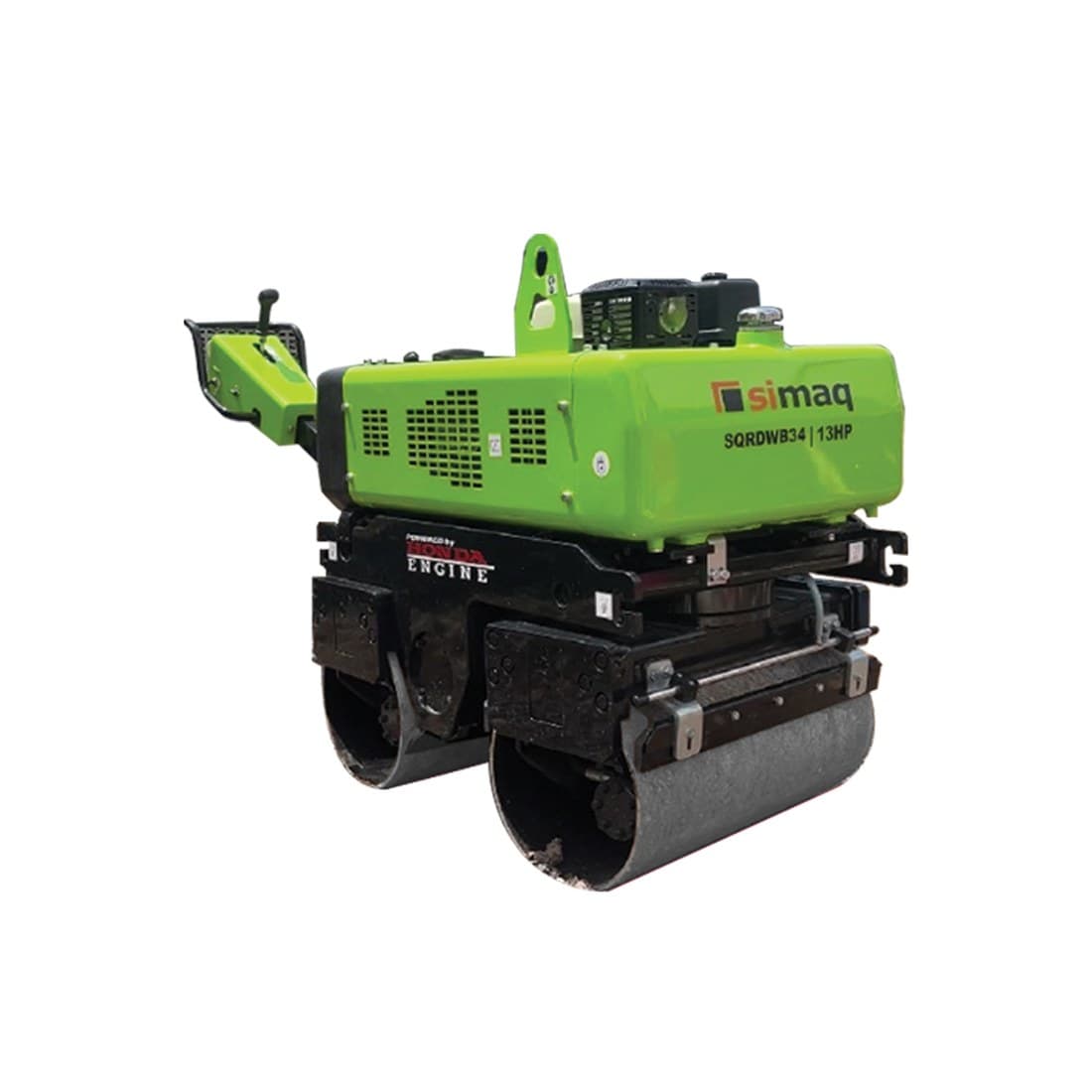
A smooth drum compacts granular soil (sand, gravel, base) and asphalt, and leaves an even surface. On asphalt, the drum is wetted so the mix doesn't stick: the L34 has front and rear sprinklers, and the L61 a 200 L water tank.
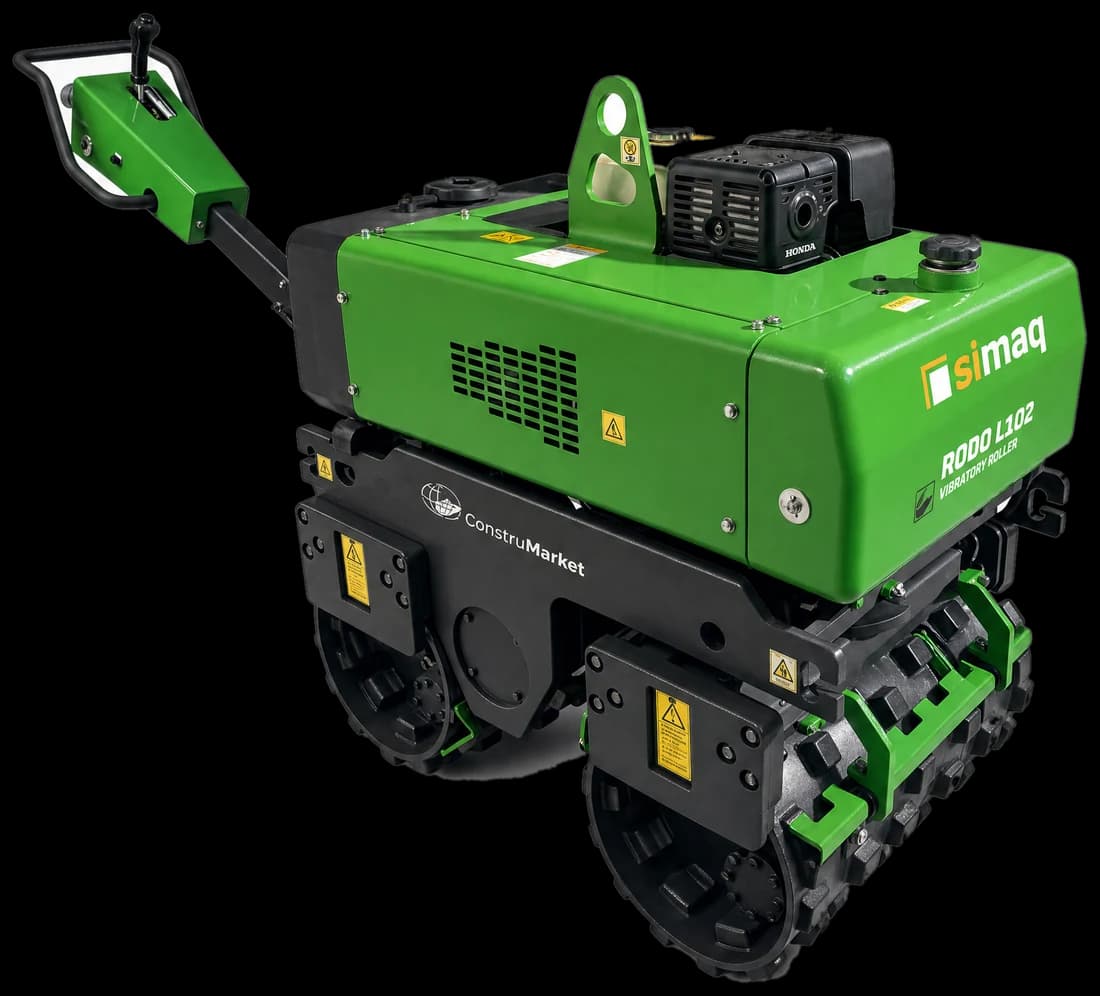
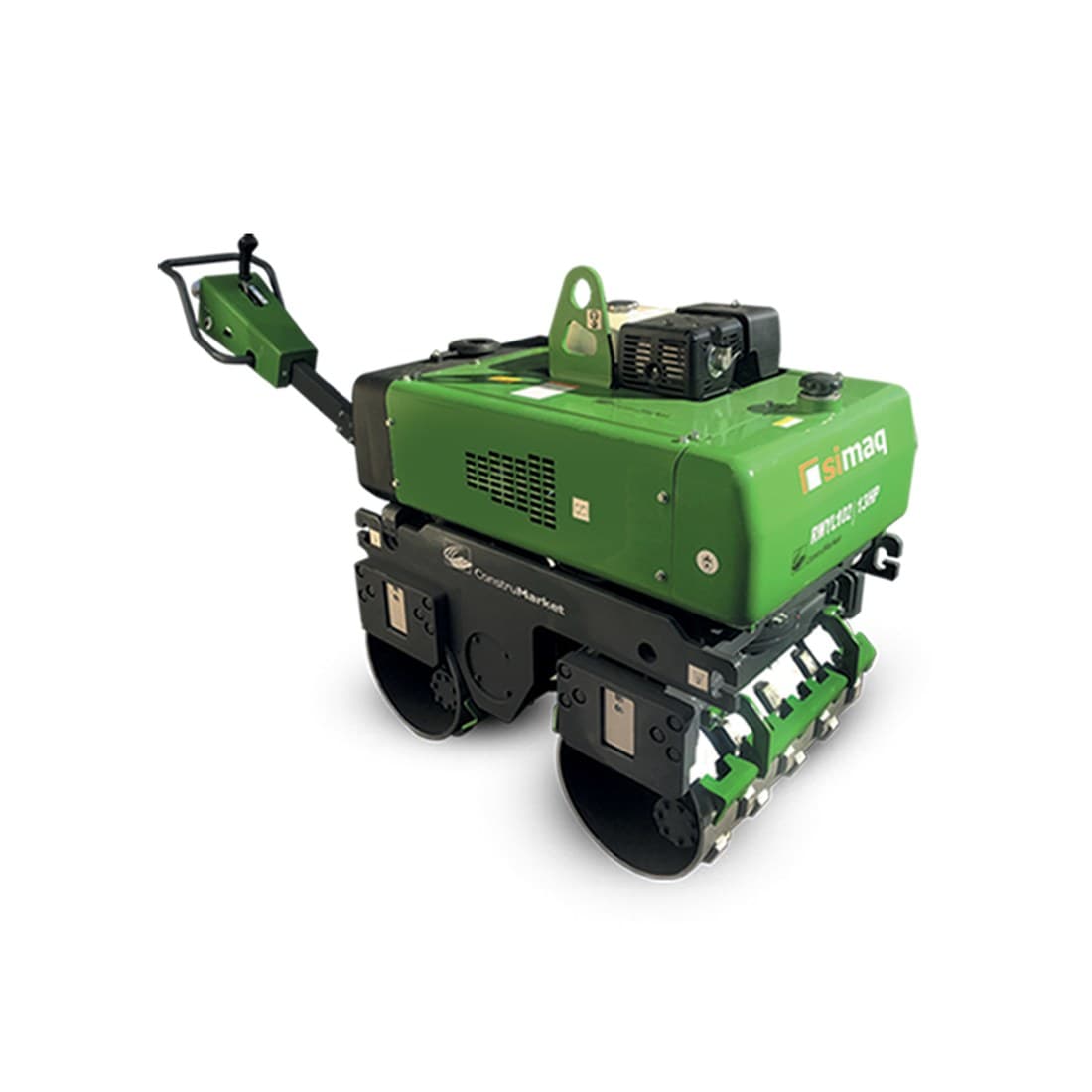
A padfoot drum has lugs that dig in and knead cohesive soil (clay, silt), which doesn't respond to a smooth drum. At SIMAQ these are the trench rollers: the walk-behind L102 and the remote-controlled L202.
Walk-behind, ride-on or remote control
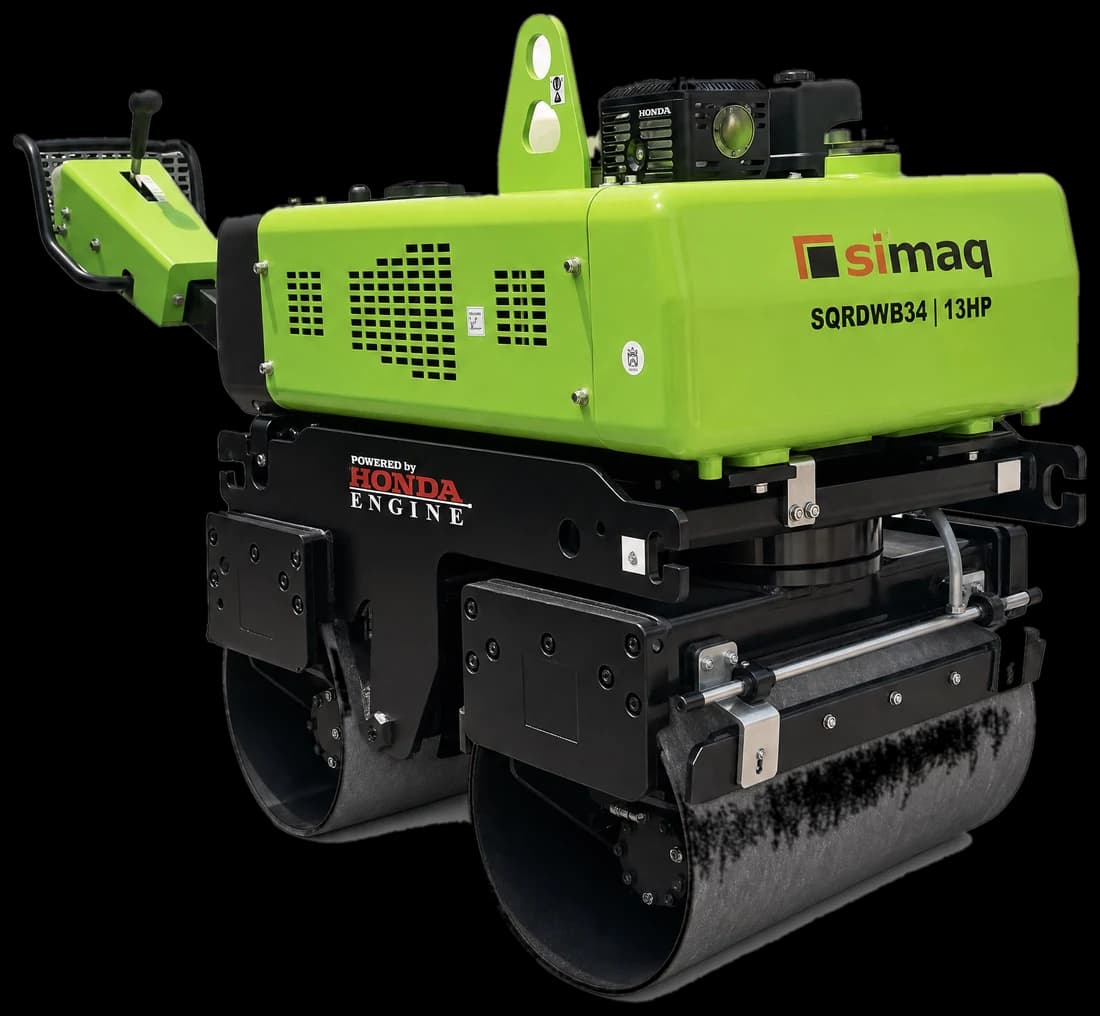
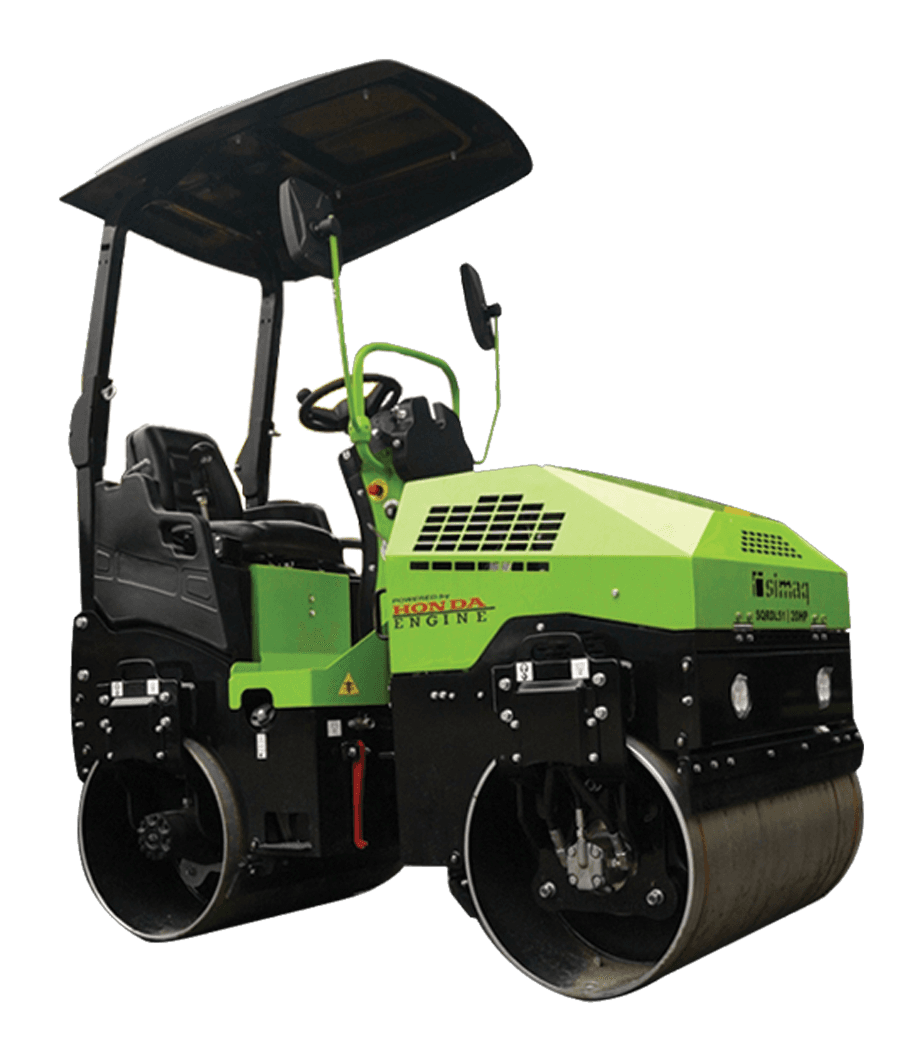
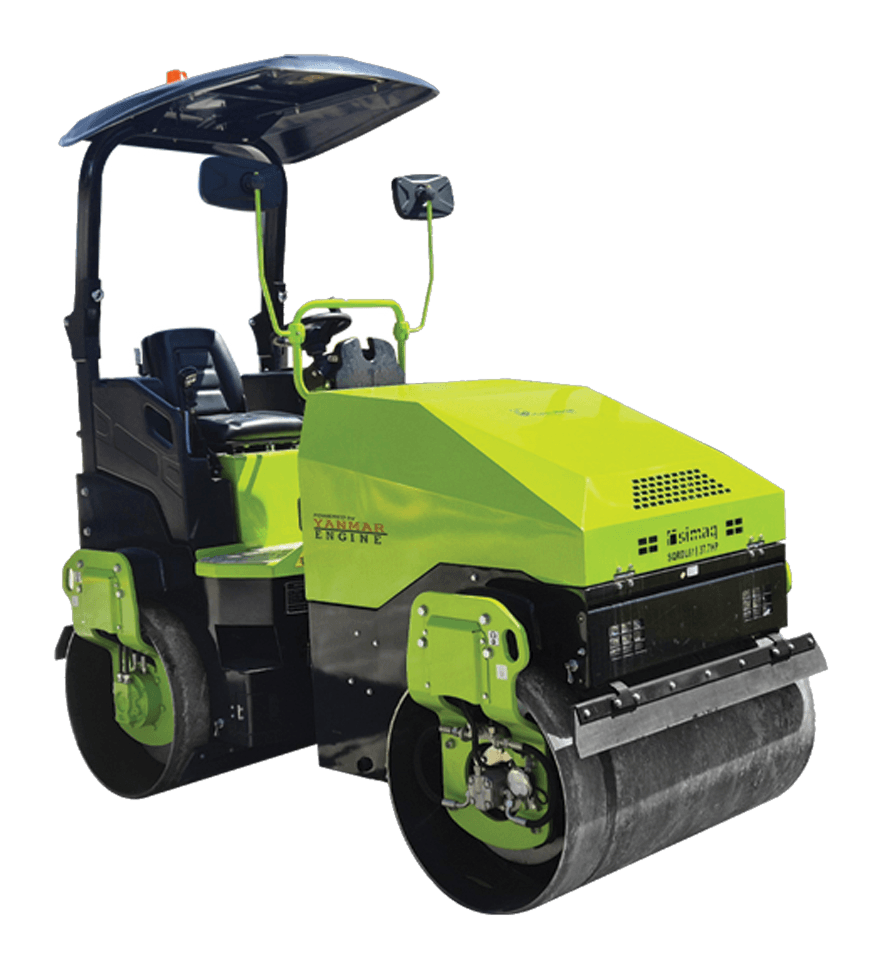
A walk-behind roller like the SQRDWB L34 (0.84 t, 680 mm drum) fits tight spaces and has a lifting point to hoist it on and off safely. Ride-on rollers cover more area and carry a ROPS canopy: the L41 (0.8 t, 700 mm), the L51 (1.5 t, 900 mm), the L61 (3 t, 1,200 mm, vibration on both drums) and the L71 (4.2 t, Yanmar diesel, climbs grades up to 40%). The L202 runs by remote control, with the operator out of the trench.
| If your job is… | Use | Why |
|---|---|---|
| Patching, sidewalks, access roads, small areas | SQRDWB L34 walk-behind | Fits where a ride-on won't, with sprinklers for asphalt |
| Parking lots and residential streets | SQRD L41 or L51 ride-on | More area per pass with a seated operator |
| Roadwork, embankment and base | SQRD L61 or L71 | 3 to 4.2 t, 1,200 mm drum (L61) and diesel (L71) |
| Clay trench | L102 walk-behind or L202 remote | Padfoot that kneads cohesive soil |
How to work with a roller
- Compact in lifts: as a general rule, 20 to 30 cm loose, or whatever your spec says.
- Make 3 or 4 passes per lift, overlapping each pass with the last.
- Check moisture: not so dry it crumbles, not soaked.
- On asphalt, keep the drum wet and don't brake hard or turn in place on hot mix.
- Switch off vibration before stopping or reversing, so you don't leave marks.
- Next to walls and pipes, finish with a plate or rammer: the roller can't reach the edge.
«Rodo» is also the scaffold wheel
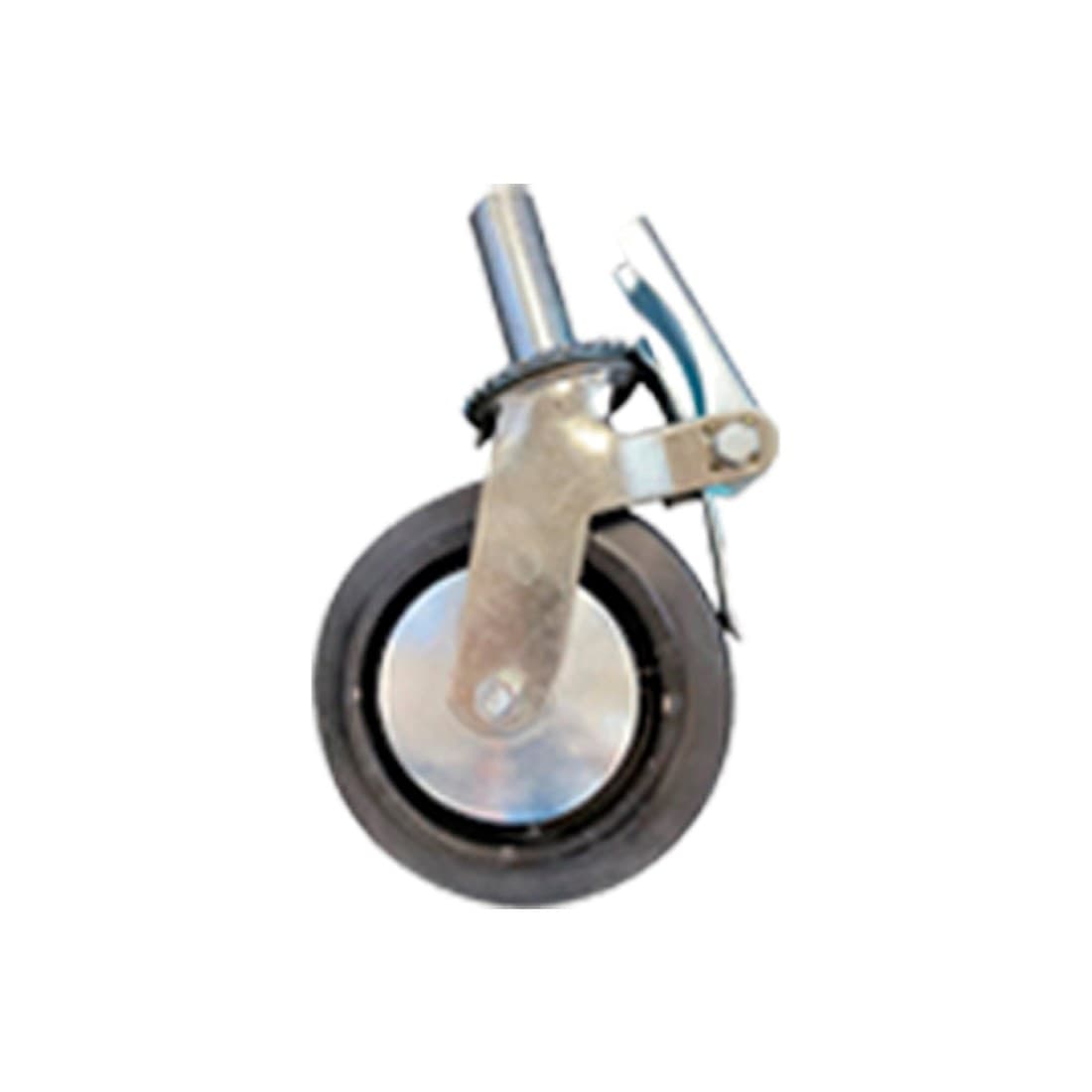
If you were looking for the wheel that moves a scaffold tower, it's also called a «rodo». SIMAQ has the A005 scaffold caster, a swivel wheel with brake and insertion stem, and the A003 screw jack for leveling. They don't compact anything: they only move and level the scaffold.
SIMAQ compaction rollers carry a warranty of 6 months or 500 hours of use, whichever comes first; it's activated by registering the machine.
At ConstruMarket branches in El Salvador, Guatemala (CMARKET), Nicaragua and Panama. Request a quote from this guide and an advisor in your country will confirm the model and availability.
Common mistakes
- Using a smooth roller on clay: pass after pass, and the soil won't compact.
- Compacting thick lifts expecting the roller to reach the bottom.
- Leaving the roller vibrating in place on asphalt: it marks and dents the mat.
- Working asphalt with a dry drum: the mix sticks and tears the surface.
- Buying a big roller for a small area or one full of obstacles.
Takeaway
A «rodo» is a compaction roller. Smooth for granular and asphalt, padfoot for clay. Walk-behind (L34) for patching and tight spaces; ride-on (L41, L51, L61, L71) for streets and roadwork; the L102 or the remote-controlled L202 for trenches. Compact in lifts, with 3 or 4 passes and the right moisture.
Keep going
Frequently asked
What is a «rodo» in construction?
It's a compaction roller: a machine with steel drums that compacts soil or asphalt with weight and vibration. On site, «rodo» is also the scaffold caster wheel.
Are «rodo», roller and steamroller the same?
Yes, they're regional names for the same machine: the compaction roller. What changes is the drum type, the weight and whether it's walk-behind or ride-on.
Which roller is used for asphalt?
A smooth-drum roller with water spray. For patching, the walk-behind L34; for streets and parking lots, a ride-on like the L51 or the L61, which has a 200 L tank.
How much does a roller weigh?
In the SIMAQ line they range from 0.78 t (L102 trench roller) to a 4.2 t working rating (L71). More weight compacts thicker lifts, but needs more room and transport.
Where can I buy a roller in El Salvador, Guatemala, Nicaragua or Panama?
At ConstruMarket branches in those four countries (in Guatemala, CMARKET). Request a quote from this guide with your soil type and job area.