Guide · 6 min
How much does a plate compactor cover? Square metres per hour, with your numbers
Also called: plate compactor, vibratory plate
By the SIMAQ technical team · Grupo ConstruMarket ·
Short answer
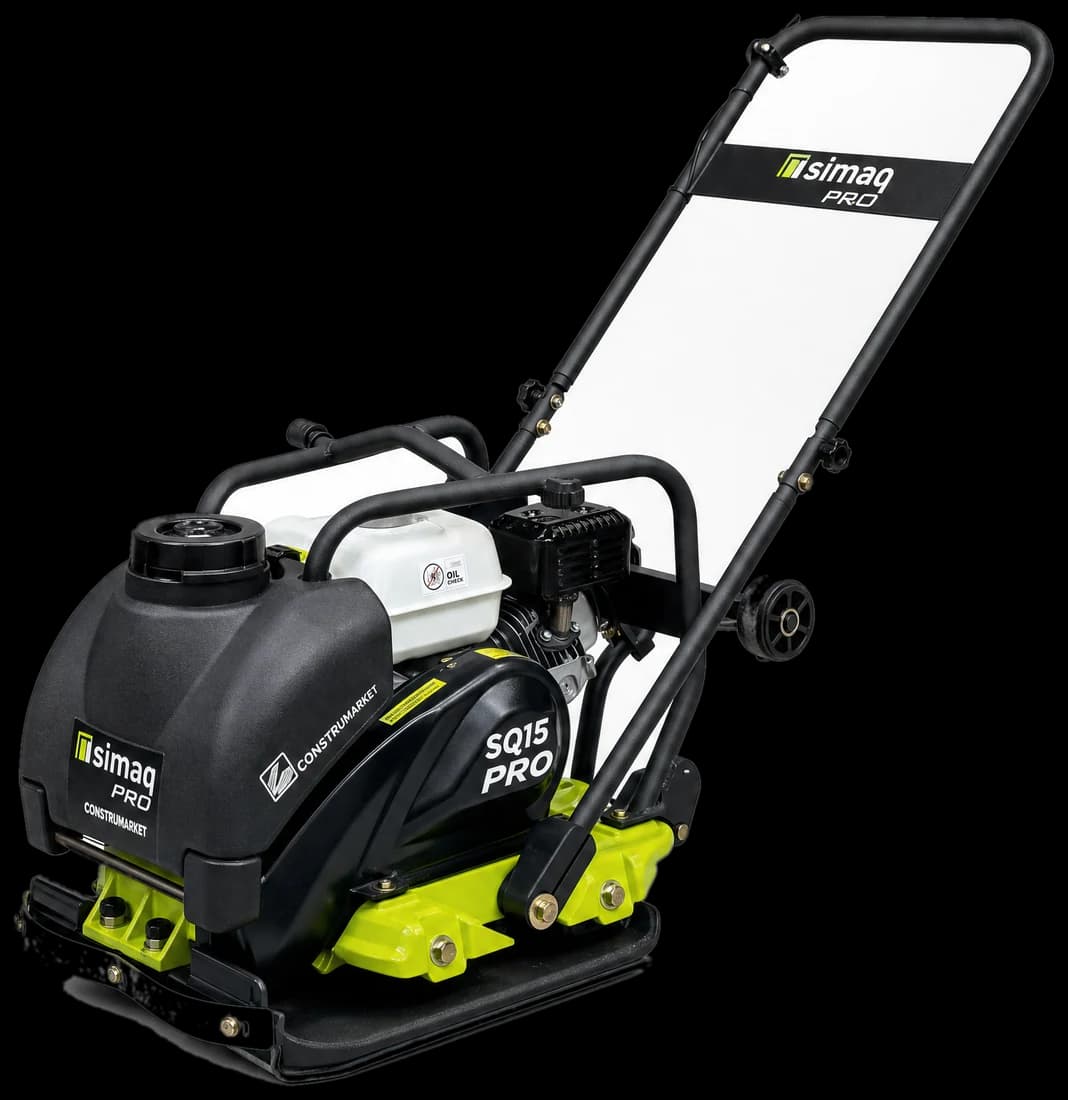
A SIMAQ SQ15 PRO plate compactor (530 × 500 mm plate, 24 m/min travel) compacts about 143 m² per hour of finished lift in granular soil —sand, gravel or base— with 4 passes, and about 114 m²/h in mixed soil with 5 passes. That's a real working figure: it already discounts the overlap between strips and the pauses. The 763 m²/h you get from a single pass without pauses is no use for planning. On clay it gets nothing done: that's rammer work.
in sand or gravel, 4 passes
in mixed soil, 5 passes
SQ15 PRO travel speed (spec sheet)
The maths, step by step
Any compactor's output comes from four numbers: the width it covers, how fast it moves, how many minutes of each hour it really works and how many passes the soil needs. The formula is the same one the SIMAQ School calculator uses: usable width × speed × 60 × efficiency ÷ passes.
With the SQ15 PRO: the plate is 0.53 m wide, but each strip overlaps the previous one a little, so you count 10 % less (0.48 m). It travels at 24 m/min, per its spec sheet. Of each hour, about 50 minutes are compacting (0.83 efficiency): the rest goes on turning, repositioning and waiting for material. And in granular soil, the lift is firm after 4 passes. Result: 0.48 × 24 × 60 × 0.83 ÷ 4 ≈ 143 m² per hour.
| Input | SQ15 PRO | Source |
|---|---|---|
| Plate width | 0.53 m (0.48 m usable) | Spec sheet: 530 × 500 mm plate, minus 10 % overlap |
| Travel speed | 24 m/min | Spec sheet |
| Useful minutes per hour | ~50 (0.83) | A well-run shift; conservative is ~45 |
| Passes per lift | 4 granular · 5 mixed | SIMAQ School compaction lesson |
What changes your number
The 143 m²/h figure is for an even granular base, at the right moisture, with an operator who keeps going. Your job pushes it up or down. What weighs most:
- The soil: mixed soil needs more passes (≈114 m²/h); on clay the plate doesn't compact, however many passes you give it.
- The overlap: if you overlap each strip by 15 cm, as the plate guide advises to avoid loose bands, the usable width drops to 0.38 m and output to about 114 m²/h in granular soil.
- The shape of the area: an open yard yields more than narrow strips, corners and around pipes, where turning eats time.
- Moisture: very dry or very wet soil needs more passes and may still not reach density.
- Thickness: the SQ15 PRO compacts down to 300 mm according to its spec sheet. A thicker lift doesn't yield more: it leaves the bottom loose and has to be redone.
Example: a 10 × 12 metre yard
A 10 × 12 m yard is 120 m². If the granular base goes in a single 25 to 30 cm lift, the SQ15 PRO takes about an hour of compaction (120 ÷ 143). If the total base is 50 cm, that's two lifts: two hours, plus the time to spread and wet each lift.
For your job, do the same maths: area ÷ output × number of lifts. If the answer is days of plate work, see the next section.
When should you step up to a roller?
The plate is unbeatable on small and medium areas, pavers and patching. As the area grows, a roller covers more ground per hour because its drum is wider and it moves faster. With the same formula, in granular soil:
- If your maths gives more than a full day of plate work in an open area → compare with the walk-behind roller.
- If there are trenches or clay besides the open area → add a rammer, not a bigger plate.
- To compare every machine with your soil and your measurements, use the «How many machines do I need?» calculator.
| Machine | Output in granular soil | Best for |
|---|---|---|
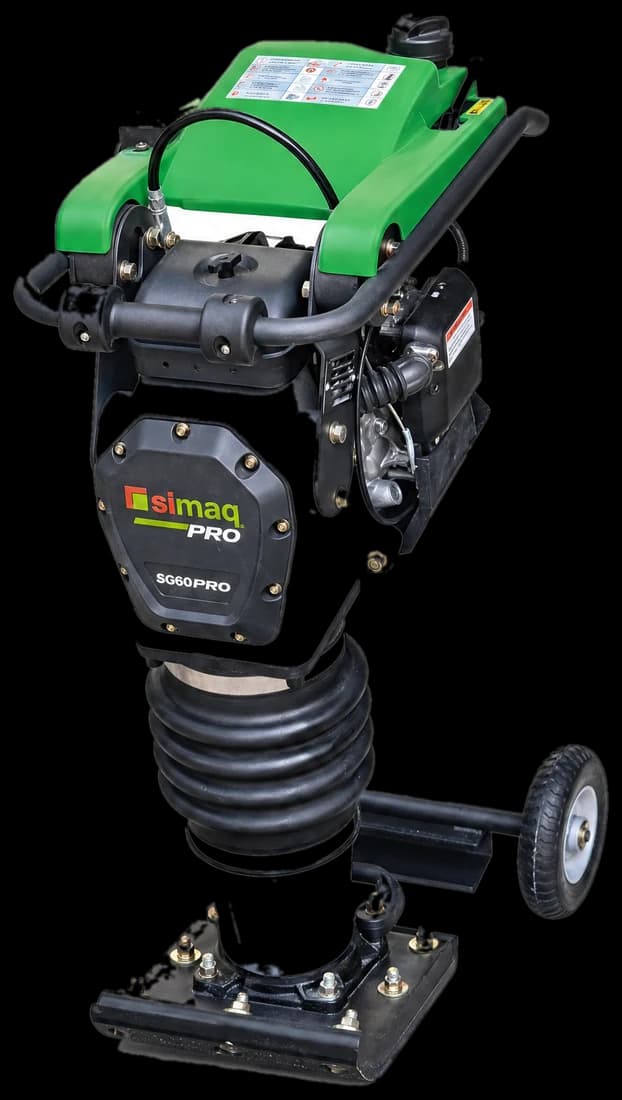
| SQ60 PRO 2 rammer | ~76 m²/h (57 on clay) | Trenches and cohesive soil |
| SQ15 PRO plate | ~143 m²/h | Yards, sidewalks, pavers, patching |
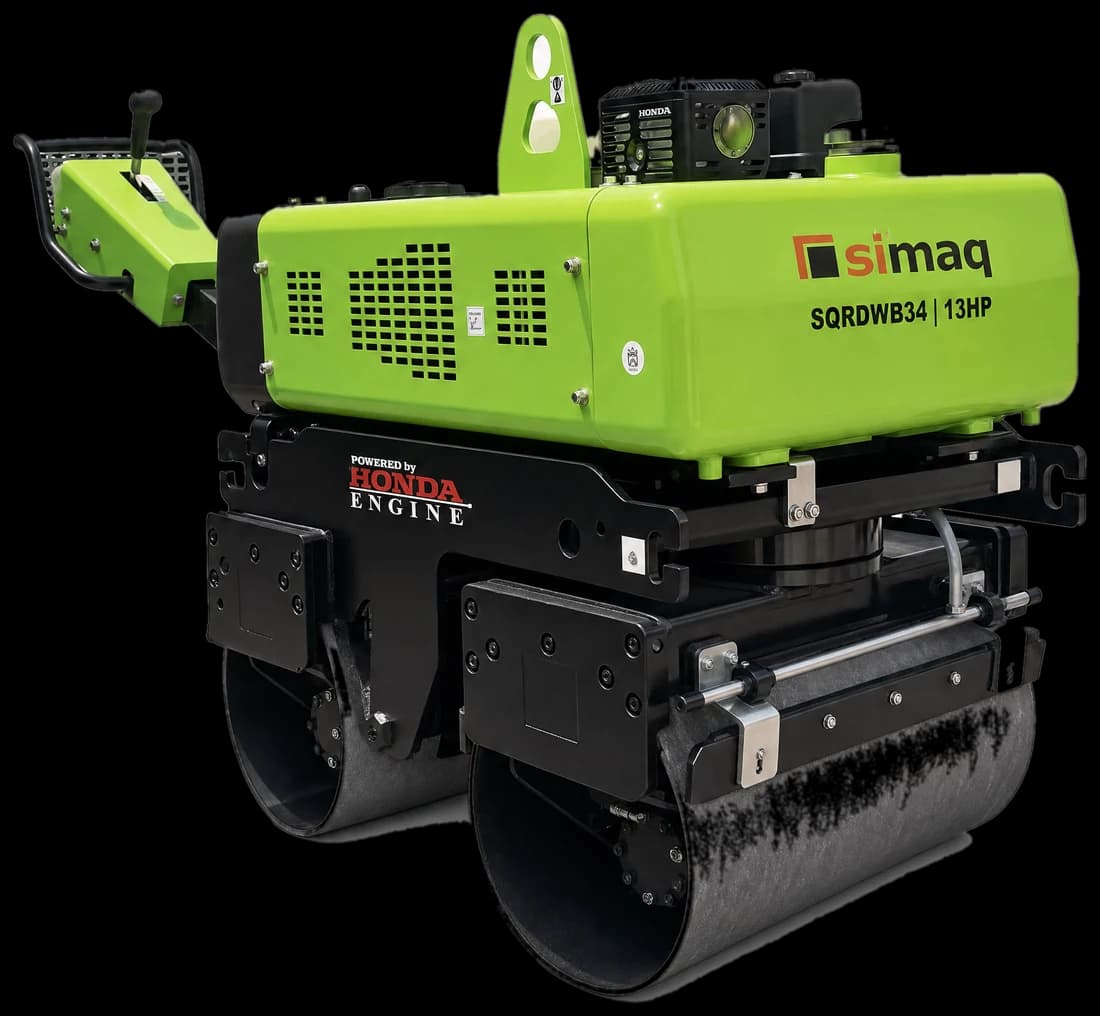
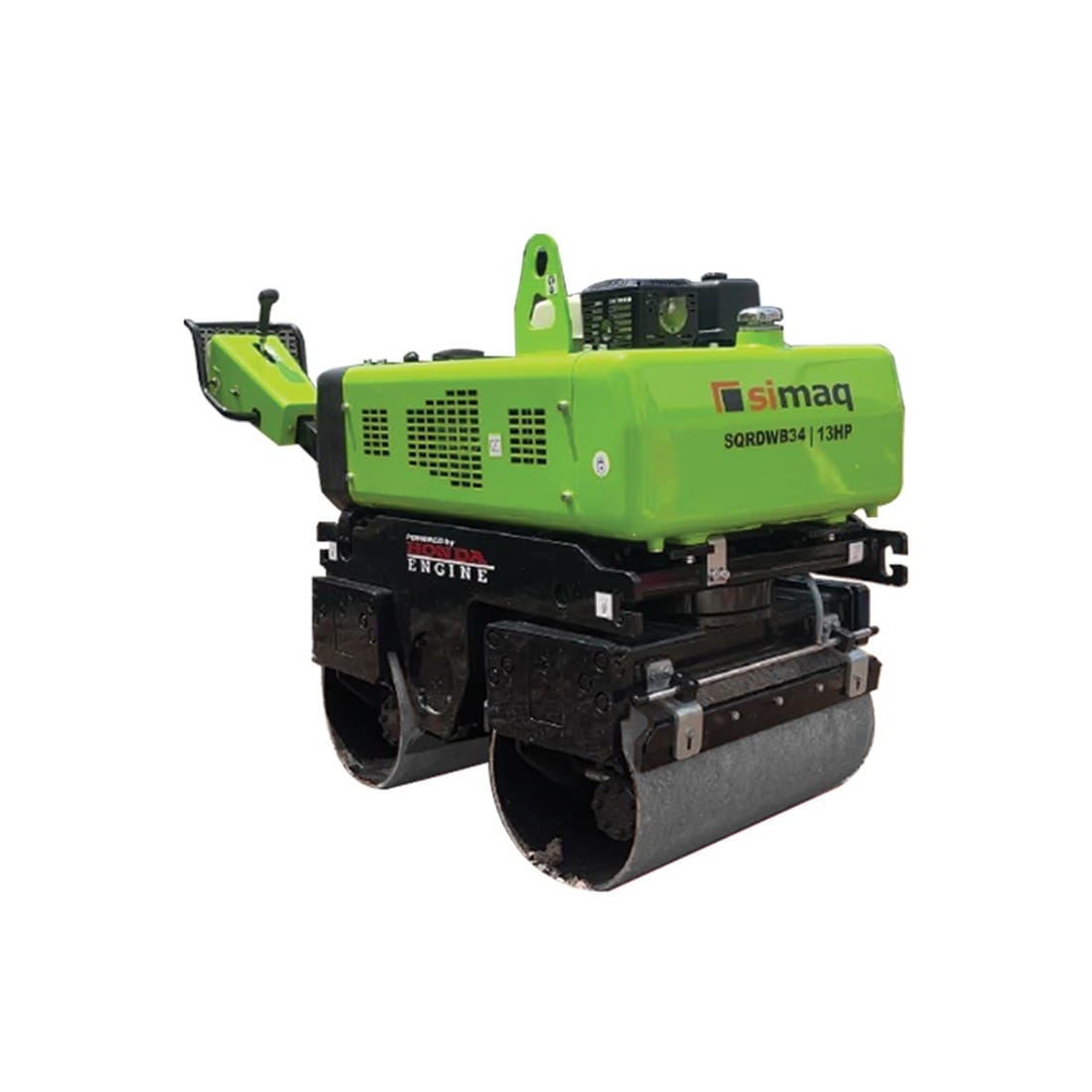
| SQRDWB L34 walk-behind roller | ~320 m²/h | Medium areas and asphalt |
How to get the full output
- Full throttle: at half throttle the plate skids and doesn't compact.
- Straight, continuous strips, from the edges towards the centre.
- Material spread and wetted before starting: waiting for material is what cuts useful minutes most.
- Lifts of 25 to 30 cm in granular soil and 15 to 20 cm in mixed soil, never thicker.
- Clean plate and oil checked at the start: a machine that stops mid-morning yields half.
Common mistakes
- Planning with the 763 m²/h of a single pass: it's five times what you'll actually achieve.
- Counting the area and forgetting the lifts: 50 cm of granular base is two lifts, twice the time.
- Using the plate on clay expecting output: cohesive soil doesn't respond to vibration.
- Compacting thick lifts to save time: the bottom stays loose and has to be redone.
- Sticking with the plate on a multi-day area: a roller does it in half the time or less.
Takeaway
Count on about 143 m²/h of finished lift in sand or gravel and 114 m²/h in mixed soil with the SQ15 PRO; nothing on clay. Your time = area ÷ output × lifts. If it's more than a day in an open area, compare with a roller; if there are trenches or clay, add a rammer. Get a quote right here and an advisor in your country will confirm the machine and availability.
Keep going
Frequently asked
How many square metres per hour does a plate compactor cover?
The SQ15 PRO, about 143 m² of finished lift per hour in granular soil (4 passes) and about 114 m²/h in mixed soil (5 passes), counting overlap and pauses. With a 15 cm overlap between strips, about 114 m²/h in granular soil.
How many passes should a plate compactor make?
In granular soil, 4 passes per 25 to 30 cm lift; in mixed soil, 5 passes per 15 to 20 cm lift. Always at the right moisture. Plates aren't used on clay: use a rammer.
How thick a layer does a plate compactor compact?
The SQ15 PRO compacts down to 300 mm, according to its spec sheet. In practice, lifts of 25 to 30 cm in granular soil and 15 to 20 cm in mixed soil; thicker ones leave the bottom loose.
How long does it take to compact a 100 m² yard?
With the SQ15 PRO on a granular base, about 40 to 45 minutes per lift (100 ÷ 143 m²/h). If the base goes in two lifts, double that, plus spreading and wetting time.
Plate or roller for a large area?
If the plate would take more than a day in an open area, the SQRDWB L34 walk-behind roller covers about 320 m²/h in granular soil, more than double. Keep the plate for edges, pavers and patching.