Guide · 7 min
Which roller compactor should you choose by tonnage and job?
Also called: roller, roller compactor, road roller
By the SIMAQ technical team · Grupo ConstruMarket ·
Short answer
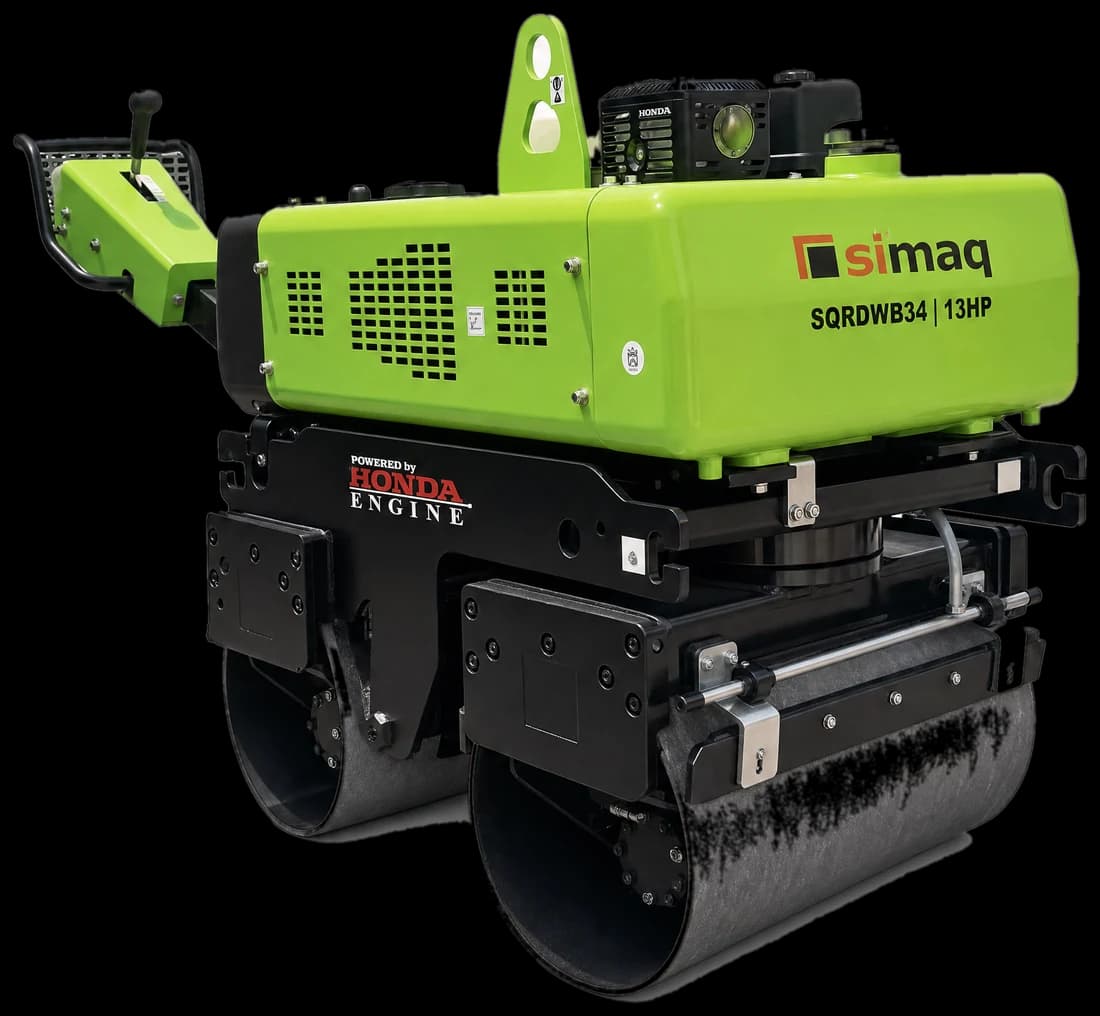
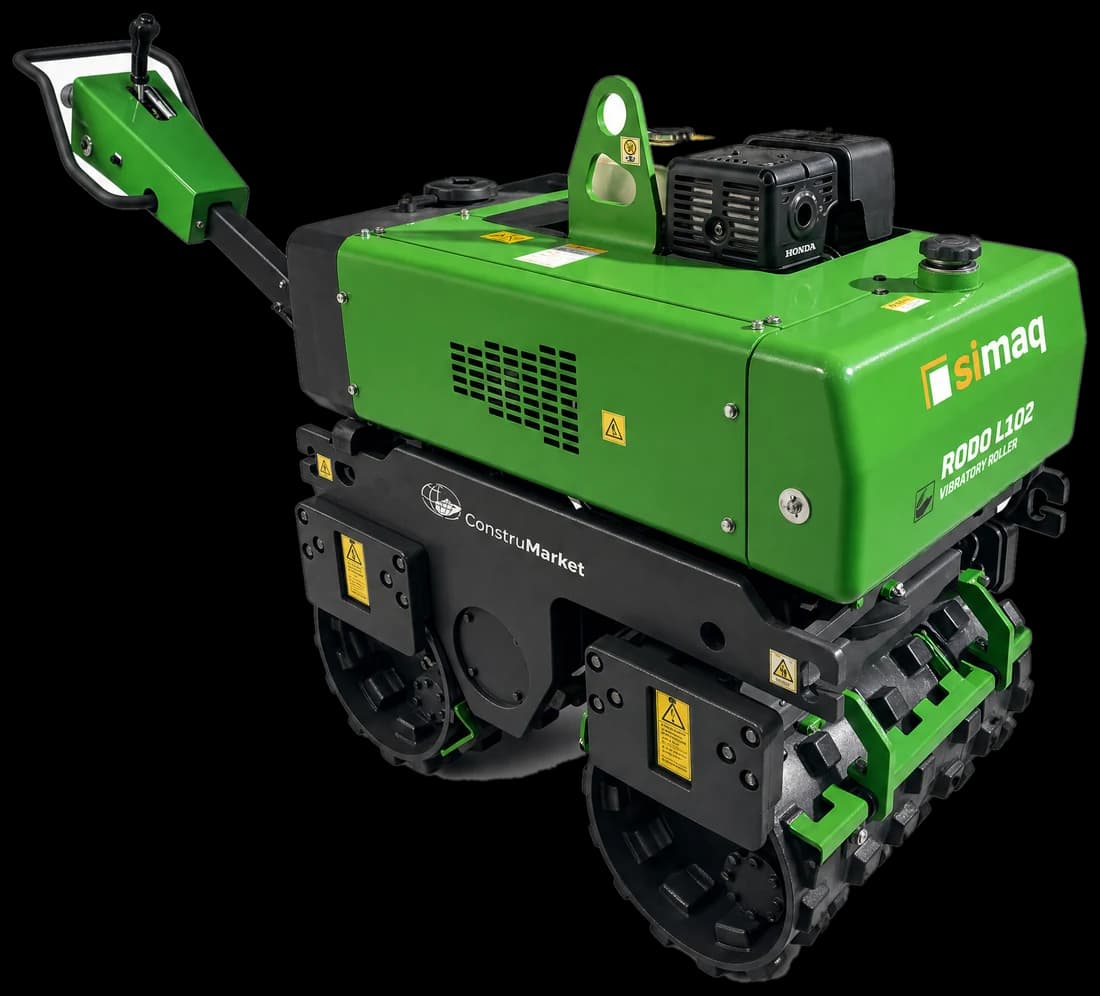
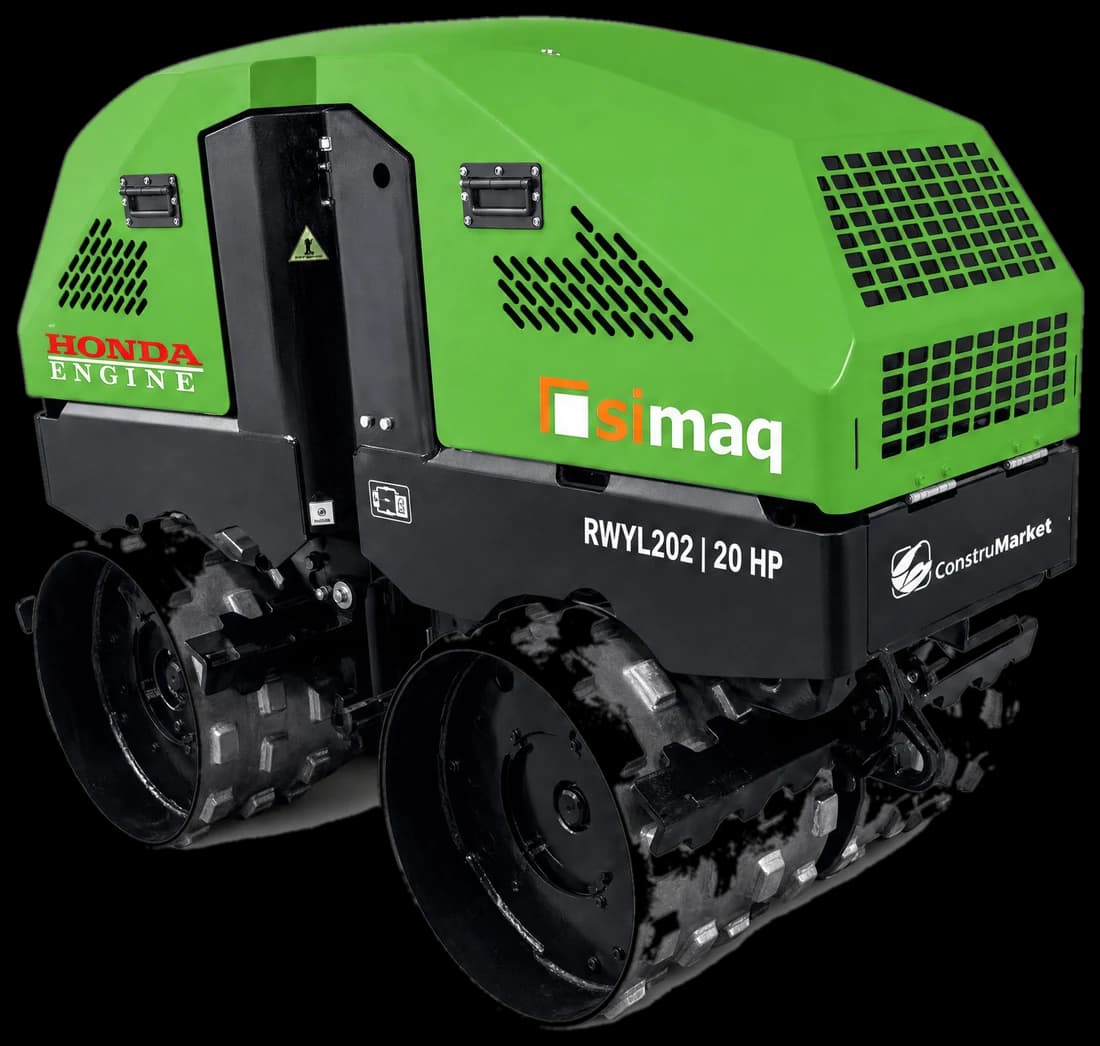
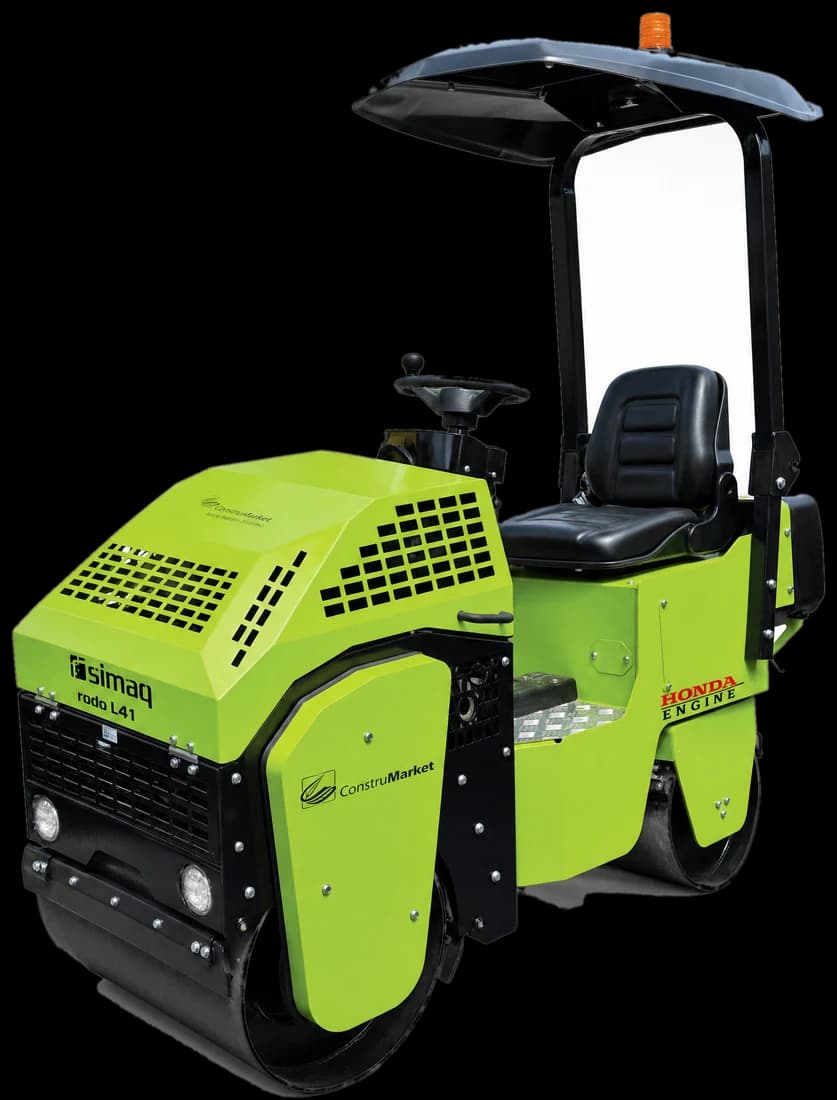
For sidewalks, patching and access roads, a roller under 1 t: the SQRDWB L34 walk-behind (0.84 t, 680 mm drum) or the SQRD L41 ride-on (0.8 t, 700 mm). For residential streets and parking lots, the SQRD L51 (1.5 t, 900 mm); for roadwork and embankments, the SQRD L61 (3 t, 1,200 mm) or the L71 (4.2 t, Yanmar diesel). In trenches, padfoot: the SQRDPWB L102 (0.78 t) or the remote-controlled SQRPTRC L202 (1.53 t).
Watch the short
SIMAQ vibratory rollers
Official @GrupoConstrumarket channel
range of the 7 SIMAQ rollers
drum width
passes per lift
What tonnage changes
A roller's weight and centrifugal force set how deep it compacts and how many passes you need. Drum width sets how much you cover per pass. Speed sets how much ground you cover per hour. A small roller on roadwork falls short and forces thin lifts; a big one on a sidewalk won't fit, breaks edges and costs more than it delivers.
The other decision is the drum. A smooth drum handles granular base and asphalt. A padfoot drum kneads cohesive soil (clay, silt) and is the right one for trench floors.
The 7 SIMAQ rollers, side by side
| Model | Type | Weight | Drum | Force | Engine |
|---|---|---|---|---|---|
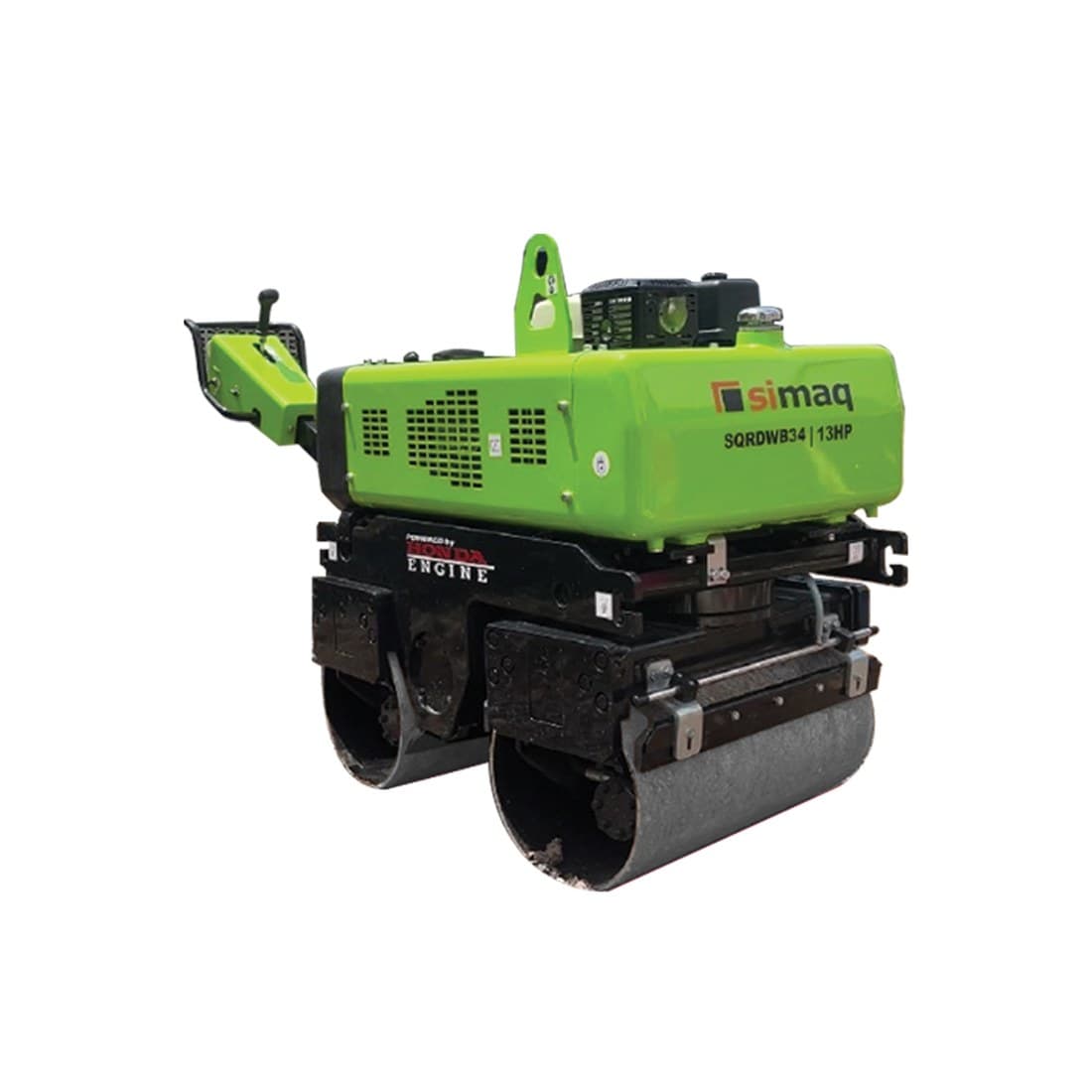
| SQRDWB L34 | Walk-behind, smooth double drum | 0.84 t | 680 mm | 17 kN | Honda GX390 |
| SQRDPWB L102 | Walk-behind trench, padfoot | 0.78 t | 680 mm | 17 kN | Honda GX390 |
| SQRPTRC L202 | Remote-control trench, padfoot | 1.53 t | 600 / 850 mm | 70 / 35 kN | Honda GX690, 20 HP |
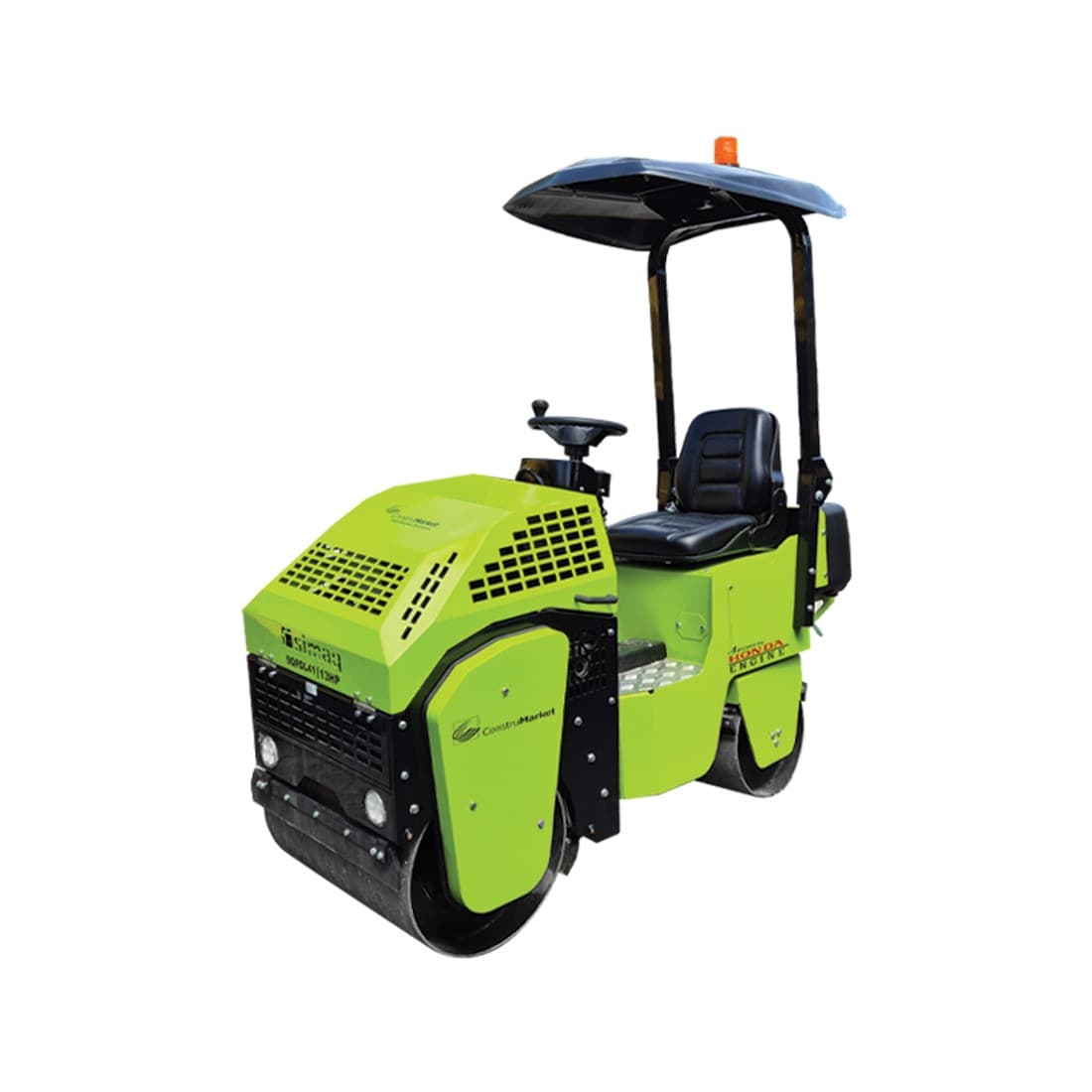
| SQRD L41 | Ride-on, smooth drum | 0.8 t | 700 mm | 20 kN | Honda GX390 |
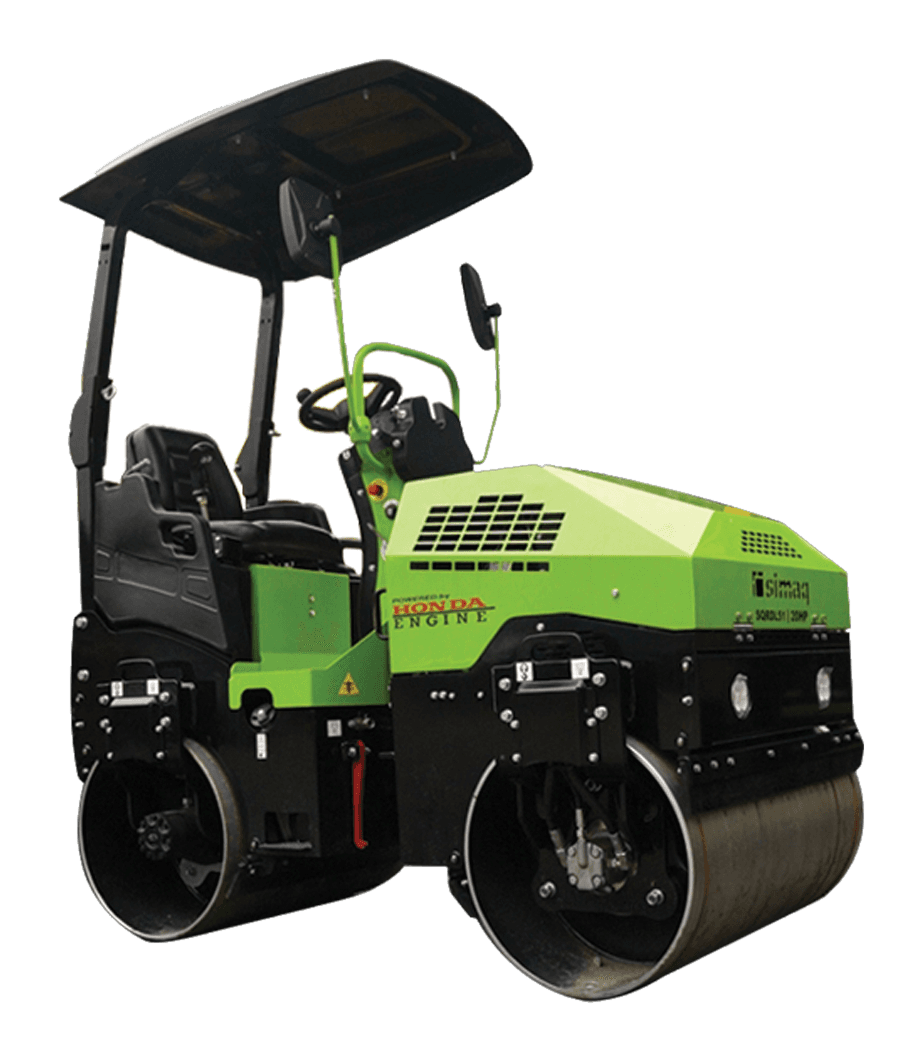
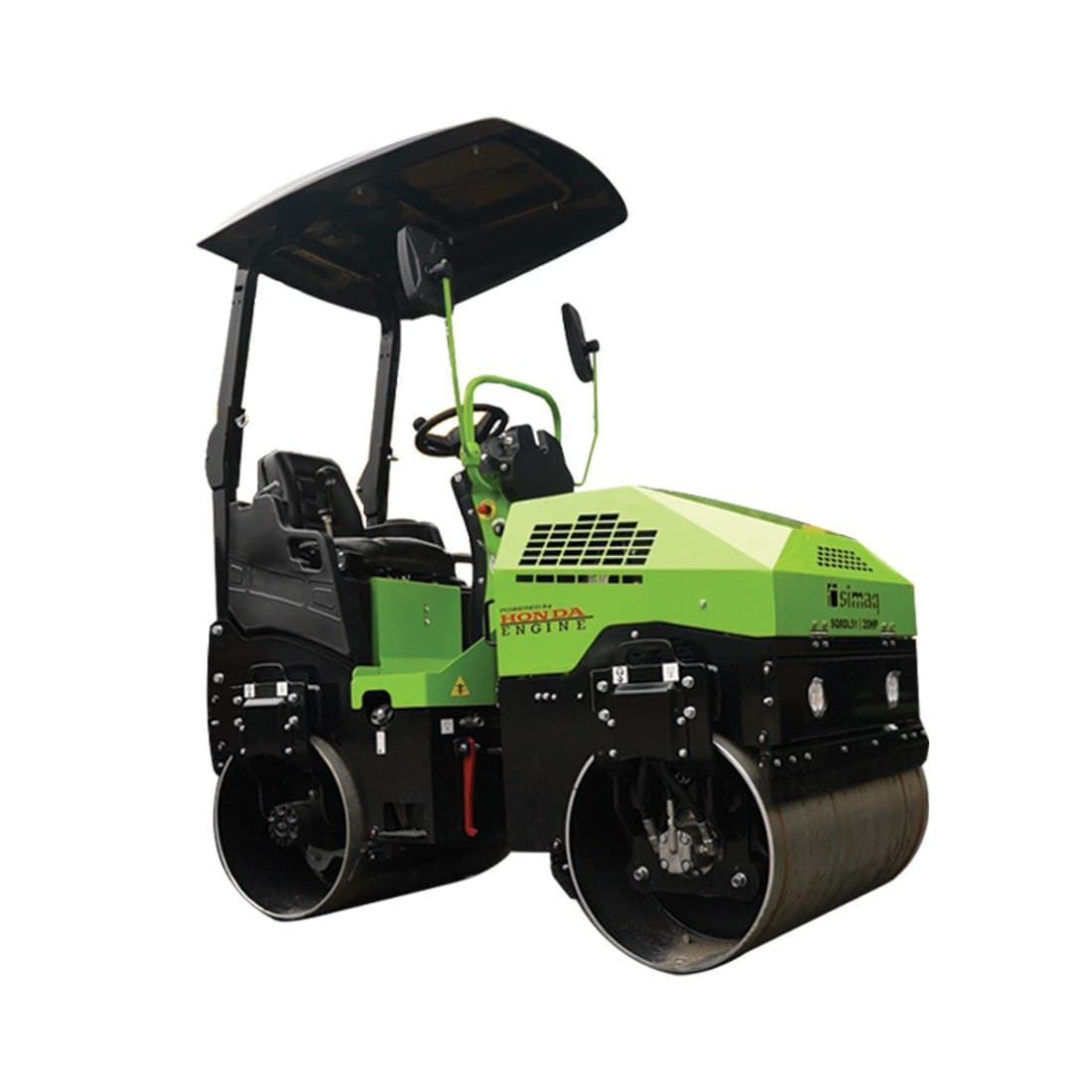
| SQRD L51 | Ride-on | 1.5 t | 900 mm | 22 kN | Honda GX630, 20.8 HP |
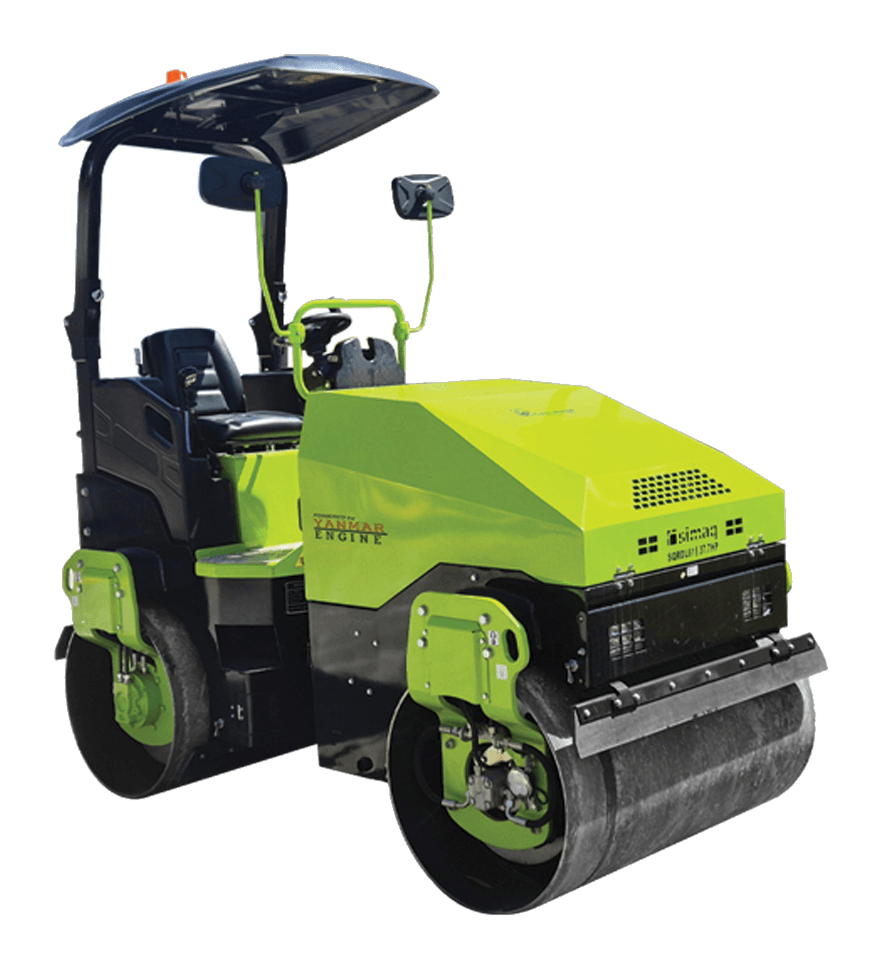
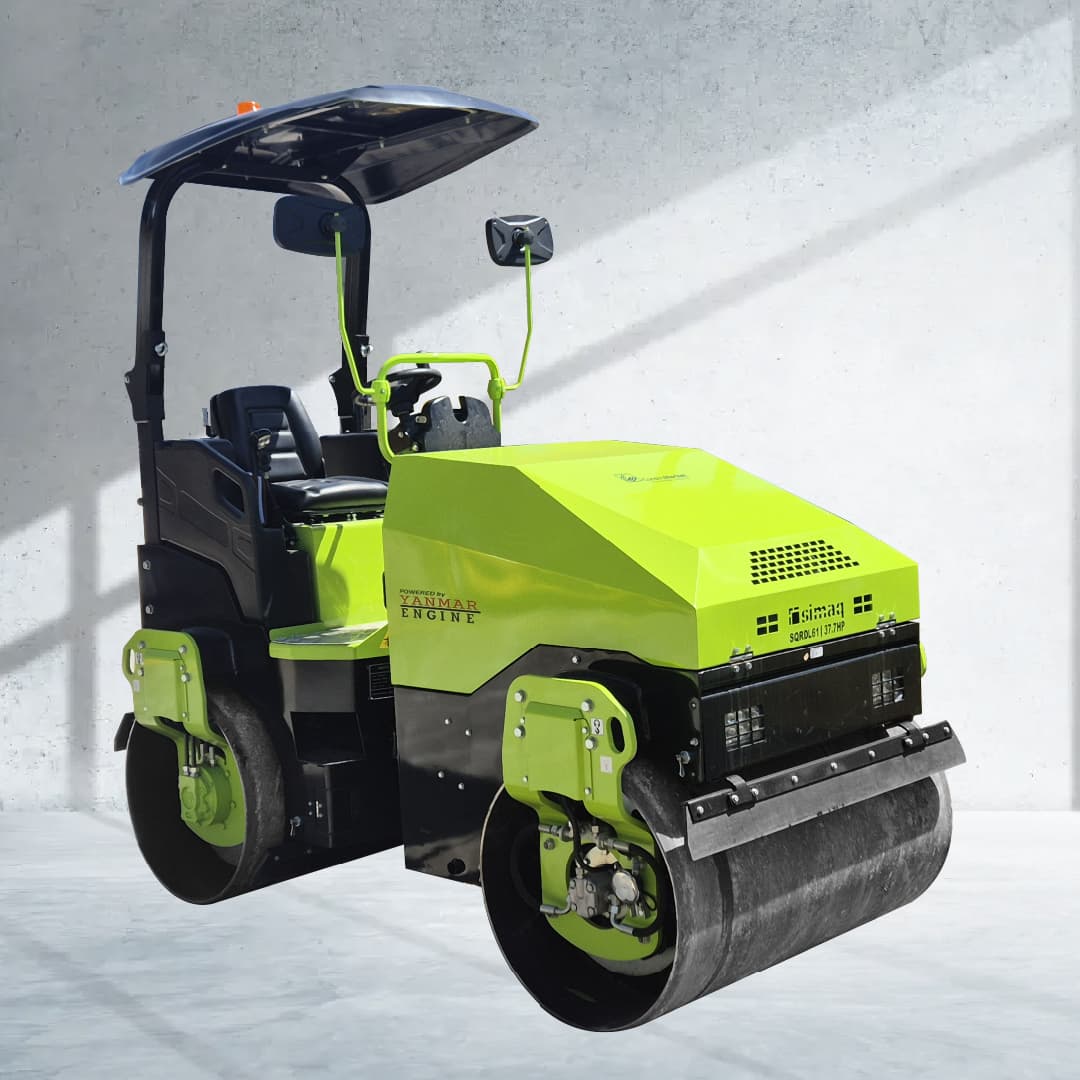
| SQRD L61 | Ride-on, vibration on both drums | 3 t | 1,200 mm | 2 × 30 kN | Yanmar diesel, 36.3 HP |
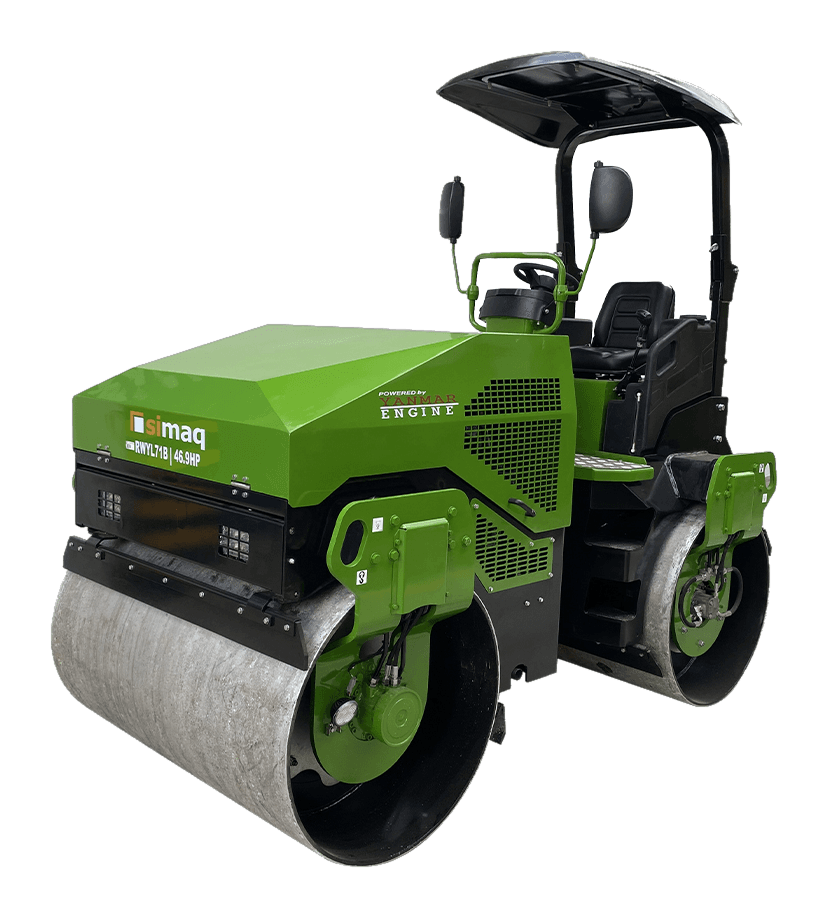
| SQRD L71 | Ride-on | 4.2 t | Advisor confirms | 40 kN (both drums) | Yanmar 4TNV88 diesel, 35 kW |
If your job looks like this, this roller
- Patching, sidewalks, access roads and asphalt on small areas → SQRDWB L34 (walk-behind, with front and rear water sprinklers).
- Trench floor in clay or silt → SQRDPWB L102 (padfoot, 0.78 t).
- Deep trench nobody should enter → SQRPTRC L202 by remote control.
- Small parking lot, access or small area with a seated operator → SQRD L41 (0.8 t, 700 mm).
- Residential streets, subdivisions and mid-size parking lots → SQRD L51 (1.5 t, 900 mm, up to 8 km/h).
- Roadwork, thick bases and embankments → SQRD L61 (3 t, 200 L water tank) or SQRD L71 (4.2 t, climbs grades up to 40%).
Walk-behind, ride-on or remote control
The walk-behind roller (L34 and L102) maneuvers in tight spaces and lets the operator see the edges up close. It travels at 0–3.5 km/h, so on large areas it gets tiring.
The ride-on roller (L41 to L71) covers more area and the operator works seated. The L41 and L51 come with a ROPS canopy and roll bar, strobe beacon and LED lights; the L51 adds rear-view mirrors. The L61 and L71 reach 0–12 km/h to move quickly around the site.
The remote-control L202 exists for one reason: in a trench, the risk is the wall caving in. With the remote, the operator compacts from above, at a safe distance. Its articulated joint lets it go around obstacles like manhole covers without tearing up freshly compacted soil.
Asphalt or soil: how to work it
On soil, compact in 20 to 30 cm lifts and make 3 to 4 passes per lift, overlapping each strip. On asphalt, the drum has to stay wet so the mix doesn't stick: that's why the L34, L102 and L61 have sprinkler systems.
To estimate strips, divide the street width by the drum width. A 6 m street with the L51 (900 mm) is about 7 strips without overlap; with overlap, 8. With the L61 (1,200 mm), 5 without overlap and 6 with it. Fewer strips per pass means less machine time.
Common mistakes
- Buying the heaviest roller «just in case» for sidewalks and access roads: it doesn't fit and breaks edges.
- Using a smooth drum on clay: it needs padfoot or impact.
- Rolling asphalt with a dry drum: the mix sticks and tears the surface.
- Stopping the roller on asphalt with vibration on: it leaves marks.
- Placing thick lifts thinking the weight will fix it.
- Sending a person into a deep trench when the job can be done by remote control.
Takeaway
Thin lift and small area → L34 or L41 (under 1 t). Trench → L102 or L202 padfoot. Streets and subdivisions → L51 (1.5 t). Roadwork and embankments → L61 (3 t) or L71 (4.2 t). Request a quote here with the type of job and lift thickness, and an advisor will contact you during business hours.
Keep going
Take it to the job site
Print the checklist to go over it on site, or send the guide to your crew.
Frequently asked
Which is better, a walk-behind or a ride-on roller?
Walk-behind for tight spaces, edges and patching; ride-on when the area is large and you want more output with less fatigue. If most of your work is streets, the ride-on gets more done per shift.
Which roller compactor works for asphalt?
A smooth-drum roller with water spray: the SQRDWB L34 for patching and small areas, and the L51 or L61 ride-ons for streets. Always keep the drum wet.
Which roller do I use in a trench?
Padfoot: the SQRDPWB L102 (0.78 t) or, if the trench is deep, the SQRPTRC L202 operated by remote control from above.
How many tonnes do I need to compact a street?
For residential streets and parking lots, 1.5 t (SQRD L51) is usually enough. For roadwork with thick bases, 3 t or more (SQRD L61 or L71).
What warranty do SIMAQ rollers have?
6 months or 500 hours of use, whichever comes first. It's activated by registering the machine.
SIMAQ · Job site checklist
Which roller compactor should you choose by tonnage and job?
For sidewalks, patching and access roads, a roller under 1 t: the SQRDWB L34 walk-behind (0.84 t, 680 mm drum) or the SQRD L41 ride-on (0.8 t, 700 mm). For residential streets and parking lots, the SQRD L51 (1.5 t, 900 mm); for roadwork and embankments, the SQRD L61 (3 t, 1,200 mm) or the L71 (4.2 t, Yanmar diesel). In trenches, padfoot: the SQRDPWB L102 (0.78 t) or the remote-controlled SQRPTRC L202 (1.53 t).
If your job looks like this, this roller
- Patching, sidewalks, access roads and asphalt on small areas → SQRDWB L34 (walk-behind, with front and rear water sprinklers).
- Trench floor in clay or silt → SQRDPWB L102 (padfoot, 0.78 t).
- Deep trench nobody should enter → SQRPTRC L202 by remote control.
- Small parking lot, access or small area with a seated operator → SQRD L41 (0.8 t, 700 mm).
- Residential streets, subdivisions and mid-size parking lots → SQRD L51 (1.5 t, 900 mm, up to 8 km/h).
- Roadwork, thick bases and embankments → SQRD L61 (3 t, 200 L water tank) or SQRD L71 (4.2 t, climbs grades up to 40%).
Avoid
- Buying the heaviest roller «just in case» for sidewalks and access roads: it doesn't fit and breaks edges.
- Using a smooth drum on clay: it needs padfoot or impact.
- Rolling asphalt with a dry drum: the mix sticks and tears the surface.
- Stopping the roller on asphalt with vibration on: it leaves marks.
- Placing thick lifts thinking the weight will fix it.
- Sending a person into a deep trench when the job can be done by remote control.
Job site:
Date:
Supervisor:
Scan it for the full guide, with video and FAQ
https://simaq.pro/en/recursos/que-rodillo-segun-tonelaje