
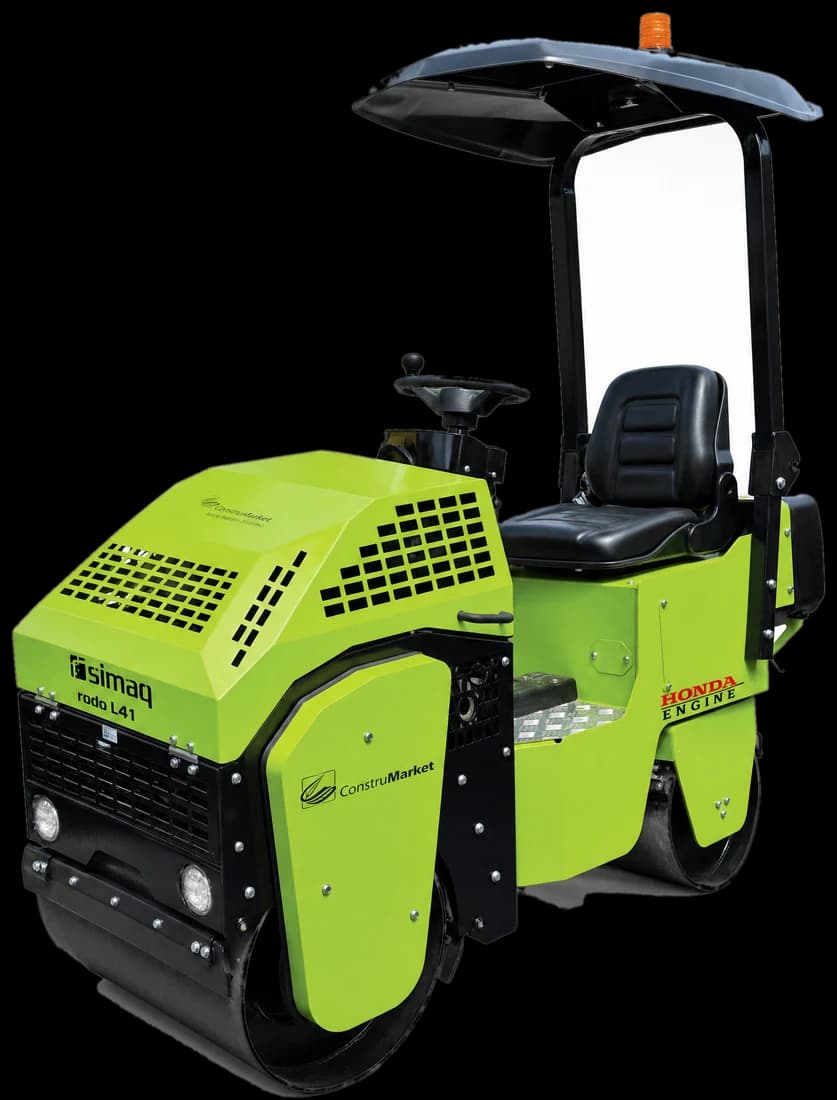
SQRD L41
Ride-on vibratory roller SQRD L41
Ride-on power for embankment and roadwork.
View details5-minute training
5 minA ride-on roller works to a rolling plan: edges first, low side to high side, a static pass to bed the mix, vibratory passes to densify and a final static pass to seal. SIMAQ has four: SQRD L41 (0.8 t, 700 mm drum), SQRD L51 (1.5 t, 900 mm), SQRD L61 (3 t, vibration on both drums) and SQRD L71 (4.2 t, Yanmar diesel engine). Never stop while vibrating on hot asphalt.
Also called: ride-on roller, road roller, vibratory roller
Ride-on roller: weight and vibration for roadways, embankments and asphalt. Output per pass over large areas.
Levels, leaks, drum and sprinkler condition. Seatbelt, horn and lights. Always mount facing in, three points of contact.
Set the pattern: edges first, then low side to high side. On a curve, the inside lane first.
A static breakdown pass, vibratory passes to densify while hot, and a final static pass to seal and erase marks.
~15 cm overlap between lanes. A steady walking speed: rushing leaves washboarding in the asphalt.
Never stop with vibration on over asphalt: it leaves a dip. Switch off, then brake.
Do this
Avoid this
Safety
Test yourself
Each practice: do it or avoid it? Tap your answer.
Smooth, gradual direction changes.
Don't stop while vibrating on the hot mat.
Don't descend slopes in neutral or coasting.
Seatbelt always on; the machine has ROPS for a reason.
Don't vibrate near structures or utilities without assessing.
Sprinkler open on asphalt, with the mix temperature under control.
Equipment in this training
Ride-on power for embankment and roadwork.
View details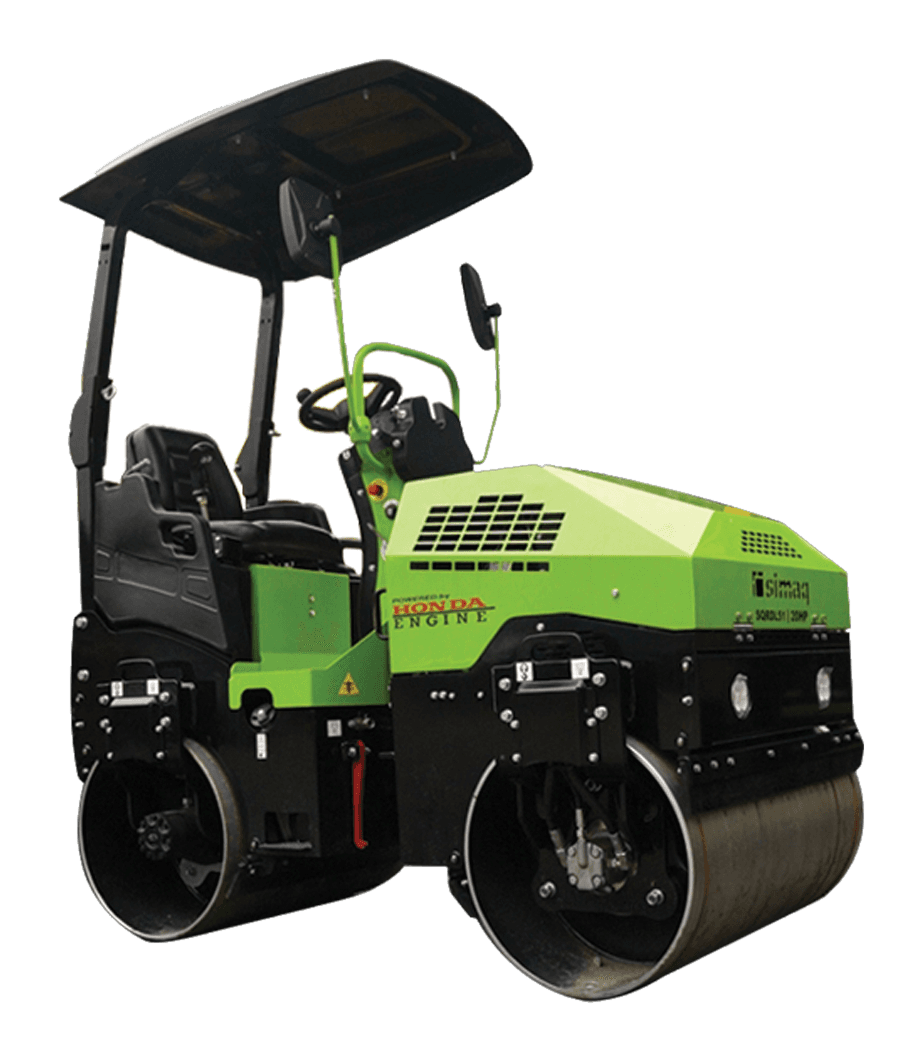
Ride-on power for embankment and roadwork.
View details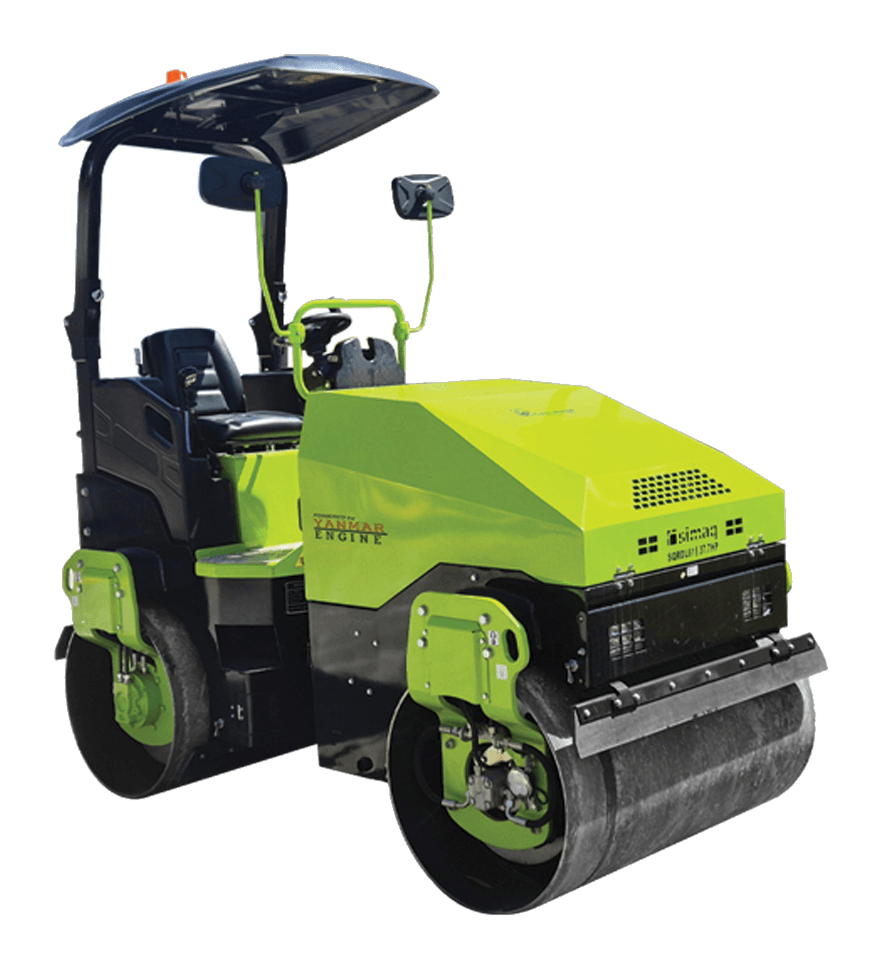
Ride-on power for embankment and roadwork.
View details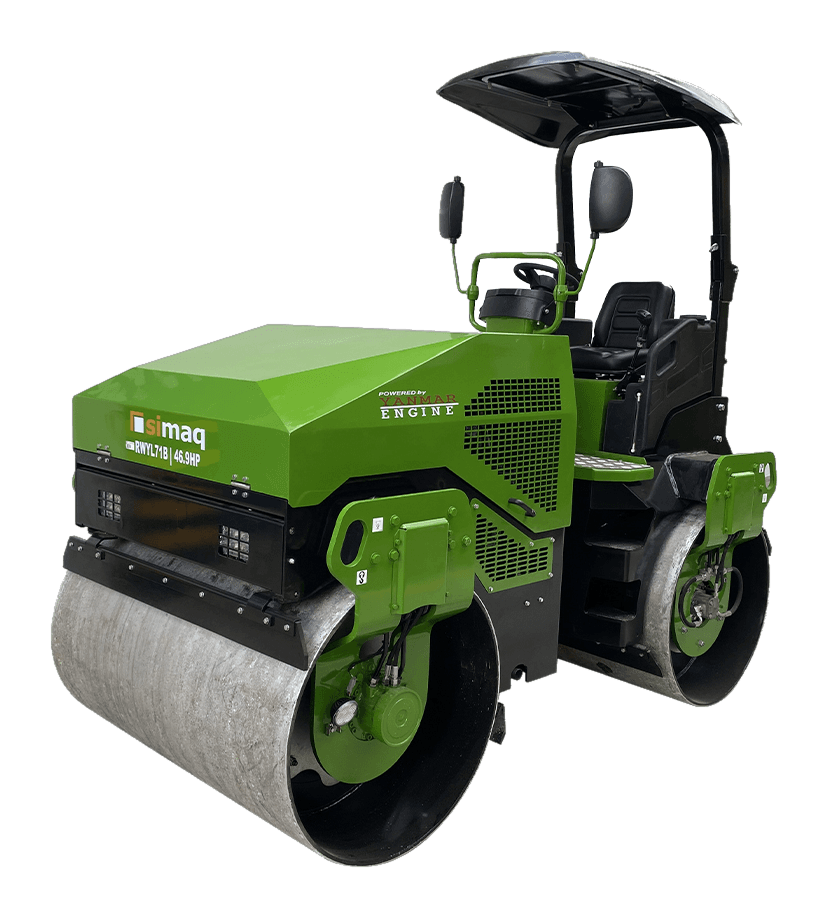
Ride-on power for embankment and roadwork.
View detailsShorts
Buying guides
From 0.78 to 4.2 tonnes: the seven SIMAQ rollers side by side, with weight, drum width, force and engine, and which roller compactor fits sidewalks, trenches, streets or roadwork.
Read Guide · 6 minGas for portable gear, diesel for big machines on long shifts and electric for indoor work. Which engine each SIMAQ machine runs and how to decide without getting it wrong.
Read Guide · 7 minLight towers, 3″ and 4″ dewatering pumps, cutting, demolition and compaction: the flood equipment worth having ready, how much water each pump moves and how to check it all before the season.
ReadFAQ
Walkways, small parking lots or patching → SQRD L41 or L51. Streets, embankments or an asphalt mat → SQRD L61 (3 t) or L71 (4.2 t). The guide on which roller to pick by tonnage has the detail.
One static pass to bed the mix, as many vibratory passes as needed while it's hot, and a final static pass to erase marks. The exact count is set by the density the project specifies.
Going too fast, braking hard or stopping while vibrating. Hold a steady speed and switch vibration off before braking or reversing.
It depends on the model: on the SQRD L51 the first oil-and-filter change is at 20 hours, then every 100; on the diesel SQRD L61 and L71, the first at 250 hours, then every 500. Check the level every 8–10 hours.
Yes. If the roller has ROPS (a rollover bar), the seatbelt is what keeps you inside that protection in a rollover.
Get a quote without leaving
Want to work it out with an advisor?
Tell us about the job and we'll build the package. A rep replies during business hours.