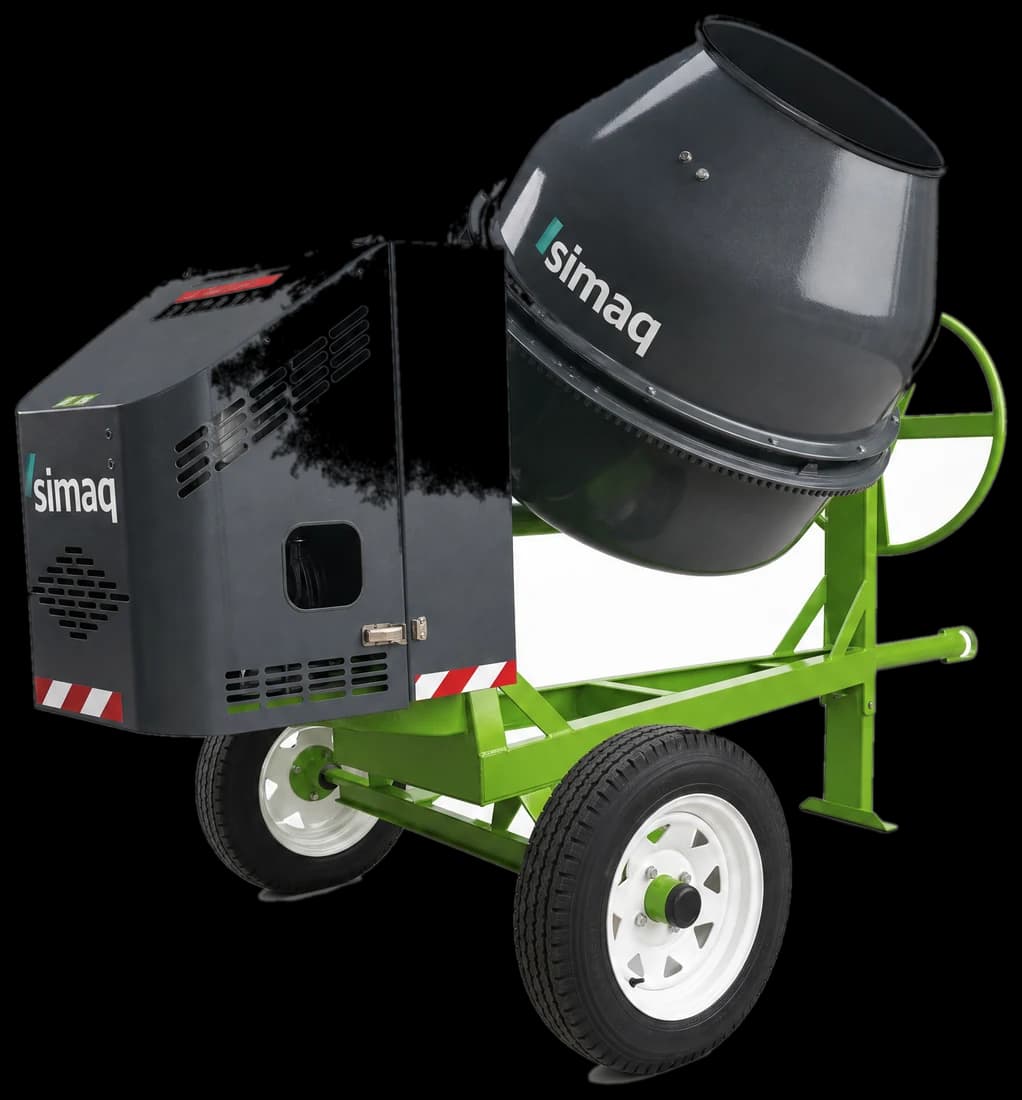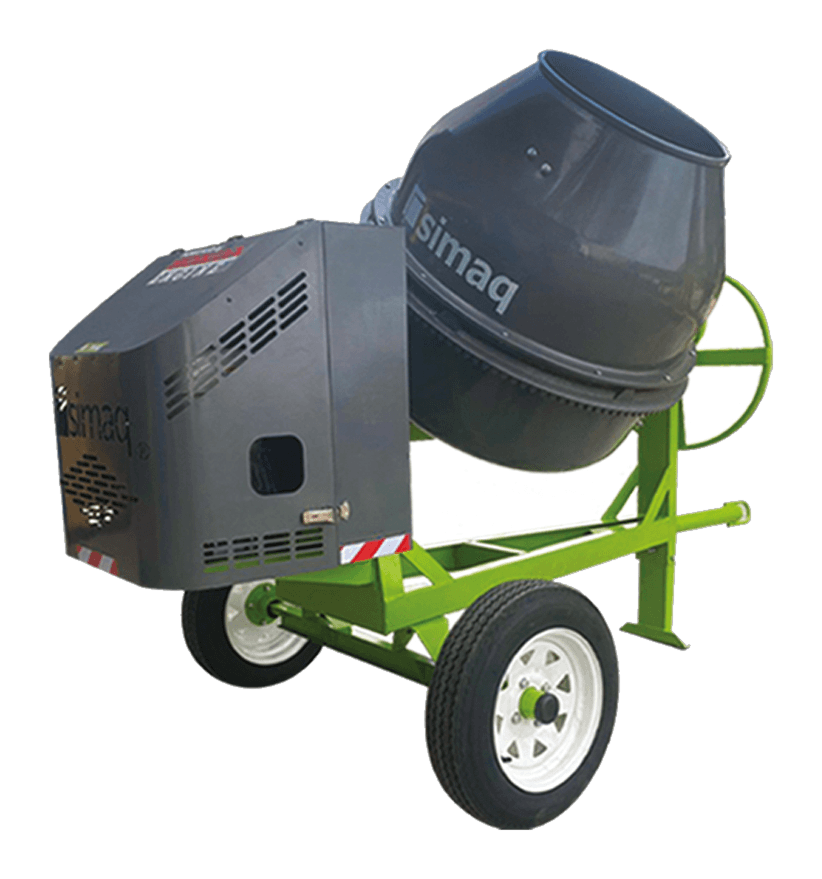
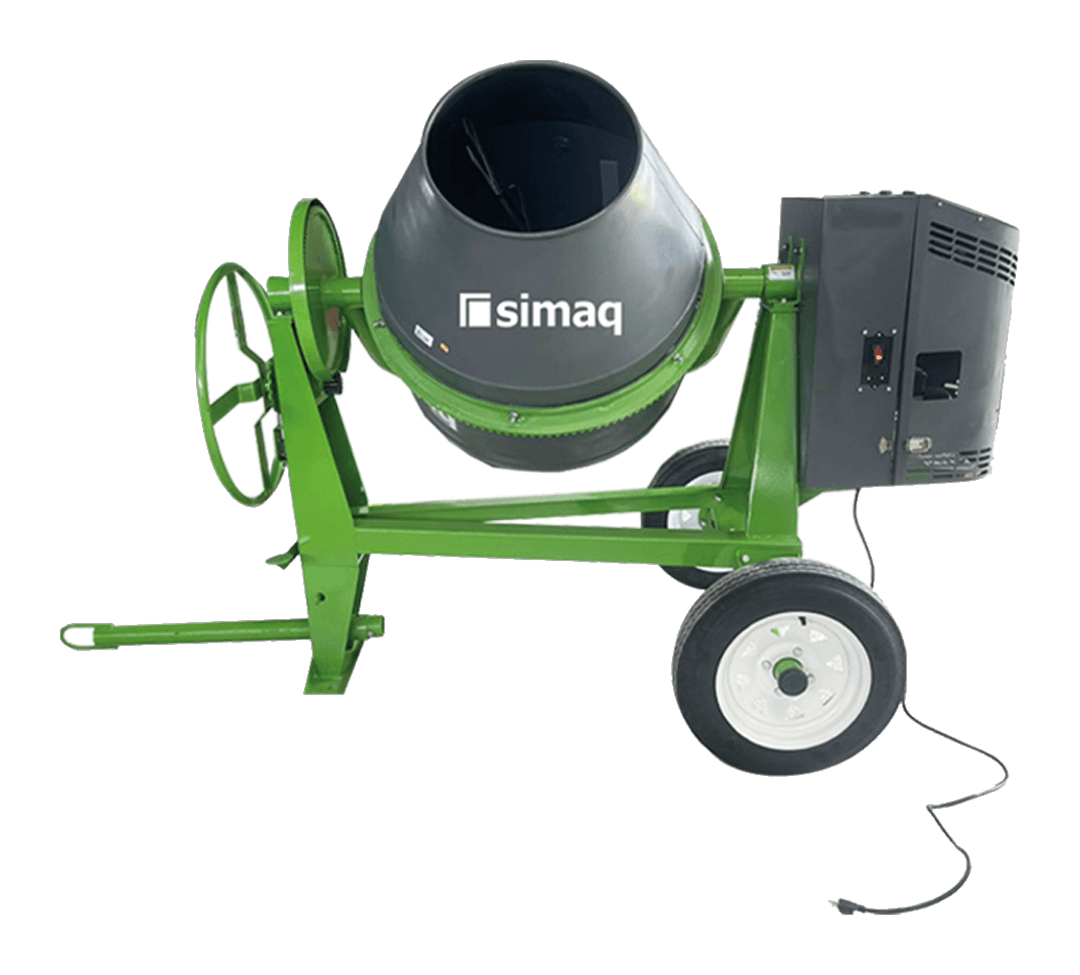
SQREVE-365LTS
Concrete mixer SQREVE-365LTS
Even mix, pour after pour.
View detailsSIMAQ School
How much of each material, in what order, and why vibrating makes the difference.
Cement, sand, gravel and water — per m³ and per mixer batch.
That's about ≈ 2 batches in the mixer.
Cement
3.7
bags (50 kg)
Sand
0.3 m³
≈ 4 wheelbarrows
Gravel
0.4 m³
≈ 6 wheelbarrows
Water
81 L
max — don't exceed
Approximate values (dry-volume method). For structural work, follow your engineer's mix design.
The fundamental
Cement needs about 40% of its weight in water to hydrate. Anything beyond that reacts with nothing: it evaporates and leaves a pore exactly where it sat. Those pores are the strength you lost — no amount of curing or waiting brings it back.
Your mix, per cubic metre:
Water/cement ratio
0.50
28-day strength
42 MPa
≈ 6,136 psi
Normal working range
Where most structural site concrete lives.
What if you add one more bucket “so it flows”?
18 litres cost you 13% of the strength, permanently. If the mix won't flow, the answer is a plasticiser or more paste (cement AND water, keeping the ratio) — never water alone.
Strength
Falls exponentially: each extra tenth in the ratio costs about a quarter of it.
Shrinkage
More water to evaporate means more contraction — and more drying cracks.
Permeability
Pores connect. Water gets in, reaches the steel and rusts it.
Bleeding
Excess water rises and carries fines with it: a milky, weak top surface.
Estimate for well-cured concrete with class 42.5 cement. Real strength comes from 28-day cylinders — this is for deciding BEFORE the pour, not certifying after.
Step by step
Start the mixer with part of the water and the gravel: it cleans the drum and keeps cement from sticking.
With the drum turning, add cement and sand gradually so they blend evenly.
Add the rest of the water bit by bit. More water = easier, but LESS strength. Don't overdo it.
Until you get uniform color and texture, with no lumps or dry cement balls.
Aim for a workable but not watery mix. Pour within 30–45 minutes and vibrate as you pour.
Demo
Flip the switch and see the difference in the pour.
Vibrating drives out the air trapped in the pour. Without it, you get honeycombs that weaken the structure and look bad. With the vibrator, the concrete consolidates dense, even and at its true strength.
What you vibrate with

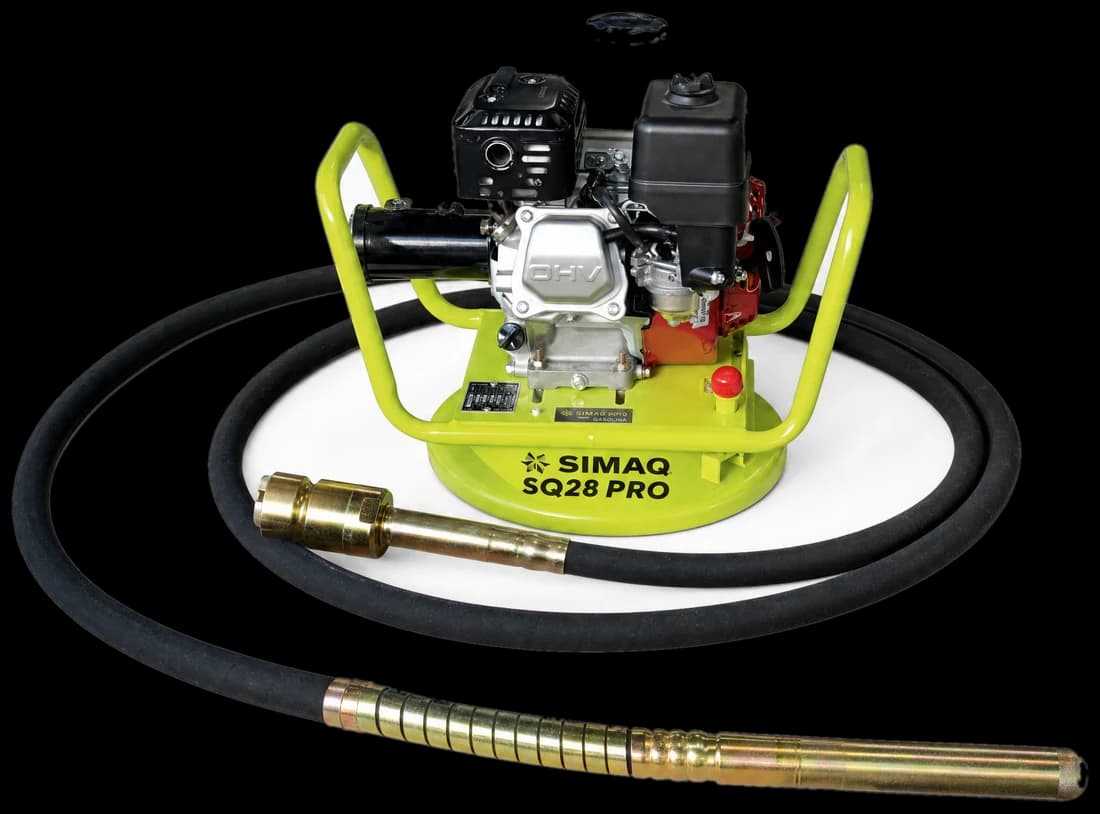
Drives out air for dense, void-free pours.
View details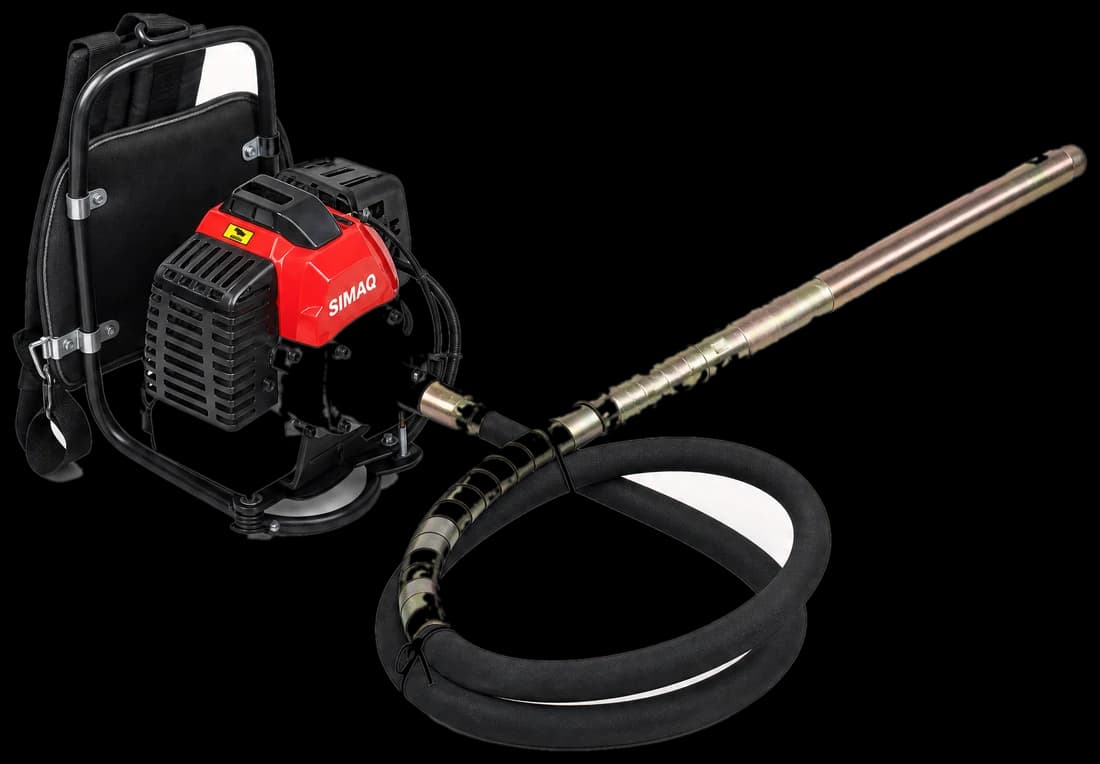
Drives out air for dense, void-free pours.
View details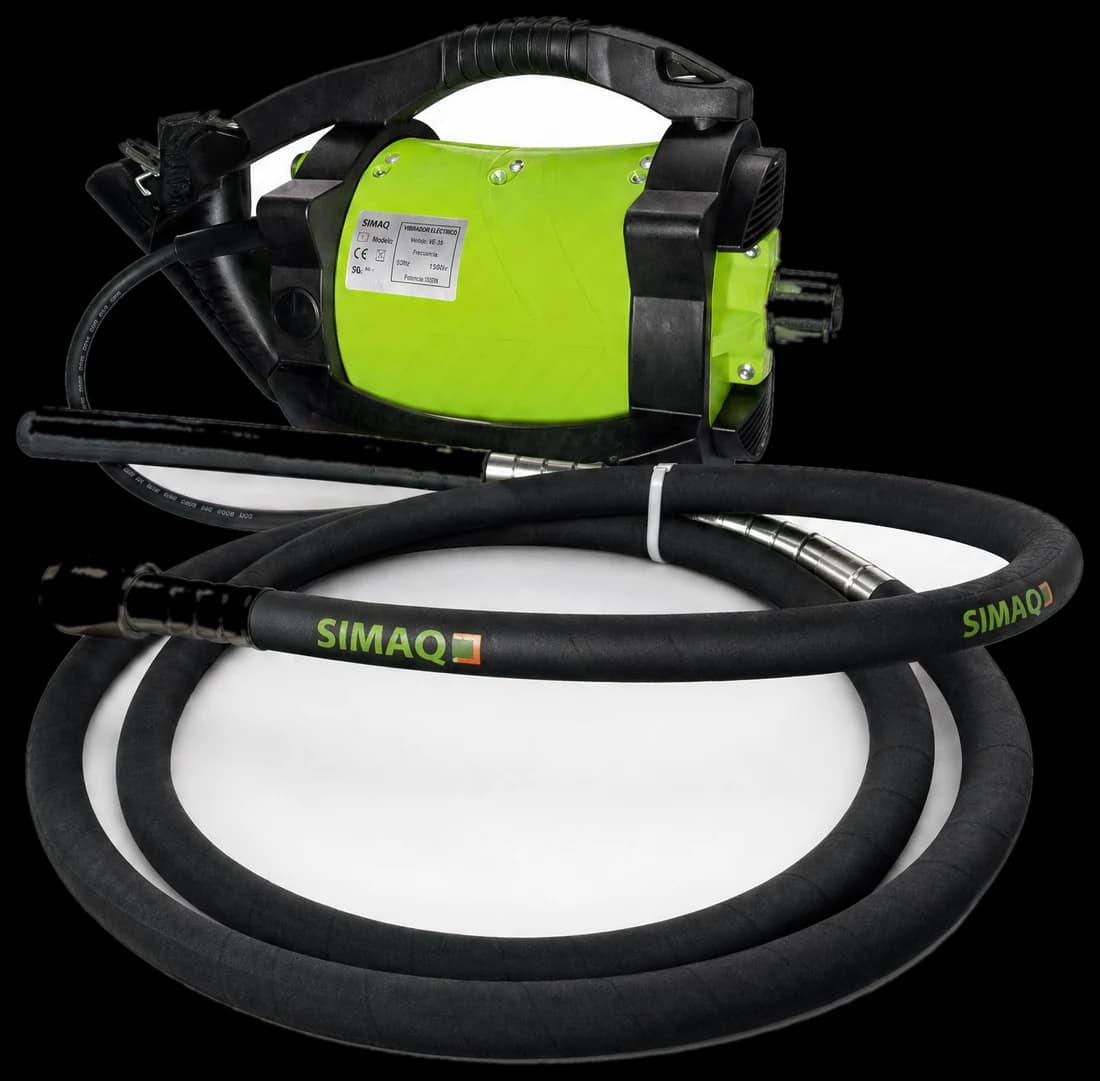
Drives out air for dense, void-free pours.
View details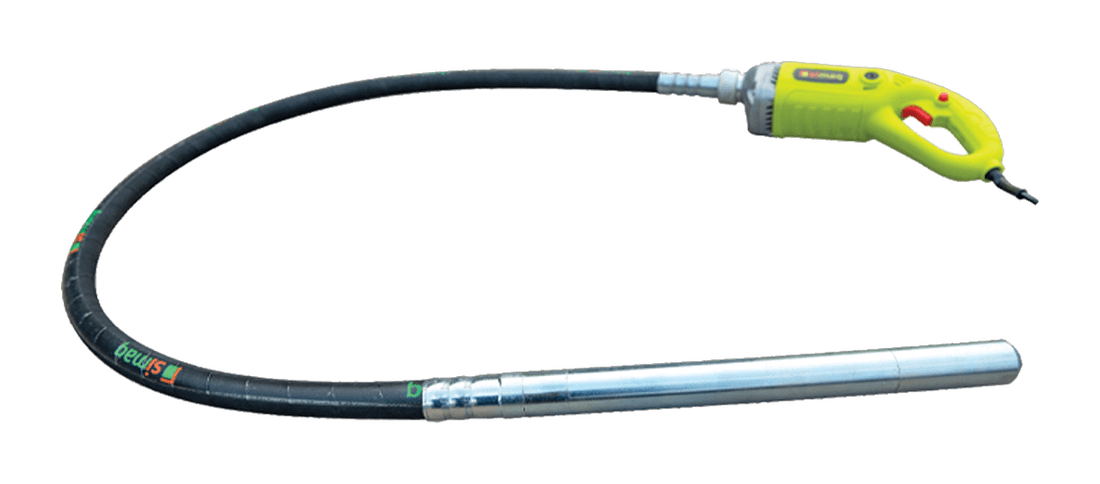
Handheld electric vibrator with flexible shaft, for columns and small pours.
View detailsTell us about the job and we'll build the package. Same-day reply.