

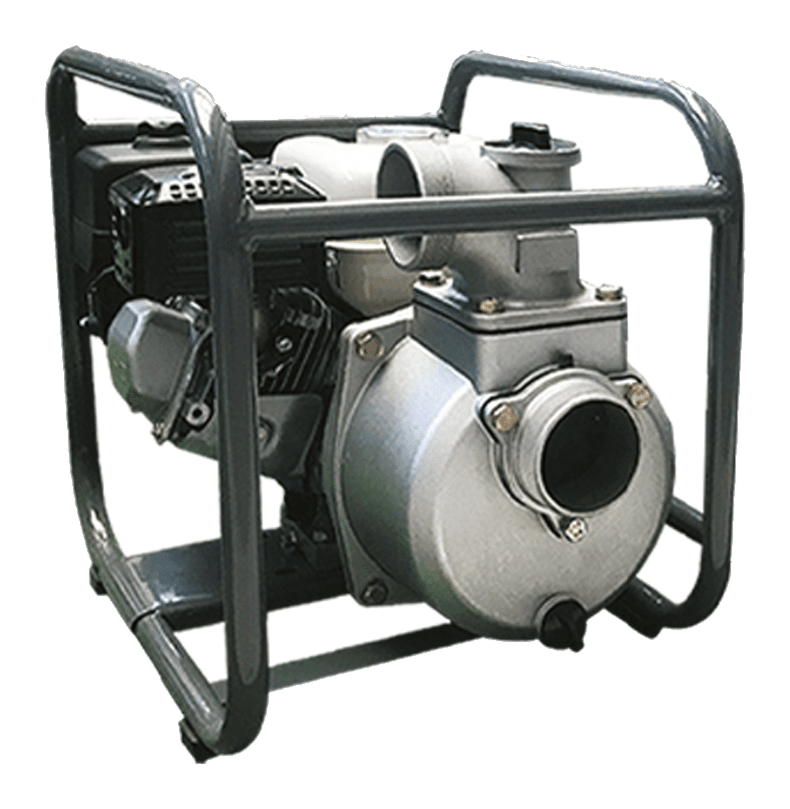
SQWP30 PRO
Water pump SQWP30 PRO
Gets water off the site, fast.
View detailsSIMAQ School · Calculator
The pump that “won't pull” is almost never broken. It's fighting a total head nobody calculated.
01
A pump is rated by the total head it can overcome: the lift from water to pump, the rise from pump to outlet, and what friction eats along the way. Nameplate flow only happens when that sum is zero.
02
No pump “pulls” water: the atmosphere pushes it. At sea level that pressure holds a column of about 10 m, and in practice friction leaves you 7 or 8. Above that no surface pump works — you move it down.
03
Friction loss falls with the fourth power of diameter. Going from 2″ to 3″ cuts it about sevenfold. That's why a big pump on narrow hose beats less than a small one on the right hose — and hose is cheaper than pumps.
04
Choke the suction — narrow hose, clogged strainer, too much lift — and pressure drops so low the water boils cold. The bubbles collapse against the impeller and pit it. That rattling sound isn't wear, it's an install error.
Move the four variables of your job and the calculation tells you which SIMAQ pump holds up, with how much margin, and what to fix if it falls short.
SQWP30 PRO
Enough3″ · 30 m³/h · max head 13 m
SQWP40 PRO
Enough4″ · 40 m³/h · max head 16 m
The SQWP30 PRO works with 2.2 m of margin.
Losses use Hazen-Williams (C = 120, sound site hose) at each pump's rated flow. Old hose, extra couplings or tight bends make it worse — which is why margin matters.
Narrow suction hose
Whatever was lying around. The number-one cause of cavitation and of pumps returned “faulty”.
Strainer resting in the mud
It sucks solids, clogs, and starves the suction. Suspend it, don't drop it.
Starting without priming
The casing must be full of water. Running dry burns the mechanical seal in minutes.
Long runs out of habit
Every metre of hose is head the pump must beat. A shorter route outperforms a bigger pump.
Get a quote without leaving
Want to work it out with an advisor?
Topic: Water pumps
Tell us about the job and we'll build the package. Same-day reply.
