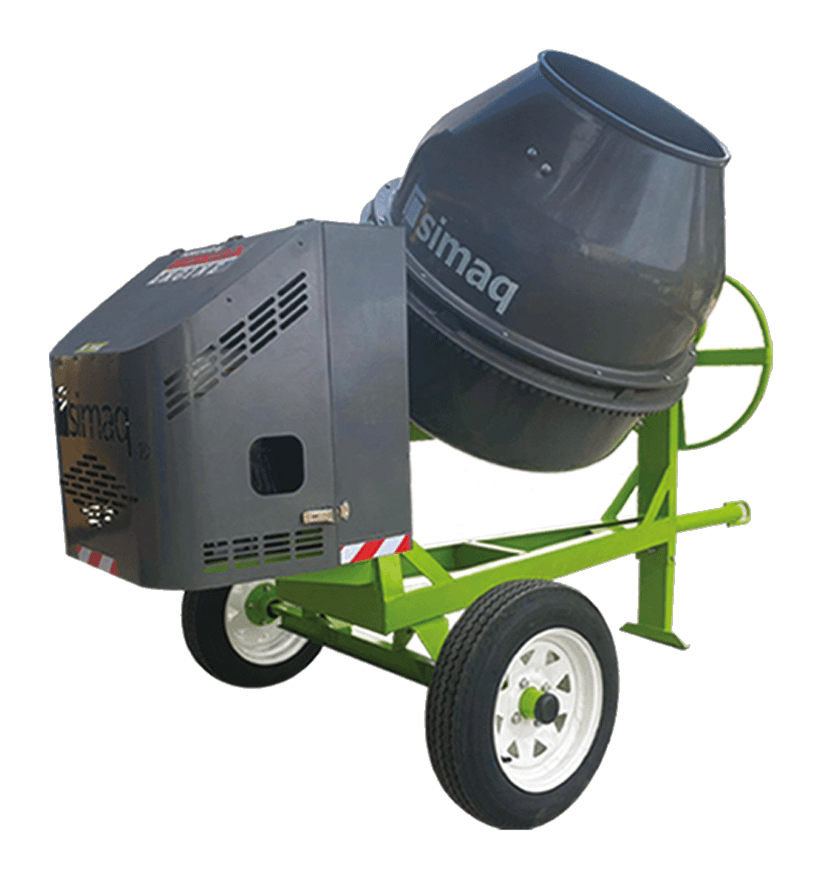

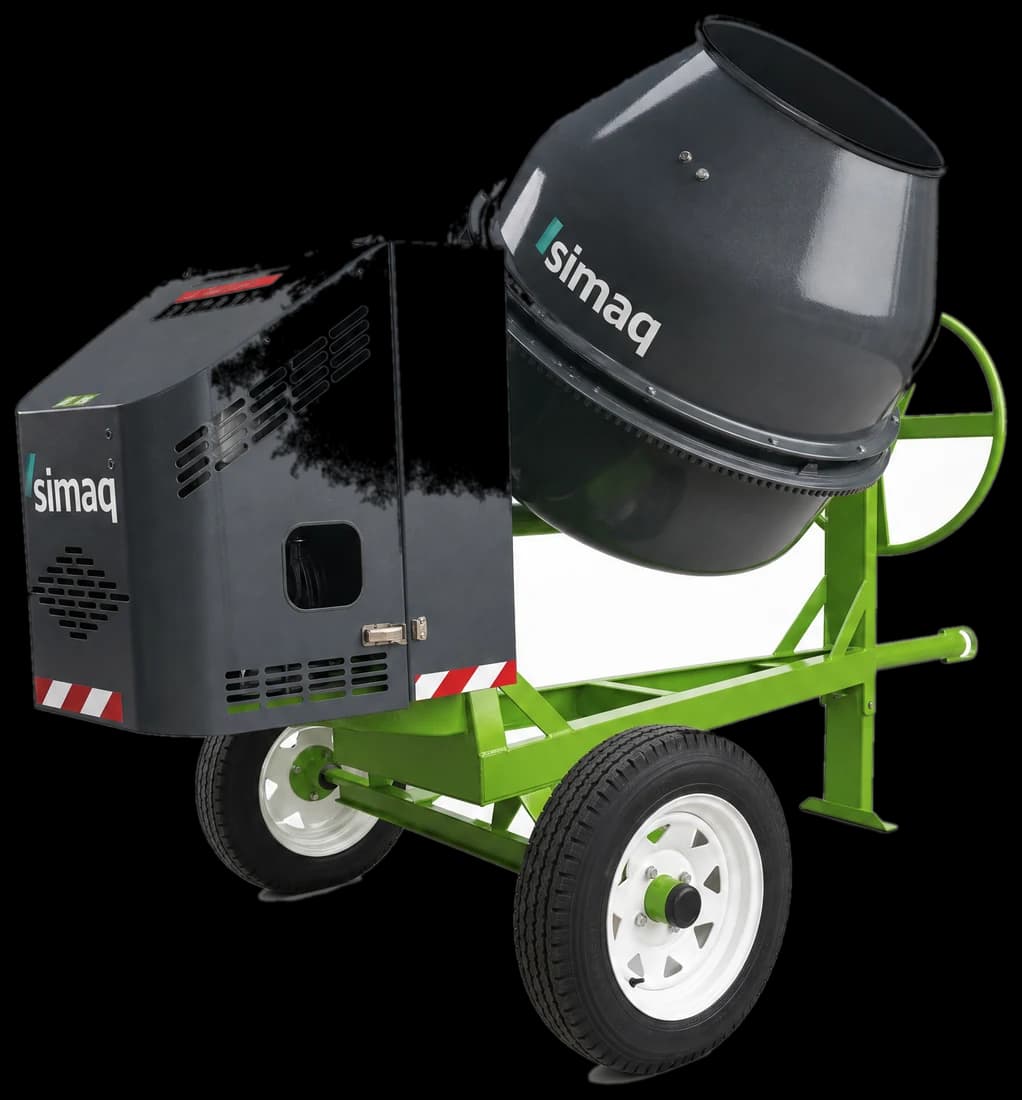
SQREVG365LTS
Concrete mixer SQREVG365LTS
Even mix, pour after pour.
View detailsSolution by job
To mix concrete on site, load the mixer in order, measure the water and mix 2–3 minutes after the last material goes in. A 1.5-bag (365 L) mixer like the SQREVG-365LTS mixes a full batch each turn; how much concrete you get depends on your mix. The 2-bag SQREVG-550LTS (550 L, Honda GX390) is for big pours with a full crew.
Also called: concrete mixer, cement mixer
Field rules
Size the batch: bags per batch ÷ bags per m³ of your mix = m³ per batch (in 1:2:3, 1.5 bags ≈ 0.2 m³). Pour volume ÷ yield = batches.
Measure the water, don't eyeball it: excess water is the #1 cause of weak concrete.
Load in order: part of the water → gravel → cement → sand → rest of the water. Mix 2–3 minutes after the last material goes in.
Working indoors or near neighbors → electric mixer. No power on site → gasoline.
The machines for this job
Does the job call for the full package?
Send all 3 machines to the quote builder at once — adjust quantities and drop what you don't need.
SIMAQ tool
Pour volume → bags, water and mixer cycles.
That's about ≈ 2 batches in the mixer.
Cement
3.7
bags (50 kg)
Sand
0.3 m³
≈ 4 wheelbarrows
Gravel
0.4 m³
≈ 6 wheelbarrows
Water
81 L
max — don't exceed
Approximate values (dry-volume method). For structural work, follow your engineer's mix design.
Before you buy, learn
Get a quote without leaving
Want to work it out with an advisor?
Job: Mix concrete on site
FAQ
For houses, extensions, small slabs and columns, the best fit is a 1.5-bag (365 L) mixer: a full mix per batch, easy to move around the site, and a small crew can keep it loaded. Pick the electric one (SQREVE-365LTS) if you have power on site and want less noise, or the gasoline one (SQREVG-365LTS, Honda GX160) if there's no grid. Move up to the 2-bag (SQREVG-550LTS, 550 L, Honda GX390) only if you have the crew and material to feed it without pauses: a big mixer you can't feed runs half-empty and doesn't make you any faster. SIMAQ mixers carry a 6-month or 500-hour warranty.
It depends on the mix your design calls for, not on the machine. The mixer's capacity only tells you how much volume fits per turn. Work out the cement, sand, gravel and water proportions with the calculator on this page or in the guide at simaq.pro/en/aprende/mezcla-de-concreto.
With the drum turning, add part of the water first, then the gravel, cement, sand and the rest of the water. Mix 2–3 minutes until color and texture are even. Empty it fully before loading the next batch.
Divide the pour volume by what each batch yields, and that depends on your mix: a 1:2:3 mix uses about 7.4 bags of 50 kg per m³, so a 1.5-bag batch yields about 0.2 m³ and 1 m³ takes about 5 batches. Size your case with the calculator on this page.
The most common mistake is eyeballing the water so the mix flows more easily. Extra water lowers the concrete's strength. Measure the water per batch and don't change it halfway through the pour.
Tell us about the job and we'll build the package. Same-day reply.