Case study · 4 min
Case: industrial slab with no honeycomb and a mirror finish
By the SIMAQ technical team · Grupo ConstruMarket ·
Short answer
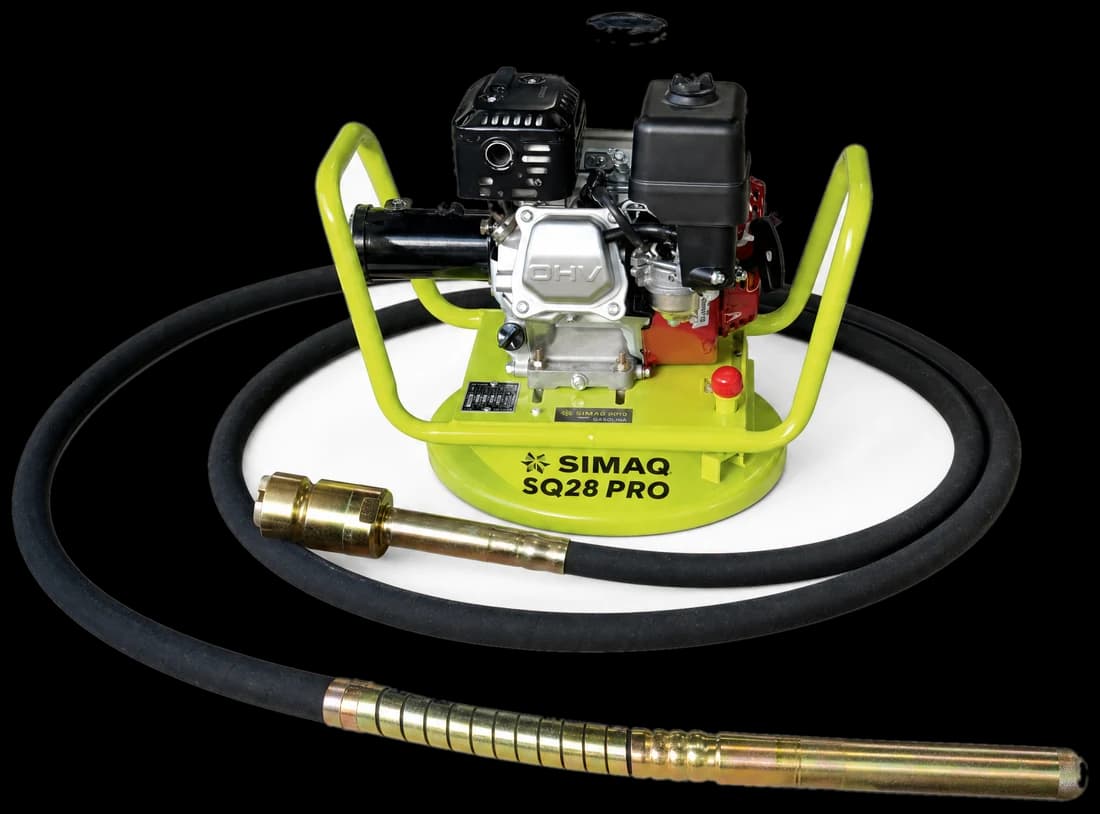
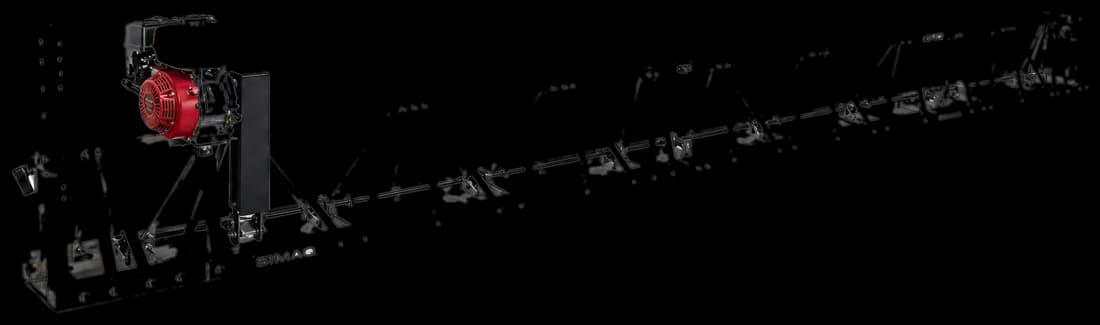
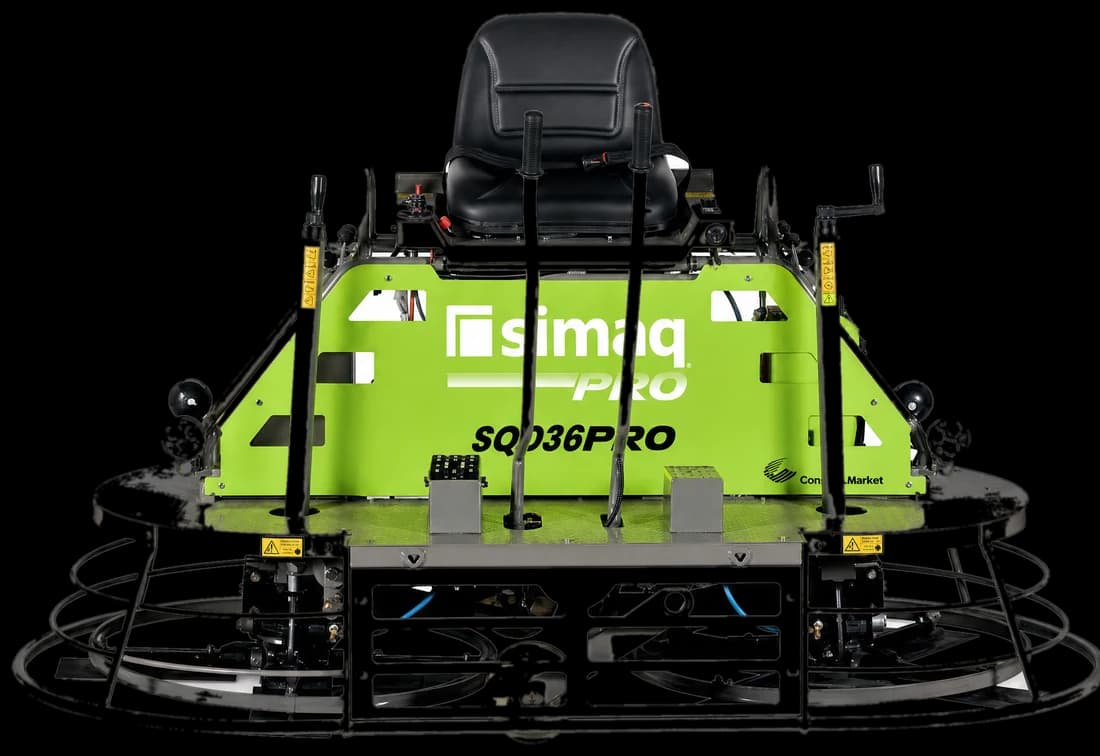
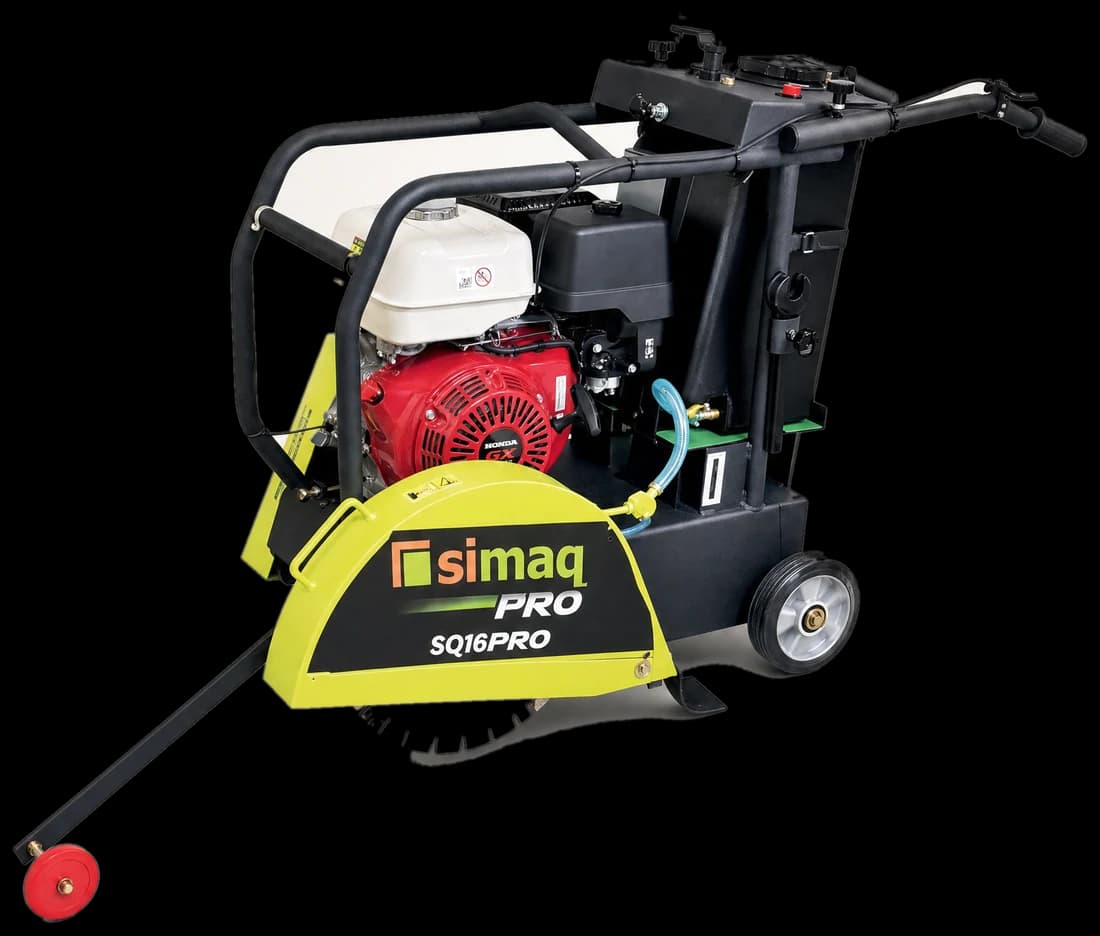
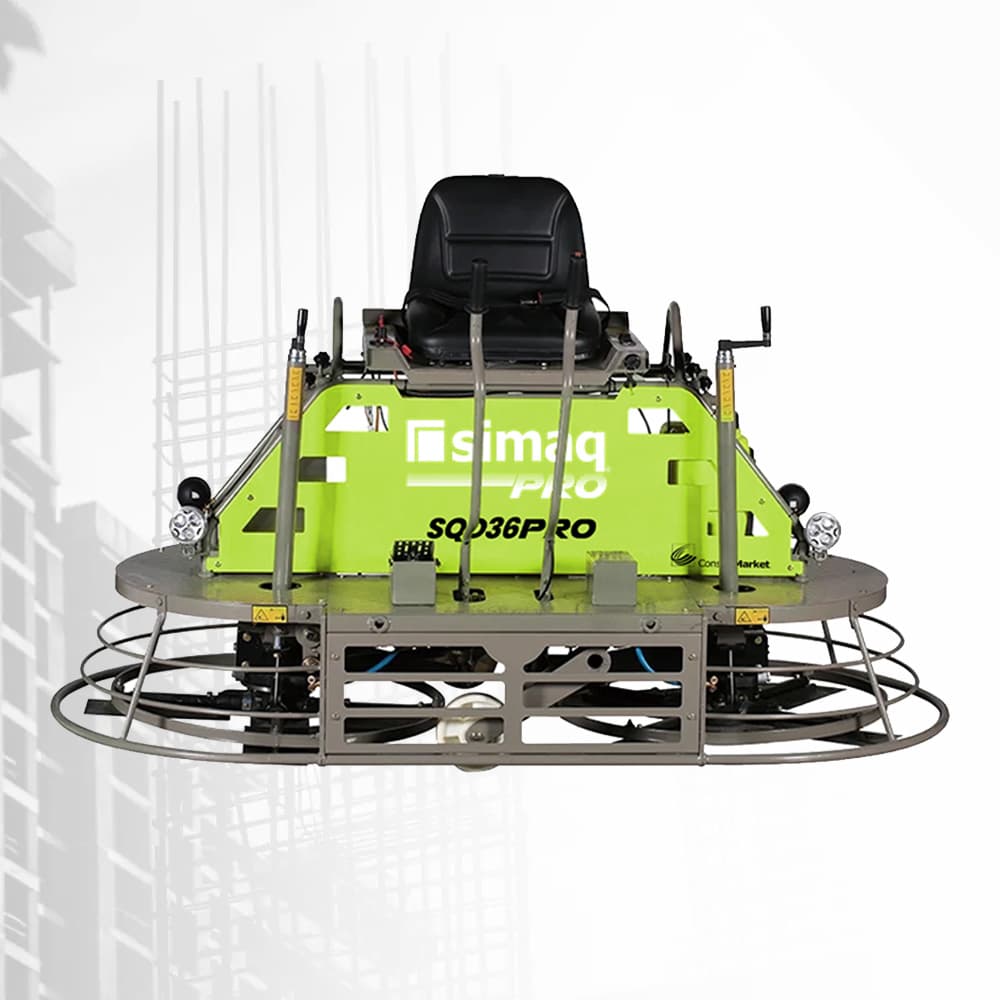
For a large, flat slab with no honeycombing, the sequence is vibrate → screed → trowel → cut joints: the SQ28 PRO vibrator to consolidate, the SQRVA6M PRO vibrating screed (6 m, layers up to 200 mm) to level, the SQ36DOUBLE PRO ride-on double trowel to finish and the SQ16 PRO saw for the control joints. This is an illustrative application case: it shows the approach, not measured results from a customer.
The challenge
An industrial warehouse needed a flat slab for forklift traffic, poured in a single day. A large surface, a short window and a density requirement (no honeycombing) to take rolling loads. Under those conditions, headcount doesn't solve it: what matters is having the right machine for each step, ready before the concrete arrives.
The SIMAQ solution
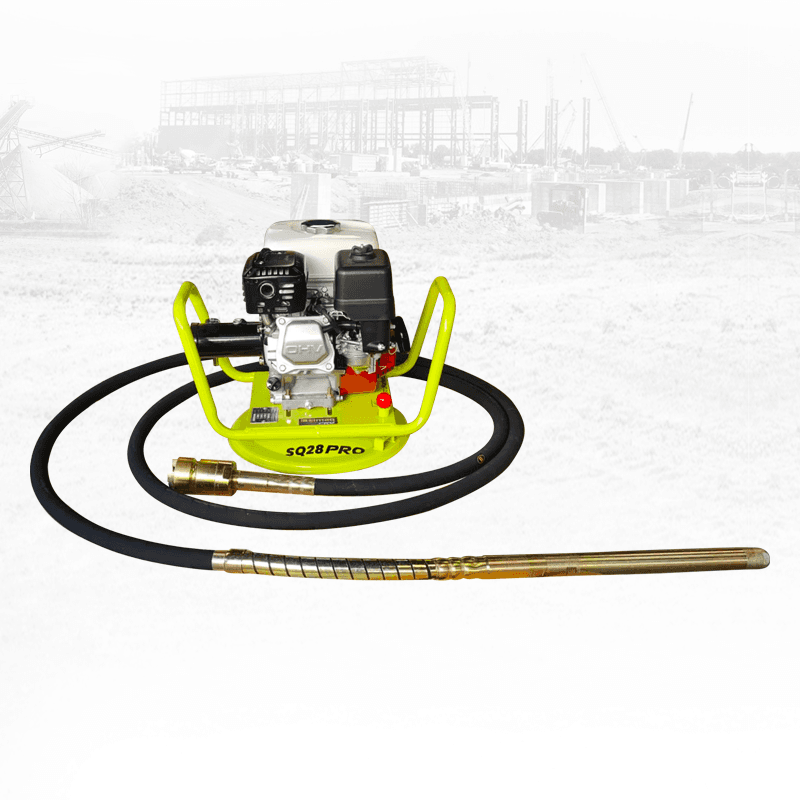
- Consolidation: SQ28 PRO vibrator (Honda GX160, 38 mm head) across the pour, with a second vibrator as backup.
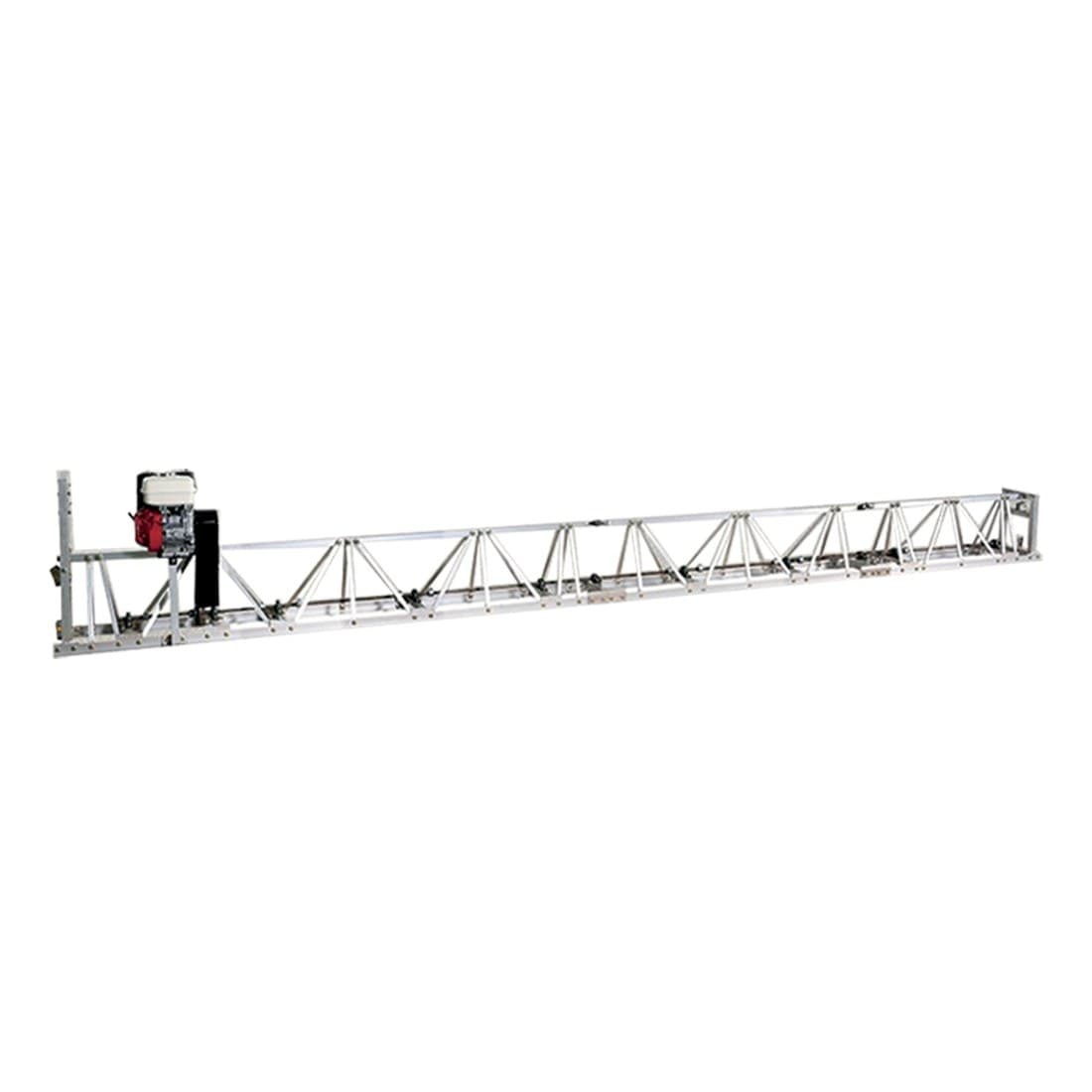
- Leveling: 6 m SQRVA6M PRO vibrating screed (Honda GX270), which levels and vibrates the surface in one pass.
- Finishing: SQ36DOUBLE PRO ride-on double trowel (Honda GX690, 8 blades of 360 × 195 mm) to cover area fast.
- Joints: SQ16 PRO saw with wet cutting, at ¼ of the thickness, as soon as the slab bears the machine.
The sequence over time
The order matters as much as the machines. You vibrate while the concrete is placed; the screed follows behind; the trowel goes in when the slab holds a footstep with a 3 to 5 mm print; and the joints are cut in the early window, before the slab cracks on its own.
The result
A dense, flat slab finished within the day, with shrinkage cracks guided by the joints. (Illustrative application case.)
Common mistakes
- Screeding without vibrating first: the surface is flat and the inside full of air.
- Going in with the trowel too early: it sinks the surface.
- Cutting joints the next day: the crack has already appeared.
Takeaway
Big slab = vibrate → screed → trowel → cut joints, with the right machine at each step and ready before the pour. Request a quote here with the m² and deadline, and an advisor will contact you during business hours.
Keep going
Take it to the job site
Print the checklist to go over it on site, or send the guide to your crew.
Frequently asked
What equipment do you need to pour an industrial slab?
An immersion vibrator, a vibrating screed, a power trowel (ride-on double for large surfaces) and a joint saw.
Does the vibrating screed replace the vibrator?
No. The screed vibrates the surface; the immersion vibrator consolidates inside. On thick slabs you use both.
When do you run the power trowel?
When the slab holds your footstep with a print of about 3 to 5 mm. There's no fixed time: it depends on weather and the mix.
SIMAQ · Job site checklist
Case: industrial slab with no honeycomb and a mirror finish
For a large, flat slab with no honeycombing, the sequence is vibrate → screed → trowel → cut joints: the SQ28 PRO vibrator to consolidate, the SQRVA6M PRO vibrating screed (6 m, layers up to 200 mm) to level, the SQ36DOUBLE PRO ride-on double trowel to finish and the SQ16 PRO saw for the control joints. This is an illustrative application case: it shows the approach, not measured results from a customer.
The SIMAQ solution
- Consolidation: SQ28 PRO vibrator (Honda GX160, 38 mm head) across the pour, with a second vibrator as backup.
- Leveling: 6 m SQRVA6M PRO vibrating screed (Honda GX270), which levels and vibrates the surface in one pass.
- Finishing: SQ36DOUBLE PRO ride-on double trowel (Honda GX690, 8 blades of 360 × 195 mm) to cover area fast.
- Joints: SQ16 PRO saw with wet cutting, at ¼ of the thickness, as soon as the slab bears the machine.
Avoid
- Screeding without vibrating first: the surface is flat and the inside full of air.
- Going in with the trowel too early: it sinks the surface.
- Cutting joints the next day: the crack has already appeared.
Job site:
Date:
Supervisor:
Scan it for the full guide, with video and FAQ
https://simaq.pro/en/recursos/caso-losa-industrial-sin-fisuras