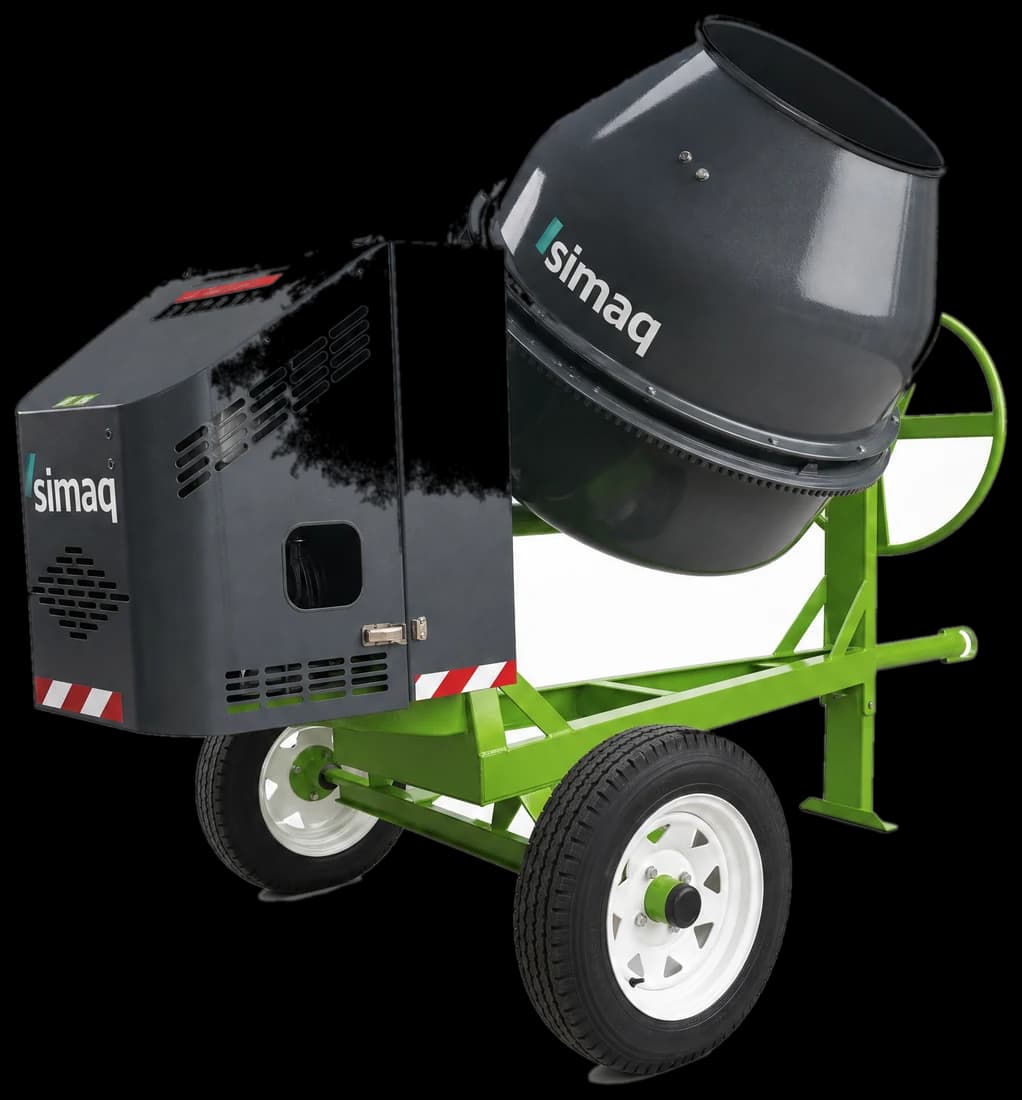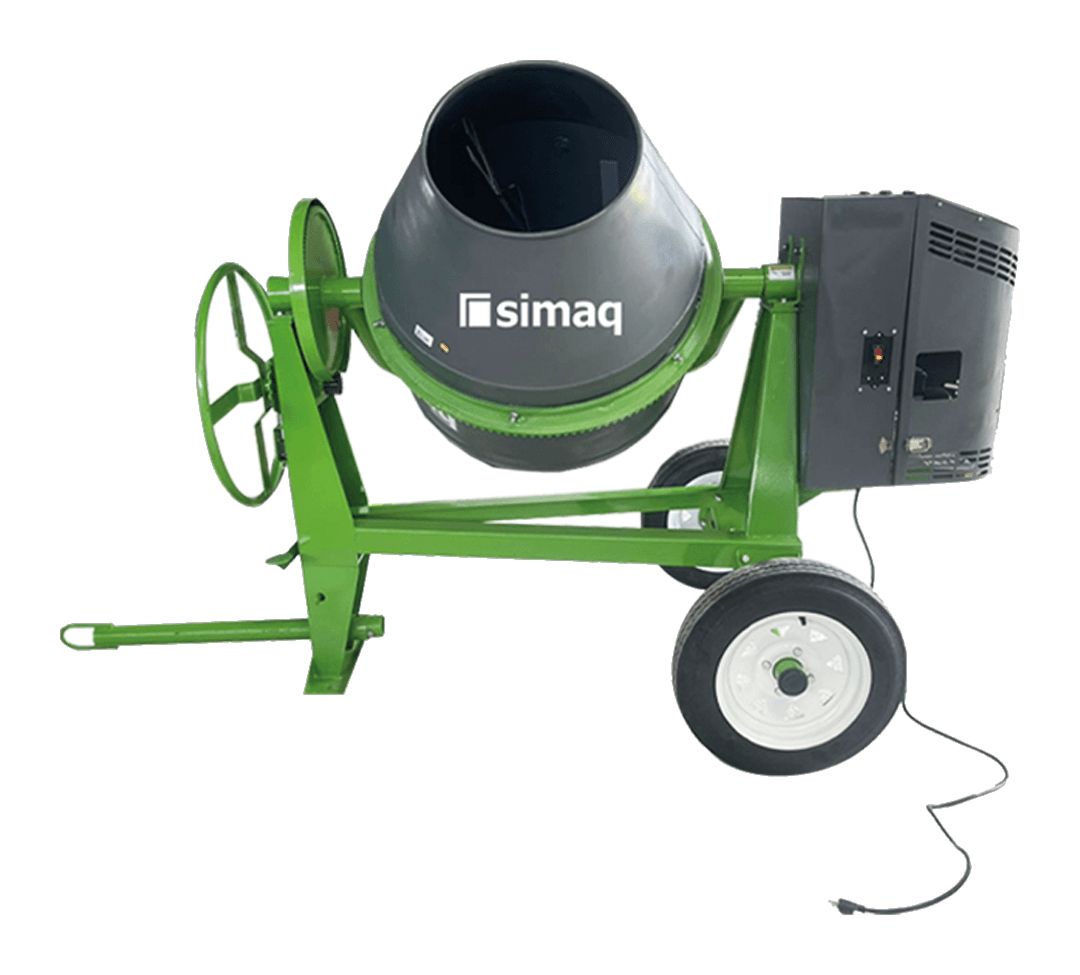
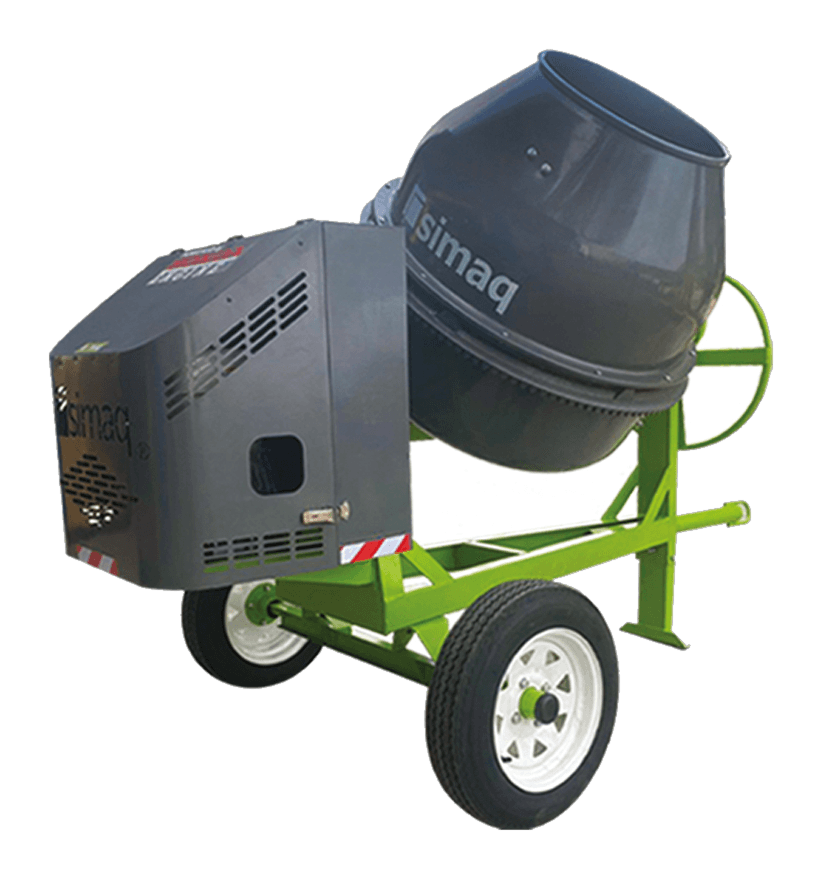
SQREVG550LTS
Concrete mixer SQREVG550LTS
Even mix, pour after pour.
View detailsFree tool · SIMAQ
Short answer
One cubic meter of 1 : 2 : 3 concrete takes about 9 bags of 42.5 kg (8 bags of 50 kg); a 1 : 2 : 4 mix, about 8 bags of 42.5 kg. Multiply length × width × thickness, add 5–10 % waste and round up. Below you calculate it with your dimensions and we tell you which SIMAQ mixer fits and in how many batches. It's a reference estimate: for slabs, beams and columns, your engineer confirms the mix.
SIMAQ · How many bags of cement do I need?
You'll need (reference estimate)
Concrete
1.2 m³
+5 % = 1.26 m³
Cement
11 bags
42.5 kg · exact 11
Sand
0.65 m³
loose
Gravel
0.98 m³
loose
Which SIMAQ mixer fits?
2 bags per batch · 550 L · gasoline
6 batches
last one with 1 bags
1.5 bags per batch · 365 L · electric
8 batches
last one with 0.5 bags
1.5 bags per batch · 365 L · gasoline
8 batches
last one with 0.5 bags
The electric one needs a power outlet on site.
Reference estimate. 1 : 2 : 3 ratio by volume, from general site practice; it is not a mix design and doesn't guarantee strength. For slabs, beams and columns confirm the mix with your engineer.
Every result is a reference estimate. It doesn't replace a professional's design or supervision.
It depends on the ratio. With the dry-volume method, per m³: 1 : 3 : 5: 6 (42.5 kg) / 5 (50 kg) · 1 : 2 : 4: 8 (42.5 kg) / 7 (50 kg) · 1 : 2 : 3: 9 (42.5 kg) / 8 (50 kg) · 1 : 1.5 : 2.5: 11 (42.5 kg) / 9 (50 kg). Add waste and round up. It's a reference estimate.
Because loose cement, sand and gravel take more volume than mixed concrete: fines fill the voids between coarse grains and air escapes. 1.54 is the general-practice factor (1.52 to 1.57 depending on the handbook).
The bag capacity says how many bags of cement go in per batch. With the 2-bag mixer you do fewer batches for the same pour. In the SIMAQ catalog: SQREVE-365LTS (1.5 bags), SQREVG365LTS (1.5 bags), SQREVG550LTS (2 bags). The calculator tells you how many batches each would take.
No. Volume ratios are general practice and real strength depends on water, aggregates and curing. For structural elements, your engineer defines the mix with a mix design.
Check the weight printed on the bag you'll buy: the calculator lets you pick 42.5 kg or 50 kg and changes the bag count.
Send us the result and an advisor contacts you during business hours.