Guide · 7 min
How do you choose a concrete mixer? Bags, litres, electric or gas
Also called: concrete mixer, cement mixer, drum mixer
By the SIMAQ technical team · Grupo ConstruMarket ·
Short answer
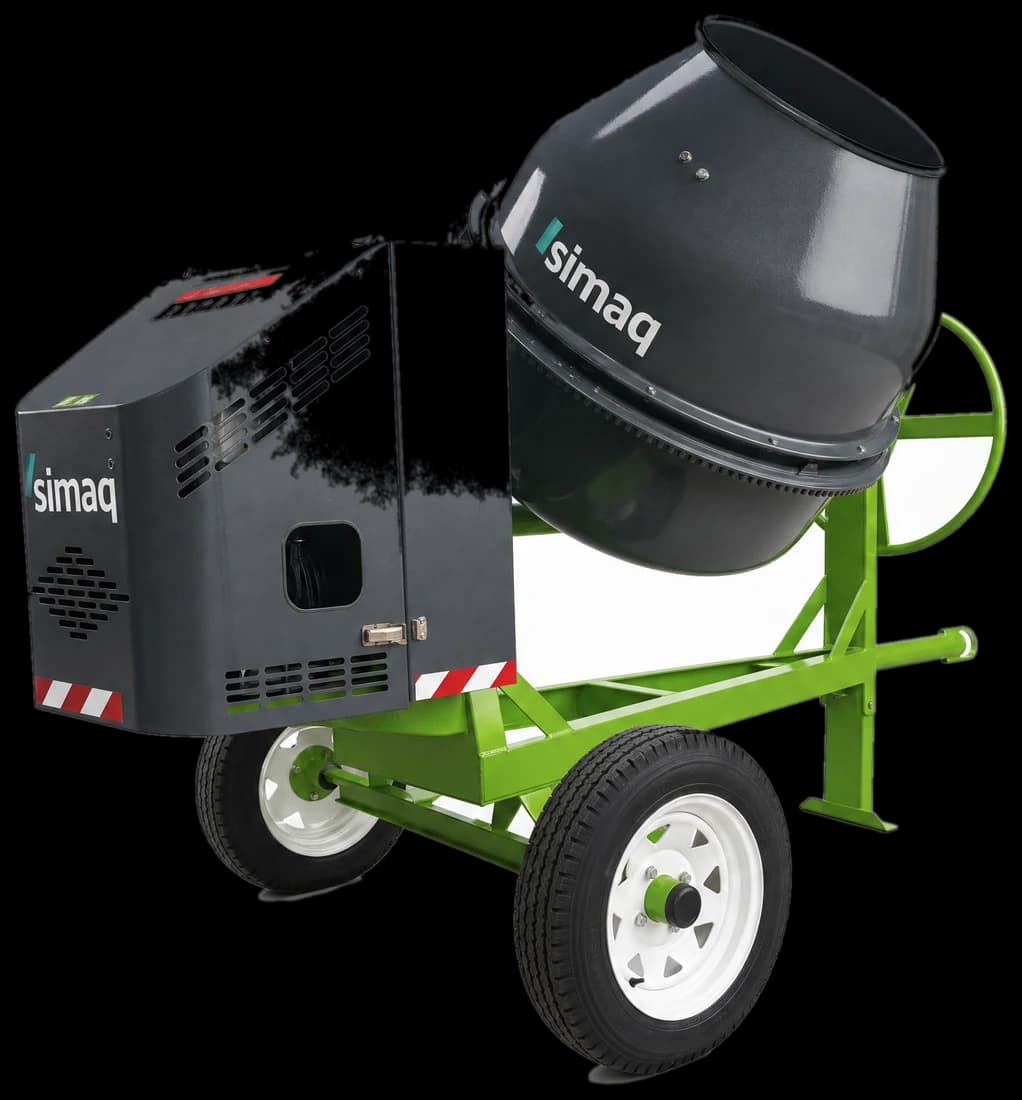
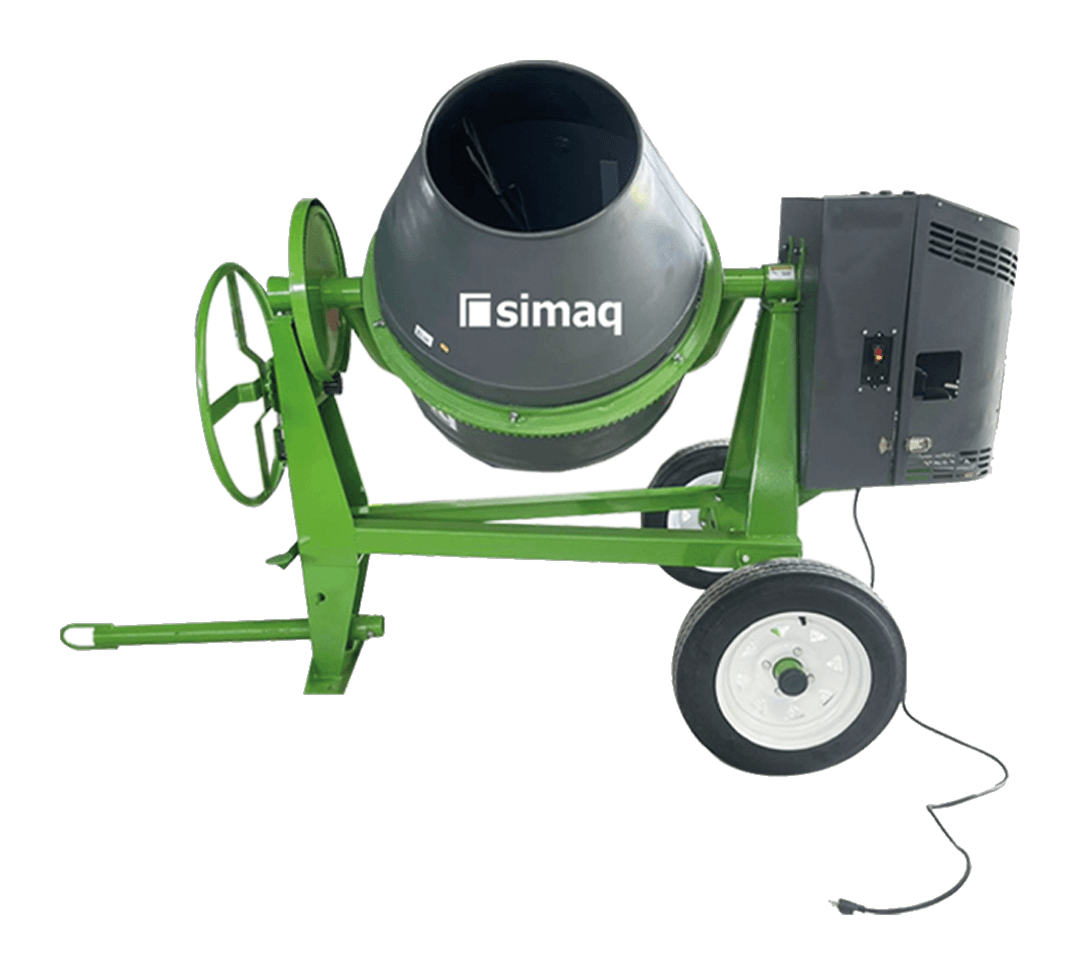
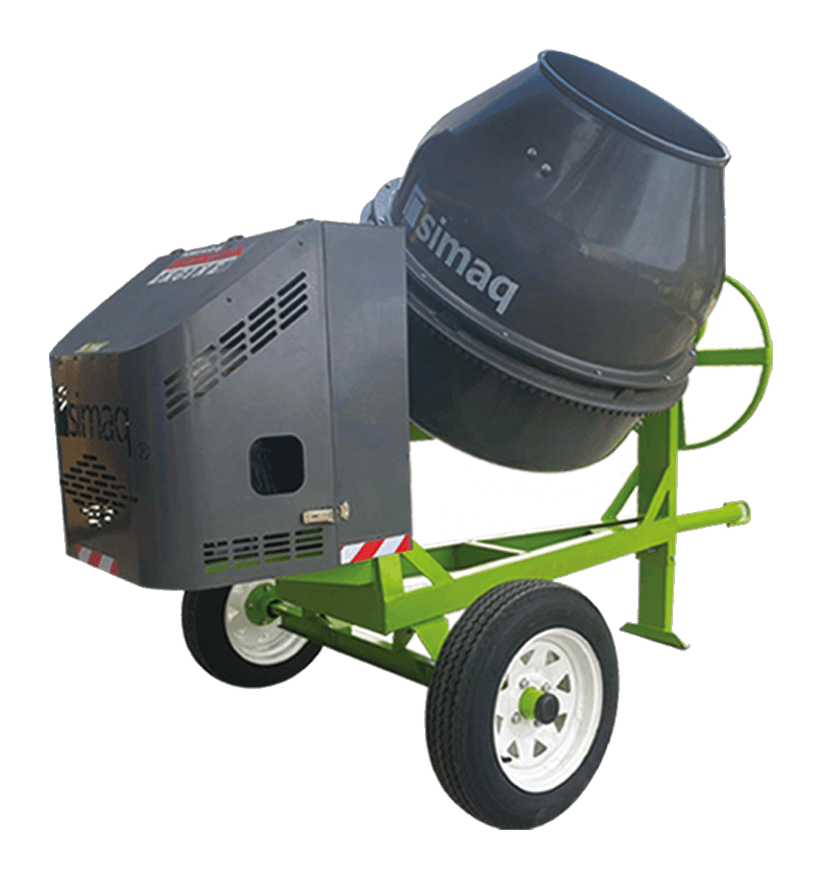
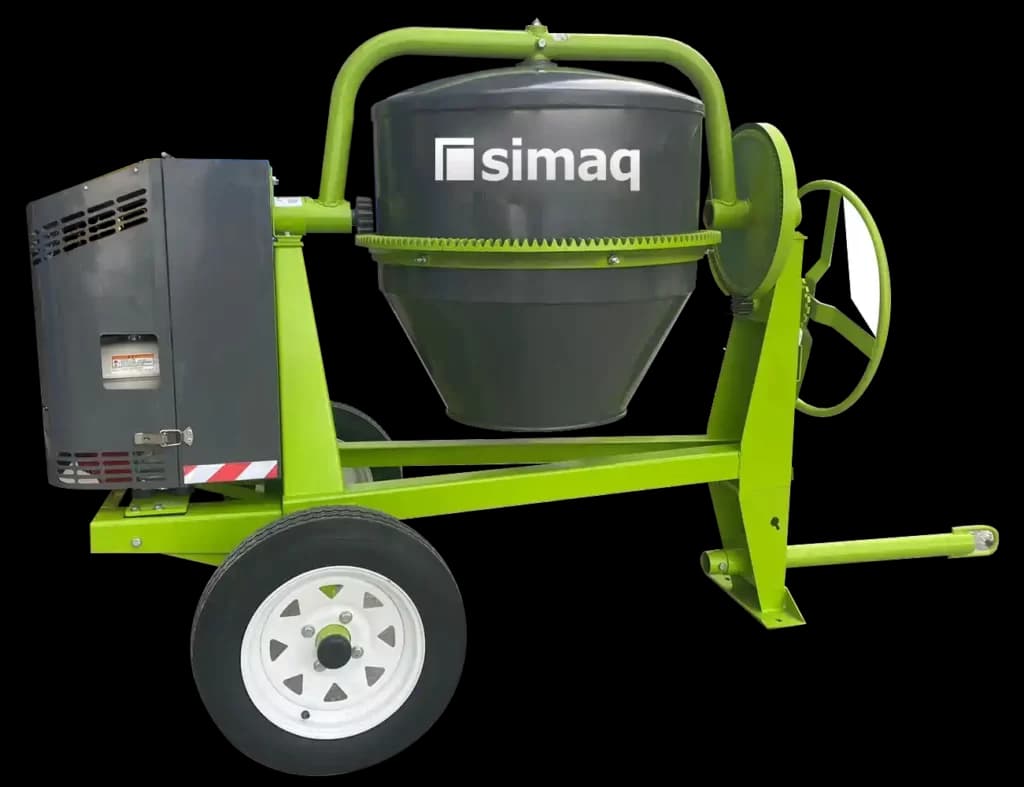
For houses, extensions, columns and small slabs, a 1.5-bag mixer (365 L drum) is the best fit. Pick the electric SQREVE-365LTS if you have steady power on site or work indoors, and the SQREVG-365LTS with a Honda GX160 if there's no grid. Move up to the 2-bag SQREVG-550LTS (550 L, Honda GX390) only if you have the crew and material to feed it without pauses.
1.5-bag drum
2-bag drum
per 1.5-bag batch in 1:2:3
Concrete mixer, cement mixer or drum: same machine
Every country calls it something different, but it does the same job: it mixes cement, sand, gravel and water in batches inside a turning drum. Its size is measured two ways: bags of cement per batch and litres of drum.
Watch the litres: the whole drum doesn't fill with mix. On the SIMAQ electric mixer the drum is 365 L and the maximum mixing capacity is 358 L. The number that tells you how much concrete you get per turn is the mix figure, not the drum figure.
First, do the maths on your pour
What each batch yields depends on your mix: bags per batch ÷ bags per m³. A 1:2:3 mix uses about 7.4 bags of 50 kg cement per m³ (SIMAQ School mix calculator), so a 1.5-bag batch yields about 0.2 m³. Divide your pour volume by that yield and you'll know how many batches you need.
Example: a 6 × 5 m slab, 10 cm thick, is 3 m³. 3 ÷ 0.2 = 15 batches. If your crew can load, mix for 2 to 3 minutes and dump those 15 batches within the day, the 1.5-bag mixer is enough. If the day runs short, first check whether you're short of people or hauling; only then think about a bigger mixer.
1.5 or 2 bags? If your job looks like this, pick this
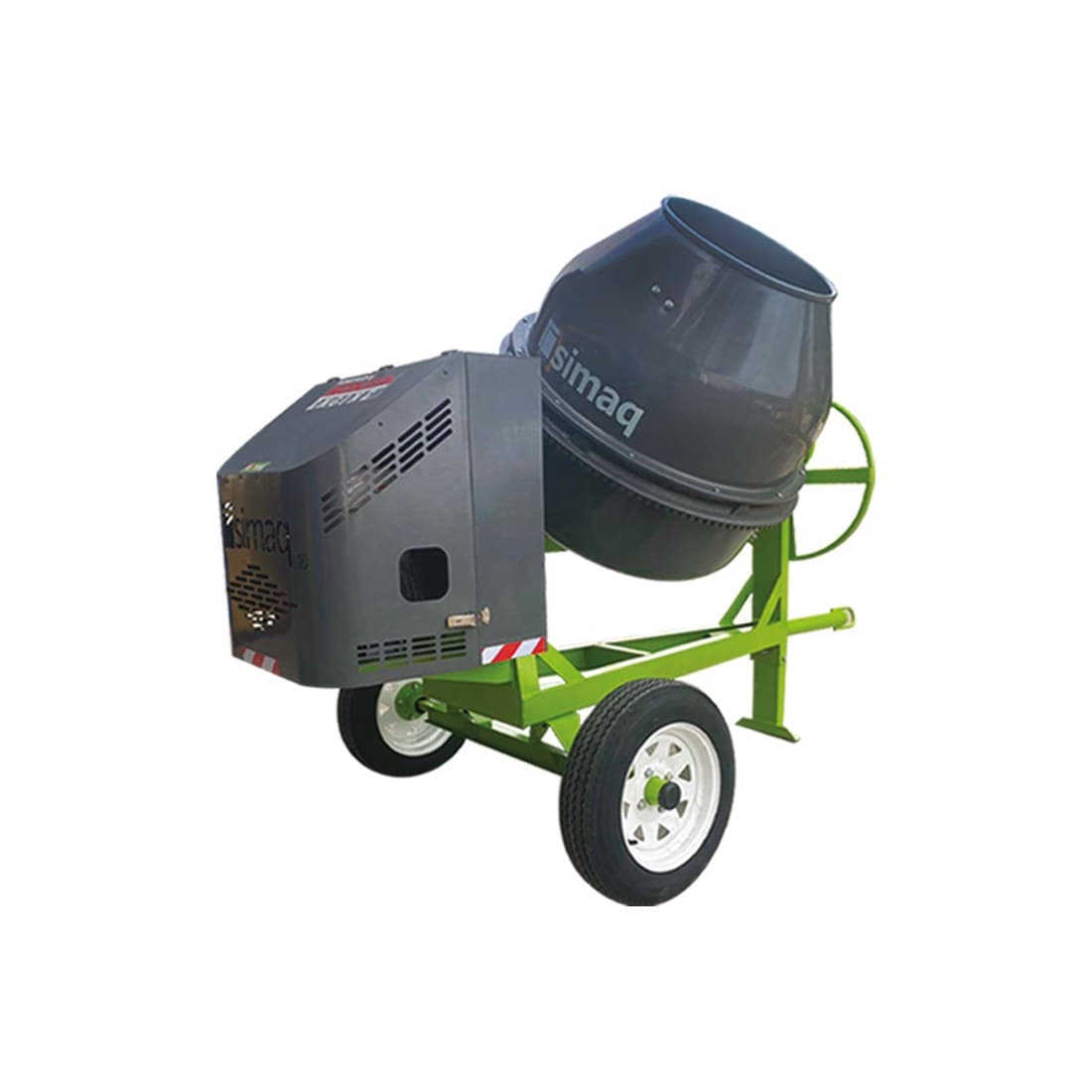
The 2-bag mixer weighs 242 kg and comes with a reinforced «V» chassis and a tow bar: it's built to stay on a big front. The 1.5-bag one is the one that moves around the site most.
| If your job is… | Pick | Why |
|---|---|---|
| House, extension, columns, stairs, small slabs | 1.5 bags (365 L) | A full mix per batch and a small crew keeps it loaded |
| Large, continuous pours with stockpiled material and a full crew | 2 bags (550 L, Honda GX390 13 HP) | More volume per turn if nobody leaves it waiting |
| Steady power, indoors or at night | Electric SQREVE-365LTS | Quiet, zero emissions, no fuel |
| No grid on site | Gas SQREVG-365LTS (Honda GX160) | Doesn't depend on power |
Electric or gas: decide by power supply, not horsepower
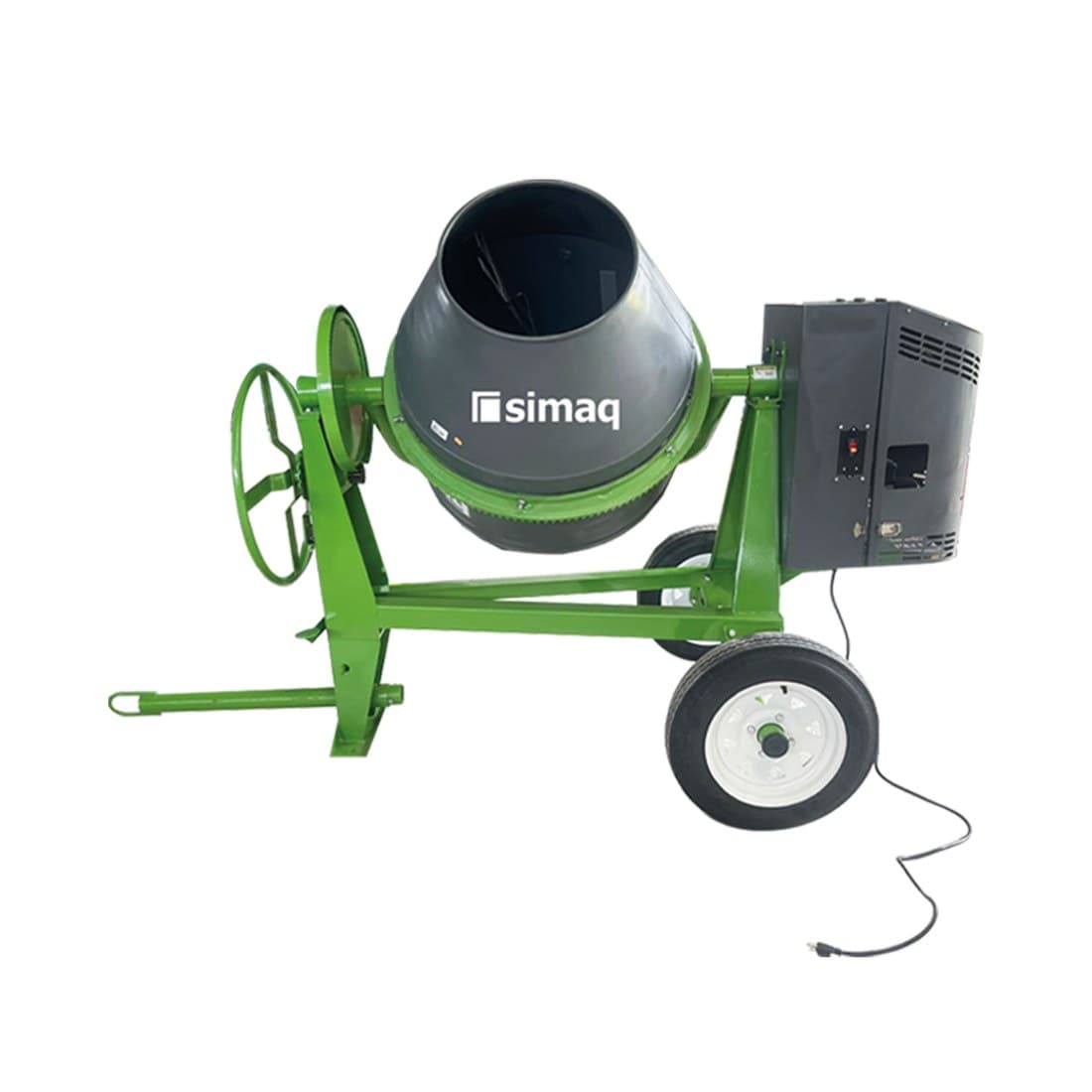
Both 1.5-bag mixers have 5.5 HP and the same drum size. The difference is where the energy comes from. The electric one is quiet, fume-free and burns no fuel: it's the one for indoor work, remodels and noise-sensitive areas. The gas one starts wherever there's no grid.
Before buying the electric one, confirm with your advisor the voltage and outlet it needs, and check your site has it reliably. If the power keeps dropping, the gas mixer will give you fewer headaches.
How to load it so the concrete comes out right
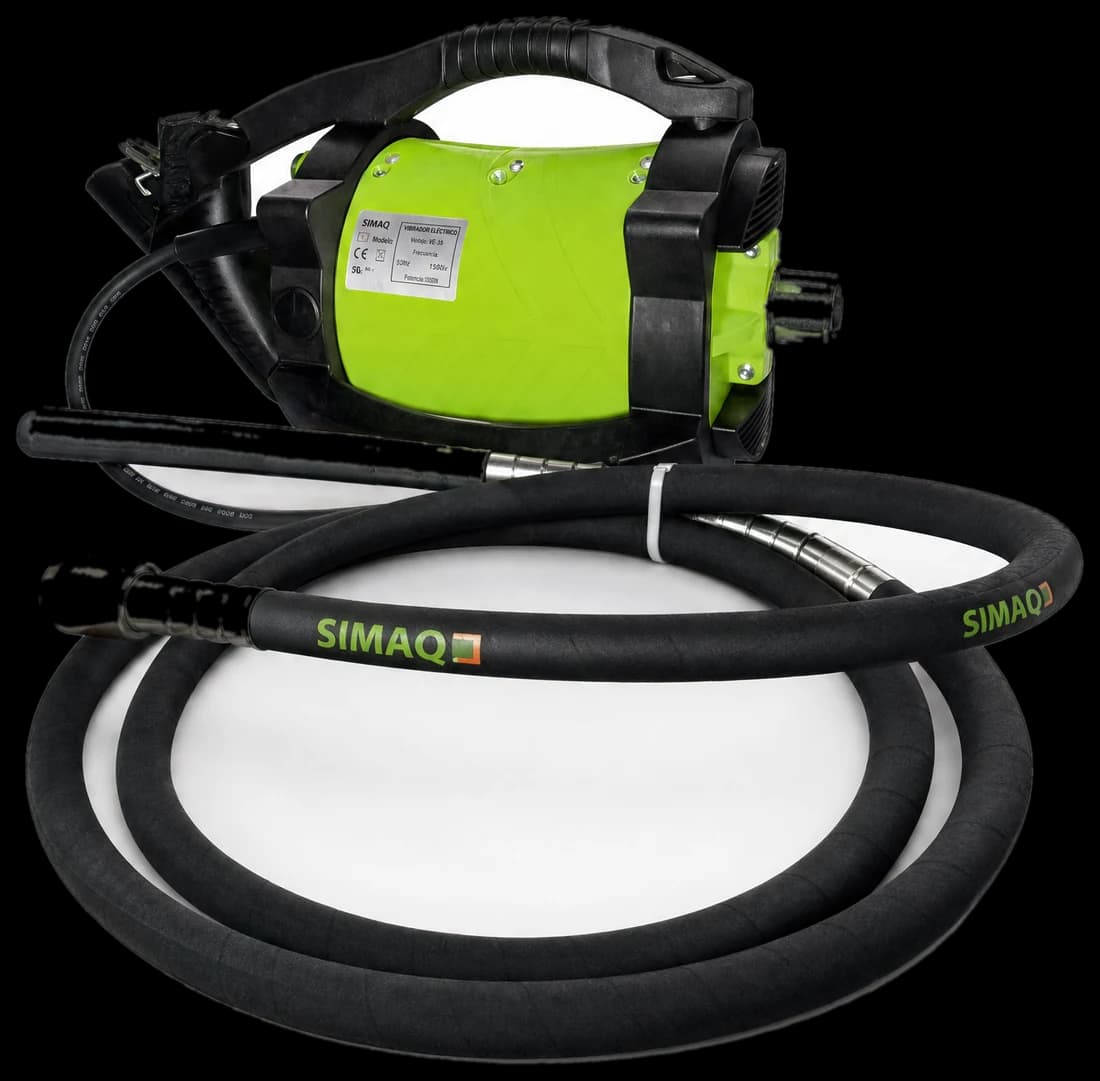
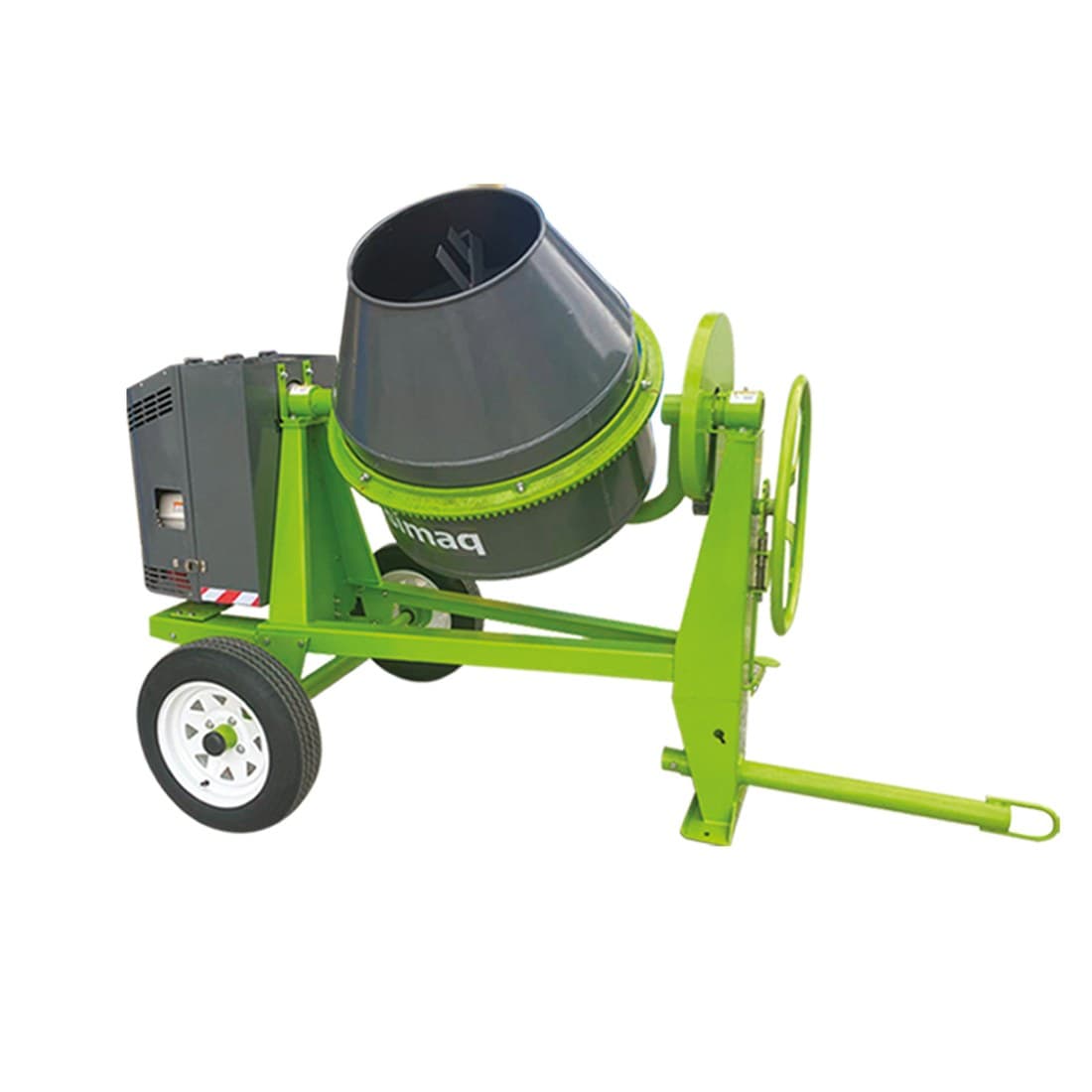
Your mix design sets the cement, sand, gravel and water proportions. To work them out per batch, use the SIMAQ School mix calculator. And after mixing, vibrate: an unvibrated pour keeps trapped air.
- Level it on firm ground and set the brake or chocks before starting.
- With the drum turning, add part of the water first; then gravel, cement, sand and the rest of the water.
- Mix 2 to 3 minutes until colour and texture are even.
- Measure the water: too much water is the number-one cause of weak concrete.
- Dump fully and wash the drum at the end of the day.
Common mistakes
- Buying the biggest one «just in case»: if you can't feed it without pauses, it runs half-empty and you don't go any faster.
- Adding extra water so the mix «flows»: it robs the concrete of strength.
- Loading above the rated bag capacity.
- Leaving mix in the drum until it starts to set.
- Buying the electric one without confirming the site's voltage and outlet.
Takeaway
1.5 bags for most jobs; 2 bags only if you can feed it without pauses. Electric with steady power or indoors; gas if there's no grid. Before deciding, do the maths: volume ÷ your batch yield = batches. Get a quote right here and an advisor in your country will confirm the model and availability.
Keep going
Frequently asked
How many bags of cement fit in a concrete mixer?
The bag rating tells you how much cement fits per batch: 1.5 bags in the 365 L mixers and 2 bags in the 550 L one. How much cement each batch takes is set by your mix design, not the machine.
Are a concrete mixer and a cement mixer the same?
Yes. Concrete mixer, cement mixer and drum mixer are regional names for the same machine.
How much concrete does a 1.5-bag mixer make per batch?
It depends on the mix. A 1:2:3 mix uses about 7.4 bags of 50 kg per m³, so a 1.5-bag batch yields about 0.2 m³. For other ratios, use the mix calculator.
Is the electric mixer right for me?
If you have steady power and work indoors, at night or where noise is a problem, yes: it has the same 365 L drum as the gas one, with no fumes or fuel. If the power drops often, pick the gas one.
How long should each batch mix?
2 to 3 minutes after everything is loaded, until colour and texture are even. Less leaves lumps; much more segregates the mix.
What warranty do SIMAQ mixers have?
6 months or 500 hours of use, whichever comes first. It's activated by registering the machine.