Guide · 7 min
When do you run the power trowel on concrete, and what size do you need?
Also called: power trowel, helicopter
By the SIMAQ technical team · Grupo ConstruMarket ·
Short answer
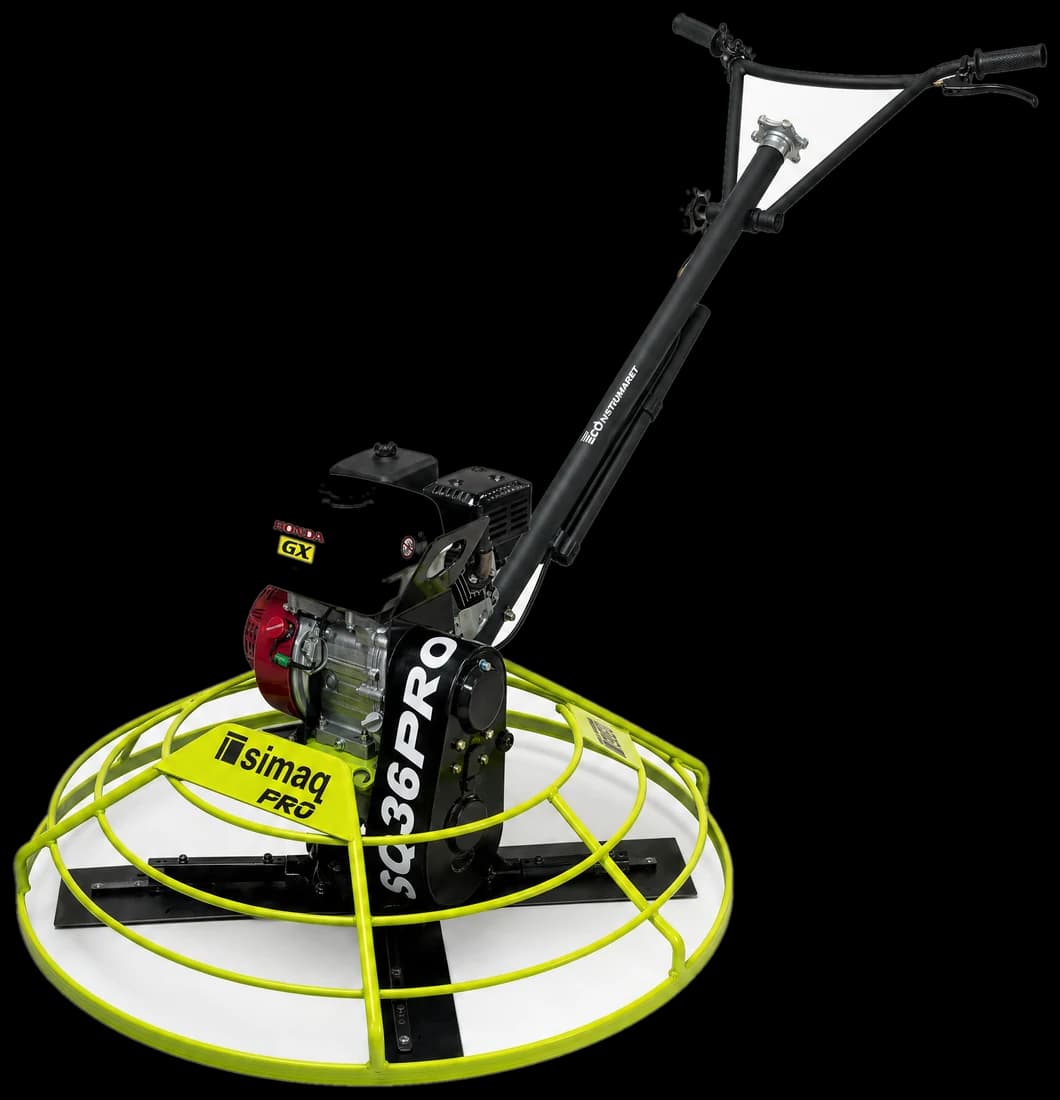
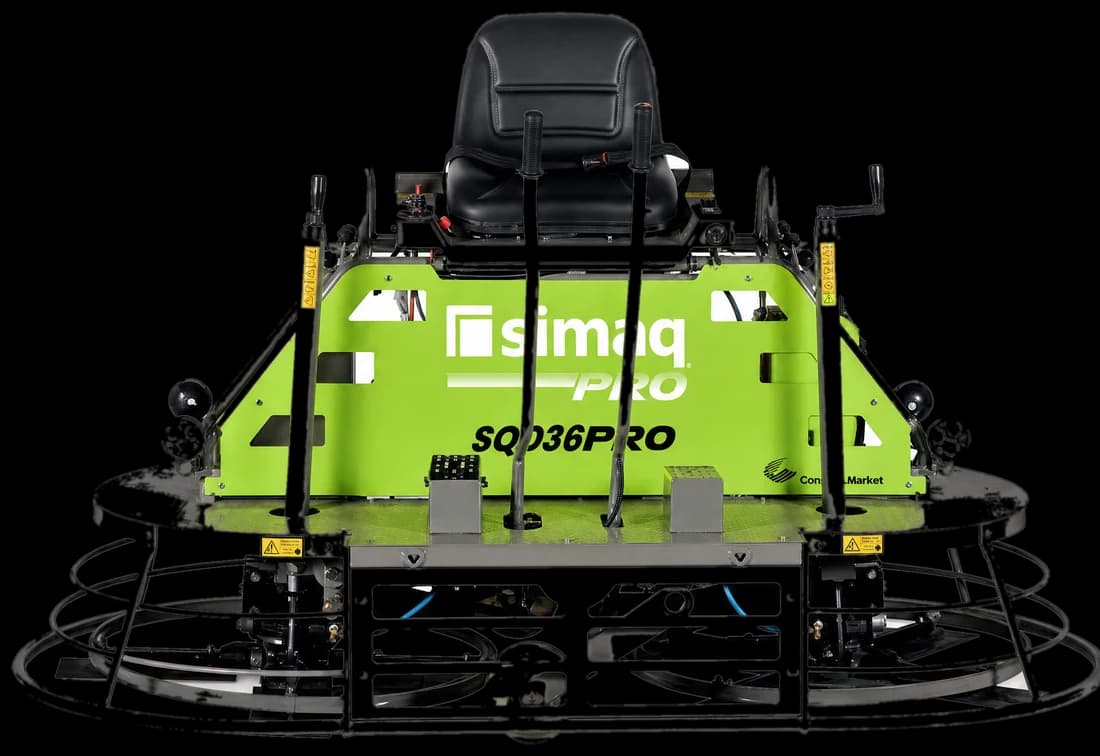
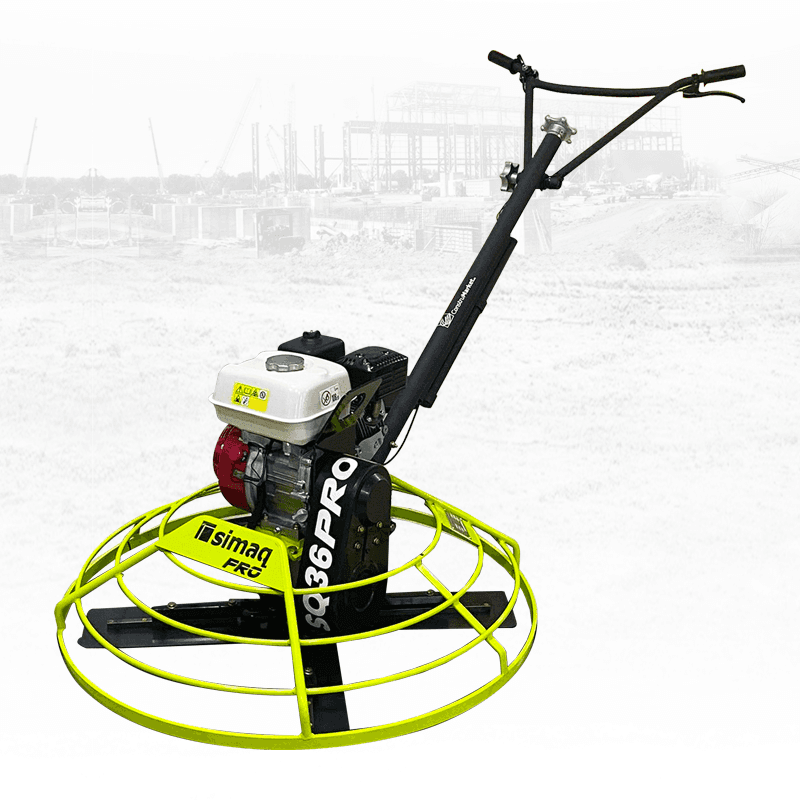
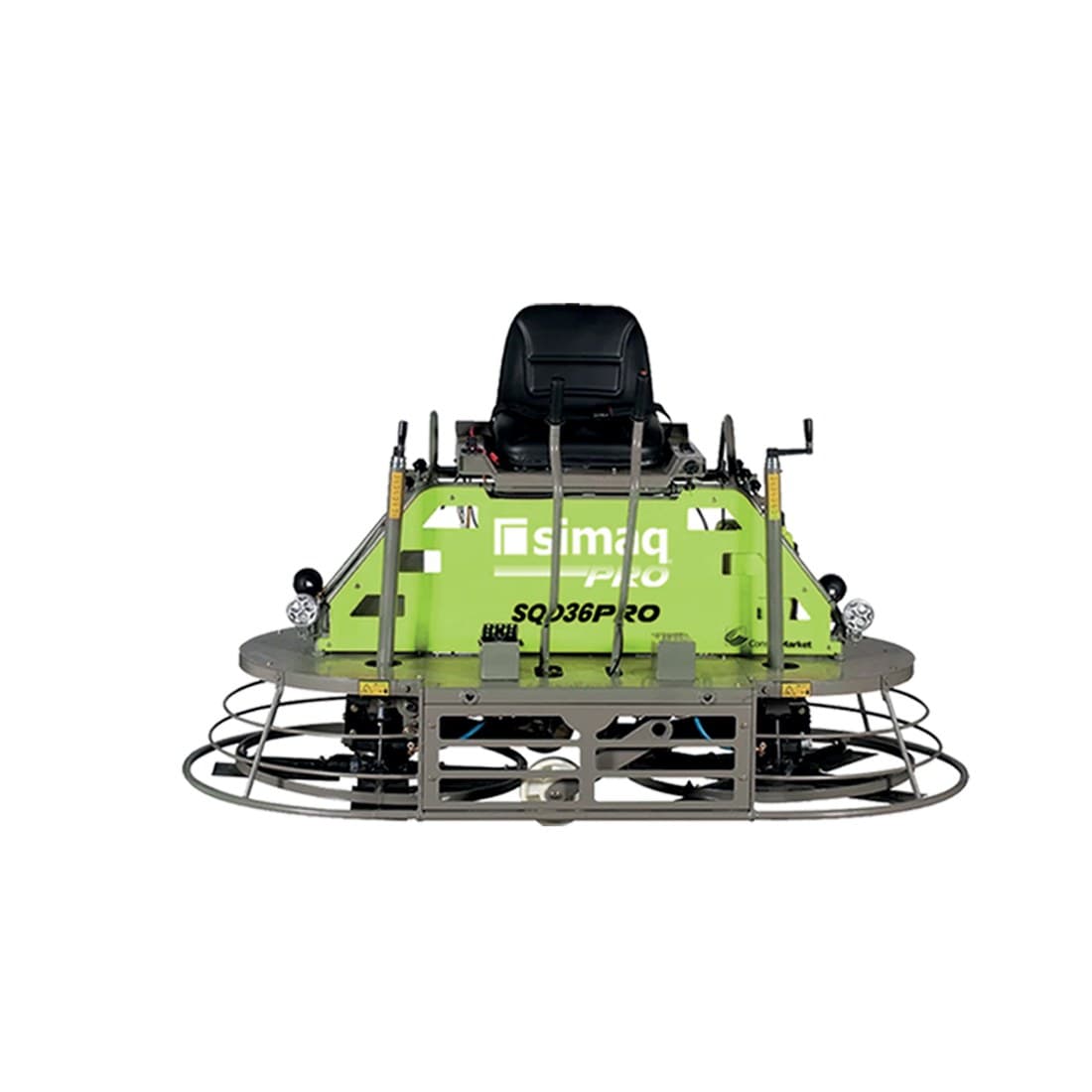
Run the power trowel when the slab holds your footstep with a print of about 3 to 5 mm: earlier and you sink it, later and it won't finish. For house slabs, small warehouses and areas full of columns, use a walk-behind like the SQ36 PRO (870 mm working diameter, Honda GX160). For large, open industrial slabs, the ride-on double SQ36DOUBLE PRO (Honda GX690, 20 HP).
footprint to start
SQ36 PRO working diameter
blades on the double
What the power trowel does (and doesn't)
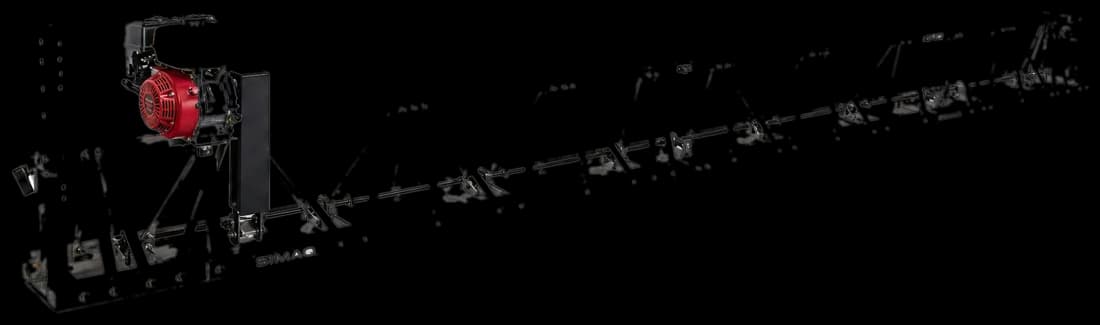
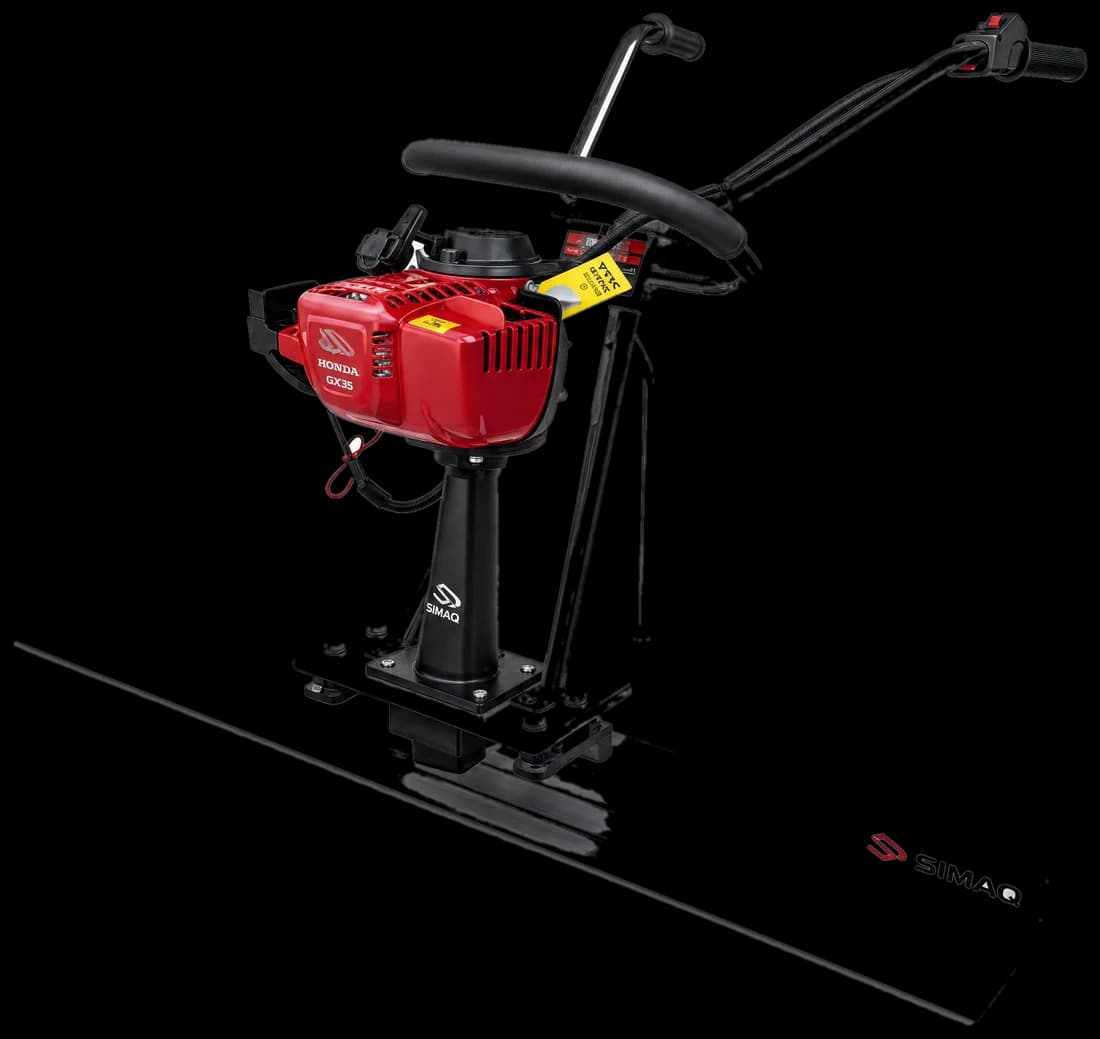
The power trowel closes the concrete surface, densifies it and gives the smooth or mirror finish. What it doesn't do is level: screed rails and the screed set the level. If the slab arrives uneven, the trowel just polishes the unevenness.
The right order is: pour, vibrate, screed, wait for the set, float with the pan and finish with the blades.
Timing: the footprint test
There's no fixed time: sun, wind and the mix change the setting time. That's why you use your footstep. Stand on the slab: if the print is about 3 to 5 mm, it's time. If you sink deeper, wait. If it barely marks, you're late and the concrete won't take a finish.
Start where the pour began and check often: on a big slab, some areas reach the set before others.
Pan first, blades after
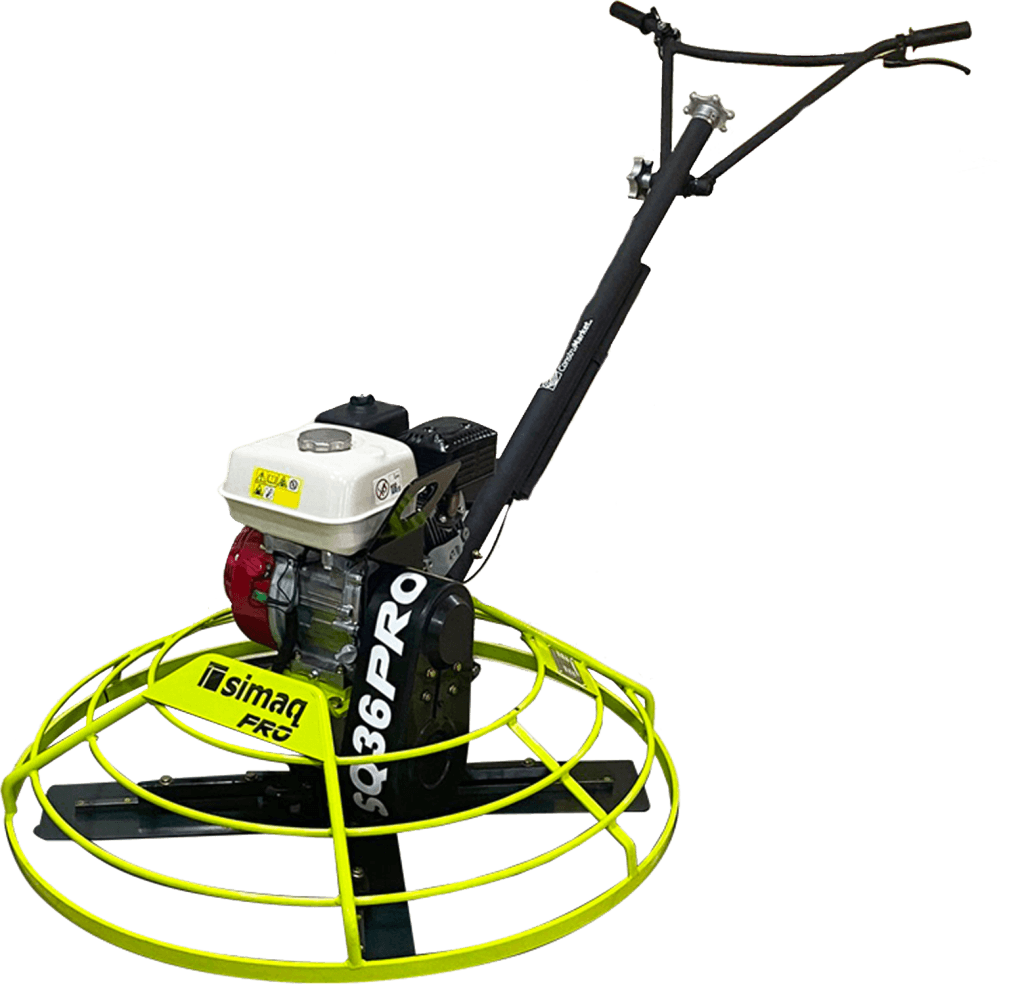
The first pass is with the float pan, which comes included with the SQ36 PRO: it closes and evens the surface without marking it. Then you remove the pan and work with the blades, raising the pitch a little on each pass to close and bring up the shine.
Cross your passes: one direction, then perpendicular. That removes waves. What the machine can't reach —edges, corners and around columns— is finished with a hand trowel.
What size? If your slab looks like this, use this
If you'll only finish a slab now and then, compare against renting: the rent-or-buy guide helps you do the maths.
| If your slab is… | Use | Spec sheet |
|---|---|---|
| House, small warehouse, many columns or small bays | SQ36 PRO (walk-behind) | 870 mm working width · 350 × 145 mm blades · 78 kg · Honda GX160 |
| Large, open industrial slab | SQ36DOUBLE PRO (ride-on) | 8 blades, 360 × 195 mm · Honda GX690 20 HP · seat with pressure sensor |
| Large slab with columns and edges | Both | The double in the middle; the walk-behind at edges and columns |
Safety and machine care
- Rubber boots, knee pads for edge work and gloves.
- Grip the handle firmly: the rotation pulls the machine.
- Switch off before lifting or moving it, and never leave it spinning in one spot on the slab.
- Keep spare blades: they wear (the SQ36 PRO includes a set).
Before you ask for a quote, have this ready
With this, an advisor in your country can recommend the right machine in a single conversation:
- Approximate slab area and whether it's one or several.
- How many columns, ducts or small bays it has.
- What finish is required: smooth or mirror.
- Whether you already have a screed and vibrator, or need the full set.
- Country and city of the job, to confirm availability and service.
Common mistakes
- Going in too early: you sink the surface and lose the level.
- Waiting too long: hard concrete won't finish.
- Throwing water or cement on the surface to «help»: it weakens the top layer.
- Raising the blade pitch all at once instead of pass by pass.
- Expecting the trowel to fix a badly screeded slab.
Takeaway
Go in at a 3–5 mm footprint, pan first then blades, with crossed passes. SQ36 PRO for slabs with columns and housing work; SQ36DOUBLE PRO for large industrial slabs. Get a quote here and an advisor will tell you which one performs best on your slab.
Keep going
Frequently asked
How long after pouring do you trowel?
There's no fixed time: it depends on weather and the mix. Go in when the slab holds your footstep with a 3 to 5 mm print.
Are a power trowel and a helicopter the same?
Yes. Power trowel and helicopter are names for the same finishing machine.
What is the float pan for?
For the first pass: it closes and evens the surface without marking it. Then you switch to the blades to finish. The SQ36 PRO includes it.
Single or double trowel?
If the slab has many columns or small bays, the single SQ36 PRO. If it's large and open, the double SQ36DOUBLE PRO. On large slabs with edges, use both.
Does the power trowel level the slab?
No. Screed rails and the vibrating screed set the level; the trowel only closes and finishes.
What warranty does the SIMAQ trowel have?
6 months, like the rest of the light equipment. It's activated by registering the machine.