Guide · 6 min
Which concrete vibrator should you buy: electric, gas or backpack?
Also called: poker, immersion or needle vibrator
By the SIMAQ technical team · Grupo ConstruMarket ·
Short answer
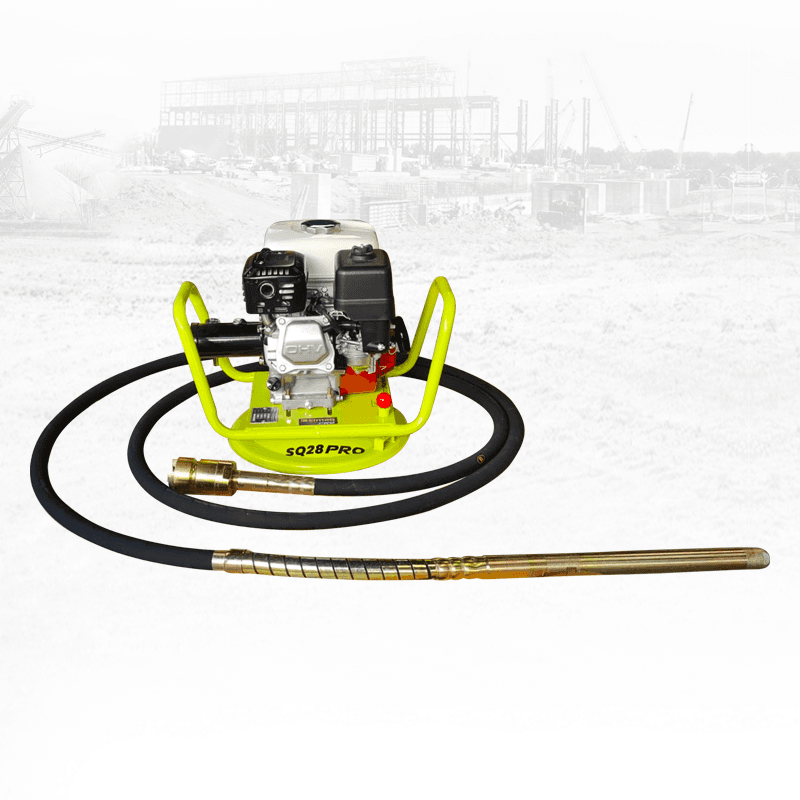
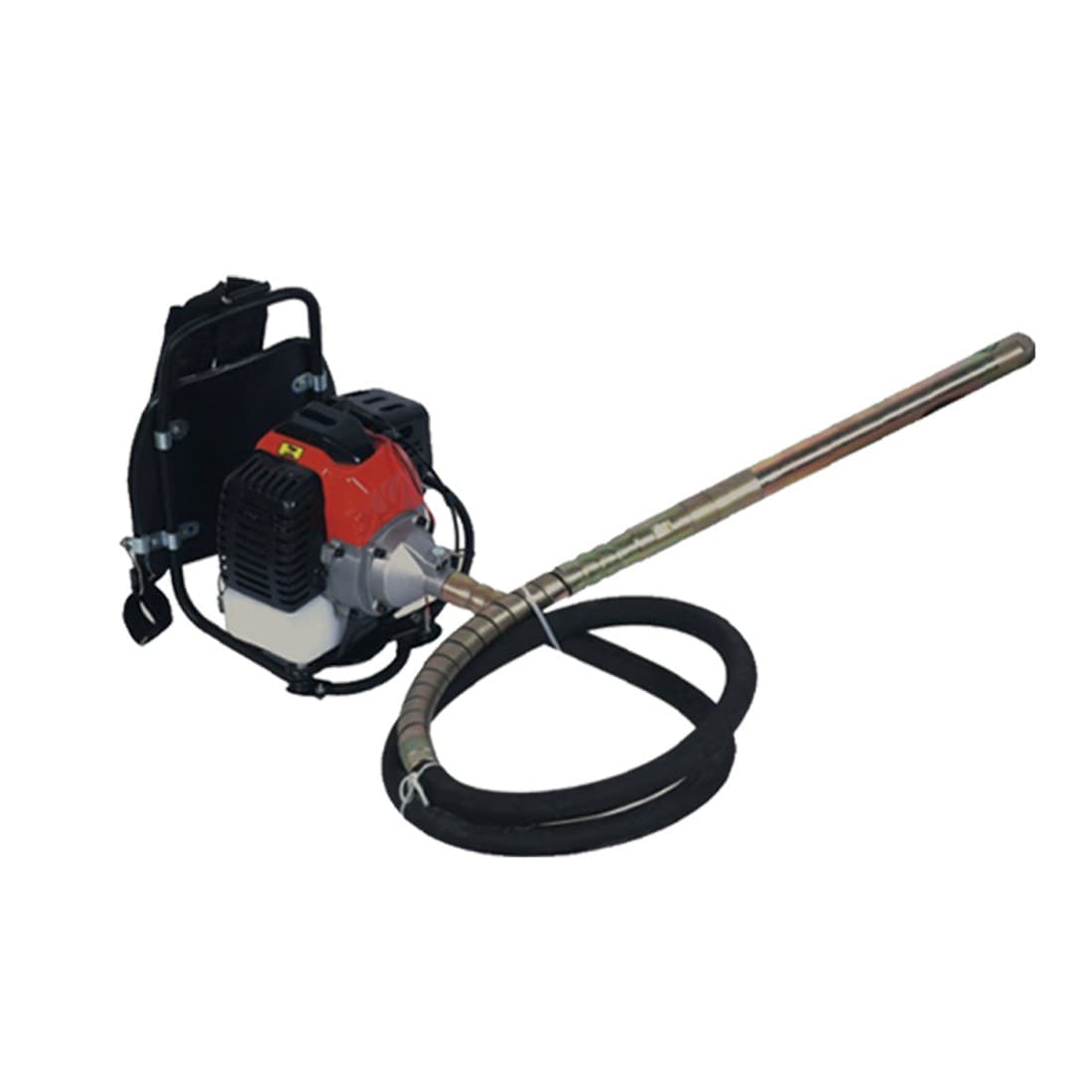
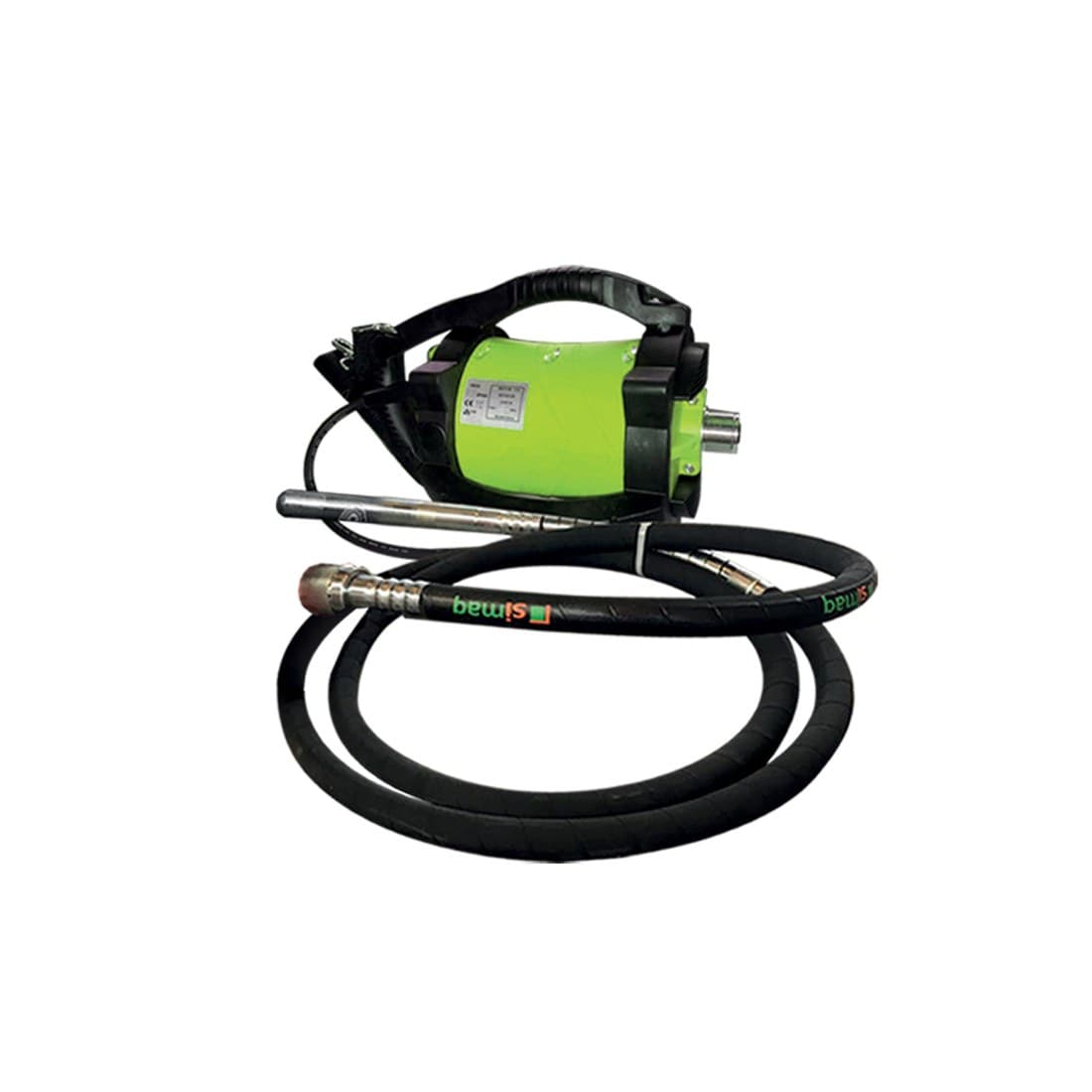
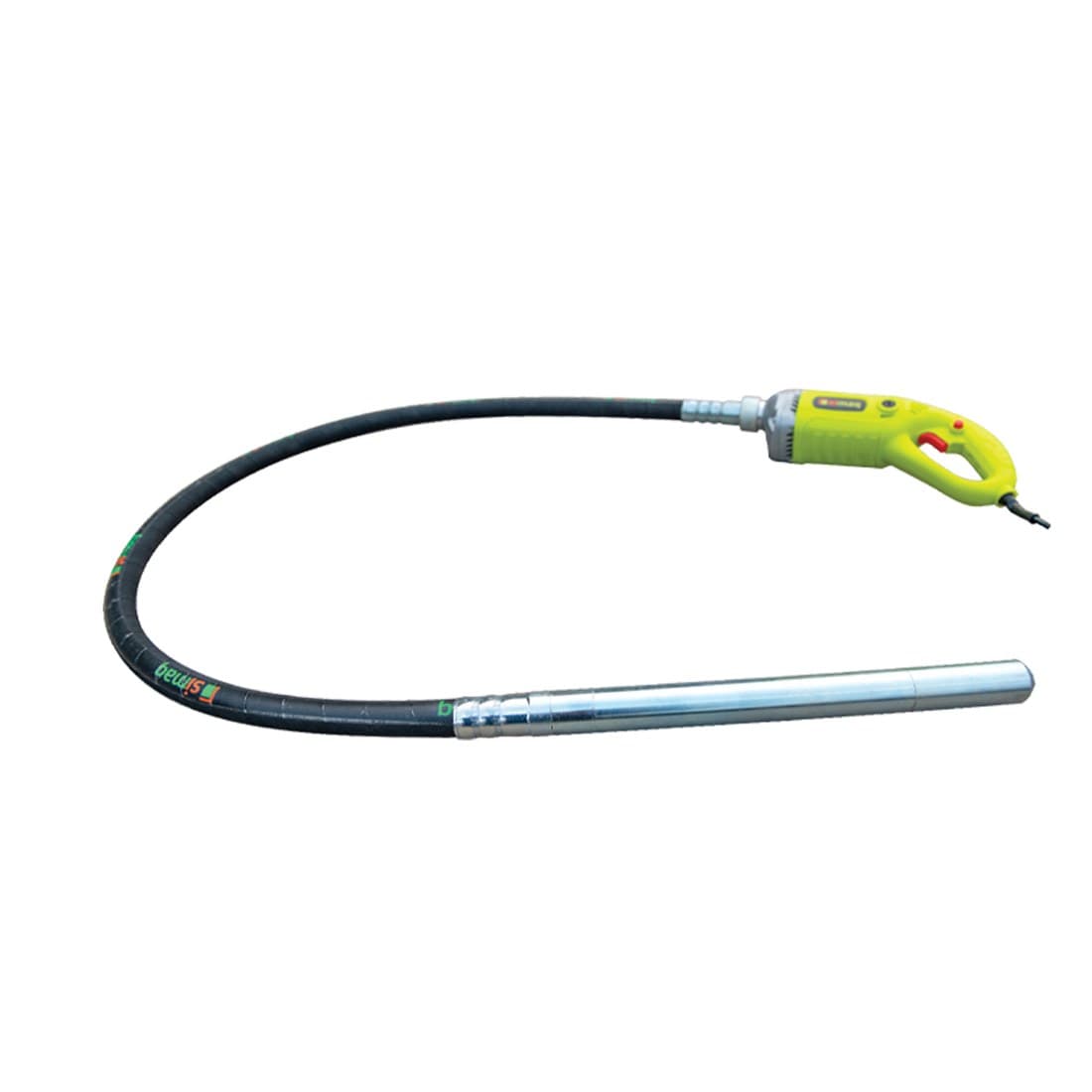
If you have power on site and work columns, walls and house slabs, an electric vibrator is the most practical: the SQVEH40 or, for slender columns, the SQRVP1.5 mini vibrator. If there's no power or the pour is large, the gas SQ28 PRO with a Honda GX160. If you move around a lot —stairs, roofs, long fronts— the SQMG28 PRO backpack goes with you.
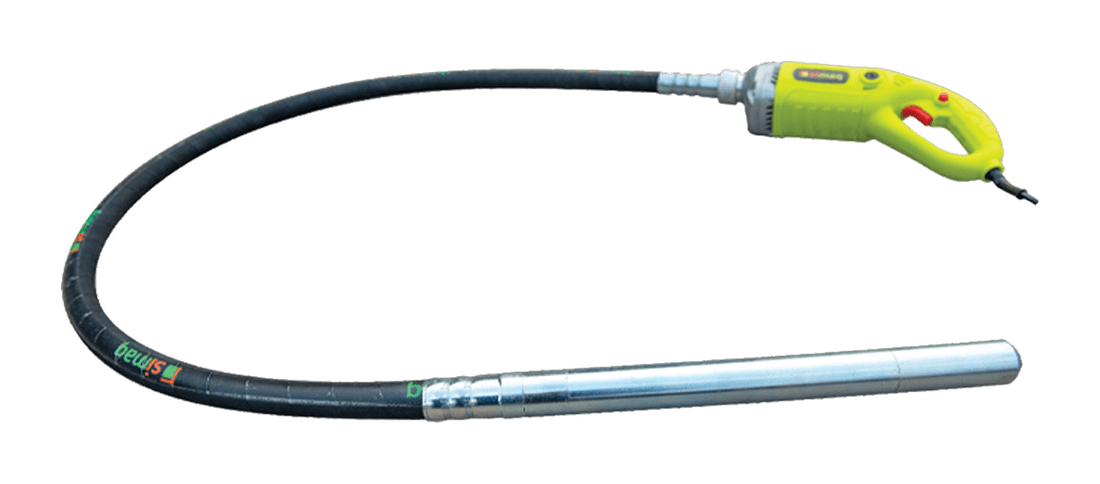
mini vibrator head
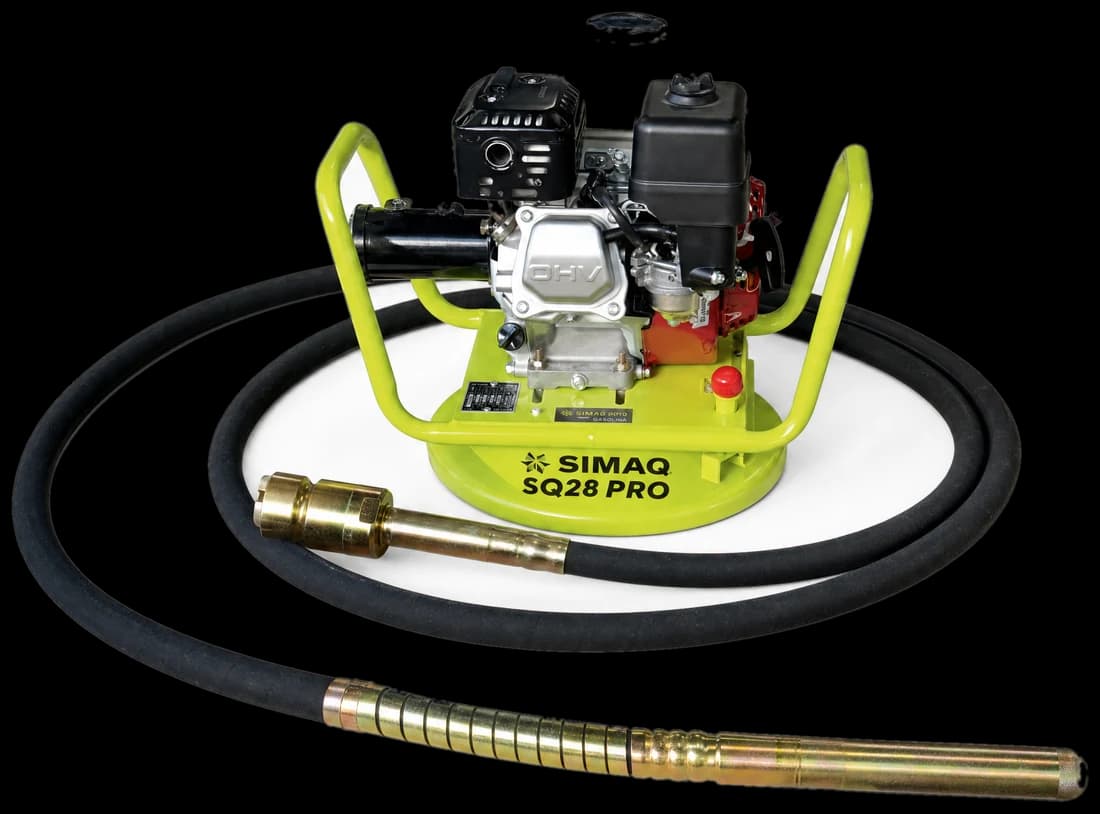
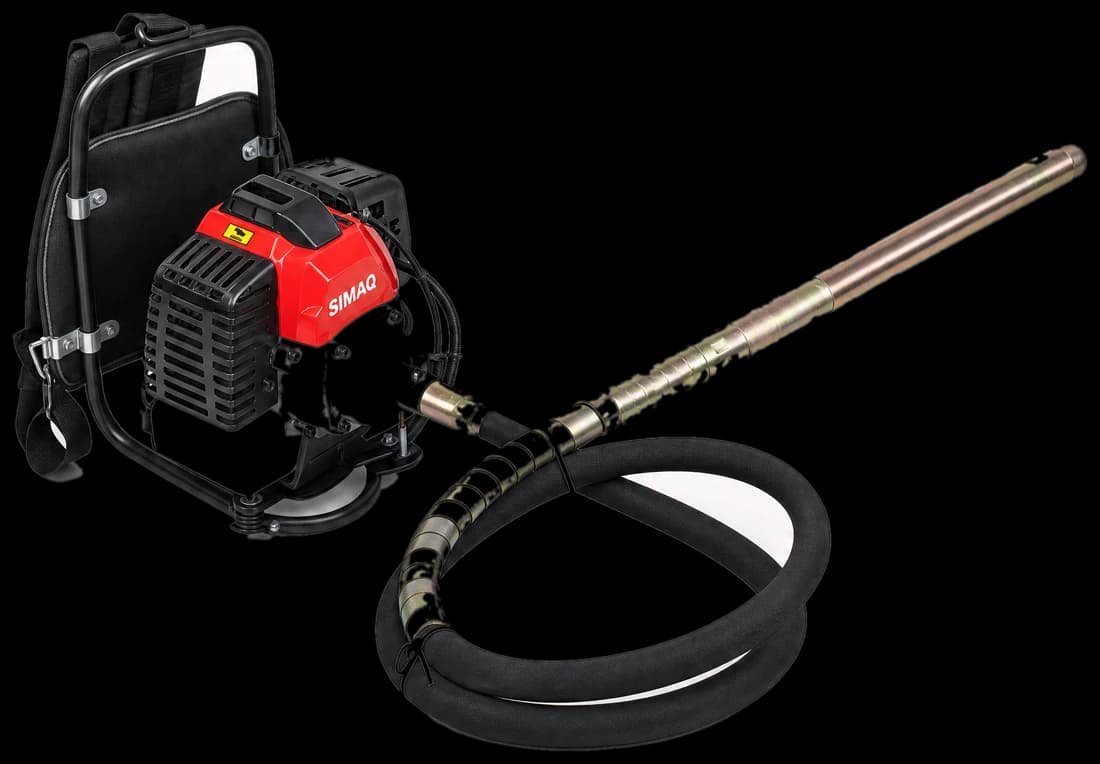
SQ28 PRO and backpack head
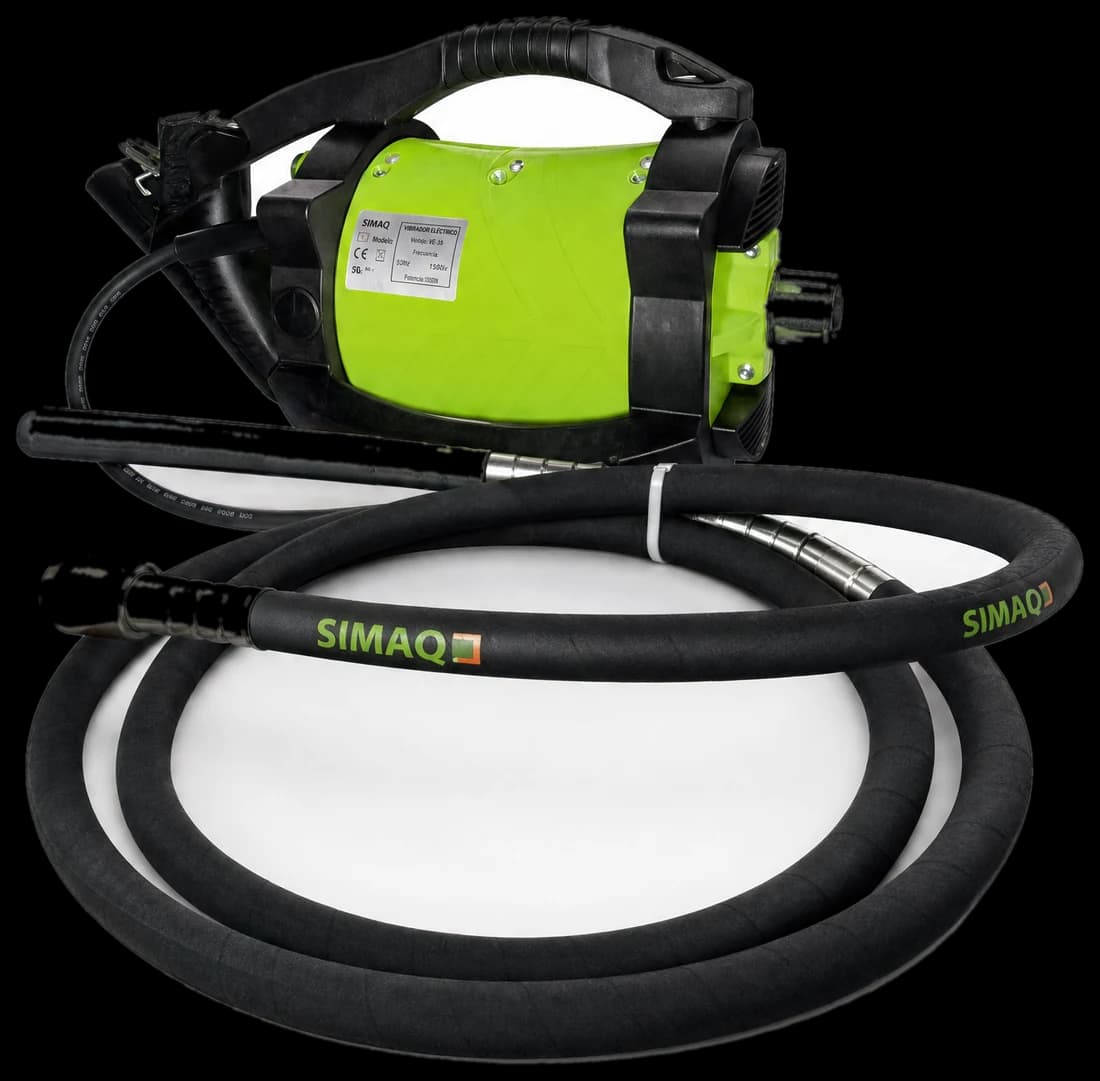
SQVEH40 electric vibrator
What matters most: the head and where it goes
The head has to fit between the rebar without jamming. A thin head for columns and thin walls; a thicker head for slabs and footings. The larger the head, the bigger its radius of action and the farther apart the insertion points can be.
The field rule: space insertion points about 1.5 times the radius of action so the circles overlap and no area is left unvibrated.
Electric, gas or backpack: which one for your job
| If your job… | Pick | Spec sheet |
|---|---|---|
| Has power and you do columns, walls and house slabs | Electric SQVEH40 | Single-phase · 5.8 kg · zero emissions, low noise |
| Has power and many slender columns or small pours | SQRVP1.5 mini vibrator | 110 V / 60 Hz · 1.5 HP · 35 mm head · 12,000–16,000 VPM |
| Has no power or the pour is large | Gas SQ28 PRO | Honda GX160 · 3.6 kW (5.5 HP) · 38 mm head · 21 kg engine |
| Makes you move a lot: roofs, stairs, long fronts | Backpack SQMG28 PRO | Honda GX35 · 1.2 kW · 8,000–9,000 rpm · 38 mm shaft · 3 m hose |
Power vs mobility: the trade-off
The SQ28 PRO is the most powerful of the gas line (3.6 kW) and the one for large pours, but its engine stays on the ground and you move within the hose length. The backpack has less power (1.2 kW) in exchange for going with you: it shines where the challenge is reach, not volume.
Electric models win indoors: no fumes and none of an engine's noise. Their limit is the cord and the outlet: make sure the site has steady power where you'll pour.
How to vibrate well with any of the four
- Insert vertically and quickly, into the layer below to knit them.
- 5 to 15 seconds per spot: stop when paste rises and no large bubbles come out.
- Pull out slowly so the hole closes.
- In walls, vibrate layer by layer as you pour.
- Don't force the hose through tight bends.
Maintenance that extends its life
On the gas models, the Honda engine routine (oil, air filter, spark plug) prevents most failures: it's in the Honda GX engine maintenance guide. On the electric ones, protect the cord: don't let it get stepped on or dragged through concrete. On all of them, clean the head and hose when the pour ends, before the concrete hardens.
Before you ask for a quote, have this ready
With this, an advisor in your country can recommend the right machine in a single conversation:
- What you'll pour: columns, walls, slabs or footings.
- The tightest bar spacing, to size the head.
- Whether there's power on site and what voltage.
- How much concrete you pour per day.
- Country and city of the job.
Common mistakes
- Using the vibrator to push concrete around: it separates stone from paste.
- Resting the head against the rebar or formwork continuously.
- Choosing a head so thick it won't fit between the bars.
- Buying an electric one for a site without steady power.
- Leaving concrete stuck on the head and hose when you finish.
Takeaway
With power: electric SQVEH40 or the mini vibrator for columns. No power or a large pour: gas SQ28 PRO. Lots of moving around: SQMG28 PRO backpack. With any of them, 5–15 s per spot and overlapping points. Get a quote here and an advisor will confirm the model and head for your job.
Keep going
Frequently asked
What head diameter do I need?
The one that fits between your bars without jamming: thin for columns and thin walls (the mini vibrator has 35 mm), 38 mm for slabs and footings.
Does an electric vibrator work for slabs?
Yes, for house slabs and sites with steady power. For large pours without grid power, the gas SQ28 PRO does more.
Is the backpack vibrator less powerful?
Yes: 1.2 kW versus the SQ28 PRO's 3.6 kW. In exchange it rides on your back; it's for jobs where reaching is the hard part, not volume.
How long do you vibrate each spot?
5 to 15 seconds, until paste rises and large bubbles stop. Longer segregates the mix.
What warranty do SIMAQ vibrators have?
6 months, like the rest of the light equipment. It's activated by registering the machine.