

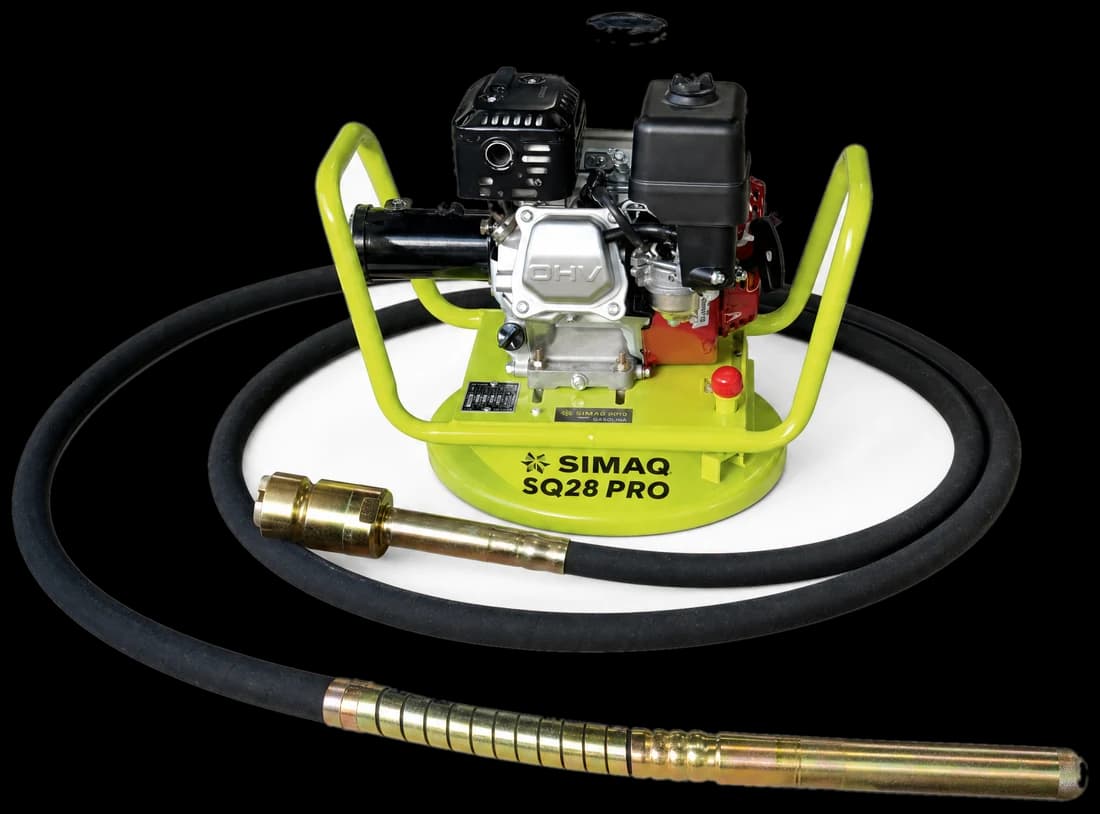
SQ28 PRO
Concrete vibrator SQ28 PRO
Drives out air for dense, void-free pours.
View details5-minute training
5 minUse a concrete vibrator by plunging the head in vertically, holding it 5 to 15 seconds until bubbles stop and paste rises, and withdrawing it slowly, point by point on an even grid. SIMAQ has the gasoline SQ28 PRO (Honda GX160, 38 mm head), the SQMG28 backpack unit, the electric SQVEH40 and the 110 V SQRVP1.5 mini vibrator. The head is for driving air out, not for moving concrete.
Also called: poker vibrator, immersion vibrator, internal vibrator
The immersion vibrator drives trapped air out of fresh concrete so it ends up dense, with no honeycombing. Under-vibrate and you leave voids; over-vibrate and the aggregate sinks while the paste rises.
No power or a big site → gasoline (SQ28 PRO) or backpack (SQMG28); indoors or noise limits → electric (SQVEH40 or the mini vibrator). Small head for thin or heavily reinforced elements; 38 mm for slabs, beams and footings.
Place concrete in even lifts and vibrate each one before the next. Fill a tall wall or column in one go and the air at the bottom can't get out.
Drop the head in vertically and fast, going a little into the lift below while it's still fresh: that knits both lifts into one piece.
Vibrate until a thin layer of paste rises and large bubbles stop. Longer doesn't help: it segregates the aggregate.
Pull the head out slowly so the hole closes itself. Yank it and you leave an air channel inside.
Repeat on an even grid, spacing points ~1.5× the action radius so the circles overlap. If no paste shows between two points, move them closer.
Do this
Avoid this
Safety
Test yourself
Each practice: do it or avoid it? Tap your answer.
Wash the head and hose when you finish.
Don't yank the head out: it leaves an air channel.
On walls and columns, vibrate lift by lift as you pour.
Don't over-vibrate: water and paste rise, aggregate sinks.
Always insert vertically, on systematic, evenly spaced points.
Don't drag concrete with the head: you segregate the aggregate.
When shiny paste rises and bubbles stop → withdraw and move to the next point.
Don't hold the head against the formwork or rest it on the rebar: it marks the exposed face and loosens the steel.
Equipment in this training
Drives out air for dense, void-free pours.
View details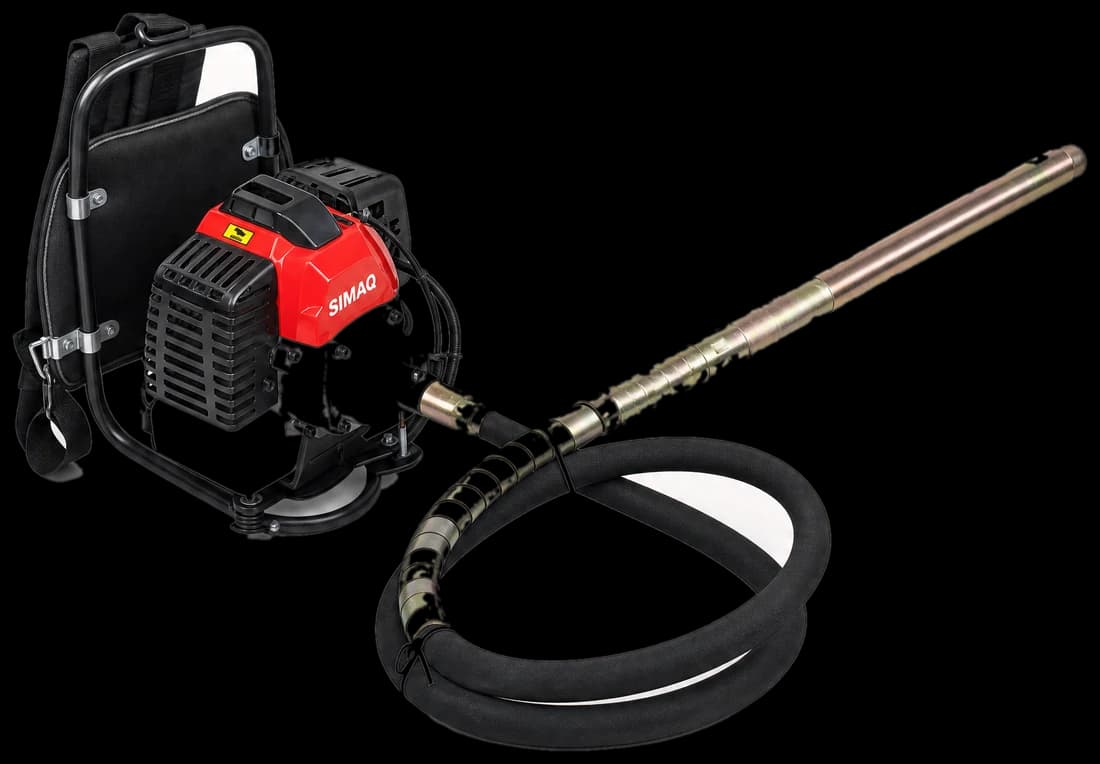
Drives out air for dense, void-free pours.
View details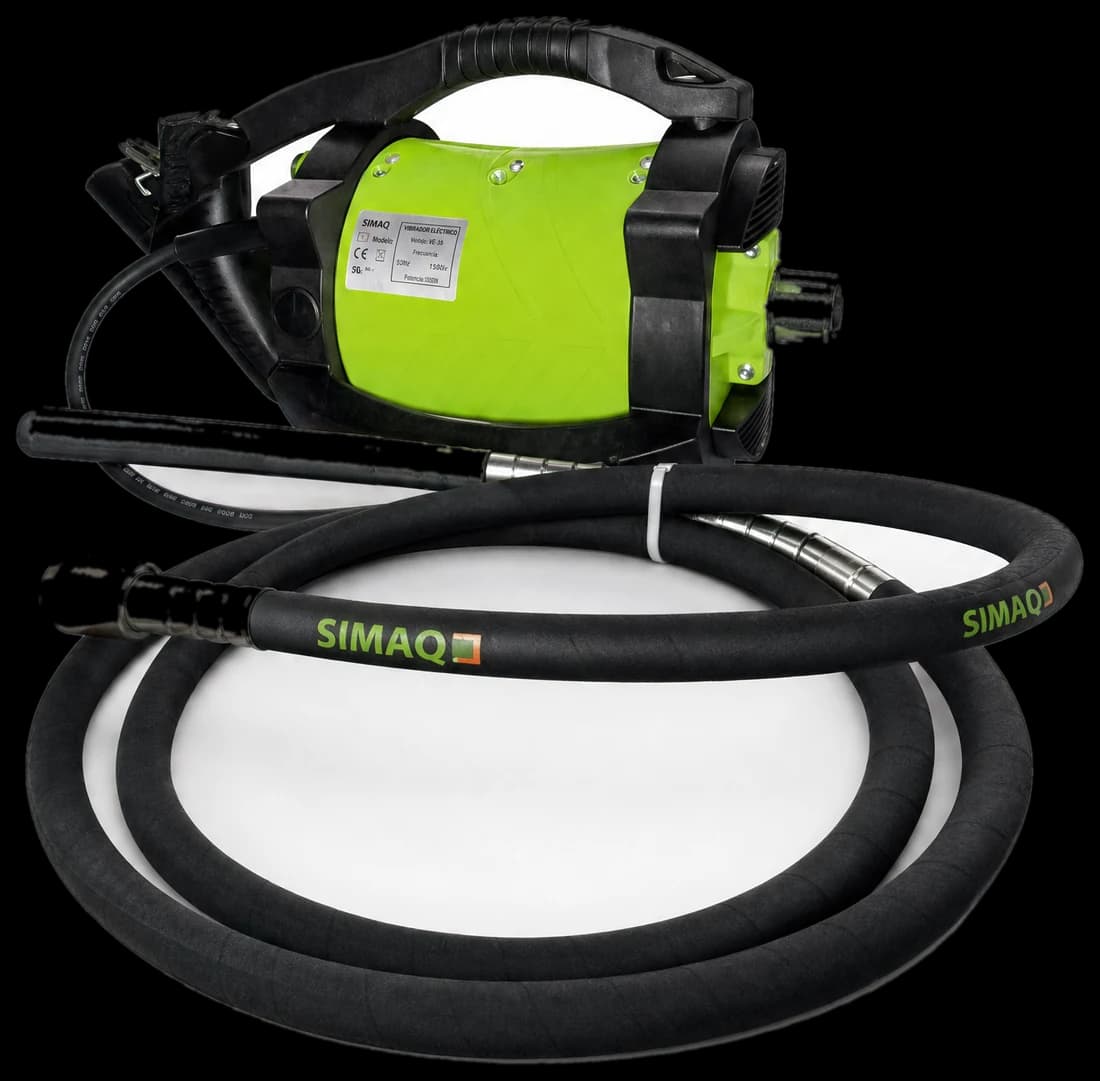
Drives out air for dense, void-free pours.
View details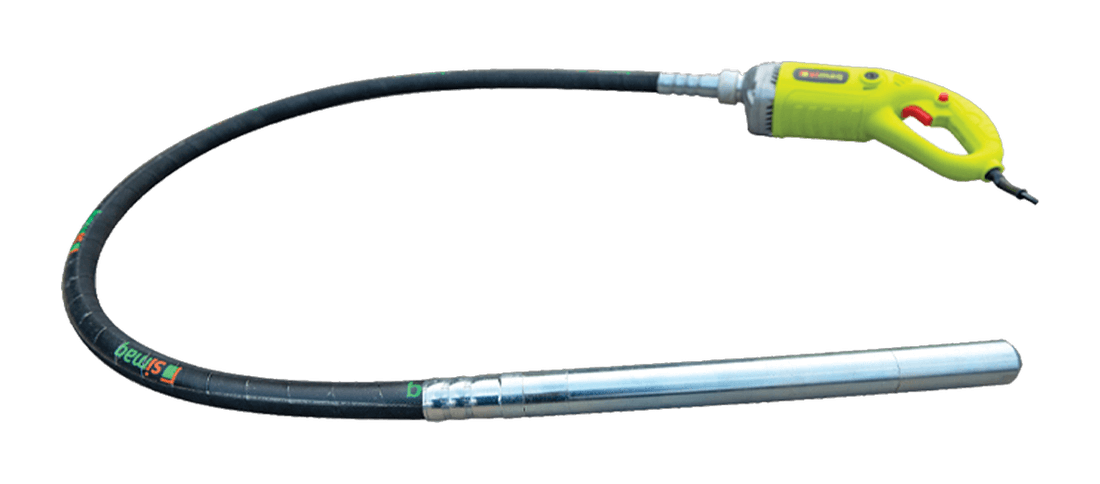
Handheld electric vibrator with flexible shaft, for columns and small pours.
View detailsBuying guides
When to start curing, for how many days, with water, burlap, plastic or curing compound, and the mistakes that rob your slab or column of strength.
Read Guide · 7 minEvery concrete vibrator has a motor, a coupling, a hose with a flexible shaft inside and a head that does the vibrating. What each part does, which ones wear and how to look after them so it doesn't lose power.
Read Guide · 6 minHoneycombs are trapped air and poorly consolidated mix. Why they appear, the vibrating technique that prevents them (vertical, 5–15 s, overlapping points) and which SIMAQ vibrator fits each element.
ReadFAQ
5 to 15 seconds per point, until large bubbles stop and a thin layer of paste shows on the surface. Longer doesn't help: it segregates the aggregate.
On an even grid, about 1.5 times the head's action radius apart, so the circles overlap. If areas between points show no paste, move them closer.
No power or a big site → gasoline (SQ28 PRO). Lots of moving across slabs and scaffolds → backpack (SQMG28). Indoors or noise limits → electric (SQVEH40 or the SQRVP1.5 mini vibrator). The guide on electric, gasoline or backpack vibrators compares them.
Using the vibrator to push concrete sideways, or yanking it out. The first separates stone from paste; the second leaves an air channel inside.
Air stays trapped: you get honeycombing, the element loses strength and the rebar is less protected. On columns and beams it shows when the forms come off.
Get a quote without leaving
Want to work it out with an advisor?
Tell us about the job and we'll build the package. A rep replies during business hours.