Guide · 7 min
Parts of a concrete vibrator: motor, coupling, hose and head
Also called: poker vibrator, immersion vibrator
By the SIMAQ technical team · Grupo ConstruMarket ·
Short answer
A concrete vibrator has four parts. The motor, gas or electric, which provides the spin. The coupling, where the hose hooks onto the motor. The hose, a flexible casing with a flexible shaft inside that carries the spin to the tip. And the head (the poker or needle), a steel tube with a shaft, bearings and seals inside: it's the only part that vibrates and the only part that goes into the concrete. If it loses power, it's almost always the head or the hose, not the motor.
parts: motor, coupling, hose and head
minimum hose bend (SQ28 PRO manual)
of continuous work, then give it a rest
The four parts of every vibrator
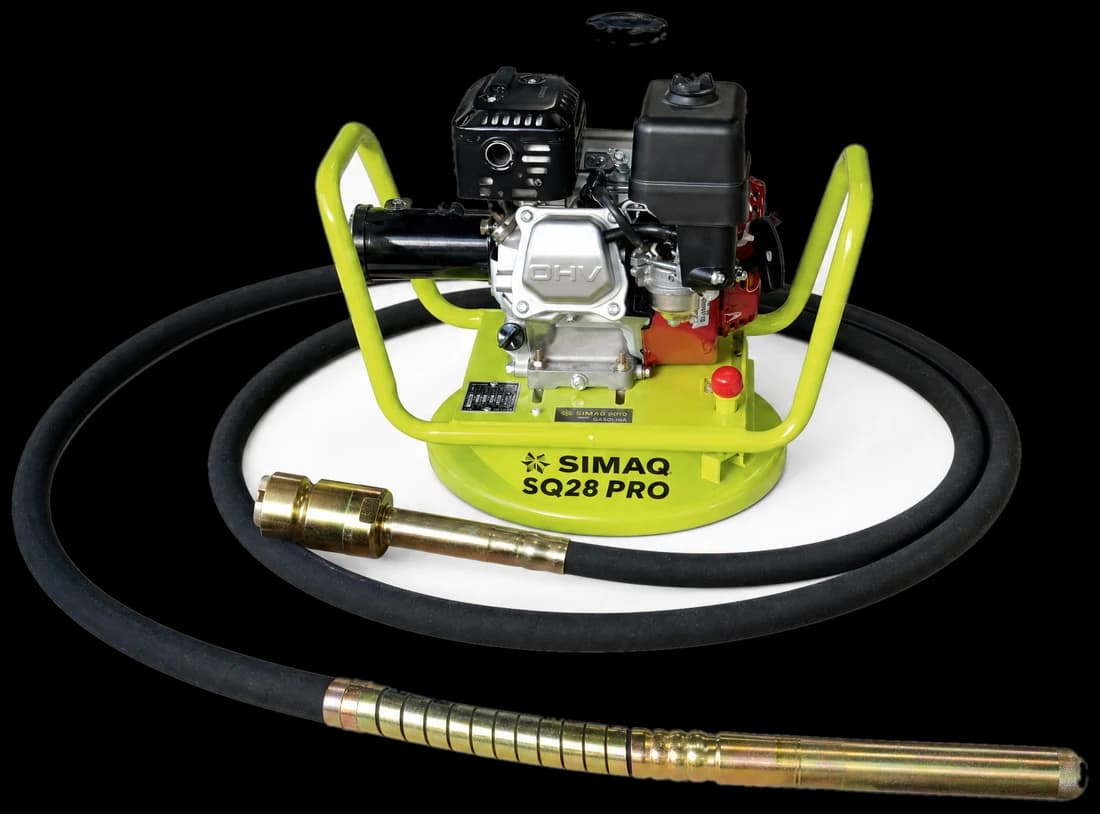
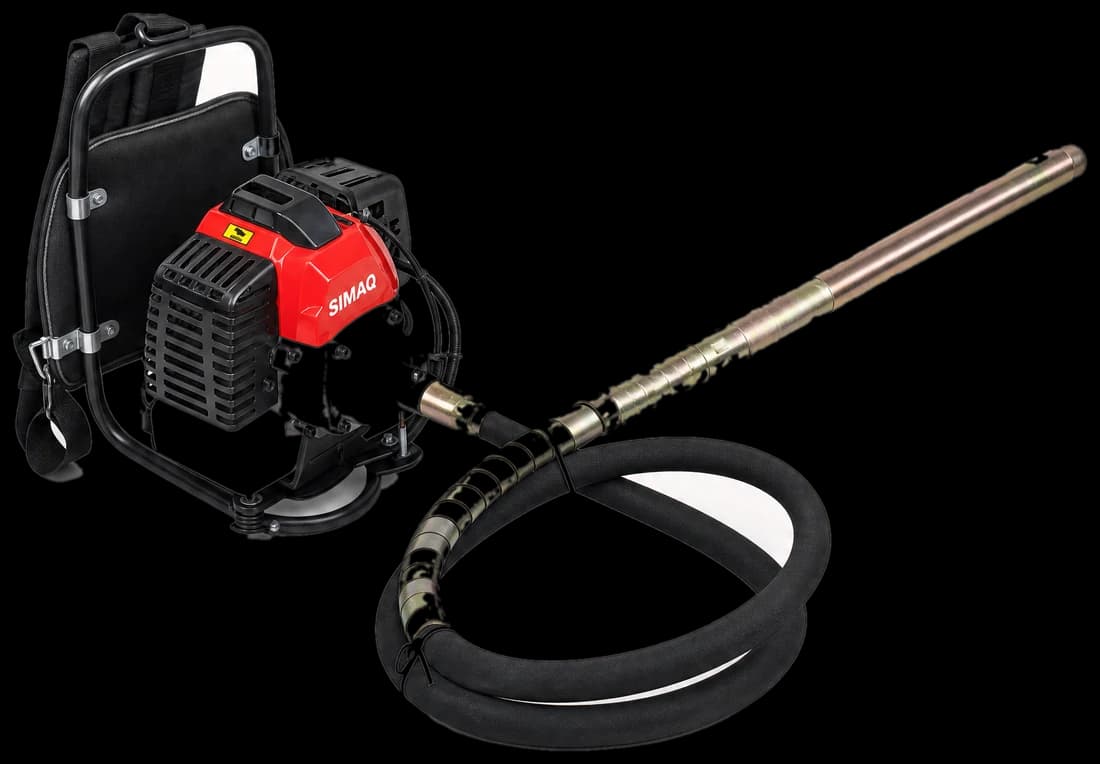
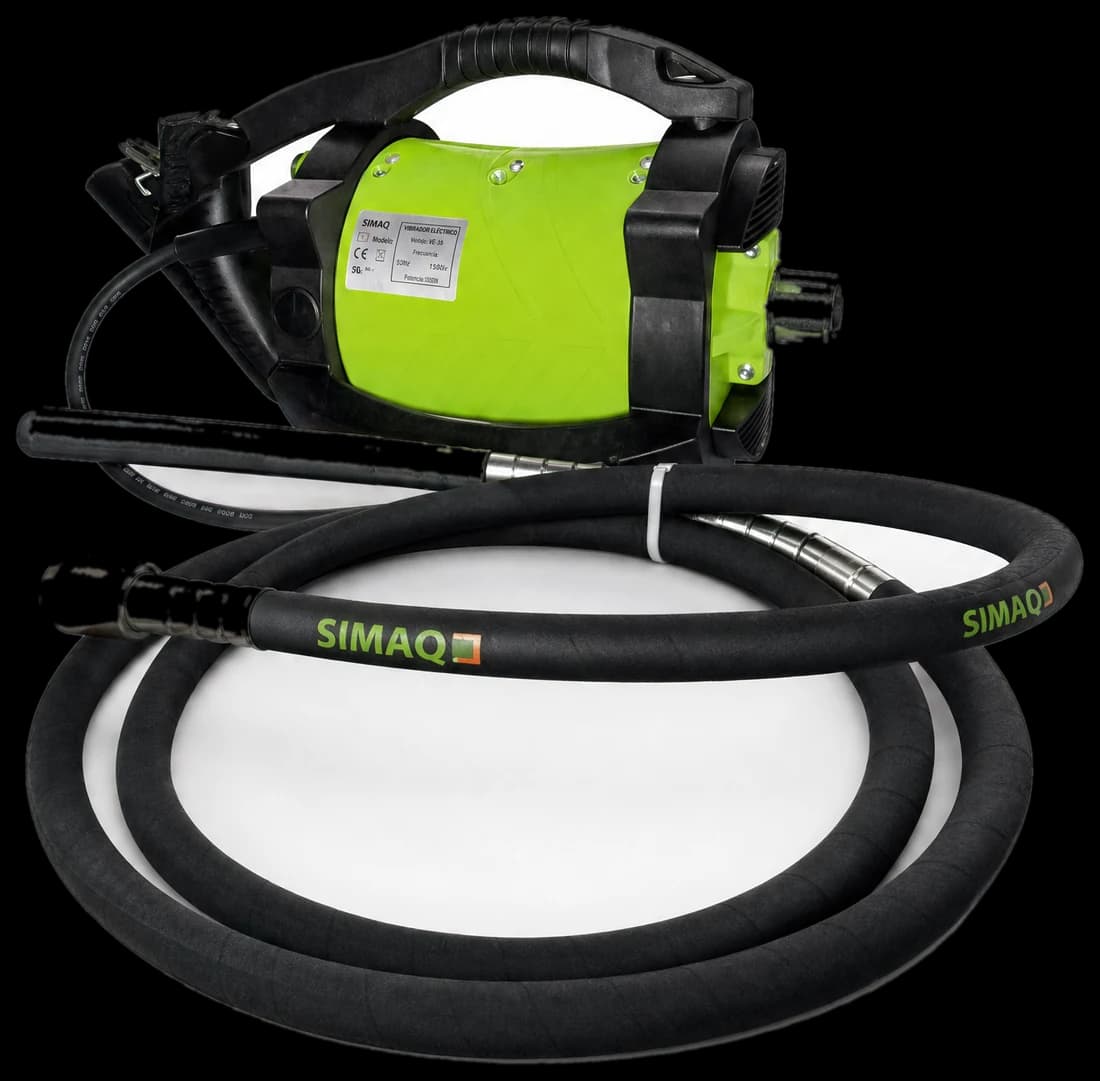
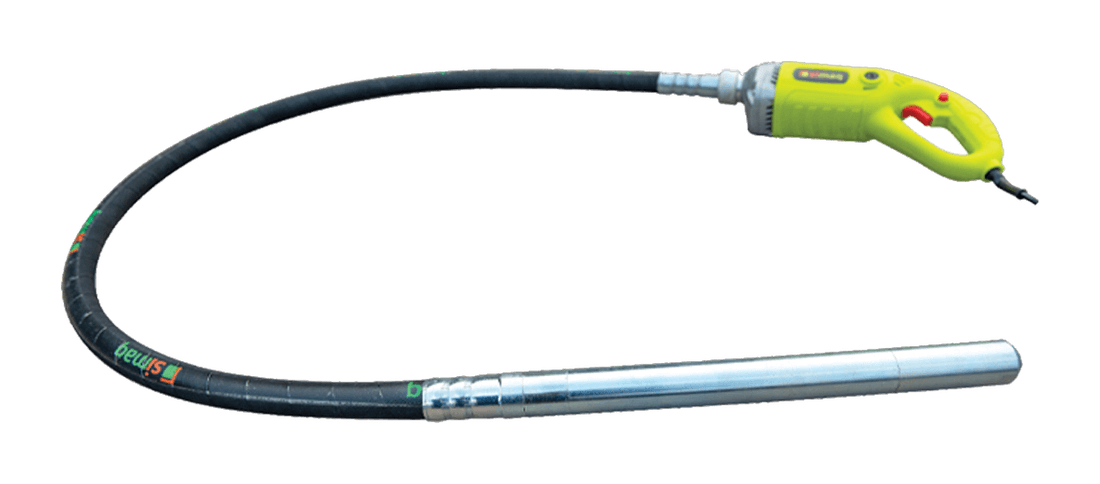
It doesn't matter whether it's the gas model with the engine on the ground, the backpack or the hand-held electric: they all carry the motor's power to the tip the same way. These are the names in the SIMAQ manuals' parts lists.
| Part | What it does |
|---|---|
| Motor | Provides the spin. A gas engine sits in a protective frame on a base; an electric one has a rotor, stator, carbon brushes and a switch. |
| Coupling | Joins the hose to the motor: a coupling shaft and sleeve that lock together. |
| Hose and flexible shaft | The casing protects the flexible shaft, which spins inside and carries the power to the tip. |
| Hose joint | The thread joining the hose to the head. |
| Head (poker) | A steel tube with the rotary shaft, bearings and oil seal inside. It's what vibrates. |
| Head cap (tip) | Closes the head at the bottom. Sand and stone wear it down. |
The motor: gas or electric
On the SQ28 PRO the engine is a 5.5 HP Honda GX160 mounted in a protective frame on a lower base. On the SQMG28 backpack it's a Honda GX35 you carry on your back. Its care is the same as any Honda engine: oil, air filter, spark plug and fresh fuel.
The electric ones (the SQVEH40 and the 110 V mini vibrator) contain a rotor, stator, carbon brushes, a fan with its guard, a switch and a cord. The brushes are the part that wears: the SQVEH40 manual says to check them every 50 hours and replace them when 8 mm are left.
- Stop right away if the electric one makes odd noises, sparks a lot at the brushes, runs too hot or smells odd.
- Don't move it by pulling the cord, and don't let anyone step on it or cut it.
The coupling: where the hose joins the motor
The coupling is a shaft and a sleeve that lock together. On the SQ28 PRO it's a pin coupling, per its spec sheet, and its parts list shows two coupling types. So when you order a spare hose, give your motor's model: a hose with another coupling type won't fit.
Before starting, check that the hose is locked properly in the coupling. A loose coupling knocks, wears and stops passing the power.
The hose and the flexible shaft
The hose looks like a tube, but a flexible shaft spins inside it at high speed. Bend it too much and the shaft rubs against the casing, heats up and breaks. The SQ28 PRO manual says the bend should never be tighter than a 500 mm radius: a wide curve, never an elbow.
- Lay the hose as straight as you can between the motor and the vibrating point.
- Don't drag it over rebar or formwork edges.
- Don't give it more grease than specified: the SQVEH40 manual says not to over-grease the shaft.
The head: the part that vibrates
The head is a steel tube with a rotary shaft inside, running on bearings and closed with an oil seal and a cap. It's the only part that goes into the concrete. On the SQ28 PRO, SQMG28 and SQVEH40 it's 38 mm across; on the mini vibrator, 35 mm.
Its worst enemy is slurry. If the thread between hose and head is loose, mortar water gets in and the vibrator stops vibrating. On the SQ28 PRO, the head and its connector have a left-hand thread and the hose connector a right-hand thread: tighten them the right way.
- Don't leave it vibrating out of the concrete: the SQVEH40 manual sets the limit at 5 minutes.
- On the electric one, don't switch it off with the head in the concrete: without vibration it gets stuck.
- After half an hour of continuous work, give it a rest so heat doesn't damage it (SQ28 PRO manual).
What wears and how often to check it
| Part | When | What to do |
|---|---|---|
| Head and hose | Every shift | Clean them before the concrete hardens. |
| Brushes (electric) | Every 50 h (SQVEH40) | Check them; replace at 8 mm. |
| SQ28 PRO head | Every 50–100 h | Strip, clean and replace anything damaged. |
| Rotary shaft, grease and O-rings (mini vibrator) | Every 100 h | Strip, clean, renew grease and O-rings. |
| Cap, tube and tips | When they look worn | Replace them before the inside gets damaged. |
Common mistakes
- Bending the hose into an elbow to reach a corner: the flexible shaft breaks.
- Leaving the head vibrating in the air while waiting for the concrete.
- Storing the vibrator with concrete stuck to the head and hose.
- Ordering a spare hose without giving the motor's model: the coupling doesn't match.
- Moving the electric one by pulling on the cord.
Takeaway
Motor, coupling, hose with flexible shaft, and head: that's how every concrete vibrator is built. The head and hose are what wear and what need the most care: wide bends (500 mm or more), threads tight so slurry stays out, no vibrating in the air and cleaning every shift. Ask for a quote here and an advisor in your country will confirm the vibrator or hose that fits your motor.
Keep going
Take it to the job site
Print the checklist to go over it on site, or send the guide to your crew.
Frequently asked
What are the parts of a concrete vibrator?
Motor (gas or electric), coupling, a hose with a flexible shaft inside, a connector and the head (poker), which holds a rotary shaft, bearings and a seal, with a cap at the tip.
Why has my vibrator lost power?
It's almost always slurry inside the head (loose thread or worn seal), an over-bent hose or a loose coupling. On electric ones, worn brushes too. The SQ28 PRO manual says to check the oil seal if it won't vibrate or lacks power.
What is a vibrator's «chicote»?
That's the regional name for the hose with the head: the long part that goes into the concrete. The technical name is immersion (poker) vibrator.
How far can the vibrator hose bend?
Never tighter than a 500 mm radius, per the SQ28 PRO manual. A wide curve; an elbow breaks the flexible shaft inside.
How often does the head need servicing?
Clean it every shift. The SQ28 PRO head is stripped and cleaned every 50 to 100 hours; on the mini vibrator, the grease and O-rings are renewed every 100 hours.
SIMAQ · Job site checklist
Parts of a concrete vibrator: motor, coupling, hose and head
A concrete vibrator has four parts. The motor, gas or electric, which provides the spin. The coupling, where the hose hooks onto the motor. The hose, a flexible casing with a flexible shaft inside that carries the spin to the tip. And the head (the poker or needle), a steel tube with a shaft, bearings and seals inside: it's the only part that vibrates and the only part that goes into the concrete. If it loses power, it's almost always the head or the hose, not the motor.
The motor: gas or electric
- Stop right away if the electric one makes odd noises, sparks a lot at the brushes, runs too hot or smells odd.
- Don't move it by pulling the cord, and don't let anyone step on it or cut it.
The hose and the flexible shaft
- Lay the hose as straight as you can between the motor and the vibrating point.
- Don't drag it over rebar or formwork edges.
- Don't give it more grease than specified: the SQVEH40 manual says not to over-grease the shaft.
The head: the part that vibrates
- Don't leave it vibrating out of the concrete: the SQVEH40 manual sets the limit at 5 minutes.
- On the electric one, don't switch it off with the head in the concrete: without vibration it gets stuck.
- After half an hour of continuous work, give it a rest so heat doesn't damage it (SQ28 PRO manual).
Avoid
- Bending the hose into an elbow to reach a corner: the flexible shaft breaks.
- Leaving the head vibrating in the air while waiting for the concrete.
- Storing the vibrator with concrete stuck to the head and hose.
- Ordering a spare hose without giving the motor's model: the coupling doesn't match.
- Moving the electric one by pulling on the cord.
Job site:
Date:
Supervisor:
Scan it for the full guide, with video and FAQ
https://simaq.pro/en/recursos/partes-de-un-vibrador-de-concreto