Guide · 6 min
Why does concrete honeycomb, and how do you vibrate to prevent it?
Also called: honeycombing, voids or rock pockets
By the SIMAQ technical team · Grupo ConstruMarket ·
Short answer
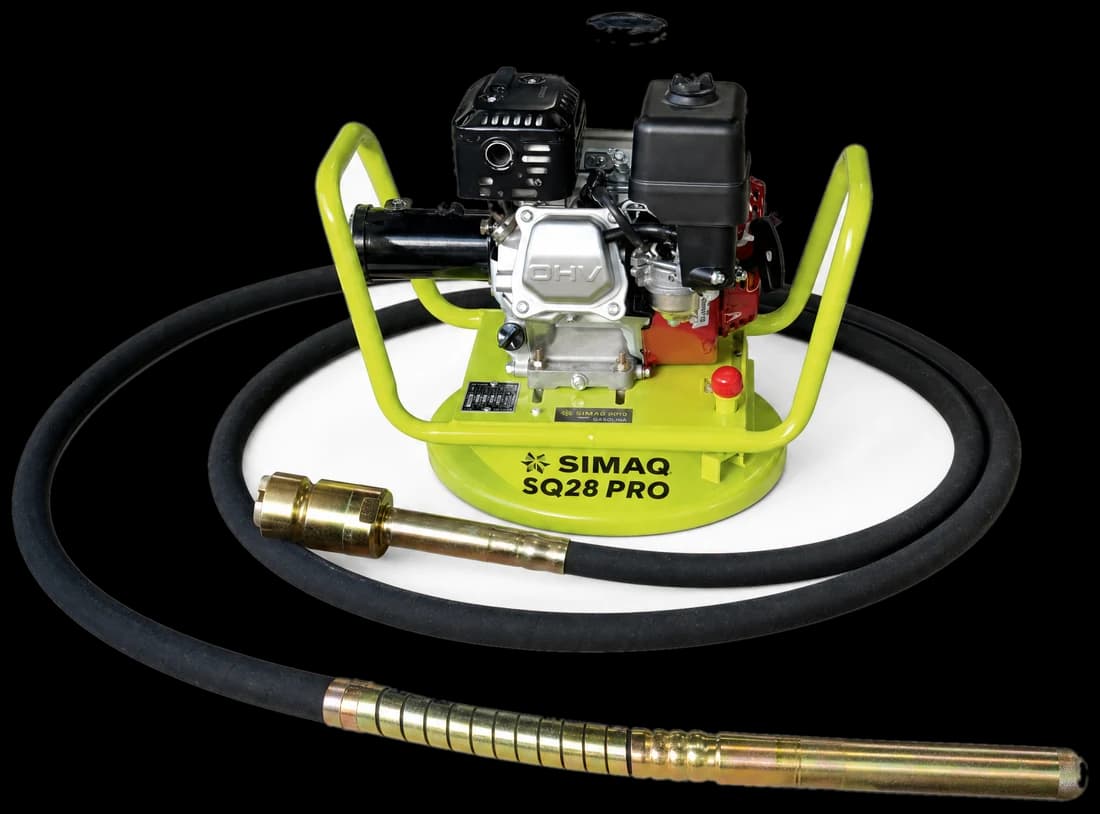
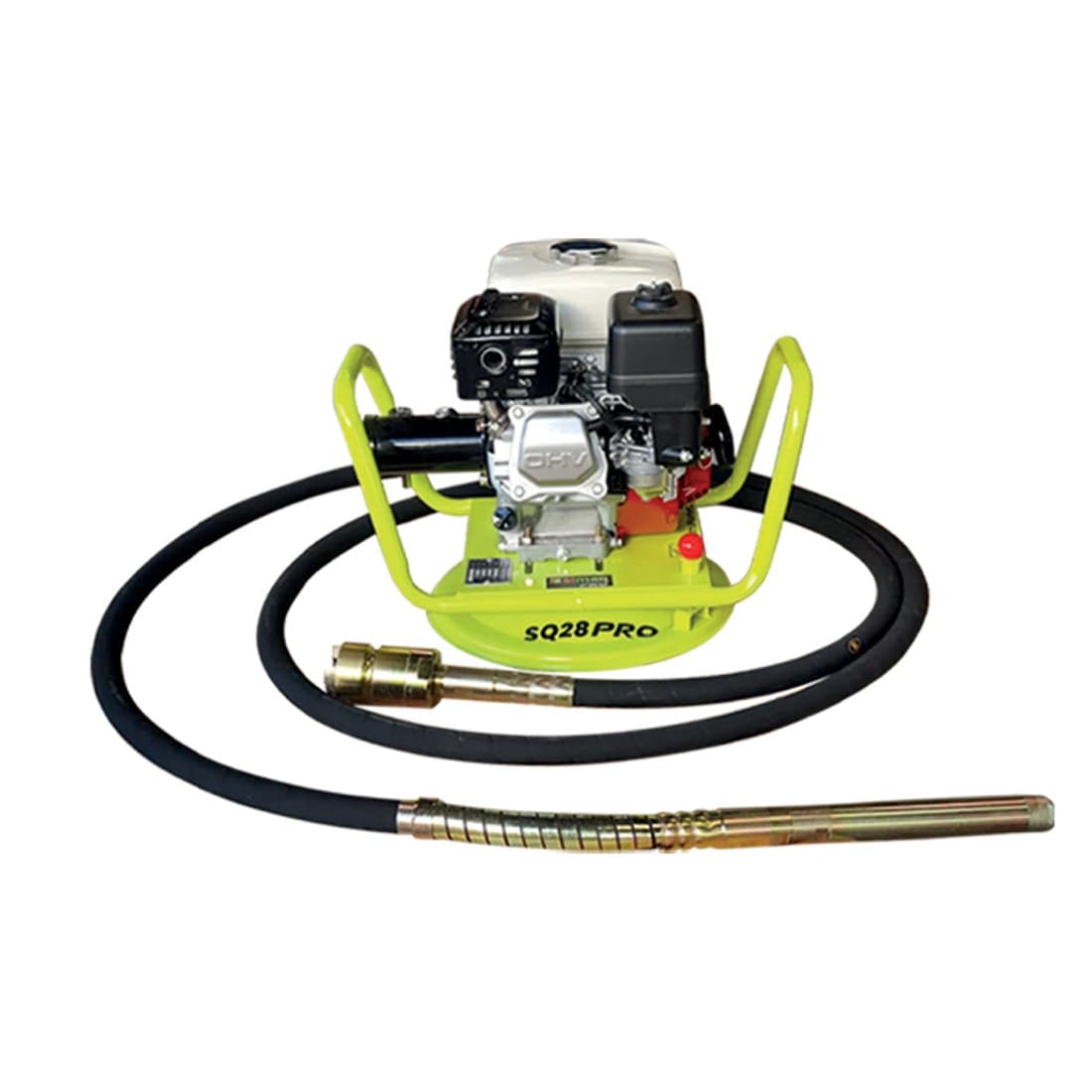
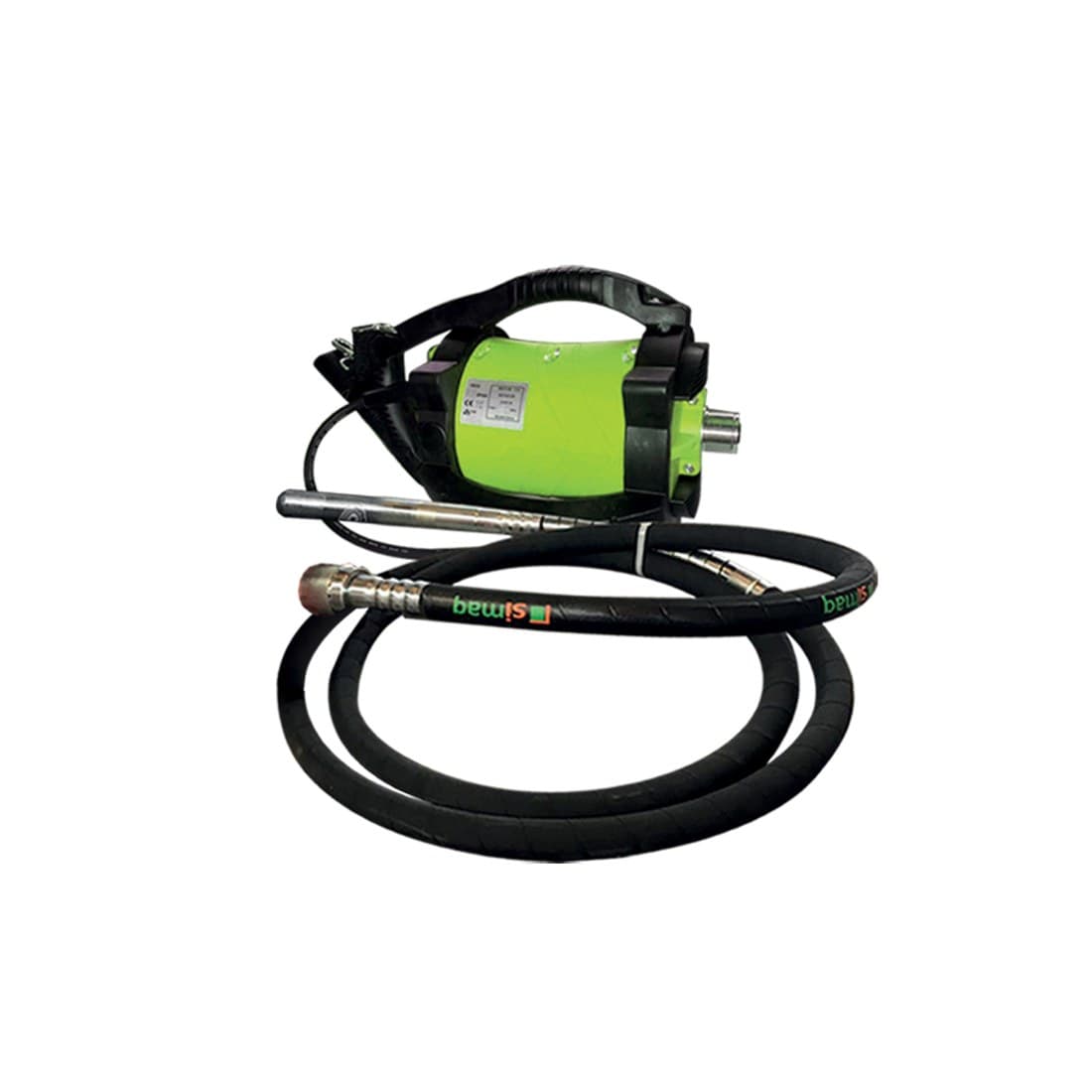
Honeycombs come from trapped air and poorly consolidated mix, almost always because the concrete wasn't vibrated or was vibrated badly. You prevent them by vibrating every layer: vibrator vertical, 5 to 15 seconds per point, points about 1.5 times the action radius apart and the tip reaching into the layer below. For columns and slabs, the SQ28 PRO (38 mm head, Honda GX160) or the electric SQVEH40; in narrow elements, the SQRVP1.5 mini vibrator (35 mm head).
Work it out with your numbersimmersion
per point
radius to overlap
What a honeycomb is and why it appears
A honeycomb is a spot where gravel was left without paste around it, with trapped air. It isn't cosmetic: it's a weak point where water gets in and the steel rusts. In a column or a beam, a large honeycomb changes how the element works.
- Not vibrating, or vibrating only the surface.
- Vibrating points too far apart: concrete is left unvibrated between them.
- A mix too dry for the amount of steel.
- Dropping the concrete from too high: the gravel separates from the paste.
- Formwork with open joints: the paste leaks out.
The technique: vertical, in fast and out slow
Insert the vibrator vertically and let it drop fast under its own weight, through the new layer until the tip enters the layer below: that knits the two together and avoids a cold joint. Don't drag it sideways to move the concrete; that separates the gravel.
Pull it out slowly, so the hole it leaves closes by itself. Pull it out fast and you leave an air-filled hole, which is exactly what you were trying to avoid.
How long and how far apart
Between 5 and 15 seconds per point is usually enough. The sign it's done: the surface levels off, a thin layer of shiny paste appears and large bubbles stop coming up. If you keep vibrating, the gravel sinks and water rises: that's segregation, and it weakens the concrete just like a honeycomb.
The action radius depends on the head and the mix. Watch for it on site: it's the circle around the vibrator where you see paste rise. Space the points about 1.5 times that radius, on an even grid, so the circles overlap and no concrete is left unvibrated.
Which vibrator for which element
| If you're pouring… | Use | Spec |
|---|---|---|
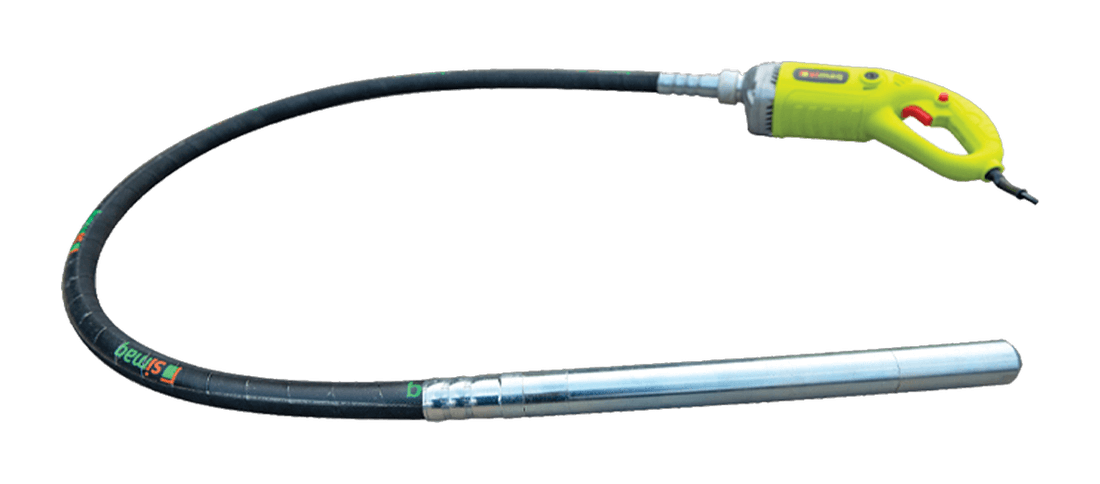
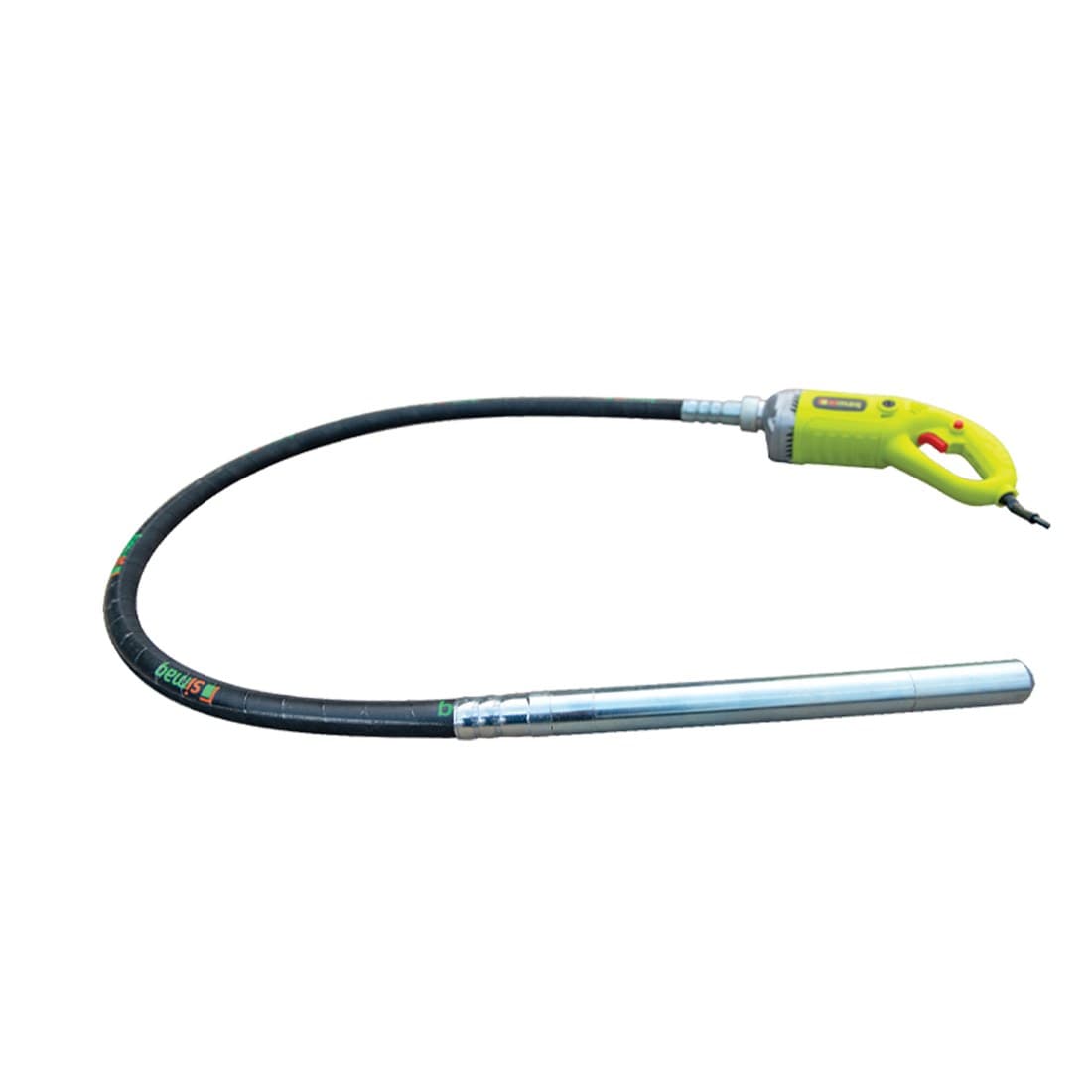
| Thin column, heavily reinforced wall or narrow element | SQRVP1.5 mini vibrator | 35 mm head, 12,000–16,000 VPM, 110 V |
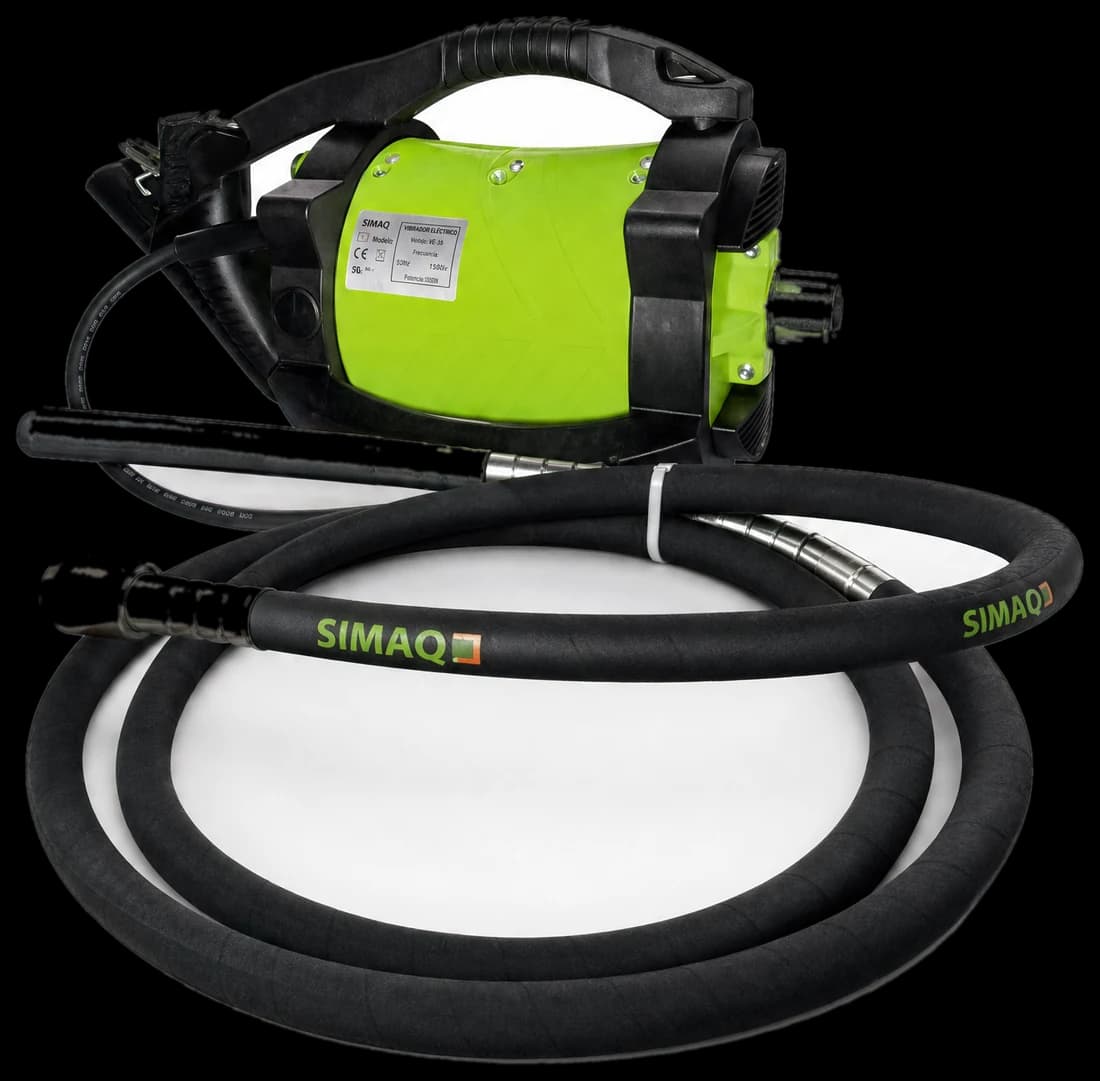
| Columns, beams and slabs with power on site | SQVEH40 electric vibrator | 5.8 kg, 4 m hose with a 38 mm head |
| Columns, beams and slabs without power | SQ28 PRO gas vibrator | 5.5 HP Honda GX160, 38 mm head |
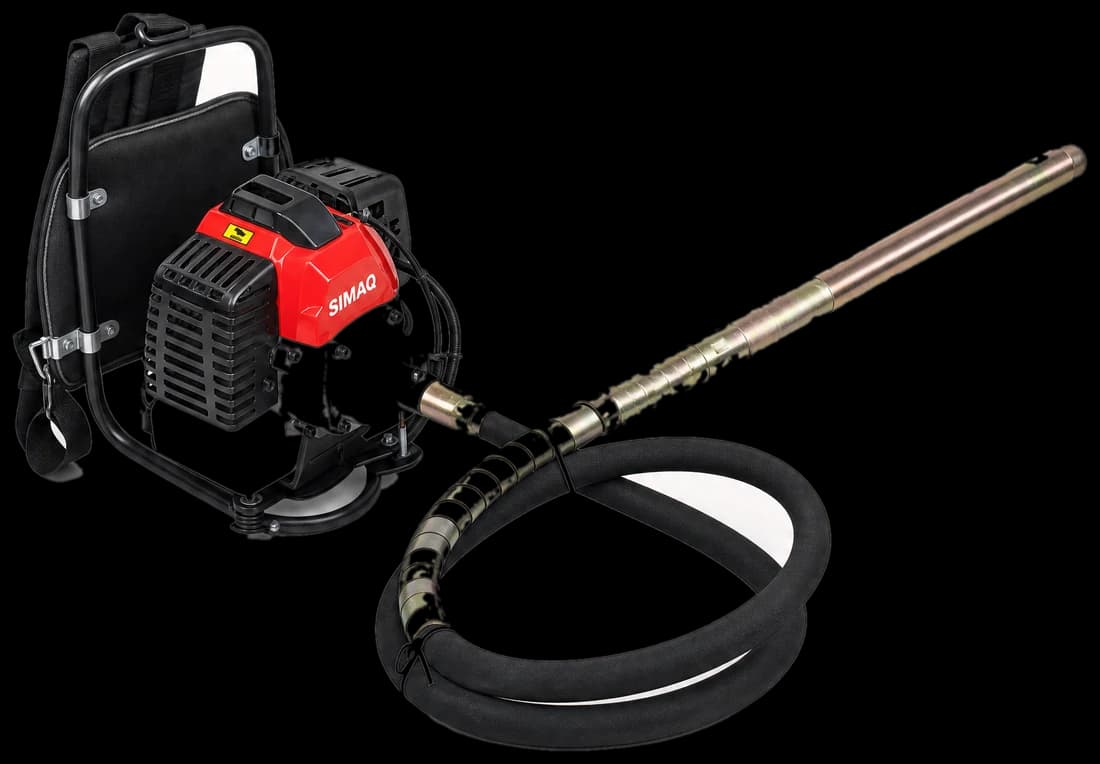
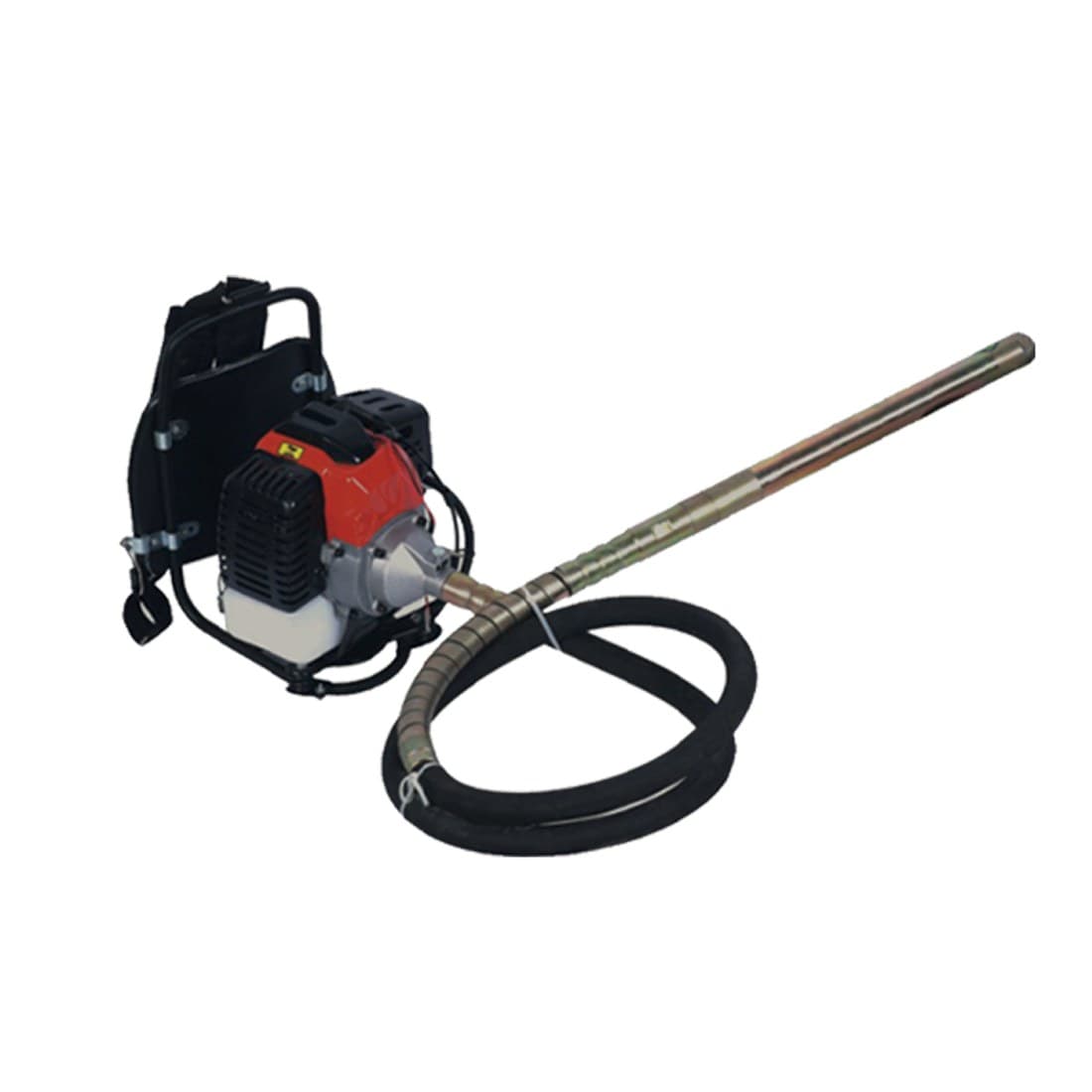
| Elevated slabs or fronts where you move a lot | SQMG28 backpack vibrator | Honda GX35, 38 mm shaft, 3 m hose |
| Large slab that also needs leveling | SQRVA6M PRO vibrating screed + immersion | The screed vibrates the surface in layers up to 200 mm |
If a honeycomb already showed up
Don't cover it with a coat of paste so it doesn't show: the void is still there. Tell the site manager. A shallow honeycomb in a wall is repaired by chipping back to sound concrete and filling with the material the project specifies; a deep one in a column or beam must be assessed by the engineer before work continues.
The best repair is the one you never need: a vibrator that works, an operator who knows the time per point and a backup vibrator on big pours.
Do it with your numbers
How far apart do you plunge the vibrator?
Your vibrator
SQ28 PRO
Petrol, long hose · 5.5 HP · 6 m hose
- Head
- 38 mm
- Consolidation diameter
- ≈ 38 cm
- Space insertions every
- 30 cm
- Points per m²
- ≈ 11.1
In slabs you don't dip point by point: drag the head almost horizontally, with passes the same 30 cm apart.
Practice it
Simulator: vibrate the slab
Put the poker in and see where honeycombing would be if the circles don't overlap.
Common mistakes
- Dragging the vibrator sideways to «move» the concrete: it separates the gravel.
- Leaving it too long in one spot: it segregates the mix.
- Pulling it out fast: it leaves an air pocket.
- Not reaching the layer below: a cold joint forms between layers.
- Resting the head against the steel or the formwork.
- Adding water to the mix so it «flows» instead of vibrating it.
Takeaway
Vertical, in fast and out slow, 5–15 s per point, points ~1.5 times the radius apart and the tip in the layer below. Mini vibrator for narrow elements; SQVEH40 or SQ28 PRO for columns, beams and slabs. Request a quote here for your pour's vibrator and an advisor will contact you during business hours.
Keep going
Take it to the job site
Print the checklist to go over it on site, or send the guide to your crew.
Frequently asked
How long do you vibrate concrete at each point?
Between 5 and 15 seconds, until the surface levels off and large bubbles stop. Longer segregates the mix.
How far apart do you insert the vibrator?
About 1.5 times the head's action radius, so the circles overlap. You can see the radius on site: it's where the paste rises.
What happens if I over-vibrate?
The gravel sinks and the water and paste rise. The concrete ends up weak on top and short of paste below.
Which vibrator do I use for columns?
In thin or heavily reinforced columns, the SQRVP1.5 mini vibrator (35 mm). In standard columns, the SQVEH40 if there's power or the SQ28 PRO if not.
Does tapping the formwork work instead of vibrating?
It helps the face come out better, but it doesn't replace internal vibration: the air in the middle only comes out with the vibrator inside.
SIMAQ · Job site checklist
Why does concrete honeycomb, and how do you vibrate to prevent it?
Honeycombs come from trapped air and poorly consolidated mix, almost always because the concrete wasn't vibrated or was vibrated badly. You prevent them by vibrating every layer: vibrator vertical, 5 to 15 seconds per point, points about 1.5 times the action radius apart and the tip reaching into the layer below. For columns and slabs, the SQ28 PRO (38 mm head, Honda GX160) or the electric SQVEH40; in narrow elements, the SQRVP1.5 mini vibrator (35 mm head).
What a honeycomb is and why it appears
- Not vibrating, or vibrating only the surface.
- Vibrating points too far apart: concrete is left unvibrated between them.
- A mix too dry for the amount of steel.
- Dropping the concrete from too high: the gravel separates from the paste.
- Formwork with open joints: the paste leaks out.
Avoid
- Dragging the vibrator sideways to «move» the concrete: it separates the gravel.
- Leaving it too long in one spot: it segregates the mix.
- Pulling it out fast: it leaves an air pocket.
- Not reaching the layer below: a cold joint forms between layers.
- Resting the head against the steel or the formwork.
- Adding water to the mix so it «flows» instead of vibrating it.
Job site:
Date:
Supervisor:
Scan it for the full guide, with video and FAQ
https://simaq.pro/en/recursos/vibrado-correcto-evita-nidos