Guide · 7 min
Parts of a concrete mixer: what each part is called and what it does
Also called: cement mixer, drum mixer
By the SIMAQ technical team · Grupo ConstruMarket ·
Short answer
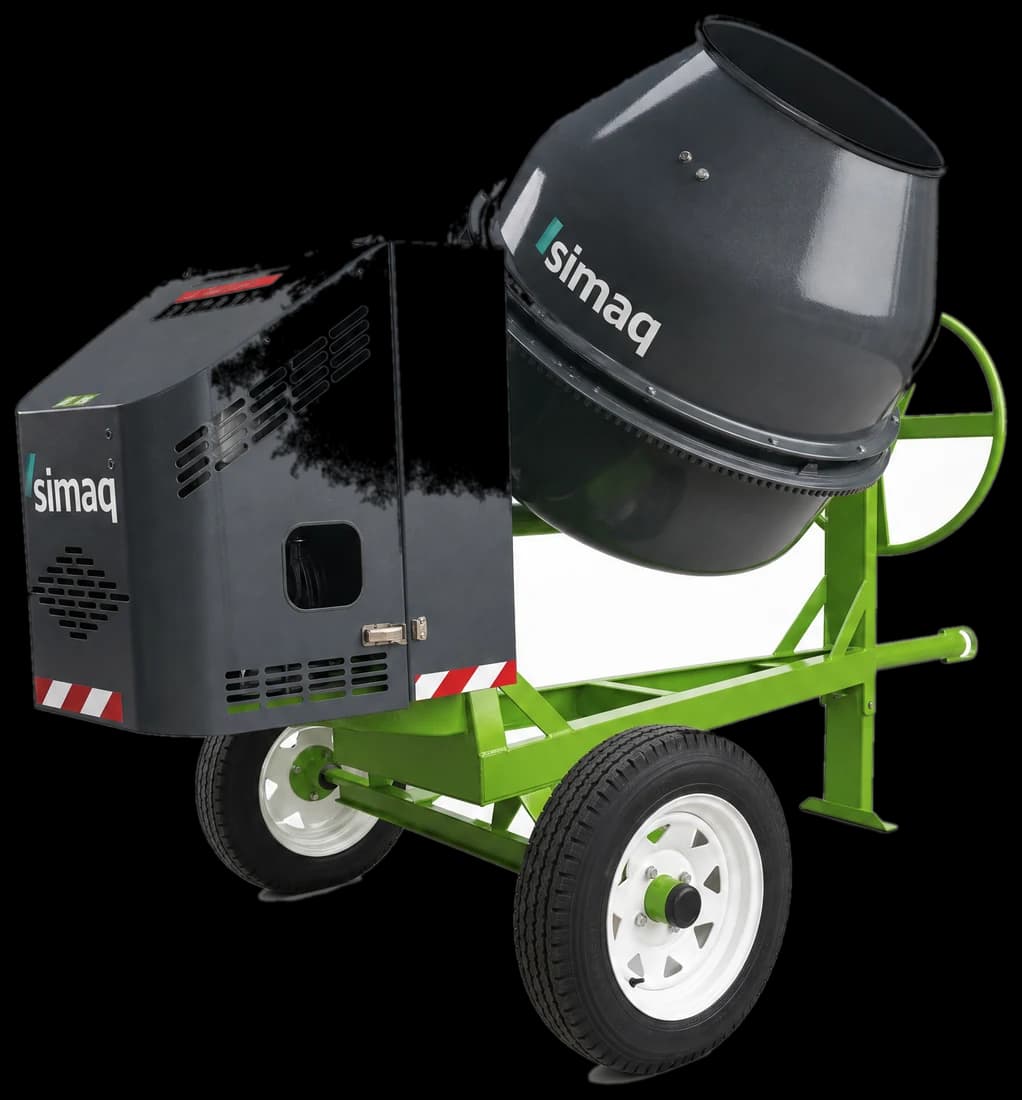
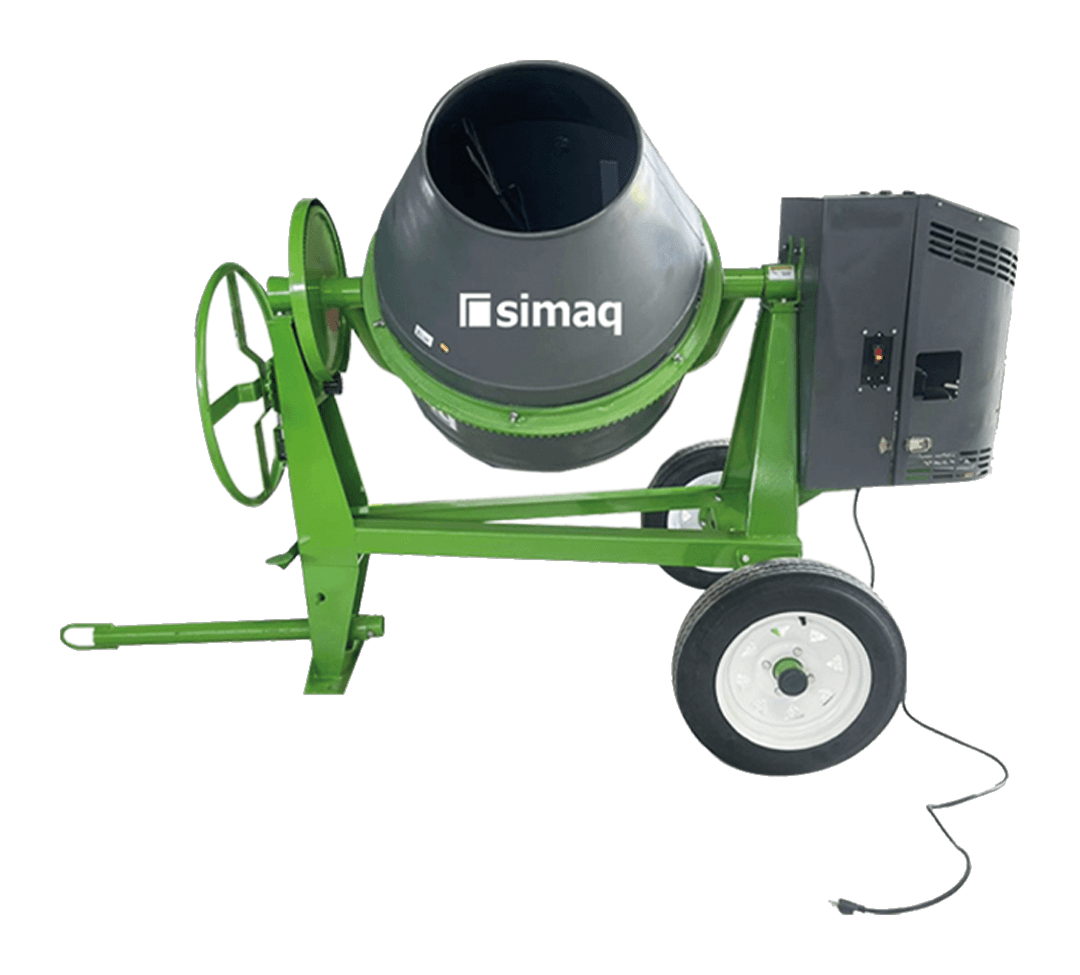
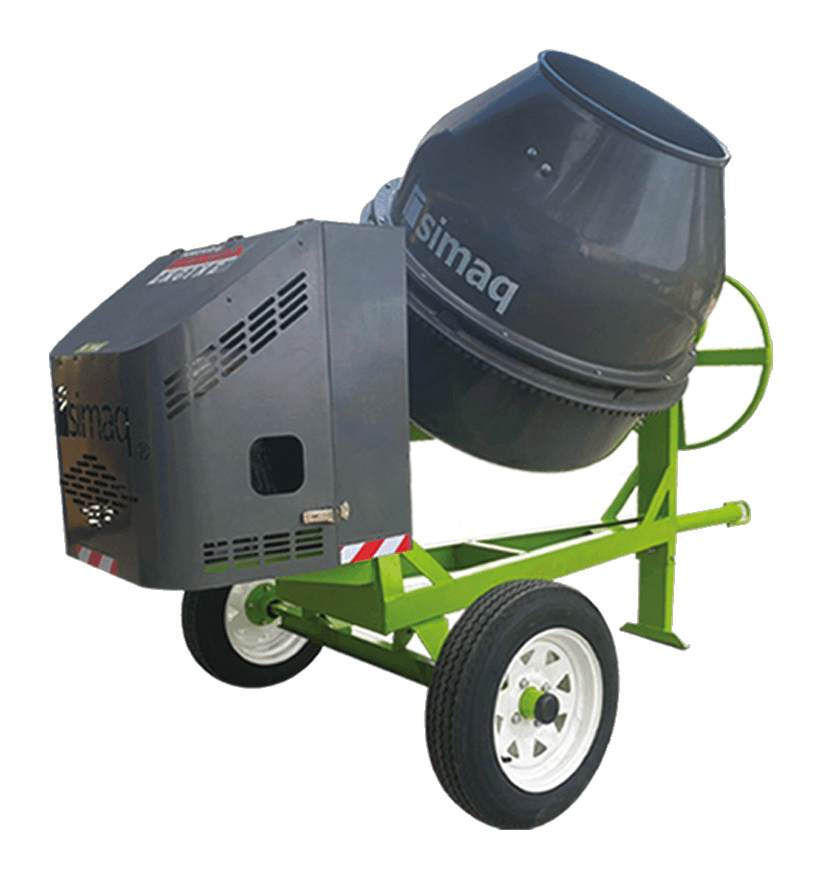
A concrete mixer has four groups of parts. The drum with its blades, which do the mixing inside. The drive: the motor turns a pulley, belts carry the power to a large pulley and a pinion turns the ring gear wrapped around the drum. The tilt: a handwheel to tip the drum and a brake or lock that holds it in place. And the chassis with its wheels and the bar for towing it. The parts that wear most are the belts, the drum-shaft bearings and seals, and the tyres.
groups of parts: drum, drive, tilt and chassis
sacks per batch (365 L and 550 L, per spec sheet)
first belt re-tension (manual)
The mixer's parts, one by one
These are the names in the SIMAQ manuals' parts breakdown, with what each part does. It works for both the gas and the electric mixer: the motor changes, the rest is the same.
| Part | What it does |
|---|---|
| Drum (hopper) | Holds the material and turns to mix it. |
| Mixing blades | Fixed inside: they lift and turn the mix on every revolution. |
| Ring gear | The toothed ring around the drum. On the 1.5-sack gas mixer it's cast iron, in one piece. |
| Pinion and reducer | The small gear that drives the ring gear and steps the motor speed down to drum speed. |
| Pulleys and V-belts | Carry the motor's rotation to the pinion shaft. A cover keeps them guarded. |
| Motor | A Honda gas engine, or an electric motor with its switch. |
| Handwheel | Tips the drum to empty it and brings it back. |
| Drum brake or lock | Pedal, bar or positioning disc that holds the drum at its angle. |
| Chassis, wheels and tow bar | Carry everything and let you move it on site or tow it. |
How power gets from the motor to the drum
The motor spins fast and the drum slowly: on the 1.5-sack gas mixer, about 25 turns a minute according to its spec sheet. That reduction happens in two steps. First, the motor's small pulley drives a large pulley through the belts: speed drops there. Then the pinion, on that pulley's shaft, meshes with the drum's ring gear and drops it again.
That's why, when the drum turns slowly or stalls under load, the first thing to check is the belts: if they slip, the motor sounds normal but the drum has no power. The second is that the ring gear and pinion are greased and have no missing teeth.
- Motor → small pulley → belts → large pulley → pinion → ring gear → drum.
- The 1.5-sack electric mixer runs two V-belts, per its parts list.
- The drum turns on a shaft with bearings and a gland or seals that keep the slurry out.
Gas or electric: which parts change
Drum, ring gear, pinion, handwheel, chassis and wheels are the same on both. What changes is the motor and what surrounds it.
| Gas | Electric | |
|---|---|---|
| SIMAQ models | SQREVG-365LTS (1.5 sacks) · SQREVG-550LTS (2 sacks) | SQREVE-365LTS (1.5 sacks) |
| Motor | Honda GX160 on the 1.5-sack · Honda GX390 on the 2-sack | Motor and switch assembly, with cover |
| What you check on the motor | Oil every day, air filter, spark plug and fuel | Cord, plug and switch; never spray water on it |
The parts that wear first
The parts list runs to more than fifty pieces, but only a few get replaced for wear. It pays to know them before they fail in the middle of a pour.
| Part | Sign it's due |
|---|---|
| V-belts | They squeal on start-up, the drum stalls under load, they look cracked or glazed. |
| Drum-shaft bearings and seals | Metal noise as it turns, play in the drum or slurry in the shaft. |
| Ring gear and pinion | A knock on every turn or teeth worn to a point. |
| Brake spring and lock | The drum won't hold its position and tips by itself. |
| Tyres and wheel axles | Low or cut tyre, a wheel that wobbles when you move it. |
The daily care that makes each part last
- Load and empty it with the drum turning, and don't switch it off with the mix inside.
- To empty it, hold the handwheel with one hand before releasing the brake; when the drum is back, lock the brake again before reloading.
- Re-tension the belts after the first 24 hours of use: pressed in the middle they shouldn't give more than about 6 mm (¼ inch), per the manual.
- At the end of the day, run the drum with gravel and water for about two minutes, empty it and hose it down inside and out.
- Dried concrete gets scraped off: don't beat the drum with a shovel, you'll dent it.
- Don't spray water on the motor. On the gas mixer, check the engine oil every day.
- Grease the grease points and check the lubrication of the reducer and the wheel bearings every so often.
How to order a spare without knowing the code
You don't need the part number. With three details, the advisor finds the part in your model's parts list:
- Your mixer's model, as shown on its plate (for example, SQREVG-365LTS).
- The part's name as it appears in this guide: «ring gear», «pinion», «belts», «handwheel».
- A photo of the part in place and of the area around it.
Common mistakes
- Switching the mixer off full: the drum restarts under strain and the mix starts setting inside.
- Releasing the brake without holding the handwheel: the drum tips all at once with the full load.
- Beating the drum with the shovel to knock off dried concrete.
- Leaving the belts slack because «it still pulls»: they slip, burn and the drum loses power.
- Washing the mixer by spraying water over the motor.
Takeaway
A mixer is four groups: drum with blades; drive (motor, pulleys, belts, pinion and ring gear); tilt (handwheel and brake); and chassis with wheels. What wears most is the belts, the drum bearings and seals, and the tyres. To order a spare you only need the model, the part's name and a photo. Ask for a quote here and an advisor in your country will confirm the part and availability.
Keep going
Take it to the job site
Print the checklist to go over it on site, or send the guide to your crew.
Frequently asked
What are the parts of a concrete mixer?
Drum with mixing blades; ring gear and pinion; pulleys and belts; gas or electric motor; handwheel to tip the drum and a brake or lock; and a chassis with wheels and a tow bar.
What's the big gear on the drum called?
The ring gear. A small gear, the pinion, drives it. On the SIMAQ 1.5-sack gas mixer, the ring gear is cast iron, in one piece.
Why does the drum turn slowly or stall under load?
It's almost always loose or worn belts: the motor sounds normal but the power doesn't get through. Check their tension (no more than about 6 mm when pressed) and that the ring gear and pinion are greased.
What's the difference between an electric and a gas mixer?
Only the motor and what surrounds it. Drum, ring gear, pinion, handwheel and chassis are the same. The gas one runs a Honda engine (oil, air filter, spark plug); the electric one, a motor, switch and cord.
How do I order a mixer spare part?
With the model from the plate, the part's name and a photo. The advisor finds it in your model's parts list; you don't need the part number.
SIMAQ · Job site checklist
Parts of a concrete mixer: what each part is called and what it does
A concrete mixer has four groups of parts. The drum with its blades, which do the mixing inside. The drive: the motor turns a pulley, belts carry the power to a large pulley and a pinion turns the ring gear wrapped around the drum. The tilt: a handwheel to tip the drum and a brake or lock that holds it in place. And the chassis with its wheels and the bar for towing it. The parts that wear most are the belts, the drum-shaft bearings and seals, and the tyres.
How power gets from the motor to the drum
- Motor → small pulley → belts → large pulley → pinion → ring gear → drum.
- The 1.5-sack electric mixer runs two V-belts, per its parts list.
- The drum turns on a shaft with bearings and a gland or seals that keep the slurry out.
The daily care that makes each part last
- Load and empty it with the drum turning, and don't switch it off with the mix inside.
- To empty it, hold the handwheel with one hand before releasing the brake; when the drum is back, lock the brake again before reloading.
- Re-tension the belts after the first 24 hours of use: pressed in the middle they shouldn't give more than about 6 mm (¼ inch), per the manual.
- At the end of the day, run the drum with gravel and water for about two minutes, empty it and hose it down inside and out.
- Dried concrete gets scraped off: don't beat the drum with a shovel, you'll dent it.
- Don't spray water on the motor. On the gas mixer, check the engine oil every day.
- Grease the grease points and check the lubrication of the reducer and the wheel bearings every so often.
How to order a spare without knowing the code
- Your mixer's model, as shown on its plate (for example, SQREVG-365LTS).
- The part's name as it appears in this guide: «ring gear», «pinion», «belts», «handwheel».
- A photo of the part in place and of the area around it.
Avoid
- Switching the mixer off full: the drum restarts under strain and the mix starts setting inside.
- Releasing the brake without holding the handwheel: the drum tips all at once with the full load.
- Beating the drum with the shovel to knock off dried concrete.
- Leaving the belts slack because «it still pulls»: they slip, burn and the drum loses power.
- Washing the mixer by spraying water over the motor.
Job site:
Date:
Supervisor:
Scan it for the full guide, with video and FAQ
https://simaq.pro/en/recursos/partes-de-una-concretera-y-para-que-sirve-cada-una