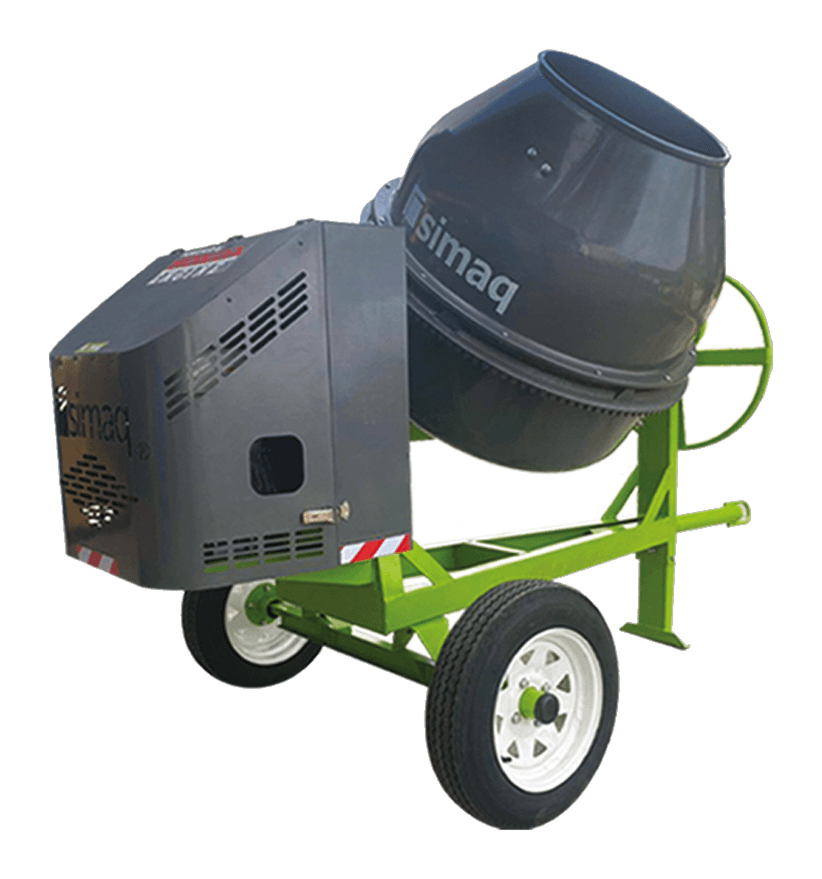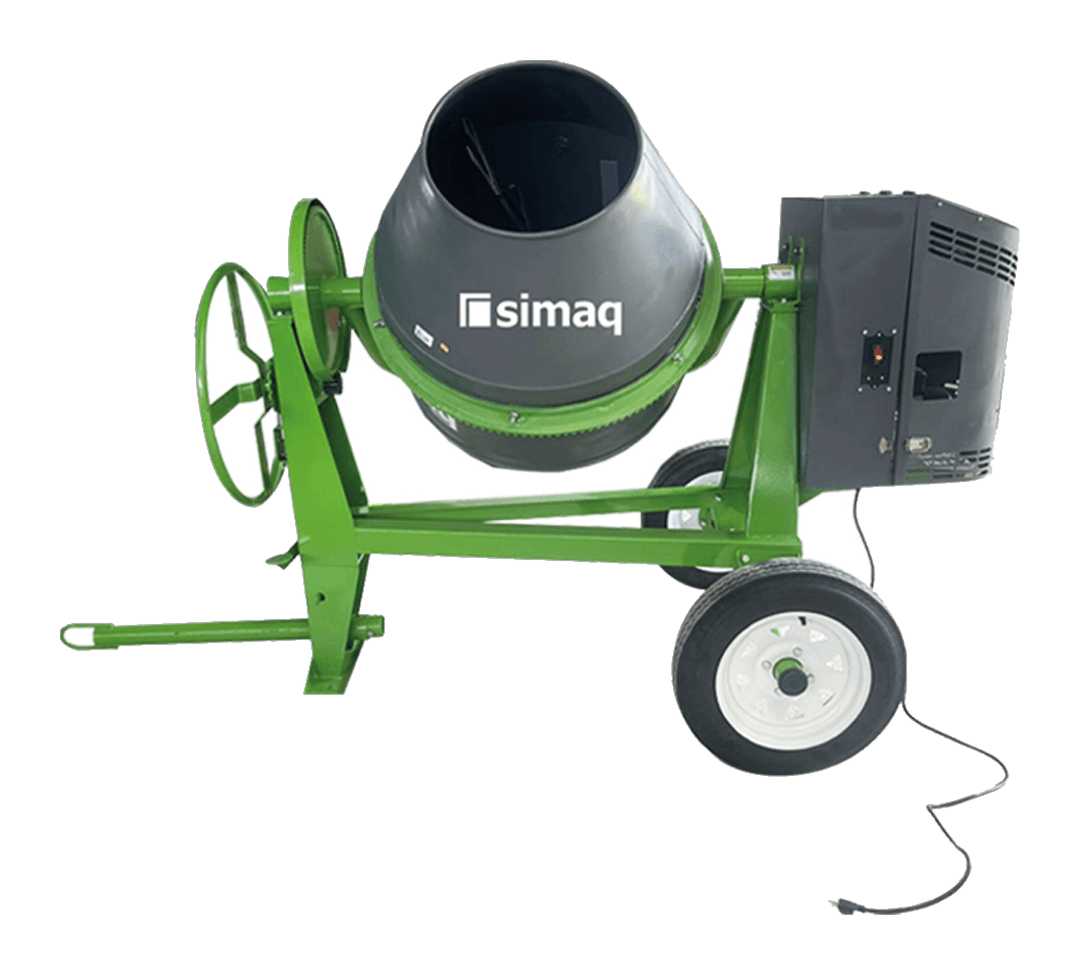
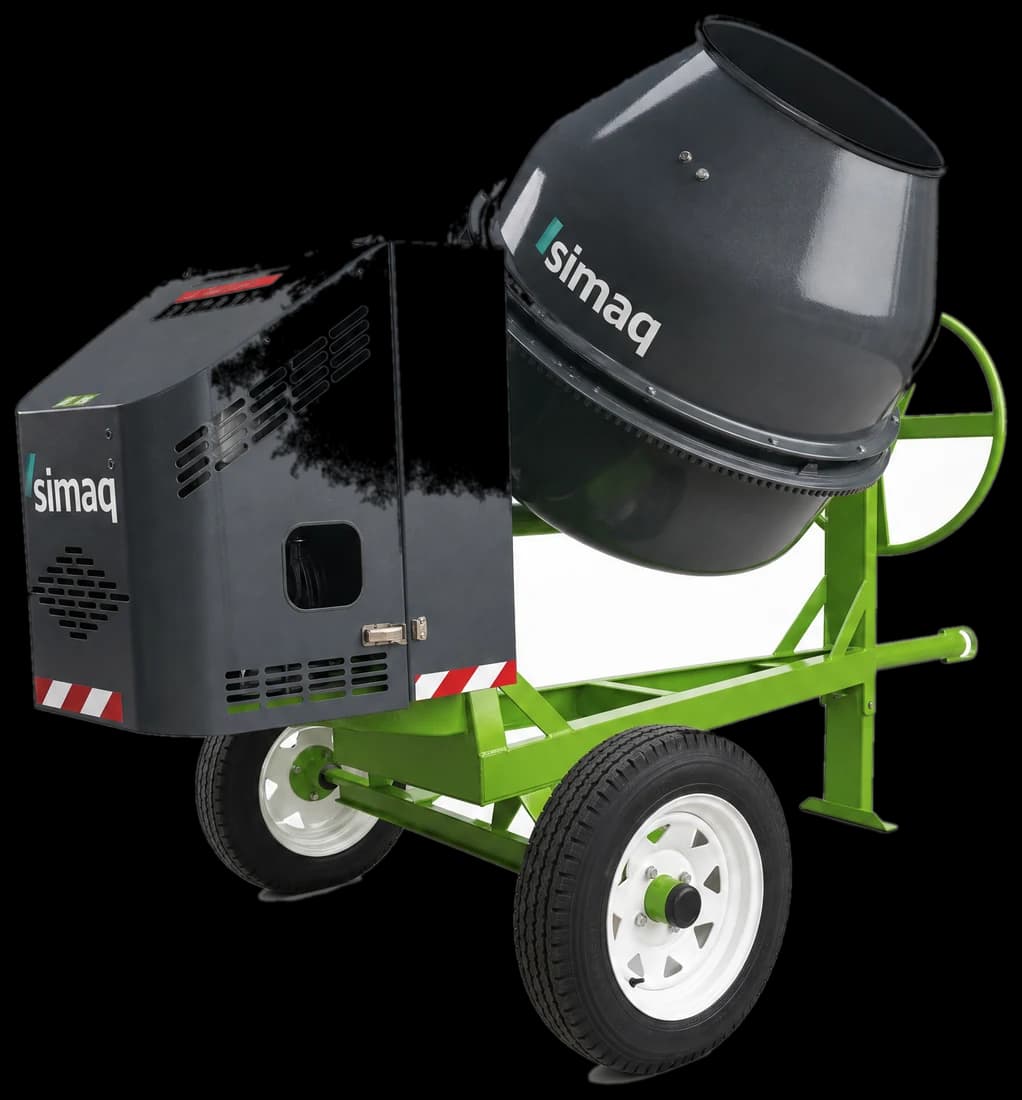
SQREVG365LTS
Concrete mixer SQREVG365LTS
Even mix, pour after pour.
View details5-minute training
5 minSet the mixer on firm, level ground: with the drum turning, add part of the water, then gravel, cement, sand and the rest of the water, and mix 2–3 minutes until the color is even. SIMAQ has the SQREVG365LTS (1.5 sacks, Honda GX160), the SQREVG550LTS (2 sacks, Honda GX390) and the electric SQREVE-365LTS. A 1.5-sack batch yields about 0.12 m³ of concrete.
Also called: concrete mixer, cement mixer, drum mixer
The mixer blends evenly and on time; proportion and load order decide the strength of your pour. When a batch comes out wrong it's rarely the machine: it's extra water, load order or mixing time.
Set the mixer on firm, level ground with the brake or chocks on. Grease the marked points and check the engine oil.
With the drum turning, add part of the water first so material won't cake on the bottom.
Add gravel, then cement, then sand and the rest of the water. Keep your proportion for the application and don't exceed the drum's capacity (1.5 or 2 sacks).
Let it turn to uniform color and texture. If you see lumps, give it a bit longer; leave it too long and the mix dries out and segregates.
Dump it fully, not halfway. If you'll stop for a while, throw water and gravel into the turning drum to scour it before anything sets.
Do this
Avoid this
Safety
Test yourself
Each practice: do it or avoid it? Tap your answer.
Never put a shovel or hand into the turning drum.
Load to rated capacity (sacks per batch), no more.
Wash the drum at day's end: set concrete ruins it.
Don't let mixed concrete sit until it starts to set.
Stick to your mix-design proportion per application.
Don't add extra water to make it 'flow': it kills strength.
Don't run it on uneven ground: the drum spills sideways and the machine walks.
If the mix comes out dry → adjust the next batch from the design water; don't add water to the one you're about to pour.
Shorts
Buying guides
Drum, blades, ring gear, pinion, pulleys and belts, motor, handwheel and brake, chassis and wheels: what each part of a concrete mixer does, which ones wear first and how to order a spare without knowing the code.
Read Guide · 6 minWhen a wheelbarrow is enough, when a 4×4 dumper like the Urban 1500 multiplies progress and when you need a skid steer. Simple criteria and common mistakes.
Read Guide · 6 minSwitch, fuel, oil, choke, filter and plug: the in-order check for plate compactors, rammers, mixers and pumps, and when to take it in for service.
ReadFAQ
With the drum turning: part of the water, gravel, cement, sand and the rest of the water. That way nothing cakes on the bottom and the cement spreads evenly.
2 to 3 minutes from the last material in, until color and texture are even. Less leaves lumps; much more dries the mix out.
Home builds or medium pours → 1.5 sacks (365 L). Big pours or a big crew → 2 sacks (550 L). Indoors or noise-restricted → the electric SQREVE-365LTS. The guide on choosing a concrete mixer compares them.
With 1.5 sacks of cement you get about 0.12 m³ per batch, depending on your mix. Use it to work out how many batches each pour needs.
Adding extra water so the mix 'flows': the concrete loses strength. If you need better workability, adjust the mix design, not the water.
The advisor confirms it in your quote, along with the outlet your site needs. What the spec sheet says: a 5.5 HP motor and a 365 L drum.
Get a quote without leaving
Want to work it out with an advisor?
Tell us about the job and we'll build the package. A rep replies during business hours.