
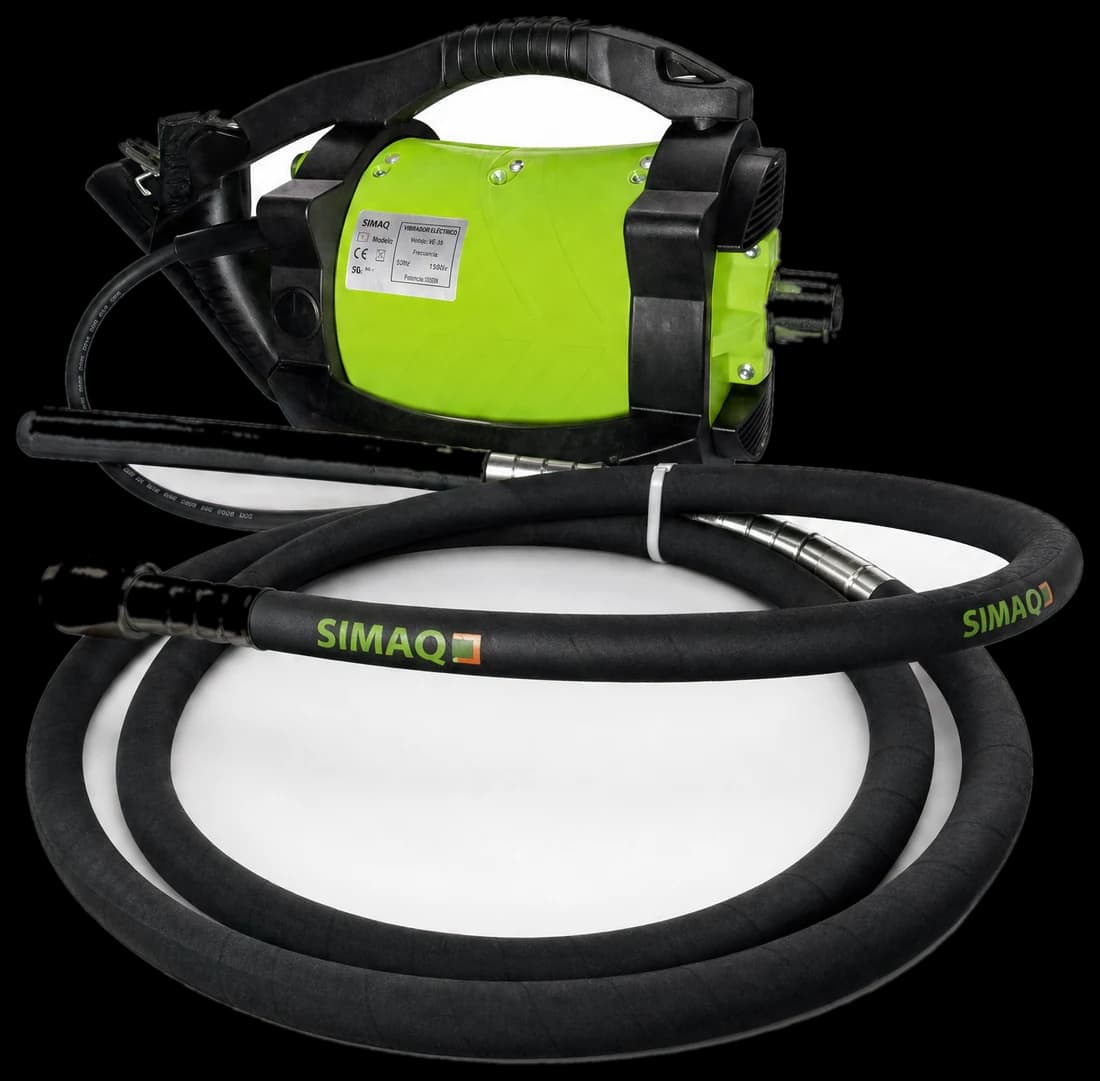
SQVEH40
Concrete vibrator SQVEH40
Drives out air for dense, void-free pours.
View detailsSIMAQ School · Course
Vibrating concrete means plunging an immersion vibrator into the fresh mix to drive out trapped air so it fills the whole form with no honeycombing. Plunge it fast, hold it still 5–15 seconds per spot until a thin sheen of paste appears, pull it out slowly, and repeat every 30 cm with a 38 mm head like the SQ28 PRO or the SQMG28 PRO.
Honeycombing doesn't appear when you strip the forms. It appears on pour day, between one insertion and the next.
Why you vibrate
When conventional concrete is poured, the mix doesn't fill every space in the form on its own: air stays trapped between its materials, around the reinforcing steel and in the corners. Vibration briefly reduces the friction between particles; the mix settles, the air escapes and the concrete fills the spaces better.
Voids, honeycombing and areas where the concrete doesn't properly surround the reinforcement appear. Some defects show when the form comes off; others stay hidden inside the element and may need assessment and repair.
The fundamental
A vibrator head consolidates a circle of roughly ten times its diameter. A 38 mm head reaches about 38 cm. That number decides everything else.
Concrete between insertions never got vibrated. Air and mortar-starved gravel stay there: classic honeycombing, invisible until stripping.
Circles overlap and leave no dead zone. It's the only way to guarantee the whole element was consolidated, not just the entry points.
No structural harm, but you waste time redoing done work — and on a pour, time is set.
The largest head that passes freely between bars is the one that performs. Tell us your element and your rebar.
Your vibrator
SQ28 PRO
Petrol, long hose · 5.5 HP · 6 m hose
In slabs you don't dip point by point: drag the head almost horizontally, with passes the same 30 cm apart.
Before you buy: vibrating screed or immersion vibrator? · electric, petrol or backpack vibrator · SQRVP1.5 electric mini vibrator
Practice
Put the poker where you would on site. When you finish the pour, whatever wasn't vibrated shows in red: that's where the honeycombing would be.
The technique
1
One movement to the bottom of the lift. Going down slowly pushes air downward instead of letting it escape.
2
A few seconds, until the concrete stops settling and a thin sheen of paste appears. That's when the air is out.
3
3 to 5 cm per second. Yanking it out opens a channel the concrete can't close: an air tube left inside the element.
When pouring over a previous lift, sink the head ~10 cm into it while it's still plastic: the two knit into one piece with no hidden cold joint.
The seconds are a guide, not a rule: there's no single vibration time for every case. It depends on the mix and the equipment; aim for uniform compaction and don't keep vibrating needlessly, especially with mixes prone to segregation.
Self-compacting concrete: it needs a different procedure and shouldn't automatically be treated as conventional concrete. Train the operator and follow the site technical lead's procedure.
Using the vibrator to move concrete
Dragging it sideways to spread the mix separates gravel from mortar. Place concrete with a shovel; the vibrator only consolidates.
Touching the rebar
A vibrating bar loses bond with the concrete around it, then telegraphs or cracks at the surface. Keep the head clear.
Hitting the formwork
Closer than 10 cm to the mould, grout leaks through the joints and leaves stains and porosity on the exposed face.
Running it in the air
The vibrator is cooled by fresh concrete. In air it overheats, shortening head and hose life.
Over-vibrating
Going too far segregates the mix: gravel sinks, water rises. You get a milky surface and a weak layer right at the top.
The vibrators
Drives out air for dense, void-free pours.
View details
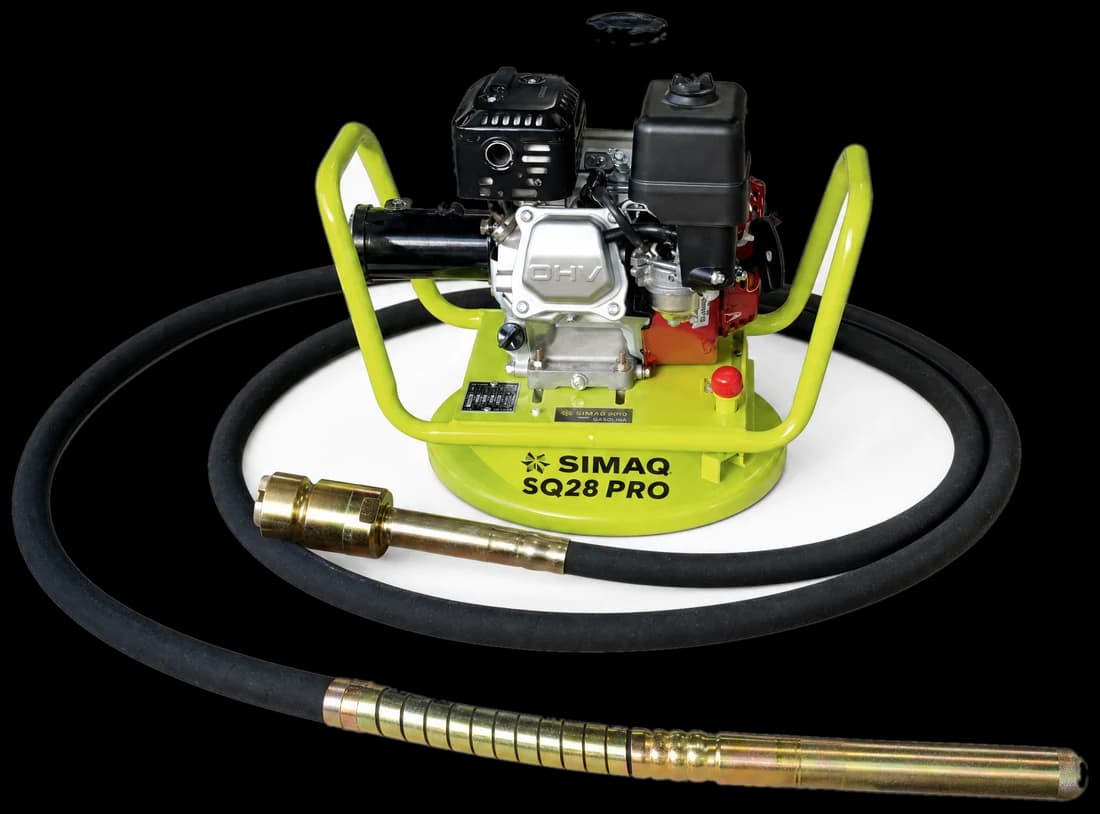
Drives out air for dense, void-free pours.
View details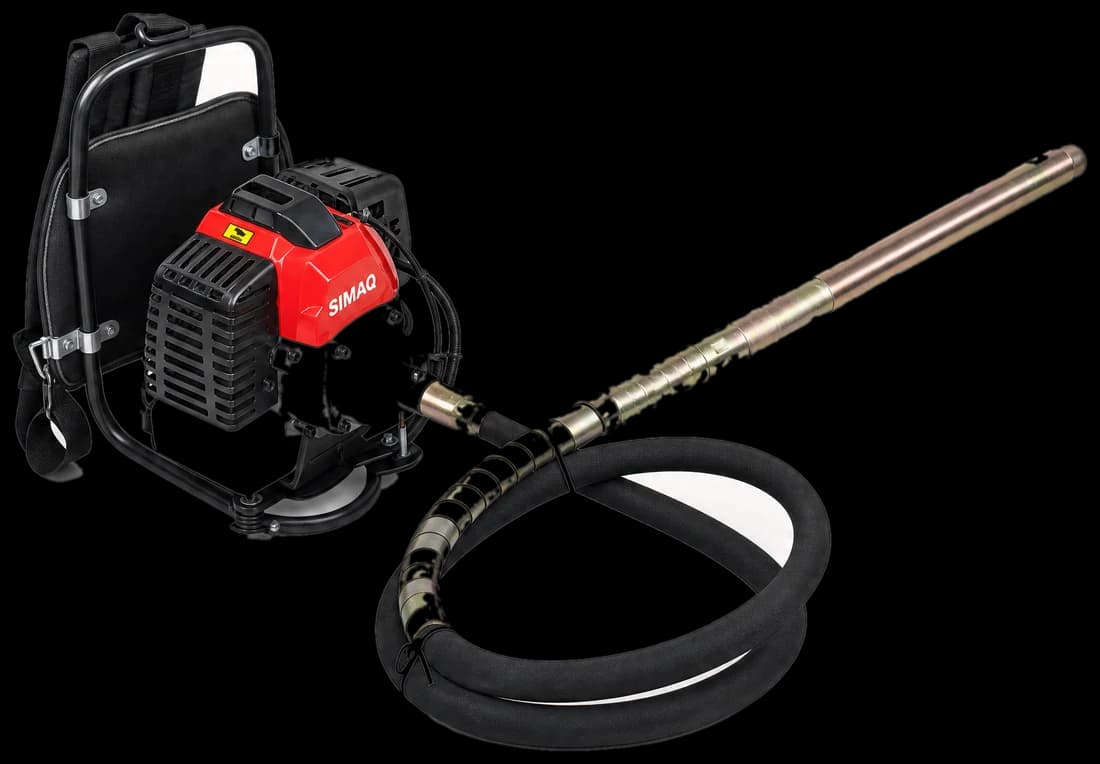
Drives out air for dense, void-free pours.
View details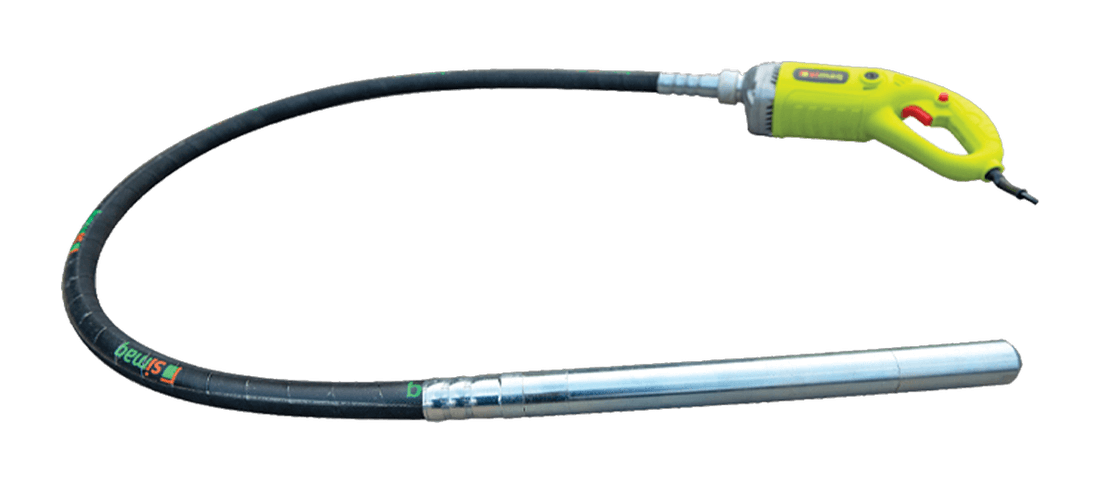
Handheld electric vibrator with flexible shaft, for columns and small pours.
View detailsWatch it
FAQ
It's shaking fresh concrete with a vibrator to drive out trapped air so the mix fills the form and wraps the rebar. Without it you get honeycombing (voids) that costs strength and shows up when you strip the forms.
Plunge the vibrator fast to the bottom of the lift, hold it still 5–15 seconds until a thin sheen of paste appears, and pull it out slowly, 3–5 cm per second. Then repeat at the next point, overlapping the previous circle.
A head consolidates a circle of about ten times its diameter: with 38 mm, about 38 cm. For the circles to overlap, space insertions about 30 cm apart with the SQ28 PRO or SQMG28 PRO, both with a 38 mm head.
Between 5 and 15 seconds, until the concrete stops settling, the vibrator's sound steadies and a thin sheen of paste appears. If the surface turns milky and water rises, you've overdone it.
No. Dragging it to spread the mix separates gravel from mortar: place concrete with a shovel and use the vibrator only to consolidate. Don't touch the rebar or the formwork with the head either.
If you have power and work indoors, the electric SQRVP1.5 mini vibrator (110 V, 35 mm head). With no power or lots of moving around, the SQMG28 PRO backpack; for big pours, the SQ28 PRO with a 5.5 HP Honda engine. On thin slabs a vibrating screed does better.
Get a quote without leaving
Want to work it out with an advisor?
Topic: Concrete vibrators
Keep learning
Tell us about the job and we'll build the package. Same-day reply.