Guide · 7 min
How do you cut asphalt and concrete? Blade, depth and water
Also called: floor saw, concrete saw, road saw
By the SIMAQ technical team · Grupo ConstruMarket ·
Short answer
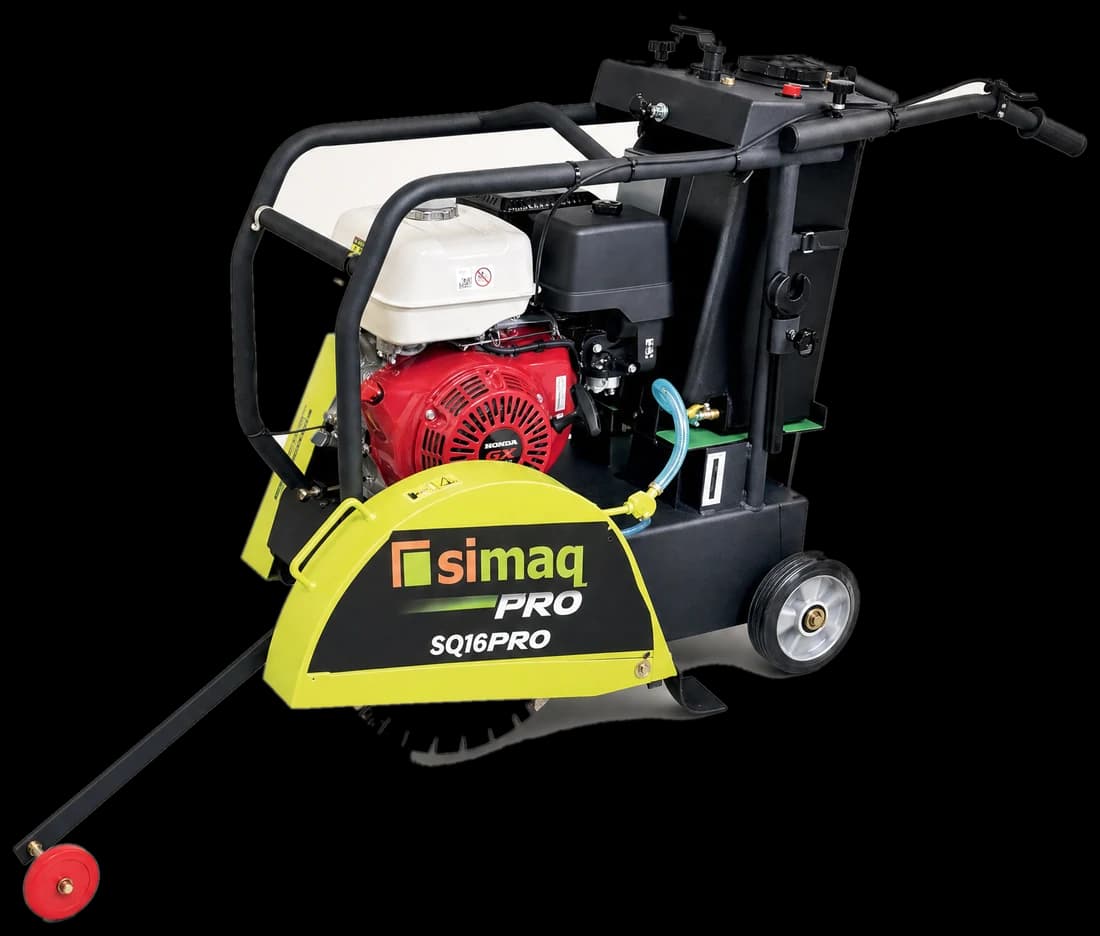
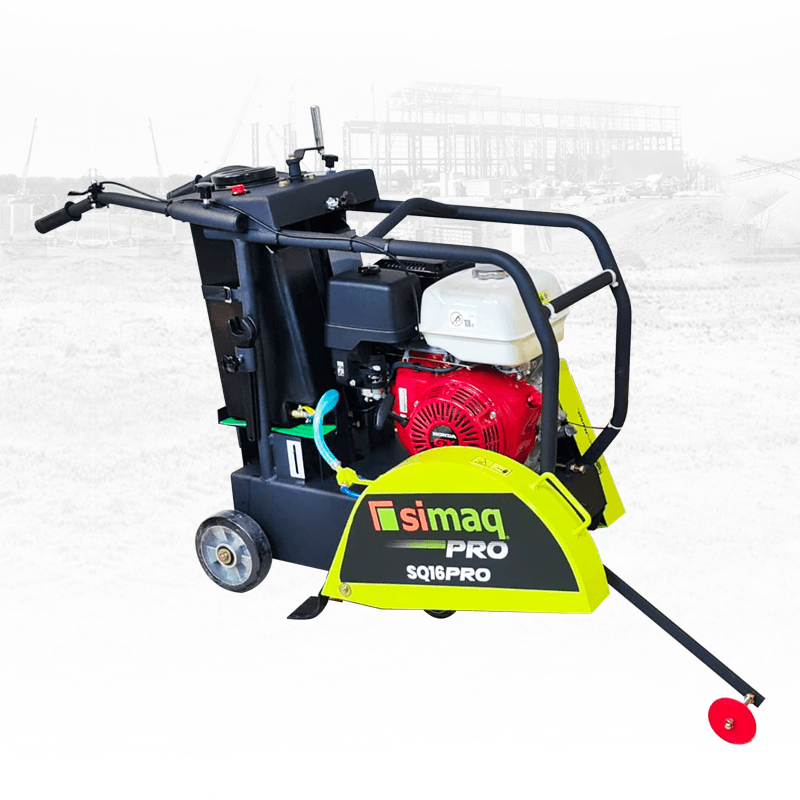
With a floor saw, a diamond blade for the right material (asphalt or concrete), wet cutting and depth in passes of 2 to 5 cm until you reach full depth. Mark the line, set up signage if you're on the road and don't force the machine. The SIMAQ SQ16 PRO (Honda GX390, 13 HP) cuts up to 130 mm deep with 300 to 450 mm blades and has a 30 L water tank.
SQ16 PRO max depth
per pass
water tank
The blade: one for asphalt, one for concrete
The diamond blade isn't universal. Concrete and asphalt blades have a different diamond bond: cut asphalt with a concrete blade and the abrasive asphalt eats the blade. Always use the one for the material you're cutting and mount it in the direction the arrow shows.
Diameter sets depth: the SQ16 PRO takes 300 to 450 mm (12″ to 18″) blades and reaches 130 mm deep. The saw comes with 400 mm (16″) concrete blades; if you'll cut asphalt, ask for the asphalt blade in your quote.
Water, always: wet cutting
Water cools the blade, extends its life and keeps dust down. Concrete cutting dust carries silica, the kind that harms lungs: dry-cutting with a blade made for water ruins the blade and exposes the crew. Fill the 30 L tank and check water flows on both sides of the blade before lowering it.
Depth: in passes, not all at once
Go down 2 to 5 cm per pass until you reach full depth. Forcing full depth at once overheats the blade, bogs the engine and pulls the cut off line.
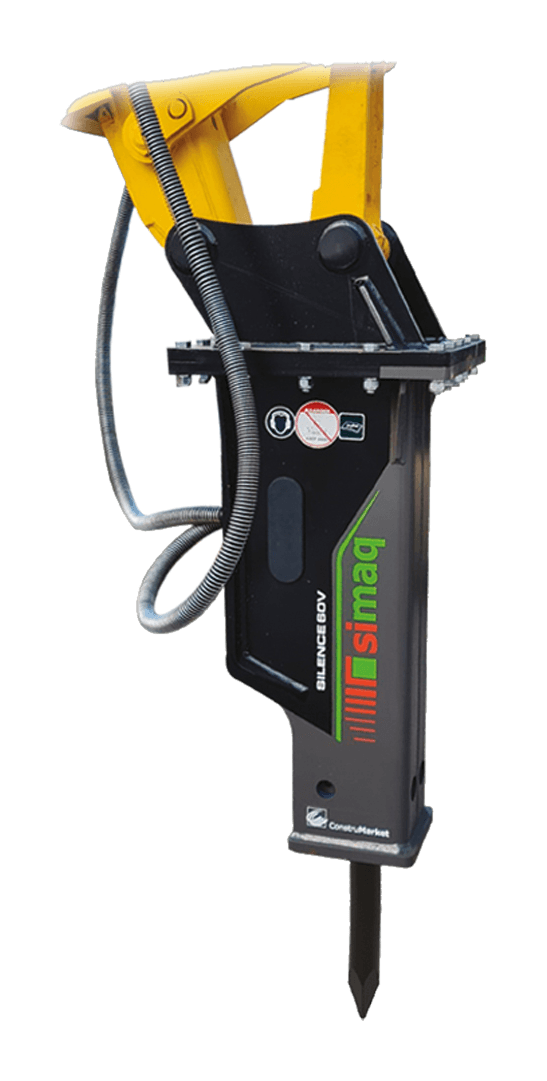
How deep? For a control joint in a new slab, about ¼ of the thickness. To remove a panel or open a trench, the cut has to go through the layer you're taking out; if it's thicker than the saw's 130 mm, finish breaking it with a hydraulic hammer.
Step by step
At the end of the day, wash the machine and check the blade: one with worn or damaged segments cuts crooked and runs hot. Also check the Honda GX390 engine oil per its maintenance routine.
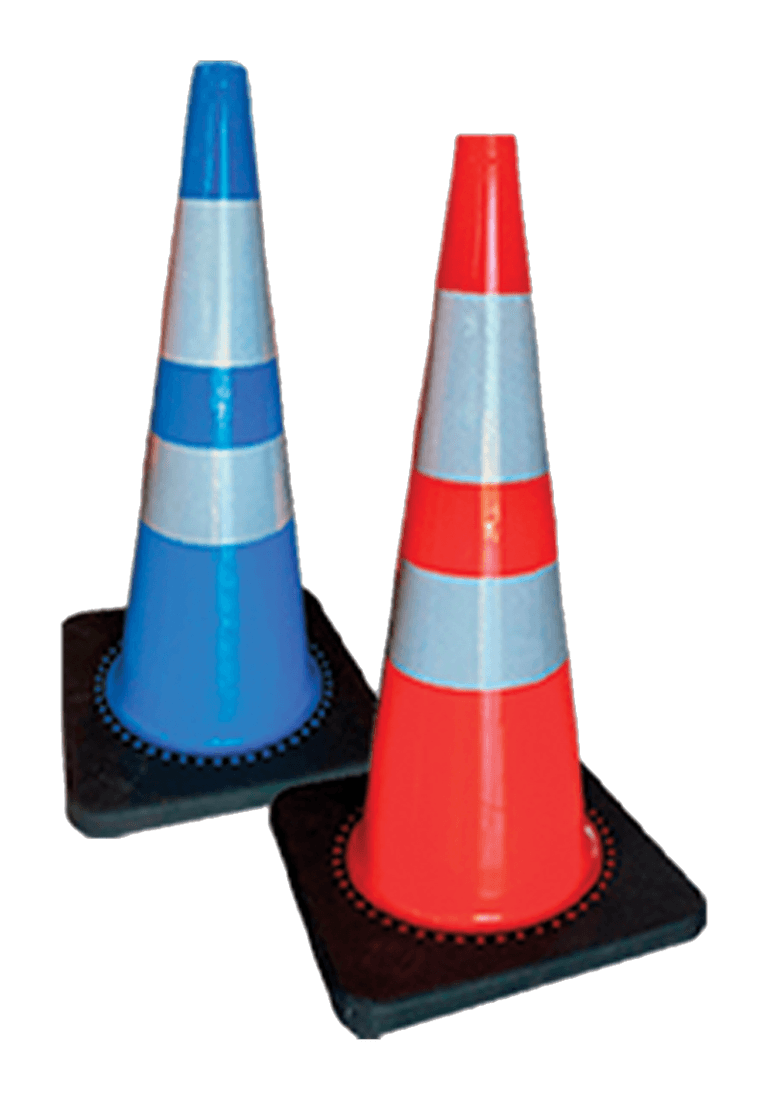
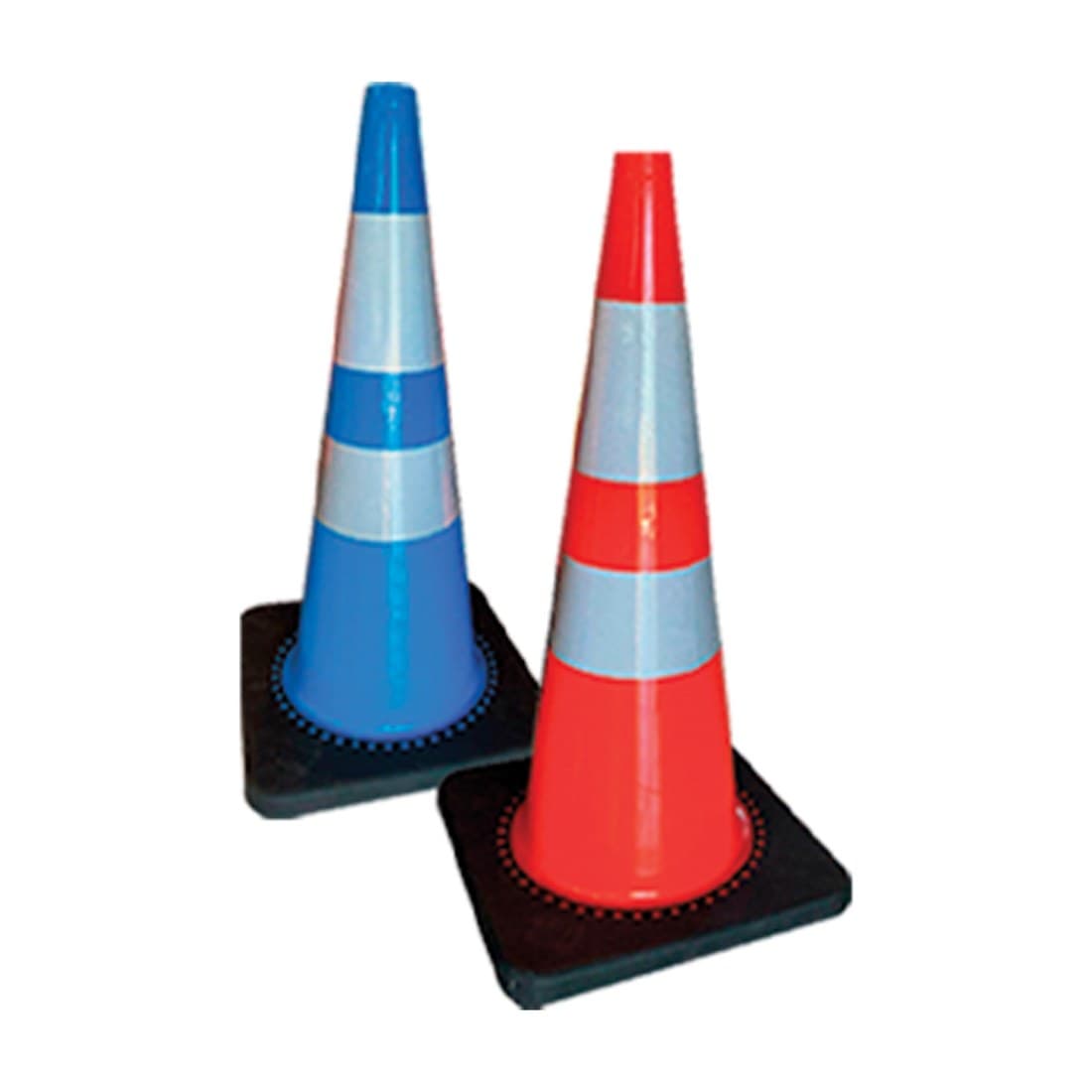
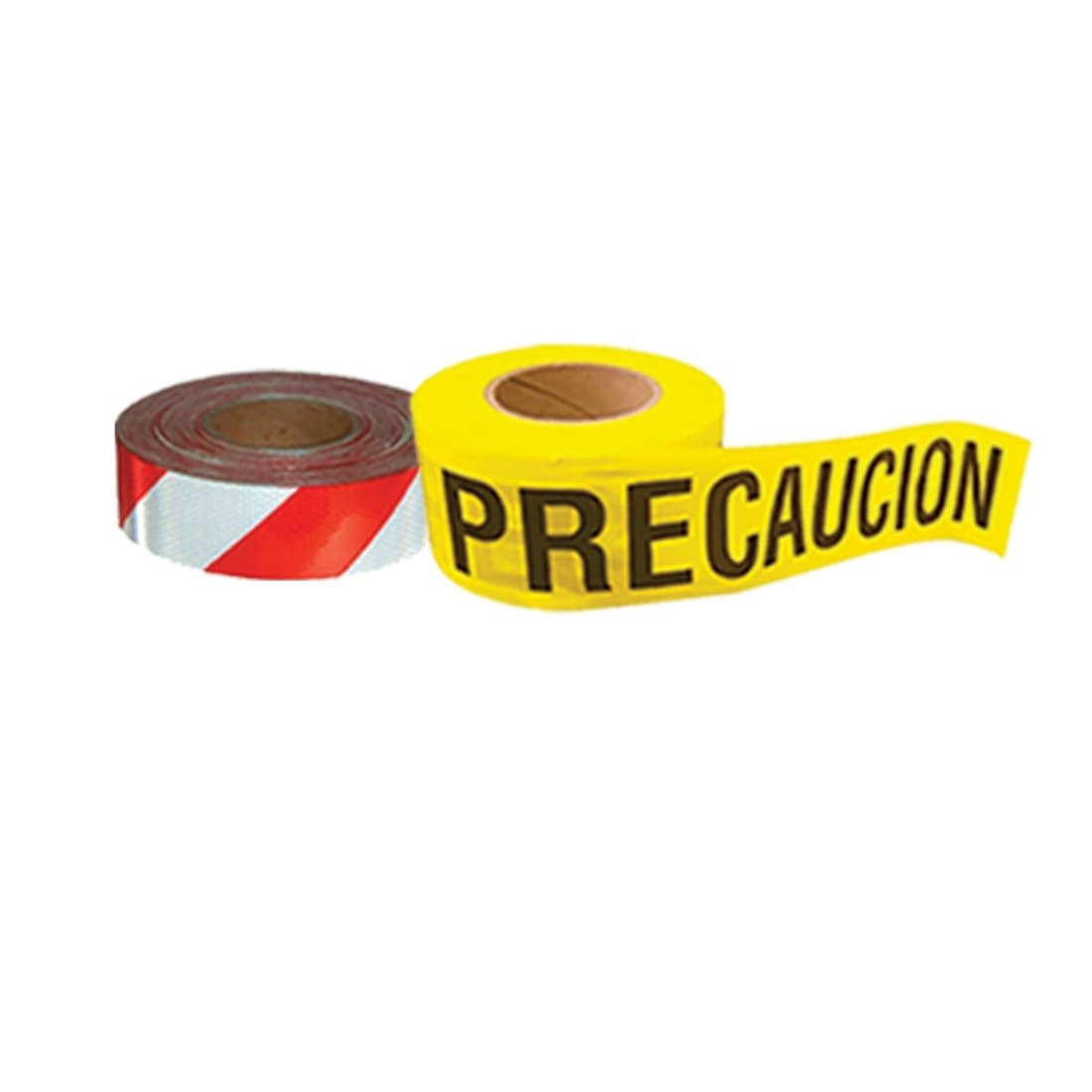
- Set up signage if you're on the road: cones or drums and vests before you start.
- Mark the line with chalk or string and line up the saw's front guide.
- Mount the right blade, fill the tank and open the water.
- Lower the blade and move forward evenly, letting it cut at its own pace.
- Repeat passes to final depth; raise the blade and wait for it to stop before moving the machine.
Protective gear
If you cut near traffic, face oncoming vehicles when you can and keep a flagger on busy roads.
- Glasses, face shield, hearing protection and a dust respirator.
- Blade guard always on.
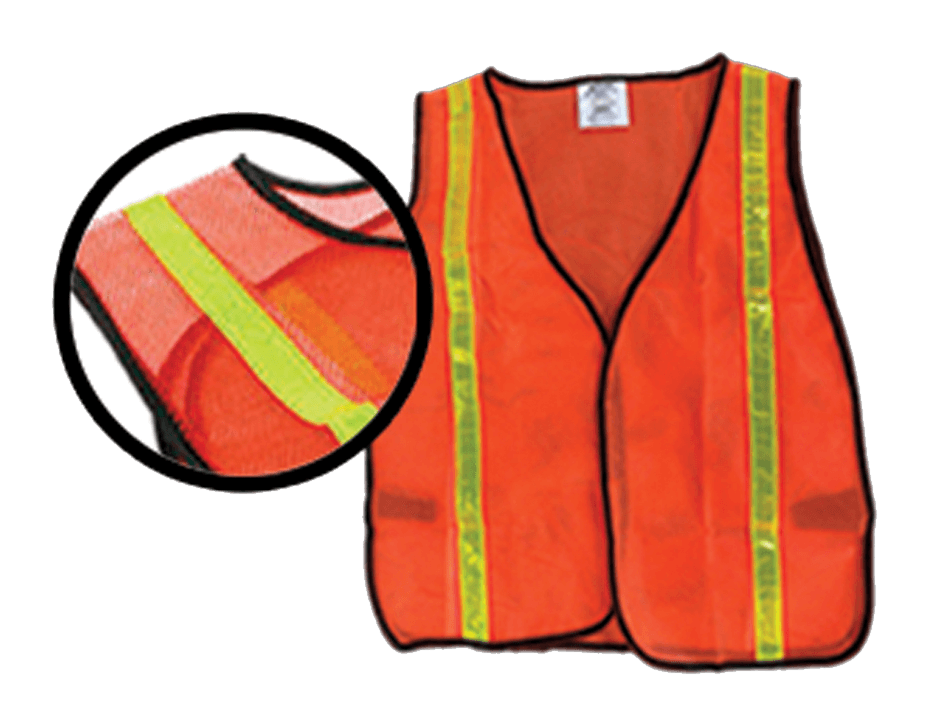
- Hi-vis vest and a signed work zone on public roads.
Before you ask for a quote, have this ready
With this, an advisor in your country can recommend the right machine in a single conversation:
- What you'll cut: asphalt, concrete or both.
- Layer thickness and the cutting depth you need.
- Approximate linear metres.
- Whether the cut is on a public road, to add signage.
- Whether there's water available on site.
Common mistakes
- Cutting asphalt with a concrete blade (or vice versa): it eats the blade.
- Dry-cutting with a blade that needs water.
- Trying to reach full depth in a single pass.
- Twisting the saw inside the cut: the blade binds or shatters.
- Starting to cut on the road before the signage is up.
Takeaway
The right blade for the material, water always, 2–5 cm per pass and a signed work zone. The SQ16 PRO reaches 130 mm with blades up to 450 mm. Get a quote here for the saw, blades and signage in one request.
Keep going
Frequently asked
How deep does the SQ16 PRO cut?
Up to 130 mm, with 300 to 450 mm blades. Depth is set manually.
Can I use a concrete blade on asphalt?
No. Asphalt is abrasive and quickly wears a concrete blade. Use an asphalt blade for asphalt and a concrete blade for concrete.
Can you cut concrete dry?
Not with a blade made for wet cutting: you ruin it and raise silica dust. The SQ16 PRO has a 30 L water tank for wet cutting.
How much do you cut per pass?
2 to 5 cm per pass, until you reach final depth.
When do you cut joints in a new slab?
As soon as the slab bears the saw without raveling, usually 6 to 18 hours depending on weather and mix, at ¼ of the thickness.
What warranty does the SIMAQ saw have?
6 months, like the rest of the light equipment. It's activated by registering the machine.