Guide · 5 min
What is a pallet stacker, and when does it make sense?
Also called: pallet stacker, walkie stacker
By the SIMAQ technical team · Grupo ConstruMarket ·
Short answer
A stacker is a warehouse machine with a mast and forks that lifts pallets to stack them or put them on a rack; a pallet jack only moves them at floor level. It makes sense when you need to lift loads and a forklift is too big for the job or won't fit your aisles. SIMAQ has the manual SDJIO-S PRO stacker (1,000 kg) and the electric triple-mast SQCDD-H1545 PRO (1,500 kg). Golden rule: the higher you lift, the less it carries.
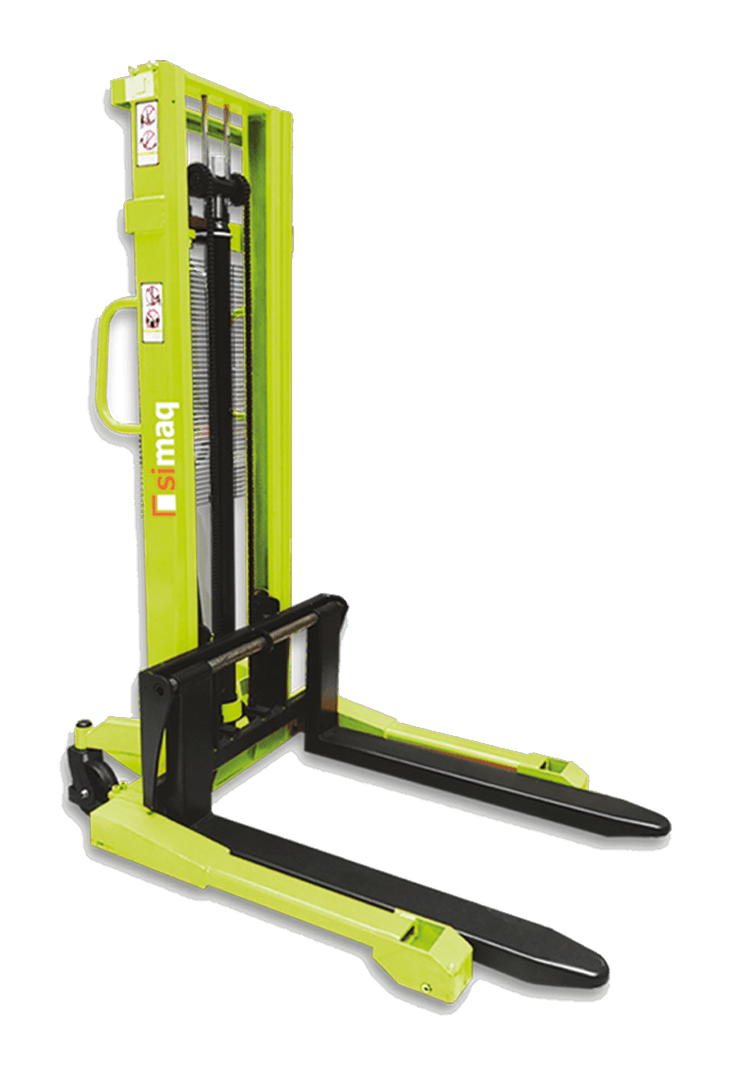
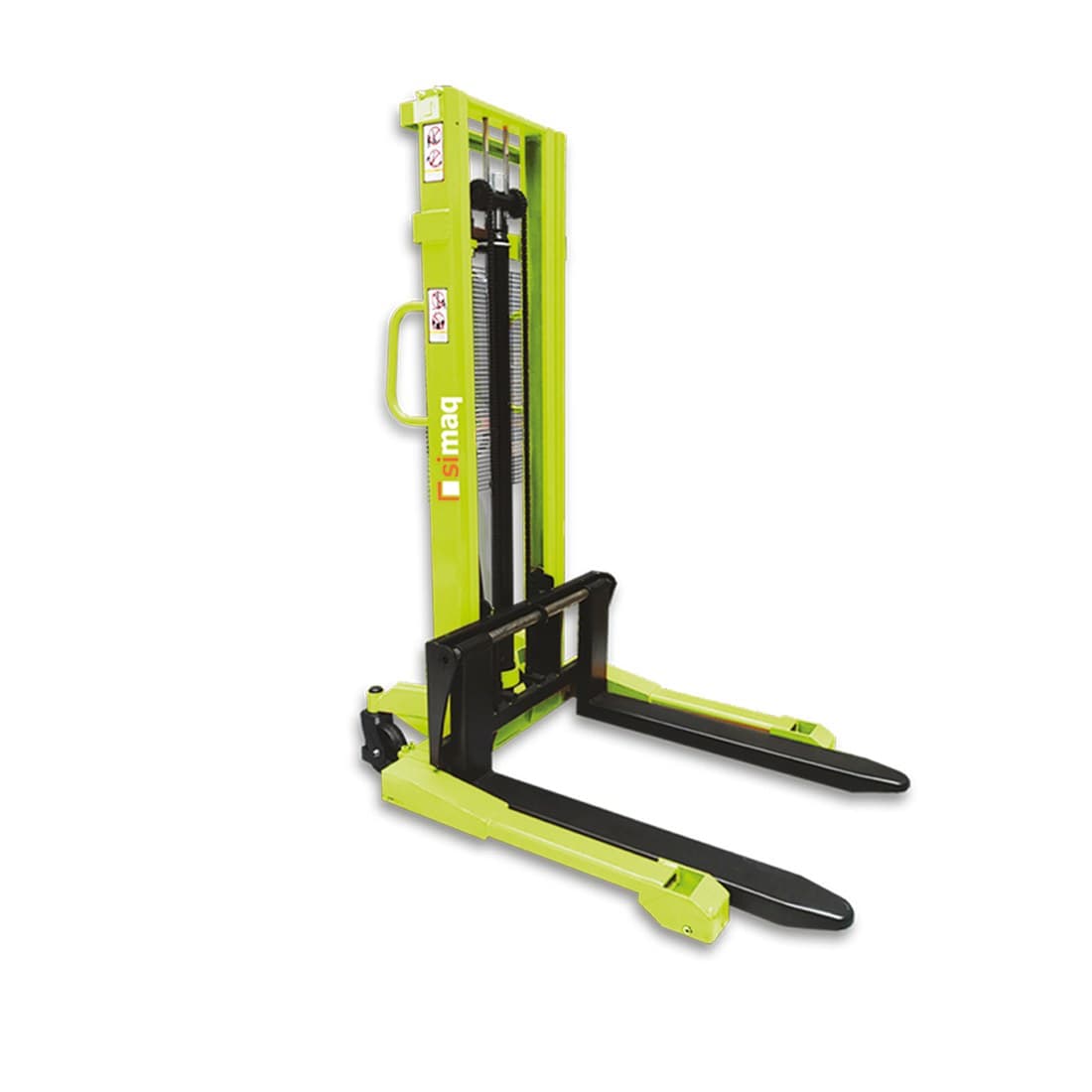
manual stacker
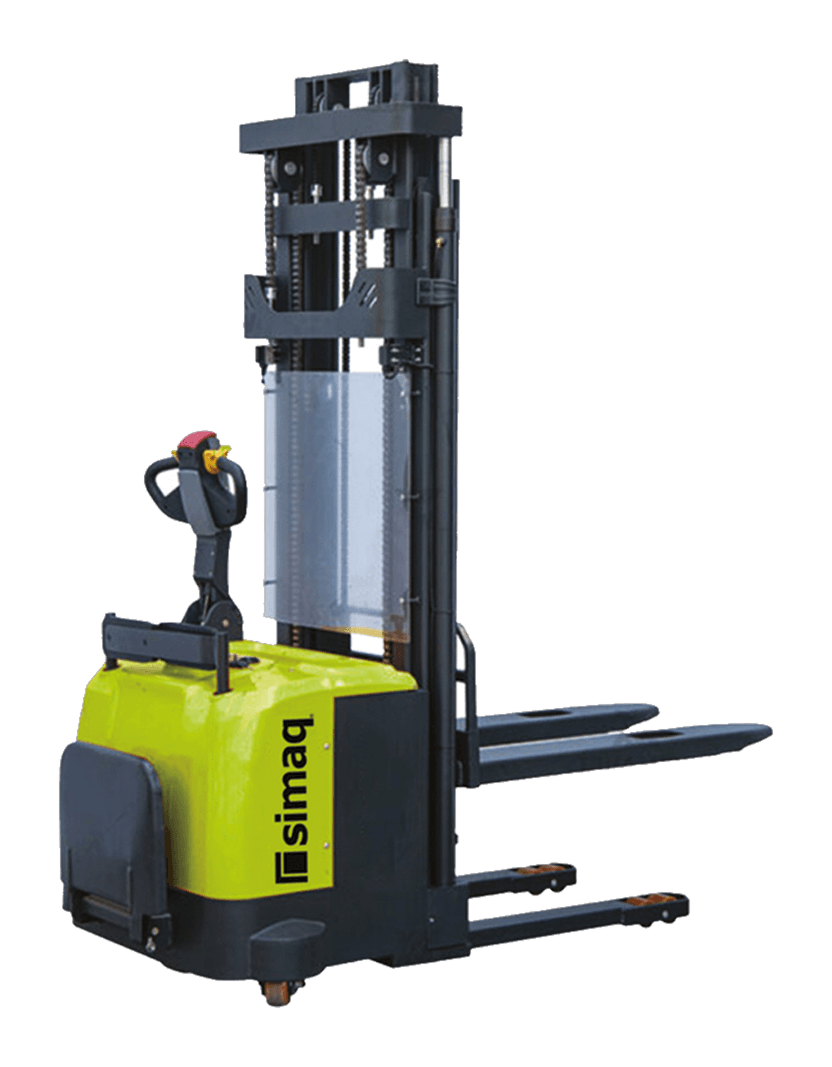
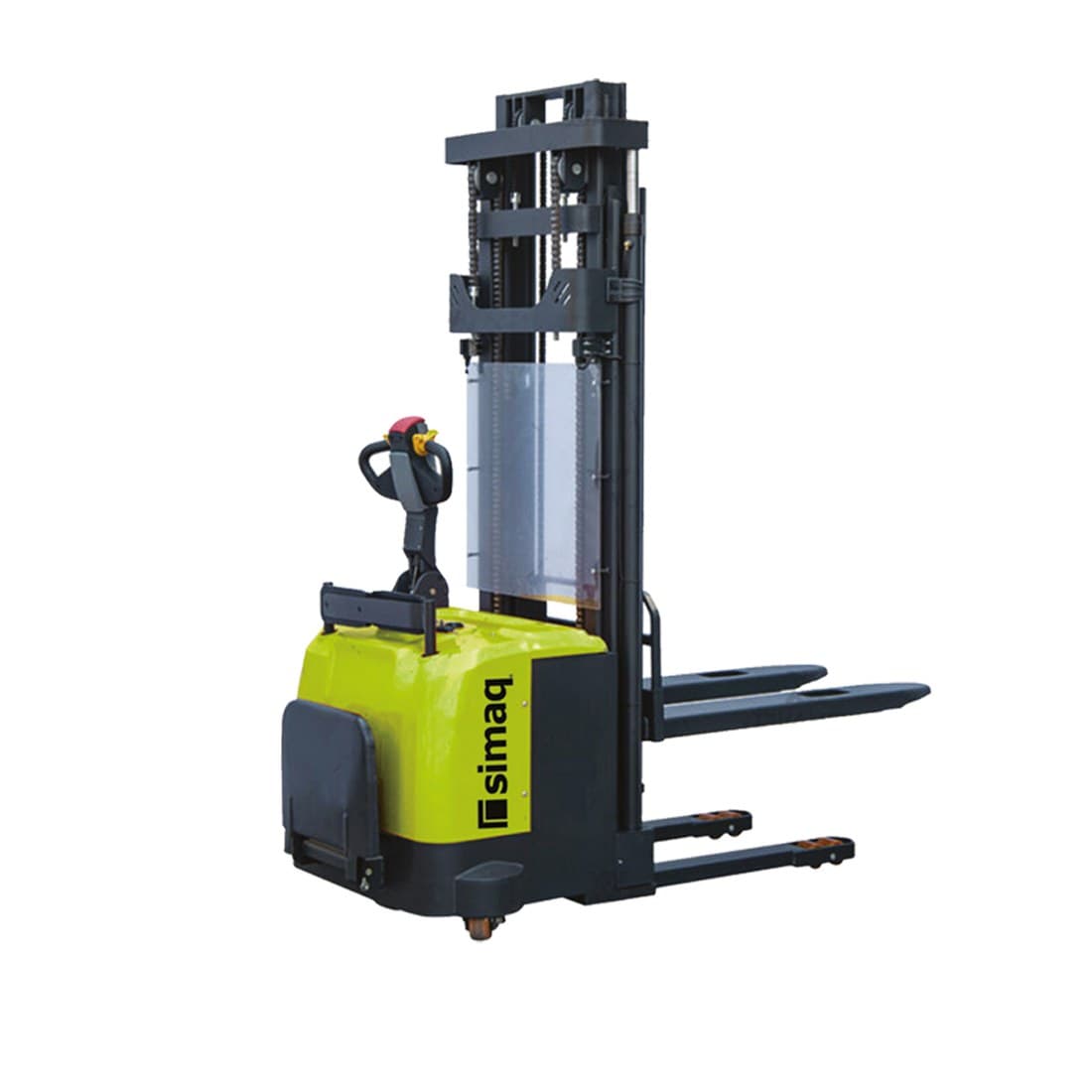
electric stacker
mast stages (electric)
What it is and how it works
A stacker has a vertical mast, forks that ride up and down it, and a tiller you steer as you walk. You slide the forks under the pallet, raise it a few centimeters, take it to the rack and, once square in front of it, lift it to the level where it goes.
On the manual one, you lift the load with hand hydraulics: no energy use and no battery to charge. On the electric one, a battery-powered motor does the lifting; its triple mast has three stages, which helps gain height with a compact machine. Whether it also drives under power or you push it, confirm with your advisor when you quote.
Stacker, pallet jack or lift table?
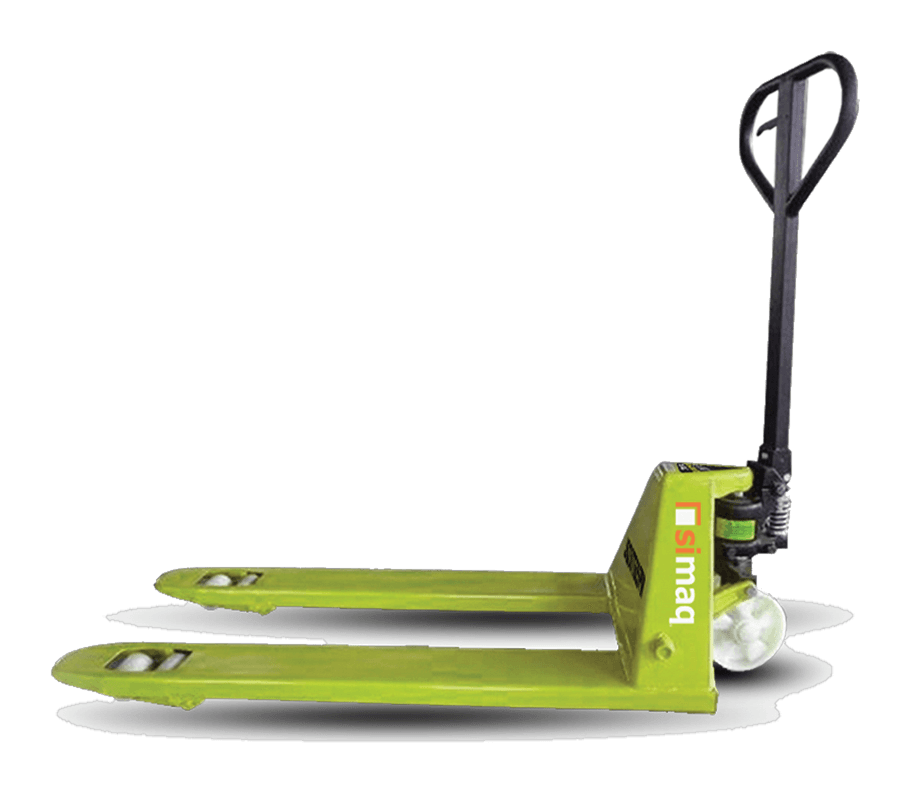
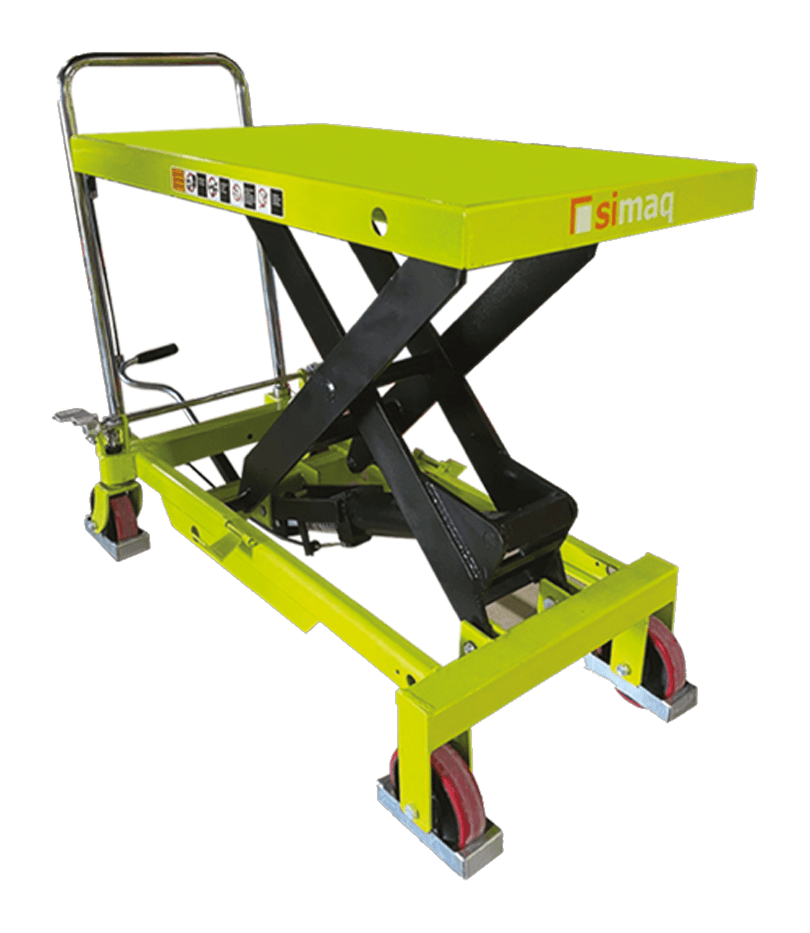
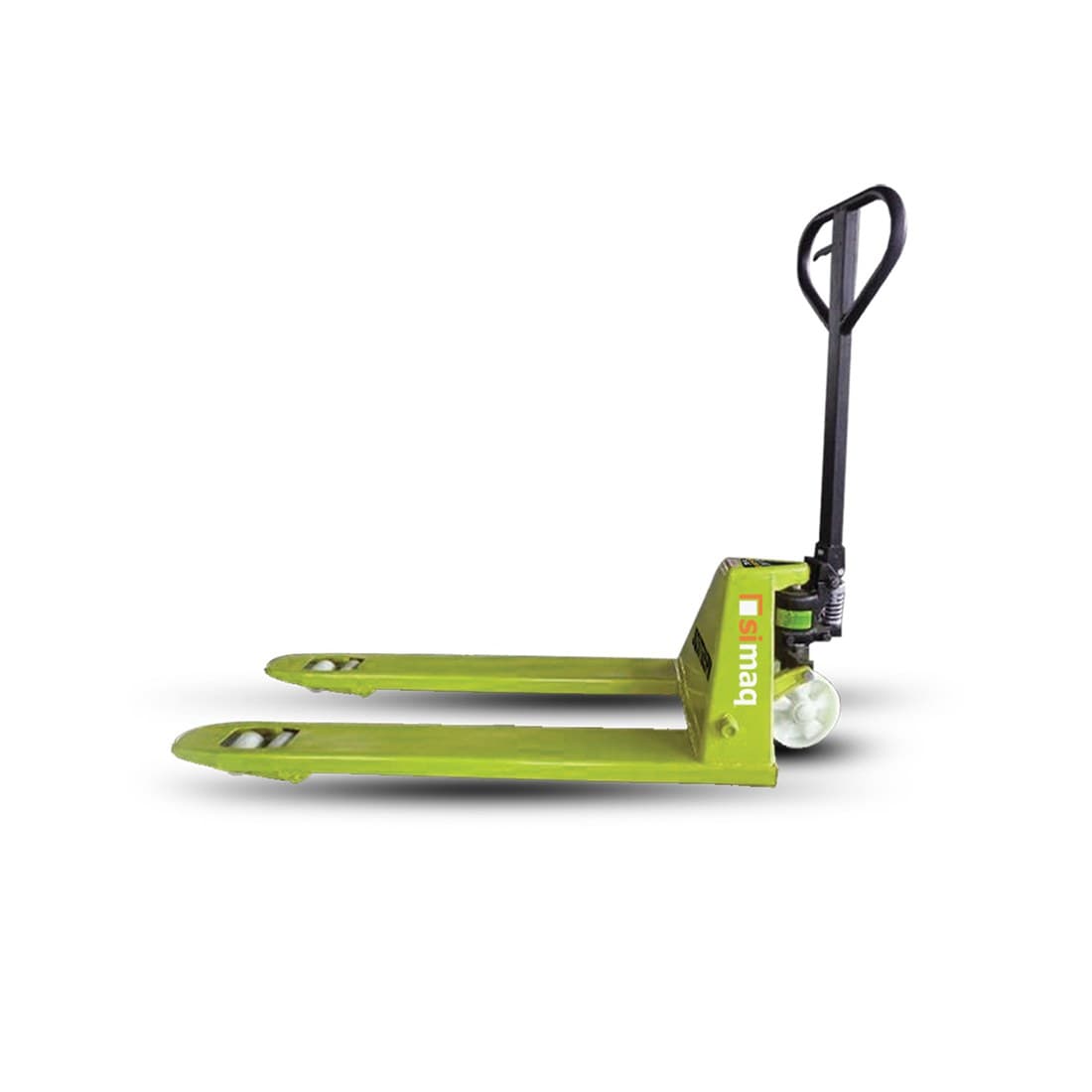
The deciding question is where the load goes. If you only move it across the floor, a hydraulic pallet jack is cheaper and simpler. If you have to raise it onto a rack or stack one pallet on another, you need a stacker. If you only raise it to bench or truck-bed height, the PTD1000 PRO lift table (1,000 kg, 380 to 1,000 mm) is the tool.
Why not a forklift?
A forklift lifts higher and heavier, and it works outdoors. But it costs more, needs a trained operator, and calls for wider aisles. The stacker is the option when your warehouse is small, the aisles are narrow, the pallets weigh within its capacity and the load isn't going out to the yard.
| If your case is… | Use |
|---|---|
| Moving pallets at floor level, anywhere in the warehouse | Hydraulic pallet jack (2.0, 2.5 or 3.0 t) |
| A few rack lifts a day, up to 1,000 kg | Manual SDJIO-S PRO stacker |
| Frequent lifts or loads up to 1,500 kg | Electric SQCDD-H1545 PRO stacker |
| Raising loads to bench or truck height | PTD1000 PRO lift table |
| Yard, ramps, great height or heavy loads | Forklift (another line in the group) |
Manual or electric: decide by how often you lift
- Manual SDJIO-S PRO (1,000 kg): for a few lifts a day, no plug or battery to look after.
- Electric SQCDD-H1545 PRO (1,500 kg): for frequent lifts and heavier loads; it lifts by motor and doesn't wear out the operator.
- With the electric one, set up a ventilated area to charge the battery.
What to measure before you quote
With that data, your advisor confirms the lift height and the capacity at that height from the model's load chart. The higher you lift, the less it carries: never assume the rated capacity holds at the top level. And never lift people on a stacker: aerial platforms exist for working at height.
At ConstruMarket branches in El Salvador, Guatemala (CMARKET), Nicaragua and Panama. Request a quote from this guide and an advisor in your country will confirm the model and availability.
- Height of the highest rack level you'll lift to.
- Weight of your heaviest loaded pallet.
- Your pallet dimensions and where the forks go in.
- Aisle width and turning room.
- Floor type: smooth and firm, with no ramps or potholes.
Common mistakes
- Traveling with the pallet raised: the center of gravity climbs and it can tip.
- Assuming the rated capacity holds at the top rack level.
- Buying without measuring rack height or aisle width.
- Using it on dirt floors, potholes or ramps.
- Lifting a person on the forks.
Takeaway
If you only move pallets around, a pallet jack. If you raise them onto a rack or stack them, a stacker: the manual SDJIO-S PRO (1,000 kg) for a few lifts, the electric triple-mast SQCDD-H1545 PRO (1,500 kg) for frequent use. If you only raise loads to working height, the PTD1000 PRO lift table. Measure rack, pallet, aisle and floor before you quote.
Keep going
Frequently asked
Is a stacker the same as a forklift?
No. Both lift pallets, but you walk a stacker, it's more compact and it's meant for warehouses with smooth floors. A forklift lifts higher and heavier, and works outdoors.
How much can a stacker lift?
The manual SDJIO-S PRO is rated at 1,000 kg and the electric SQCDD-H1545 PRO at 1,500 kg. Capacity drops with height: your advisor confirms it for your rack height.
Should I get a manual or electric stacker?
Manual if you lift a few times a day and loads stay under 1,000 kg. Electric if you lift often or need up to 1,500 kg.
Can a stacker be used on a jobsite or in a yard?
It's not the right fit. It needs a smooth, firm, level floor; on dirt, gravel or ramps it loses stability. For a jobsite, look at a dumper or a forklift.
Where can I buy a stacker in El Salvador, Guatemala, Nicaragua or Panama?
At ConstruMarket branches in those four countries (in Guatemala, CMARKET). Request a quote from this guide with your rack height and pallet weight.