Guide · 6 min
How do you put up a scaffold safely? Base, leveling and braces step by step
Also called: frame scaffold, tubular scaffold
By the SIMAQ technical team · Grupo ConstruMarket ·
Short answer
A safe scaffold starts at the bottom: a firm base on sole boards, A003 screw jacks to level it (never wedges or blocks), every frame set with its two A002 cross-braces before you go up a level, and A004 platforms covering the full width with no gaps. If it rolls, the A005 casters stay locked while you work and nobody stays on top when it moves.
braces per frame set
gaps in the deck
leveled base
Before assembly: parts, ground and surroundings
Most scaffold accidents come from something that could have been spotted before climbing. Spend a few minutes checking the parts and the site: it's far cheaper than a fall.
- Frames and braces free of bends, cracks or rust eating into the tube; damaged parts go out of service.
- Pins and locks all present.
- Firm ground: compacted soil, a slab or wooden sole boards under every leg.
- No overhead power lines near the scaffold.
- Weather: in strong wind or rain, you don't assemble or work up top.
Assembly step by step
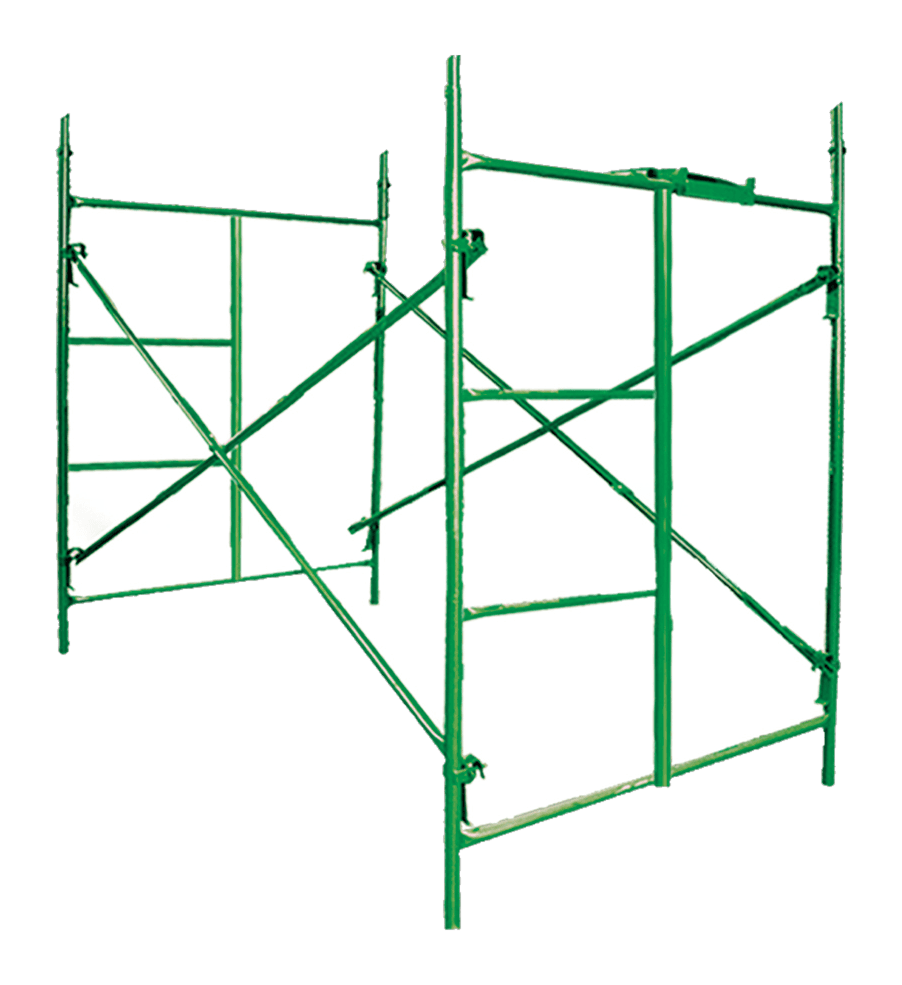
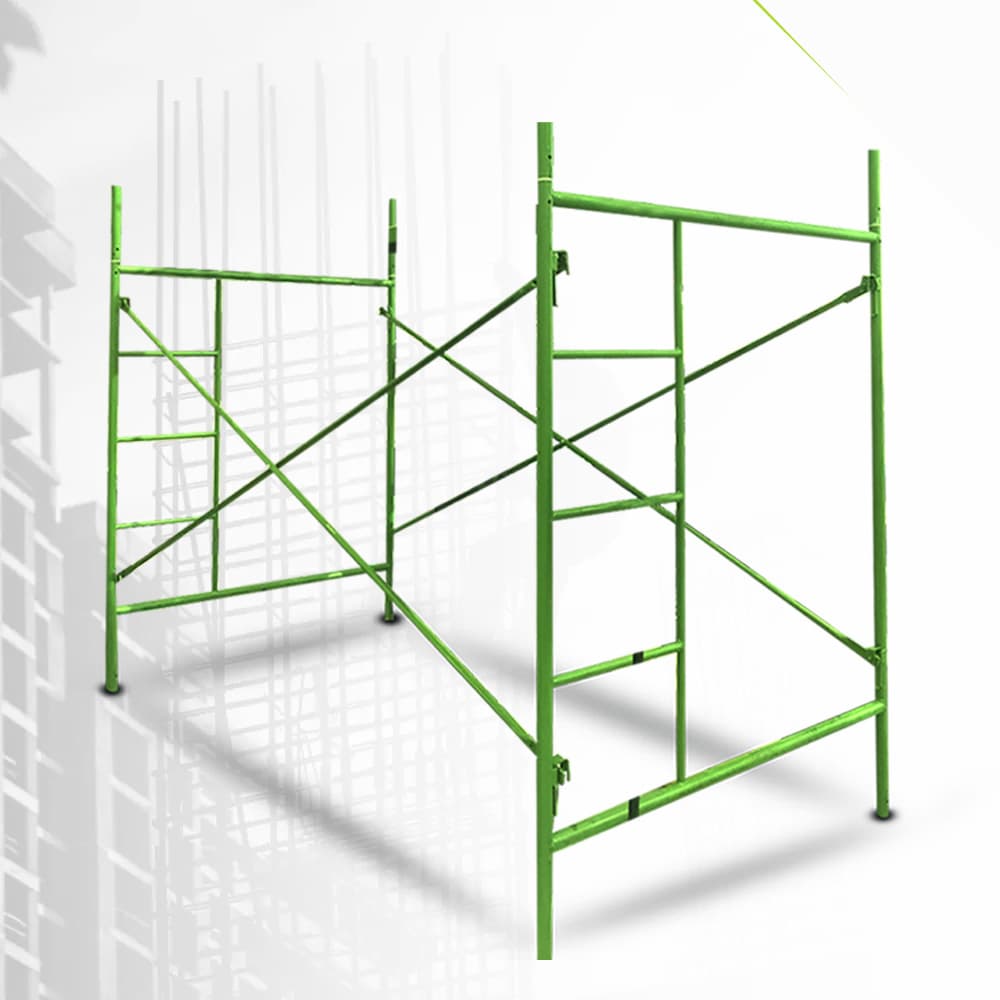
A scaffold frame set is two frames (code A001) joined by two cross-braces (A002), one on each side. That rigid box is the module you repeat along the front and upward.
- 1. Set the sole boards and the A003 screw jacks where each leg will go.
- 2. Stand the first two frames on the jacks and join them with their two cross-braces.
- 3. Level with the jacks, in both directions, using a spirit level.
- 4. Lay the first level's A004 platforms, covering the full width.
- 5. Go up to the next frame set only when the one below has both braces.
- 6. Check everything before the crew climbs: level, locks, platforms.
Leveling: screw jacks, not wedges
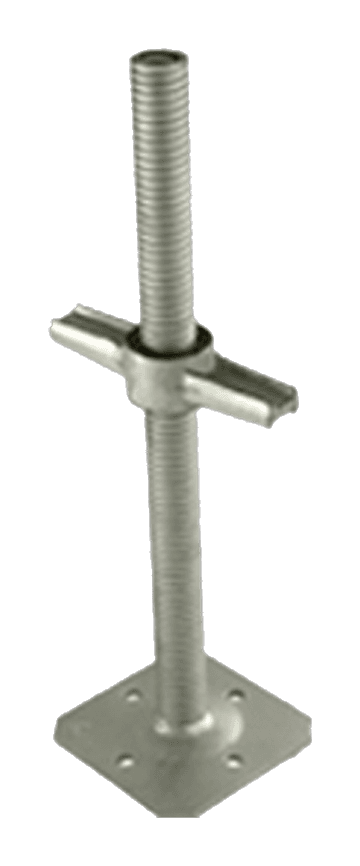
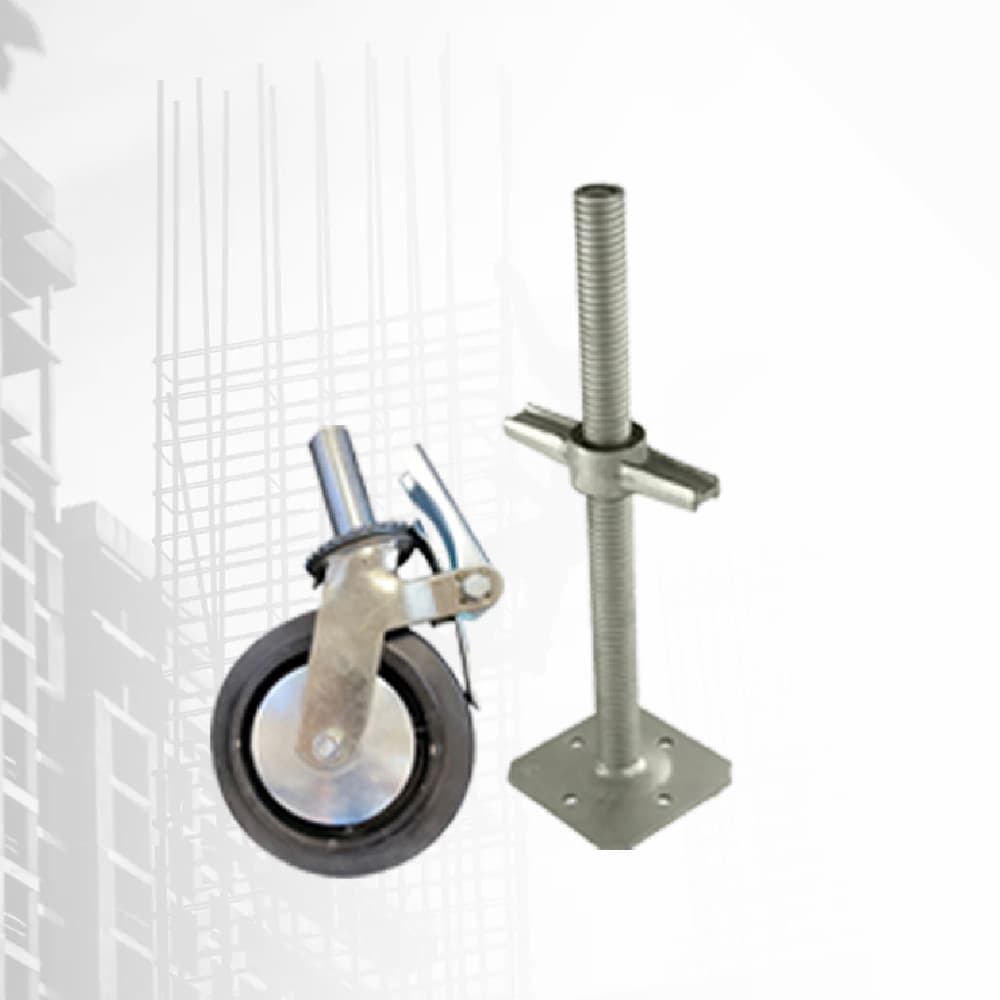
The A003 screw jack is an adjustable-height base that corrects uneven ground without improvising. Wedges, blocks and bricks crack or shift under vibration and weight, and the scaffold leans. A scaffold that isn't plumb works badly: the load shifts to one side and the risk grows with every level.
Don't extend the jack past its limit to gain height. If the slope is too steep, fix the ground or pack it with a firm, wide sole board under the jack.
Platforms and access
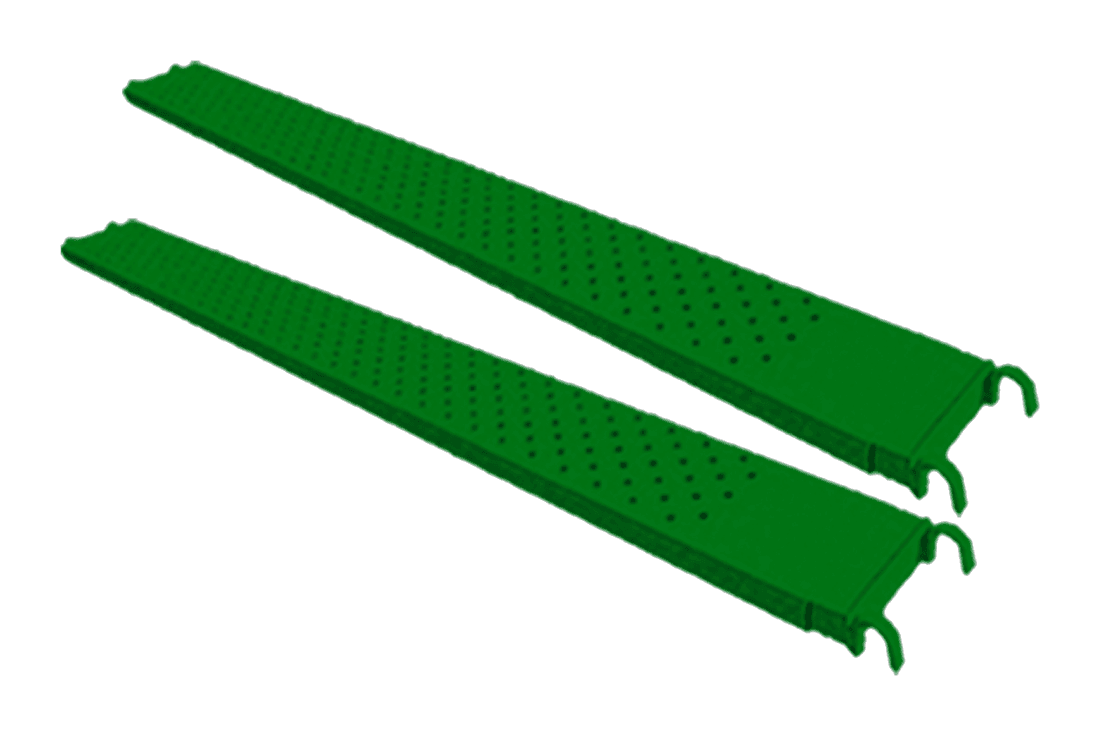
The A004 platform is 25 cm wide and 3.00 m long, made of anti-slip steel and rated for material or people. Lay as many as it takes to cover the frame's full width, with no gaps between them: a foot slipping into a gap is a fall. Your advisor confirms how many fit per level with the frame you'll use.
To climb, use a proper access, not the braces as a ladder. And if the work is at height, use guardrails and a harness according to the site's safety plan.
If this happens, do this
| If… | Do this |
|---|---|
| The ground is soft or loose soil | A wide sole board under every leg; if it isn't firm, don't build |
| The floor is uneven | A003 screw jacks and a spirit level |
| A brace is missing | Don't go up a level until it's in place |
| There's a gap in the deck | Fill it with another platform before climbing |
| The scaffold is tall and next to a façade | Tie it to the structure per the site plan |
| You need to move it | Everyone comes down, loose material is removed, brakes released and it moves slowly |
Rolling scaffold: locked casters
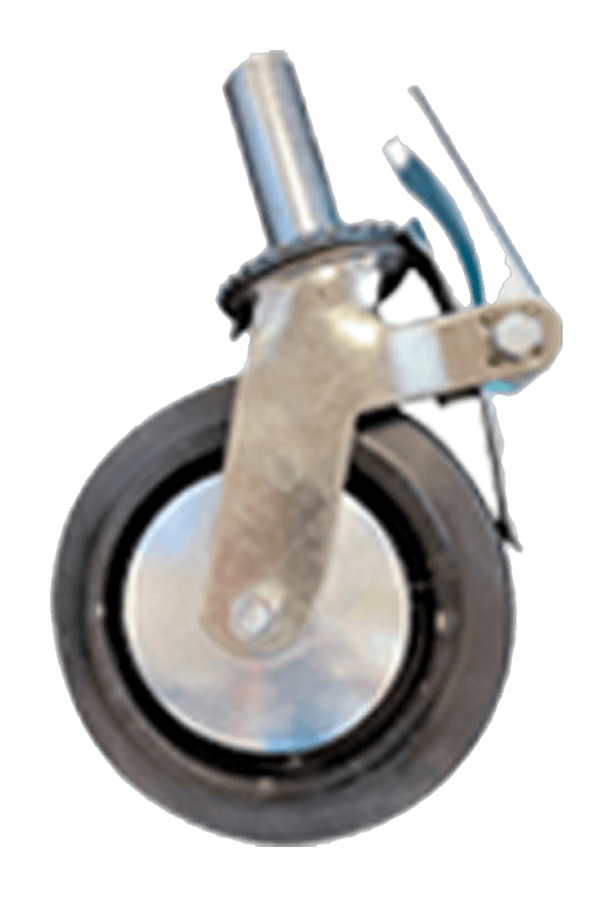
The A005 caster is a swivel wheel with a brake and an insertion stem to move the assembled tower without taking it apart. While working, all four brakes stay on. To move it, nobody on top, a level floor and no obstacles. The taller the tower, the less stable it is when moving: lower it or brace it first if the run is long.
Practice it
Simulator: build the scaffold
Level by level, with SIMAQ parts and the shortcuts that tempt you on site: when you go up, whatever fails shows in red.
Common mistakes
- Leveling with wedges, blocks or bricks instead of screw jacks.
- Going up a level without both braces on the set below.
- Working on a single platform or with gaps between platforms.
- Moving the scaffold with people or material on it.
- Using the braces as a ladder.
- Mixing parts from different systems that don't fit properly.
Takeaway
A firm base with screw jacks, two braces on every set before climbing, gap-free decks and locked casters. SIMAQ frames, braces, platforms, jacks and casters are galvanized, modular and reusable. Request a quote here with the front length and working height, and an advisor will contact you during business hours.
Keep going
Take it to the job site
Print the checklist to go over it on site, or send the guide to your crew.
Frequently asked
How many cross-braces does a scaffold frame set take?
Two, one on each side. Without both, the set isn't rigid and you don't go up to the next level.
How do you level a scaffold?
With adjustable screw jacks under every leg and a spirit level in both directions. Never with wedges or blocks.
Can you move a rolling scaffold with people on it?
No. Everyone comes down, loose material is removed, the brakes are released and it moves slowly over level ground.
How many scaffold frame sets do I need?
Bays along the front times levels up. Example: 4 bays and 3 levels is 12 sets and 24 braces. The advisor adjusts the list to your front.
Can shoring props be used as scaffolding?
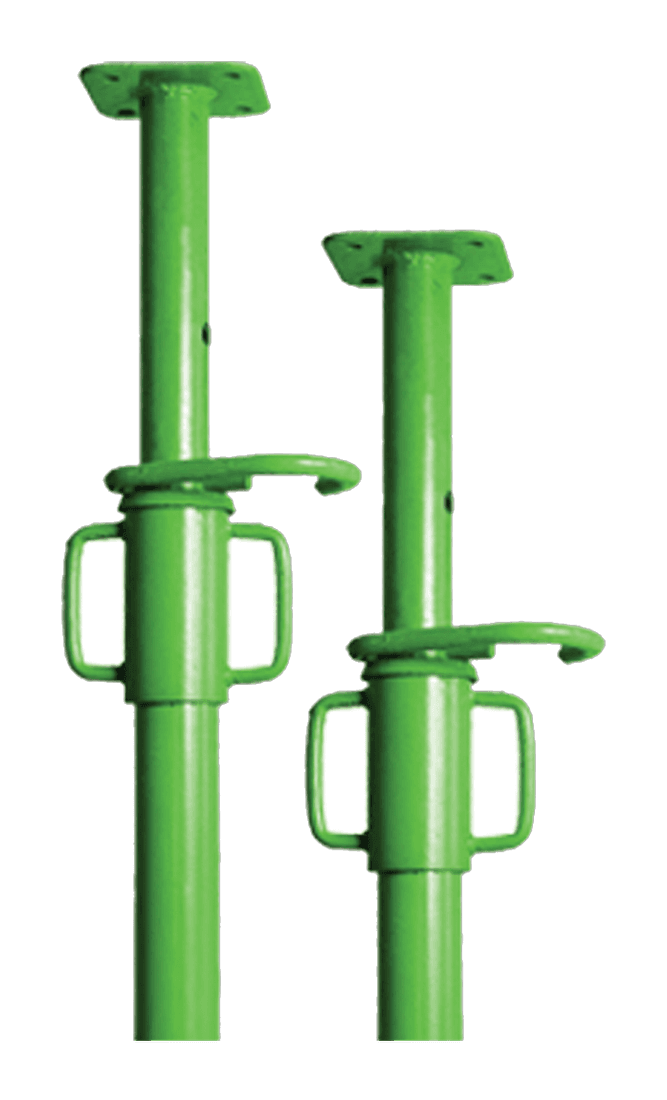
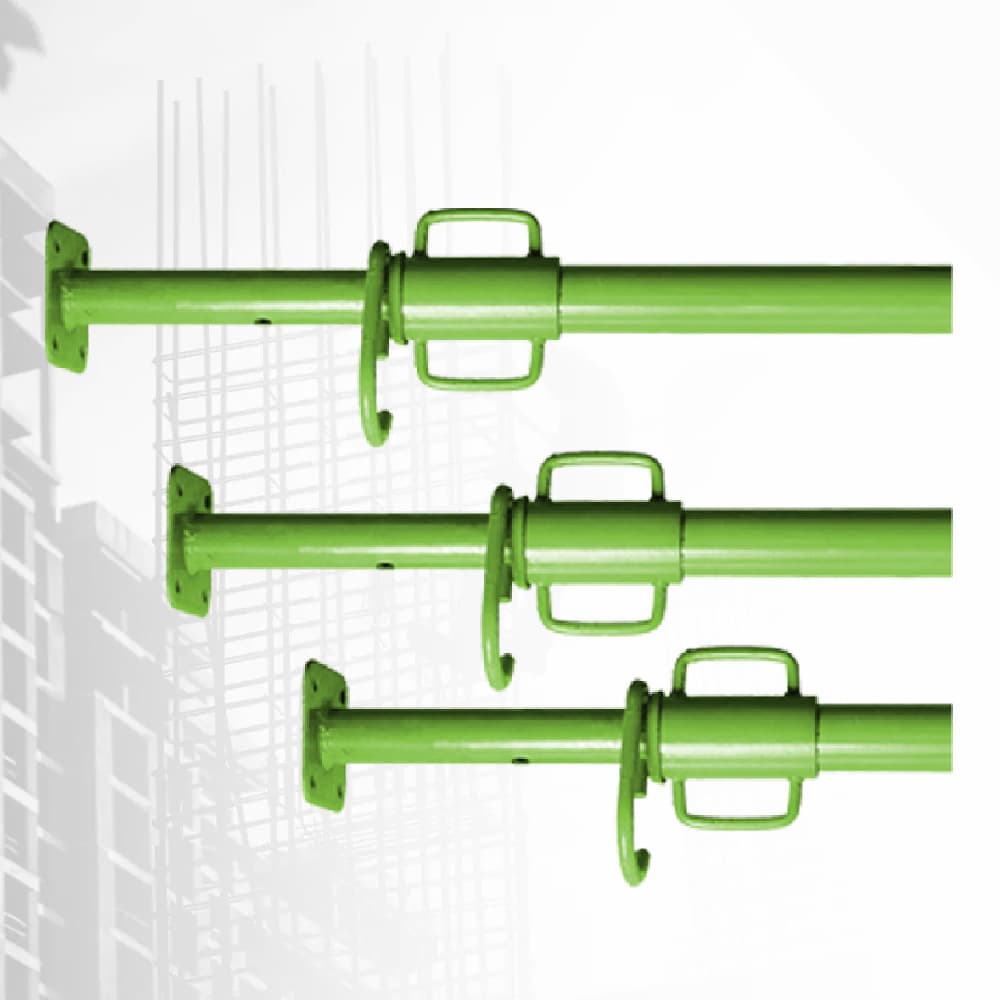
No. P001 props (2.20 to 4.00 m) hold formwork and temporary loads; they're not for people to climb.
SIMAQ · Job site checklist
How do you put up a scaffold safely? Base, leveling and braces step by step
A safe scaffold starts at the bottom: a firm base on sole boards, A003 screw jacks to level it (never wedges or blocks), every frame set with its two A002 cross-braces before you go up a level, and A004 platforms covering the full width with no gaps. If it rolls, the A005 casters stay locked while you work and nobody stays on top when it moves.
Before assembly: parts, ground and surroundings
- Frames and braces free of bends, cracks or rust eating into the tube; damaged parts go out of service.
- Pins and locks all present.
- Firm ground: compacted soil, a slab or wooden sole boards under every leg.
- No overhead power lines near the scaffold.
- Weather: in strong wind or rain, you don't assemble or work up top.
Assembly step by step
- 1. Set the sole boards and the A003 screw jacks where each leg will go.
- 2. Stand the first two frames on the jacks and join them with their two cross-braces.
- 3. Level with the jacks, in both directions, using a spirit level.
- 4. Lay the first level's A004 platforms, covering the full width.
- 5. Go up to the next frame set only when the one below has both braces.
- 6. Check everything before the crew climbs: level, locks, platforms.
Avoid
- Leveling with wedges, blocks or bricks instead of screw jacks.
- Going up a level without both braces on the set below.
- Working on a single platform or with gaps between platforms.
- Moving the scaffold with people or material on it.
- Using the braces as a ladder.
- Mixing parts from different systems that don't fit properly.
Job site:
Date:
Supervisor:
Scan it for the full guide, with video and FAQ
https://simaq.pro/en/recursos/andamio-seguro-armado-nivelacion