Guide · 6 min
How do you light a jobsite at night? Area, mast height and light towers
Also called: light tower, lighting tower or site light
By the SIMAQ technical team · Grupo ConstruMarket ·
Short answer
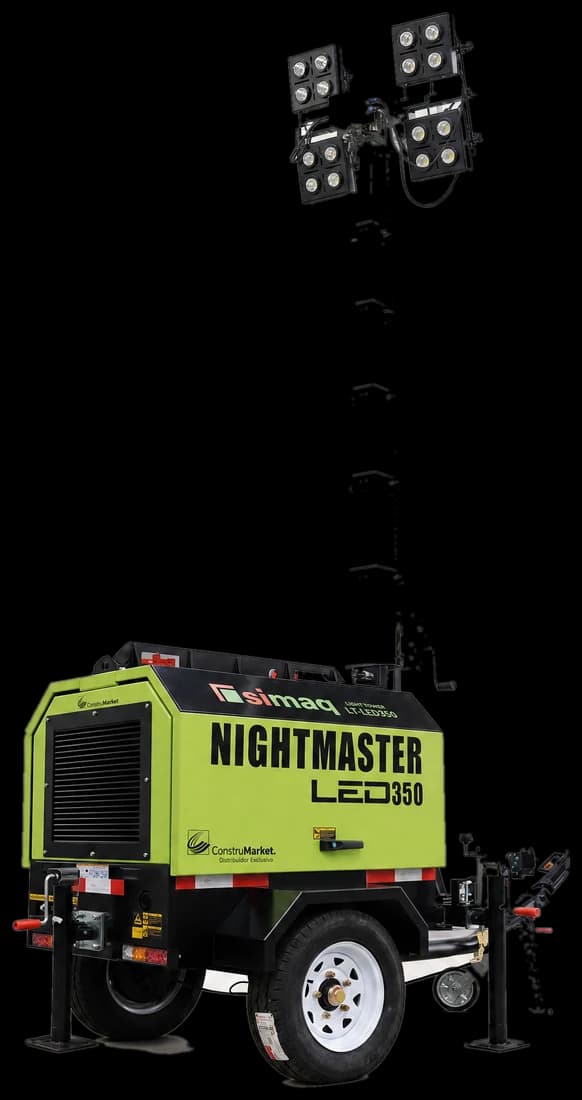
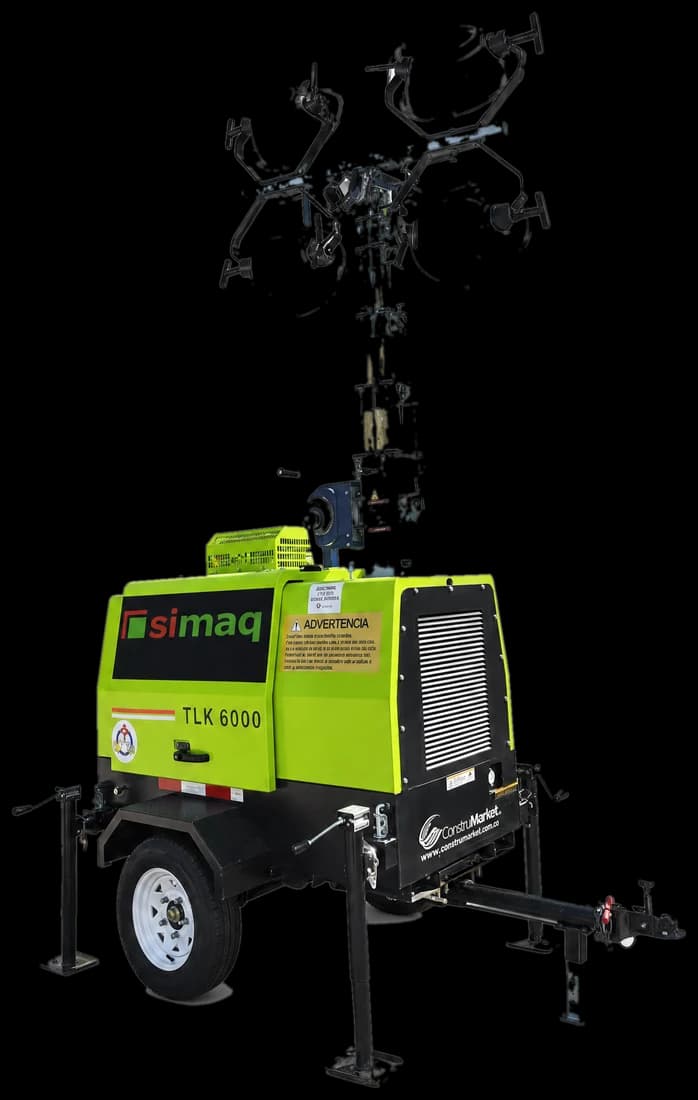
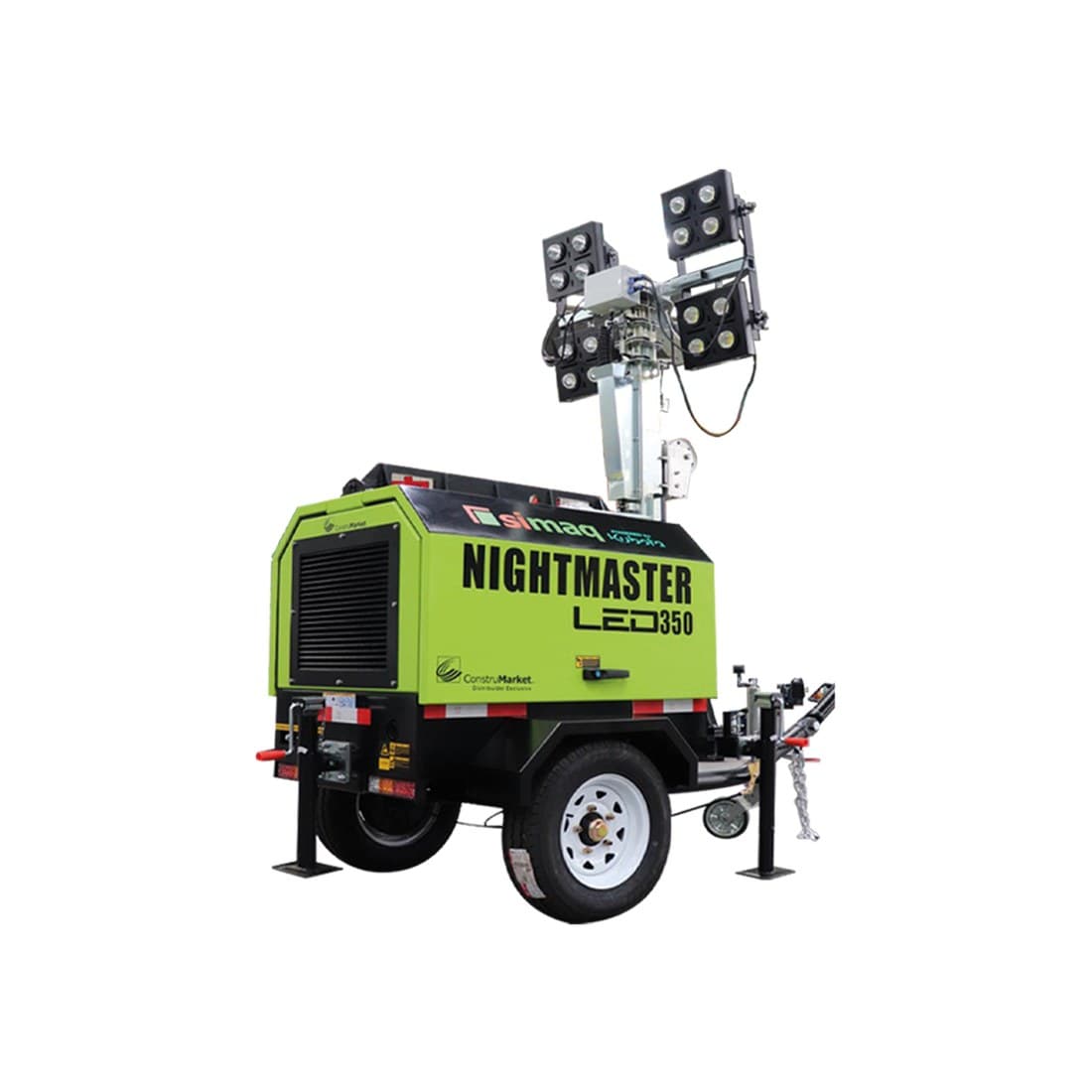
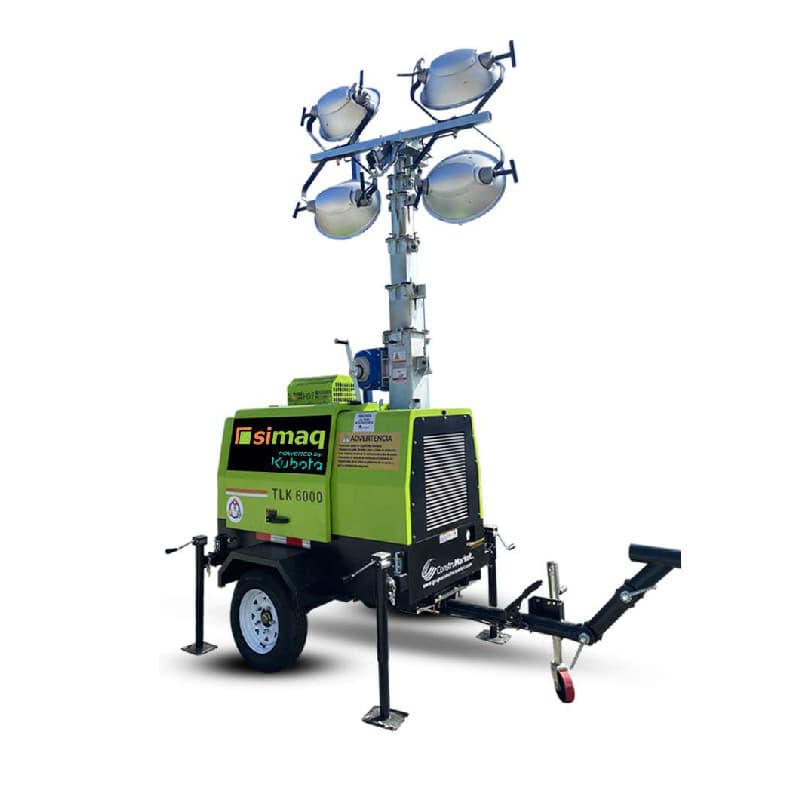
Measure your work area in square meters and pick the tower by coverage, not by lamp count. The NIGHTMASTER LED 350 (7 m mast, 4 × 350 W LED floodlights, Kubota D1105) suits mid-size fronts; the SQTLK 6000 (9 m mast, Kubota D1105) covers more area per tower. On long fronts, several towers spread out leave fewer shadows than one in the middle.
Work it out with your numbersNIGHTMASTER LED 350 mast
SQTLK 6000 mast
mast rotation
First, measure the area you need to light
Length times width of the front that's actually worked at night: where machines, people and material will be. Don't count areas nobody will be in. That number in square meters decides how many towers you need and how tall.
The SIMAQ School calculator uses an approximate useful-coverage reference per tower: about 2,200 m² for the NIGHTMASTER LED 350 and about 3,300 m² for the SQTLK 6000. Example: a 60 × 40 m front is 2,400 m². With NIGHTMASTER you need 2 towers (2,400 ÷ 2,200 = 1.1, round up); with the SQTLK 6000, 1 tower. It's a starting reference: terrain, obstacles and the task can call for more.
If your front looks like this, this tower
If you have to choose between one big tower and two smaller ones for the same area, think about shadows. Two light sources almost always work better than one, especially with excavations, formwork or moving machinery.
| If your front is… | Choose | Why |
|---|---|---|
| Yard, plant or compact front up to ~2,200 m² | 1 NIGHTMASTER LED 350 | 4 × 350 W LED, 7 m mast that turns 350° |
| Large open area, ~2,200 to ~3,300 m² | 1 SQTLK 6000 | 9 m mast: more area, fewer shadows |
| Street, trench or long narrow front | Several towers spread along it | A single tower leaves the ends in half-light |
| Site with structures, slopes or machines blocking light | Towers from two sides | Crossed light erases the shadows that hide the work |
Height and position: taller lights more and casts less shadow
The taller the mast, the more vertical the light falls, the more area it covers and the shorter the shadows of people and machines. The NIGHTMASTER rises to 7 m and turns its mast 350°, so you can aim without moving the trailer. The SQTLK 6000 rises to 9 m.
Place the tower so light reaches the operator from behind or from the side, never straight into their eyes. If the site is next to a road, aim the floodlights at the work front and not at drivers: dazzling them is an accident waiting to happen.
- Park on firm, level ground before raising the mast.
- Never raise the mast near overhead power lines.
- In strong wind, lower the mast.
LED: more usable light, less diesel
The NIGHTMASTER LED 350 uses four 350 W LED floodlights. LED switches on instantly, without waiting for lamps to warm up, and burns far less fuel than halogen for the same usable light. For shifts that repeat night after night, that diesel saving shows up over the month.
The SQTLK 6000 comes with four 1000 W metal-halide spare lamps, plus safety chains for transport and a Pro-Club kit with air and oil filters. Your advisor confirms in the quote which lamp type each unit ships with.
Fuel for the whole shift
Both towers run a Kubota D1105 diesel engine. Before the first night, count the shift hours and ask the advisor for fuel consumption and tank capacity: the spec sheet doesn't list them and they depend on use. Fill the tank before dark and assign someone to check the level mid-shift.
If you also need power for tools, confirm with the advisor whether the model provides it; if not, plan a separate generator. What you don't want is to go dark at two in the morning with the crew in the trench.
Do it with your numbers
How many light towers do you need?
≈ a work front about 22 m in radius. Choose by coverage, not just lamp count.
Light tower NIGHTMASTER 350LED
7 m · 4 × 350 W LED
1 tower
covers ~2,200 m² each
View detailsLED delivers more usable light at far less fuel than halogen — for repeated shifts, the diesel savings cover the difference. Taller mast = more area with fewer shadows. Check runtime on a full tank for the whole shift.
Practice it
Simulator: light the job
Place light towers on the plan: the shape of the front rules, not just the m².
Common mistakes
- Choosing the tower by lamp count instead of the area it covers.
- Putting one tower in the middle of a long front: the ends stay in half-light.
- Aiming the floodlights at traffic or into the operator's eyes.
- Raising the mast near power lines or in strong wind.
- Starting the shift without confirming there's enough diesel.
- Parking the tower on soft ground or on a slope.
Takeaway
Measure the area, divide by the tower's coverage and round up. Choose height (7 m or 9 m) by size and shadows, LED to save diesel, and secure fuel for the whole shift. Request a quote here with your front size and an advisor will contact you during business hours.
Keep going
Take it to the job site
Print the checklist to go over it on site, or send the guide to your crew.
Frequently asked
How many light towers does my site need?
Divide the work area by the tower's coverage and round up. As an approximate reference: ~2,200 m² per NIGHTMASTER LED 350 and ~3,300 m² per SQTLK 6000. The SIMAQ School calculator does the maths.
What mast height do I need?
More height = more area and fewer shadows. For mid-size fronts, 7 m (NIGHTMASTER); for large open areas, 9 m (SQTLK 6000).
LED or halogen for night work?
LED: it switches on instantly and burns far less diesel for the same usable light. If you work nights often, the saving covers the difference.
How many hours does a light tower run on a full tank?
It depends on the model and use; the spec sheet doesn't list it. Ask the advisor for consumption and tank capacity, and fill up before every shift.
What warranty do SIMAQ light towers have?
6 months or 500 hours of use, whichever comes first. It's activated by registering the machine.
SIMAQ · Job site checklist
How do you light a jobsite at night? Area, mast height and light towers
Measure your work area in square meters and pick the tower by coverage, not by lamp count. The NIGHTMASTER LED 350 (7 m mast, 4 × 350 W LED floodlights, Kubota D1105) suits mid-size fronts; the SQTLK 6000 (9 m mast, Kubota D1105) covers more area per tower. On long fronts, several towers spread out leave fewer shadows than one in the middle.
Height and position: taller lights more and casts less shadow
- Park on firm, level ground before raising the mast.
- Never raise the mast near overhead power lines.
- In strong wind, lower the mast.
Avoid
- Choosing the tower by lamp count instead of the area it covers.
- Putting one tower in the middle of a long front: the ends stay in half-light.
- Aiming the floodlights at traffic or into the operator's eyes.
- Raising the mast near power lines or in strong wind.
- Starting the shift without confirming there's enough diesel.
- Parking the tower on soft ground or on a slope.
Job site:
Date:
Supervisor:
Scan it for the full guide, with video and FAQ
https://simaq.pro/en/recursos/dimensionar-iluminacion-obra-nocturna