Guide · 7 min
Which hydraulic breaker fits your machine? Choosing by weight and oil flow
Also called: hydraulic hammer, hydraulic breaker, rock breaker
By the SIMAQ technical team · Grupo ConstruMarket ·
Short answer
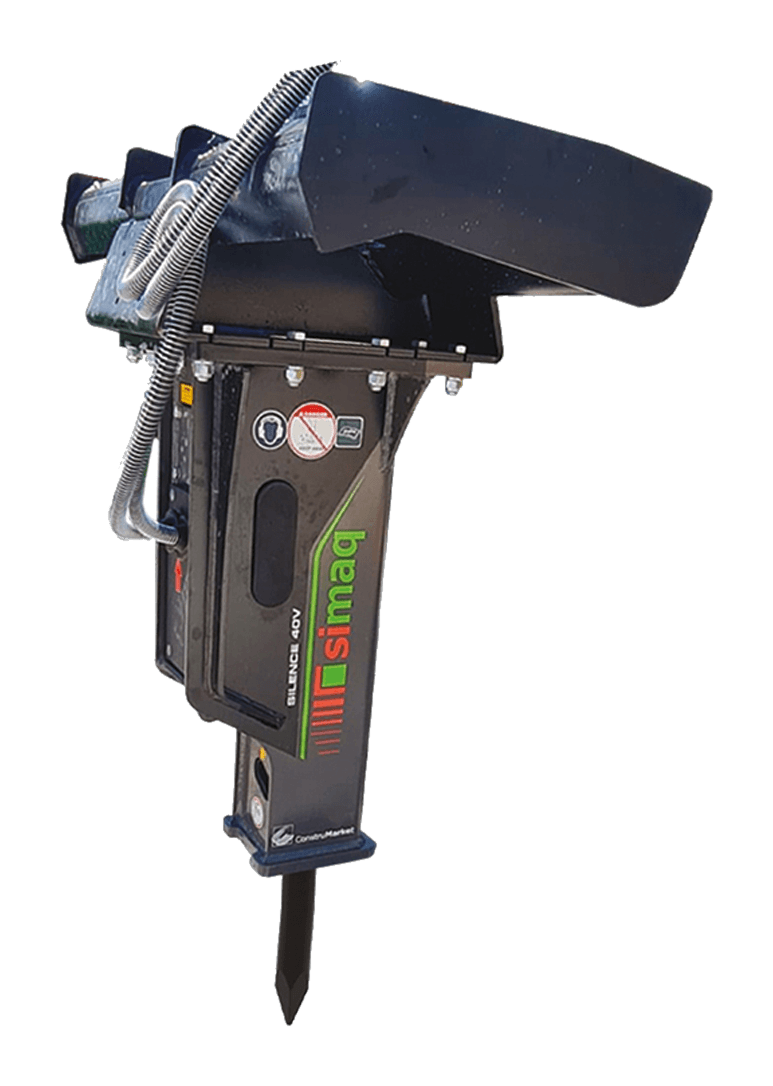
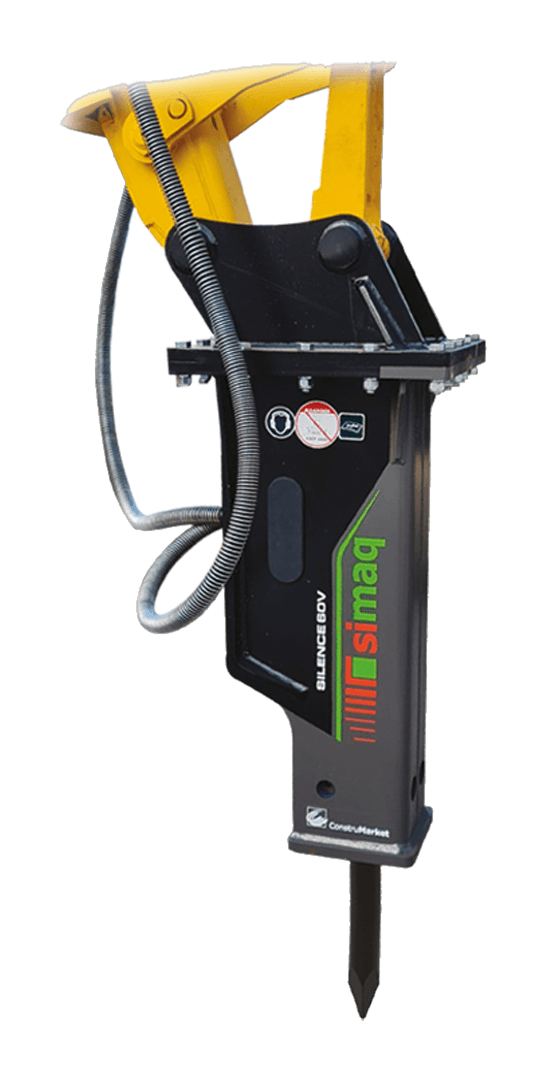
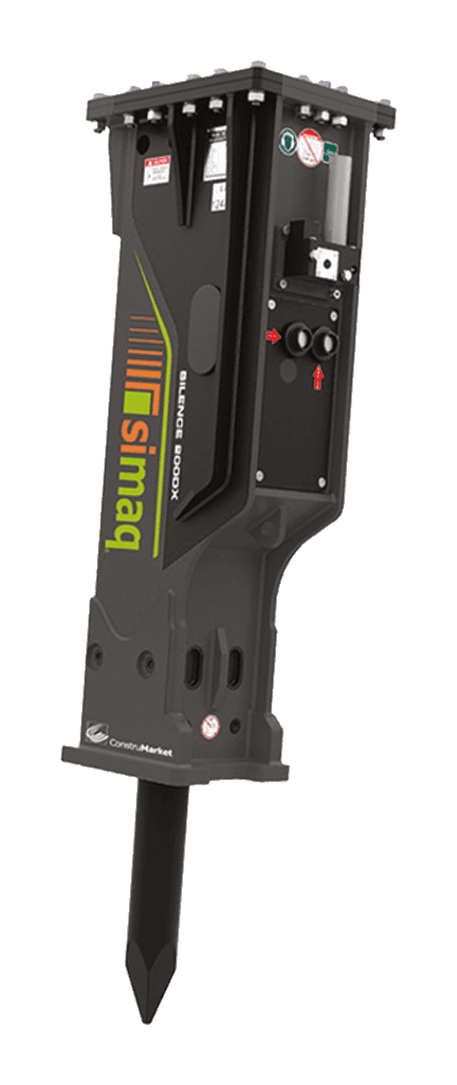
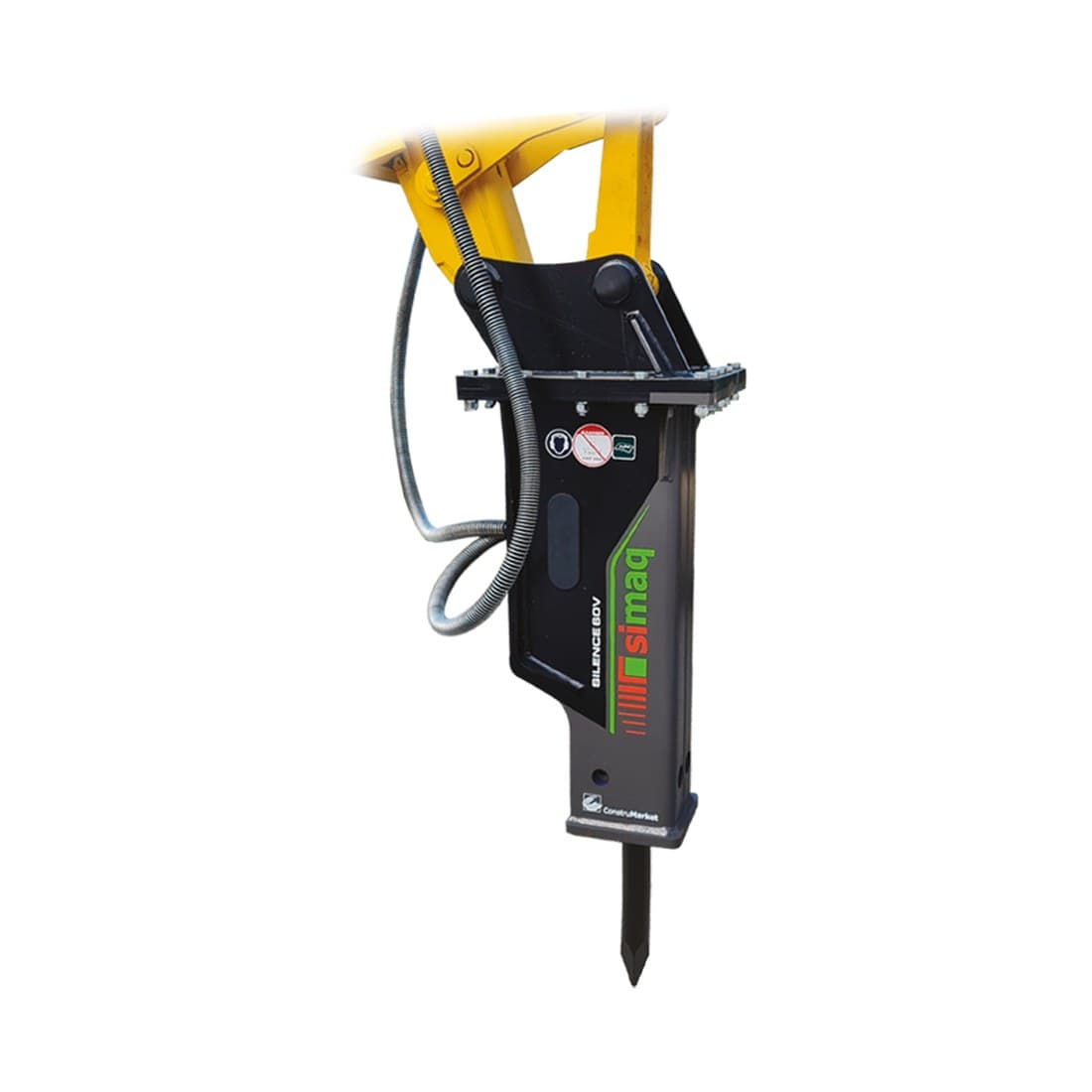
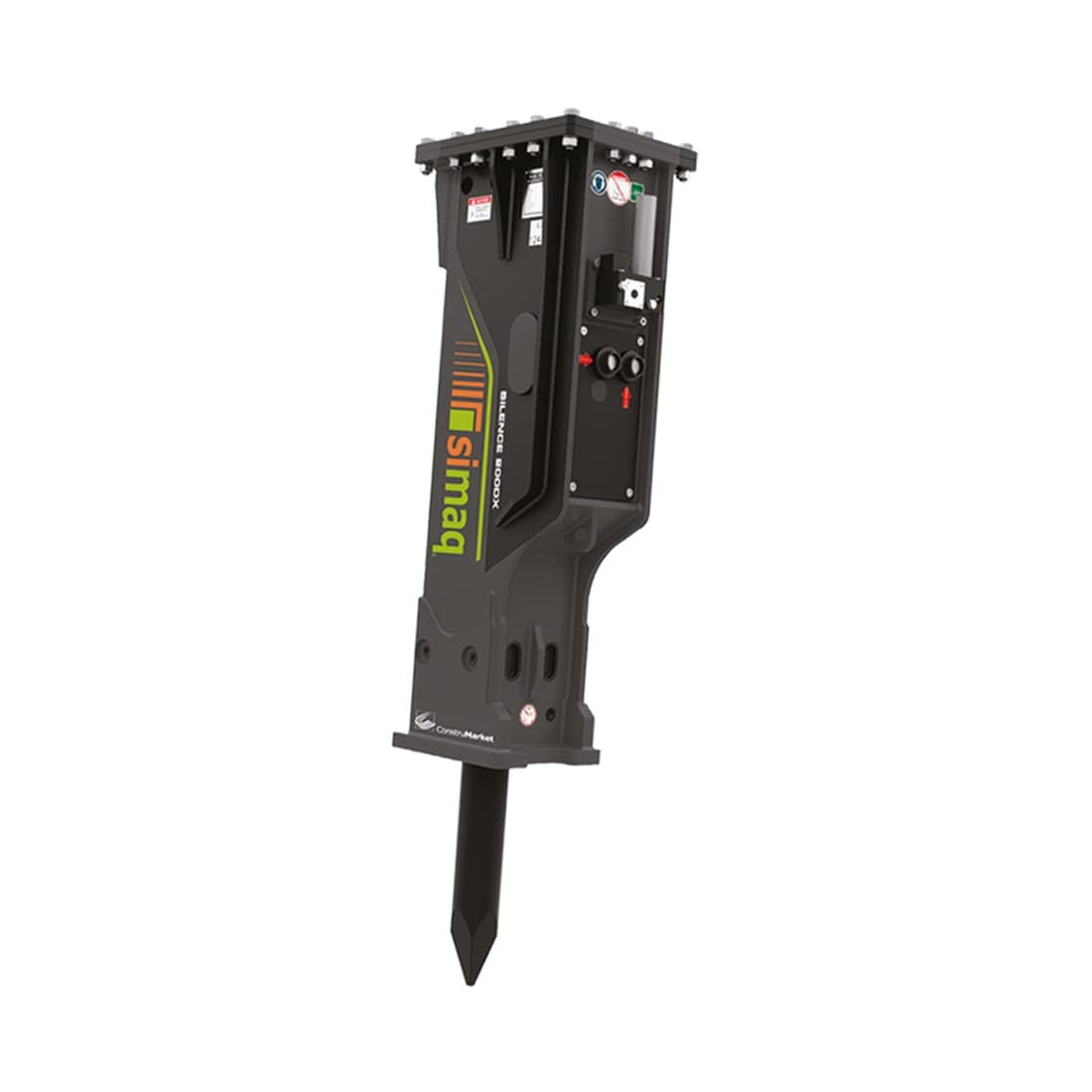
A hydraulic breaker is chosen by the machine that carries it: for a skid steer, the SIMAQ DB 40V (325 kg, 35–70 L/min); for a backhoe, the DB 60V (412 kg, 40–110 L/min); for an excavator of about 20 t, the DB 200DX (1,577 kg, 120–170 L/min). Before buying, confirm your machine's auxiliary circuit flow and pressure fall within the breaker's range.
Work it out with your numberscarrier types
DB line flow range
chisel angle
Match the breaker to the carrier
Each breaker works well within a range of carrier weight, oil flow and pressure. A big breaker on a small machine destabilizes it, punishes the boom and doesn't get the oil it needs: it hits slow and weak. A small one on a big machine underperforms and can be damaged by excess flow.
| Model | Carrier | Operating weight | Oil flow | Pressure | Blows/min | Tool |
|---|---|---|---|---|---|---|
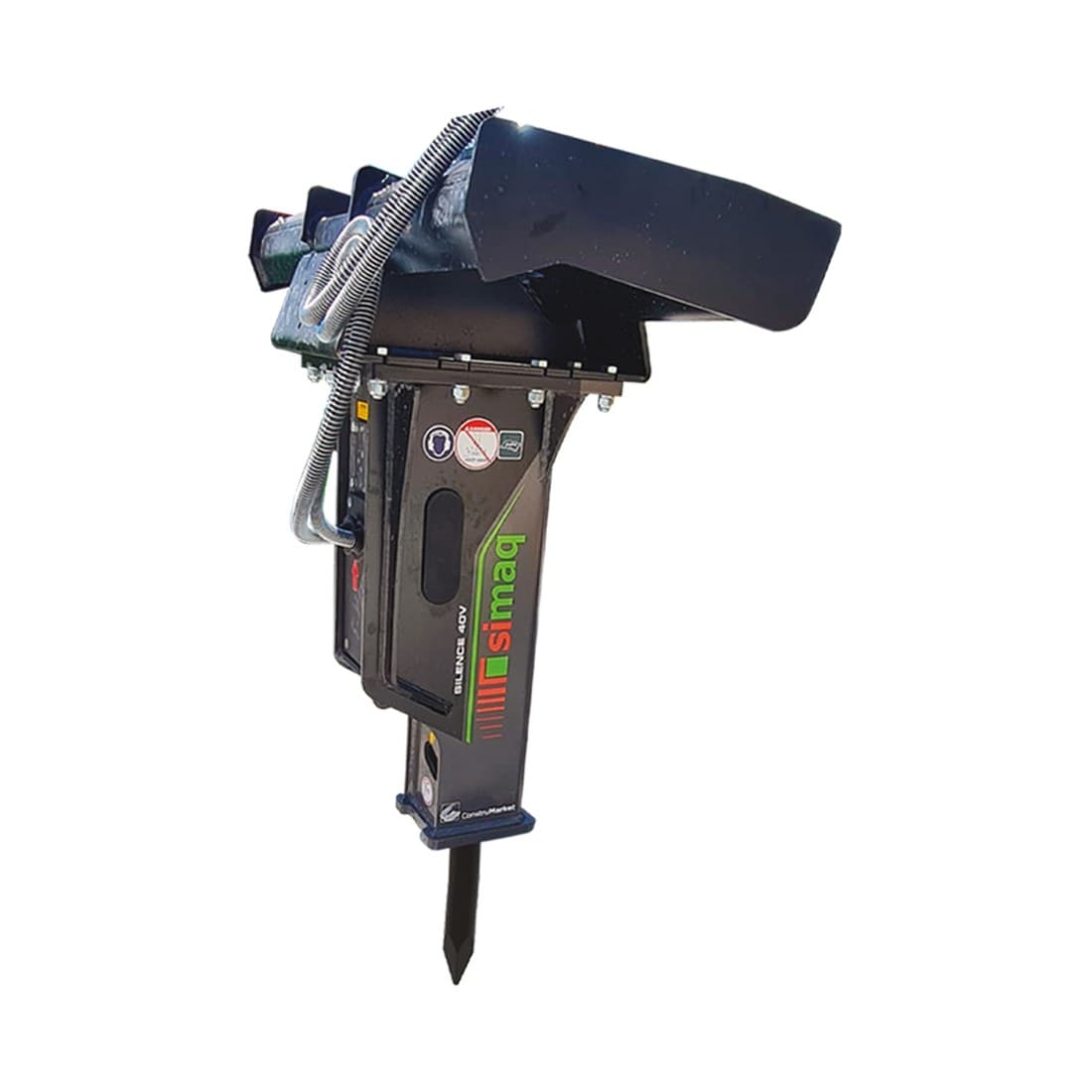
| SIMAQ DB 40V | Skid steer | 325 kg | 35–70 L/min | 1,565–2,347 psi | 380–1,000 | 70 mm |
| SIMAQ DB 60V | Backhoe | 412 kg | 40–110 L/min | 1,707–2,347 psi | 380–900 | 75 mm |
| SIMAQ DB 200DX | ~20 t excavator | 1,577 kg | 120–170 L/min | 2,276–2,702 psi | 320–480 | 135 mm |
How to find your machine's oil flow
The figure is in your machine's manual or spec sheet, listed as auxiliary hydraulic circuit flow (in L/min or gpm) and pressure. If your machine has no auxiliary circuit, it must be fitted in a shop before mounting any breaker.
The site's breaker compatibility tool asks for your machine type, brand and model, and tells you which SIMAQ breaker fits. With that, the advisor confirms the coupling and what's needed to mount it.
- Your machine is a skid steer → DB 40V.
- Your machine is a backhoe → DB 60V.
- Your machine is an excavator of about 20 t → DB 200DX.
- Your flow falls outside the range → ask before buying.
What each one does best
A skid steer with the DB 40V is nimble for urban jobs and tight spaces: sidewalks, thin slabs, concrete bases and demolition in yards. A backhoe with the DB 60V handles pavement, foundations and trenches in soft rock, and can break and load with the same machine. An excavator of about 20 t with the DB 200DX is for rock, large structures and continuous production.
If you have all three machines, don't buy one breaker «for all of them»: each carrier needs its own.
Chisel technique: preload and perpendicular
Set the chisel at 90° to the material and apply down-pressure with the machine (preload) before striking. Without preload, the breaker hits into nothing and punishes itself. Start from a free edge, not the center, and work in short bites looking for the fracture plane.
Don't use the chisel as a lever to lift or move blocks: it bends or breaks the bushing. To move the broken material, use the bucket.
Never dry-fire, and grease often
If the chisel doesn't break through in 15 to 30 seconds, move it: persisting overheats and glazes the tip. And never strike with no material under the chisel (dry-firing): it's the fastest way to wreck a breaker.
Grease the bushing often, with the breaker vertical and the chisel pressed against the material, so the grease gets where it works. The DB line is built to run with less noise and vibration, which helps in urban areas and on long shifts.
Do it with your numbers
Which hammer fits your machine?
1. ¿Qué máquina tienes?
Common mistakes
- Mounting a big breaker on a small machine «so it breaks more».
- Dry-firing, with no material under the chisel.
- Staying on the same spot longer than 15–30 seconds.
- Using the chisel as a lever to move blocks.
- Working without preload or with the chisel at an angle.
- Forgetting to grease the bushing during the shift.
Takeaway
Choose the breaker by your machine's weight, flow and pressure: DB 40V for skid steers, DB 60V for backhoes and DB 200DX for excavators of about 20 t. Chisel at 90° with preload, move every 15–30 s and never dry-fire. Request a quote here with your machine's brand and model, and an advisor will contact you during business hours.
Keep going
Take it to the job site
Print the checklist to go over it on site, or send the guide to your crew.
Frequently asked
Do you have breakers for skid steers and backhoes?
Yes: DB 40V for skid steers, DB 60V for backhoes and DB 200DX for excavators of about 20 t. We pick the model by your machine's weight and flow.
How do I know if a breaker fits my machine?
Compare your machine's auxiliary circuit flow and pressure with the breaker's range. If they fall inside, it's compatible; the advisor confirms the coupling.
What if my machine has less flow than the breaker needs?
The breaker hits slowly and weakly. With too much flow, it can overheat and get damaged. That's why you match it before buying.
Are they suitable for urban areas, noise-wise?
SIMAQ DB models are built to run with less noise and vibration, good for urban zones and long shifts.
How often do you grease the breaker?
Often during the shift, with the breaker vertical and the chisel pressed down. The exact interval is in the breaker's manual.
SIMAQ · Job site checklist
Which hydraulic breaker fits your machine? Choosing by weight and oil flow
A hydraulic breaker is chosen by the machine that carries it: for a skid steer, the SIMAQ DB 40V (325 kg, 35–70 L/min); for a backhoe, the DB 60V (412 kg, 40–110 L/min); for an excavator of about 20 t, the DB 200DX (1,577 kg, 120–170 L/min). Before buying, confirm your machine's auxiliary circuit flow and pressure fall within the breaker's range.
How to find your machine's oil flow
- Your machine is a skid steer → DB 40V.
- Your machine is a backhoe → DB 60V.
- Your machine is an excavator of about 20 t → DB 200DX.
- Your flow falls outside the range → ask before buying.
Avoid
- Mounting a big breaker on a small machine «so it breaks more».
- Dry-firing, with no material under the chisel.
- Staying on the same spot longer than 15–30 seconds.
- Using the chisel as a lever to move blocks.
- Working without preload or with the chisel at an angle.
- Forgetting to grease the bushing during the shift.
Job site:
Date:
Supervisor:
Scan it for the full guide, with video and FAQ
https://simaq.pro/en/recursos/elegir-martillo-hidraulico-para-tu-maquina