Guide · 4 min
How to dewater a flooded area with a pump
A well-used pump empties a trench or basement in minutes. Misused —dry or poorly primed— it fails on the first run. These are the steps that don't fail.
by flow and head
the casing before starting
on the suction
Pick the bore by flow
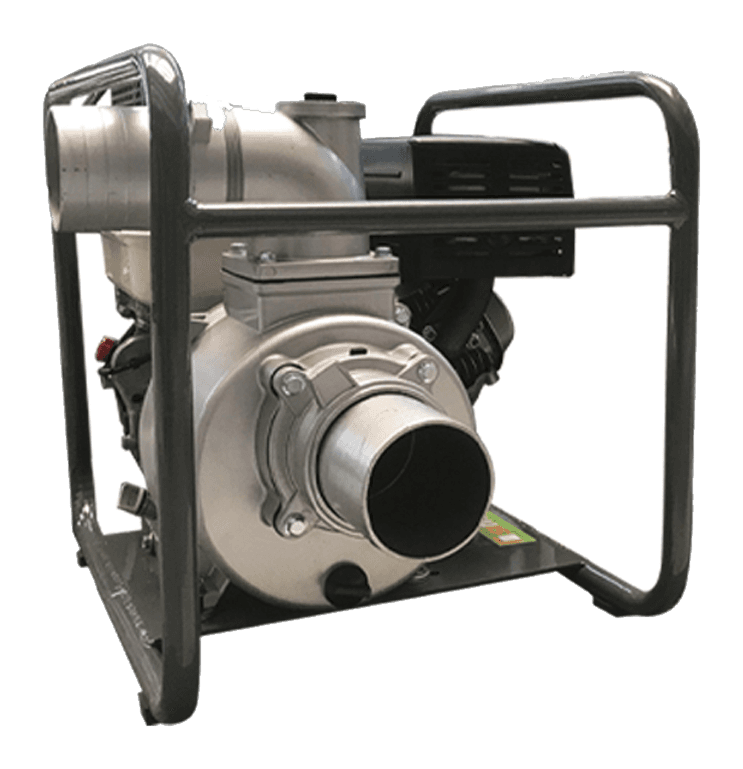
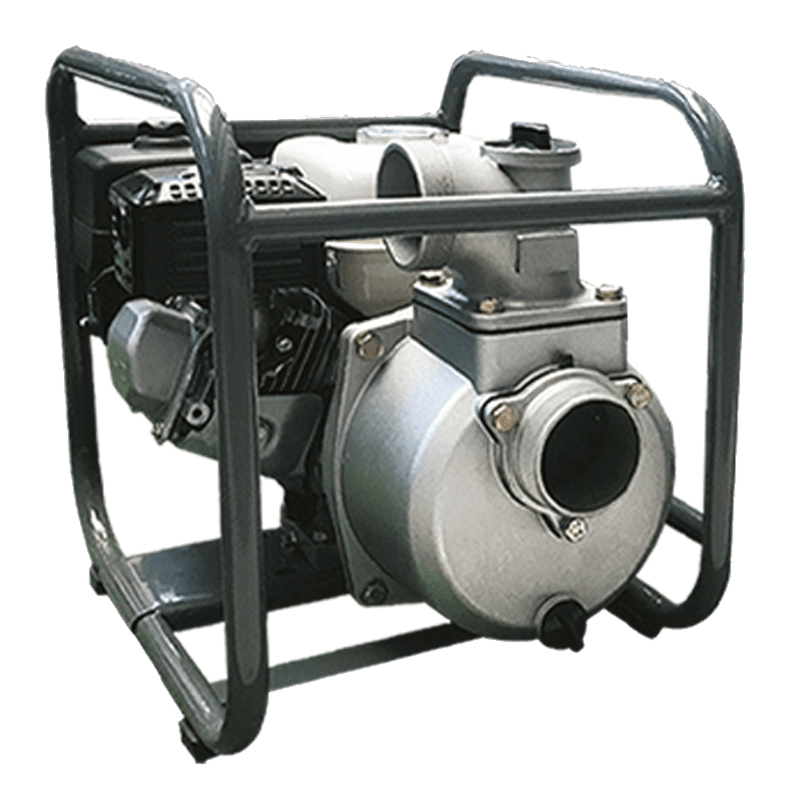
A 3" pump handles medium flows; a 4" moves far more volume and larger solids. The bigger the bore, the faster you empty — but also more weight and fuel.
Prime the casing and strain the suction
Fill the casing with water before starting: a dry pump gets damaged. Fit the strainer on the suction end so stones and rags don't clog the impeller.
Short suction, distant discharge
The shorter and lower the suction hose, the better it primes and the faster it works. Route the discharge well away from the excavation so the water won't return.
Takeaway
Pick 3" or 4" by flow, always prime the casing, use a strainer and send the discharge far. Dewater often? We'll help size the pump for your case.
Frequently asked
Does it handle muddy water and solids?
Yes, the pumps handle water with suspended solids typical of jobsites and floods. For larger solids, look at the 4" pump.