
SQRVA6M PRO
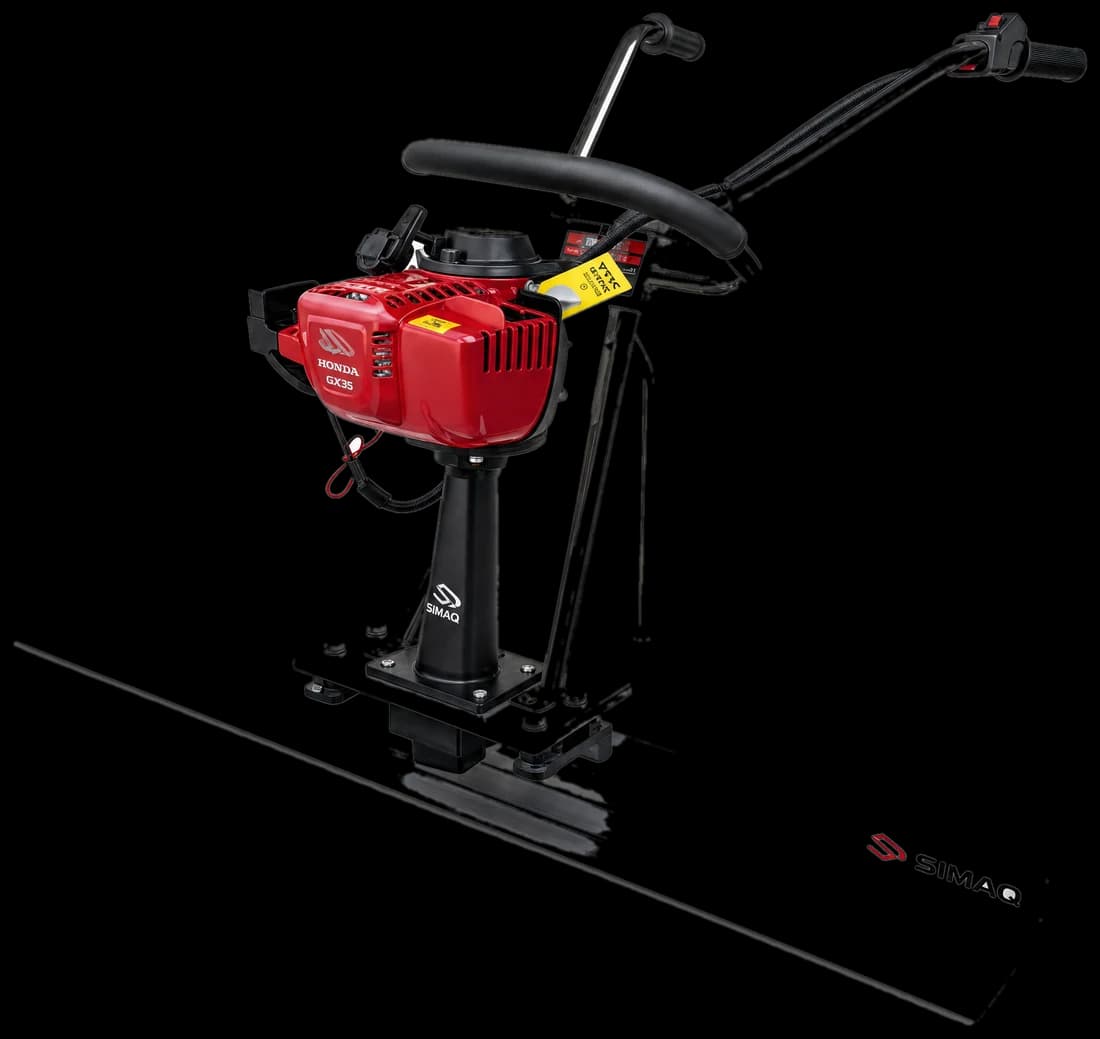
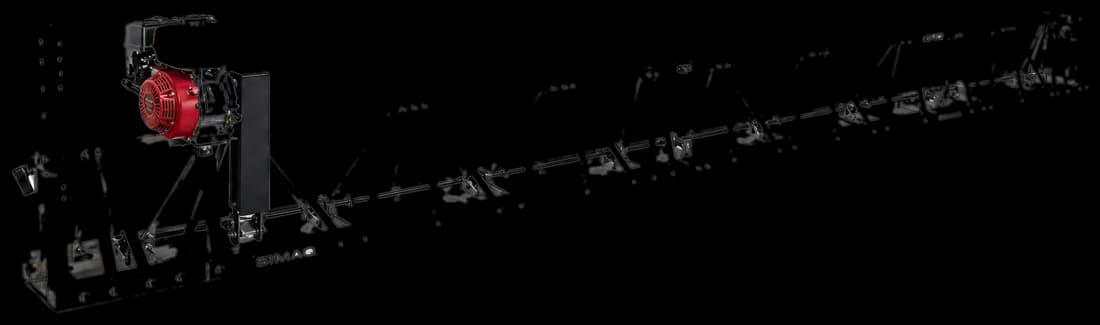
6 m vibrating screed SQRVA6M PRO
Levels and vibrates the slab in one pass.
View details5-minute training
5 minUse a vibrating screed on freshly placed concrete: rest it on the screed rails or level references, start the vibration and pull it at a steady speed with a small roll of mix ahead of the blade. SIMAQ has the SQRVA1.2SET (Honda GX35, with 1.2 and 3 m blades) and the 6 m aluminum SQRVA6M PRO, for layers up to 200 mm. It levels and compacts the surface in one pass and leaves the slab ready for troweling.
Also called: vibrating screed, power screed
The vibrating screed works the surface: it levels the slab and compacts its top. If the slab is thicker than the spec sheet allows (200 mm on the SQRVA6M PRO) or heavily reinforced, vibrate first with an immersion vibrator and then run the screed.
Set your screed rails or level references. The blade works against them; without a reference, the screed just copies the lows of the pour.
SQRVA1.2SET: 1.2 m blade for corridors, edges and tight areas; 3 m for wider slabs. For big spans, the SQRVA6M PRO builds up to 6 m from 1, 2 and 3 m sections.
With the concrete spread, start the vibration and pull at a steady speed. Go too fast and lows are left uncompacted; stop and the vibration sinks the aggregate and marks the slab.
Keep a small roll of mix ahead of the blade so it fills the lows as you advance.
If lows remain, fill with a shovel and re-screed. Then floating and troweling take over, once the slab holds a 3–5 mm footprint.
Do this
Avoid this
Safety
Test yourself
Each practice: do it or avoid it? Tap your answer.
Clean the blade between pours.
Coordinate with the crew feeding concrete.
Don't over-vibrate one spot: you sink the aggregate.
Don't run it without a level reference and expect flat.
Don't leave it running, resting on concrete, without moving.
Pull at a steady speed; on the SQRVA6M PRO, 1.2 to 2.5 m per minute.
Don't add water to the mix so the screed 'runs': it weakens the surface.
If lows remain → fill with a shovel and re-screed, don't cover them with slurry.
Equipment in this training
Buying guides
When to start curing, for how many days, with water, burlap, plastic or curing compound, and the mistakes that rob your slab or column of strength.
Read Guide · 6 minCut as soon as the slab bears the saw (usually 6–18 h) and at ¼ of the thickness. A depth-by-thickness table, where joints go and how to wet-cut with the SQ16 PRO.
Read Guide · 7 minThe exact moment to go in with the power trowel (the footprint test), pan first and blades after, and when a walk-behind or a ride-on double makes sense.
ReadFAQ
To level and compact the surface of a fresh concrete slab or floor in a single pass. It replaces the hand straightedge and leaves a flatter, tighter surface.
Thin slab or floor → screed. Column, beam, wall or a thick, heavily reinforced slab → immersion vibrator, then the screed to level. The guide on screed vs. immersion vibrator explains it.
The blade has to rest on both rails. The SQRVA1.2SET gives you 1.2 m and 3 m; the SQRVA6M PRO builds up to 6 m from 1, 2 and 3 m sections.
Running it without a level reference or stopping in one spot while vibrating. Without rails it copies the lows; stopped, it sinks the aggregate and leaves a mark.
On the SQRVA6M PRO, the first engine-oil change is at 20 hours or one month, then every 100 hours or 6 months. Grease the vibration-shaft bearings every 100 hours.
Get a quote without leaving
Want to work it out with an advisor?
Tell us about the job and we'll build the package. A rep replies during business hours.