
SIMAQ DB 200DX
Hydraulic breaker SIMAQ DB 200DX
Breaks concrete and rock, machine-mounted.
View details5-minute training
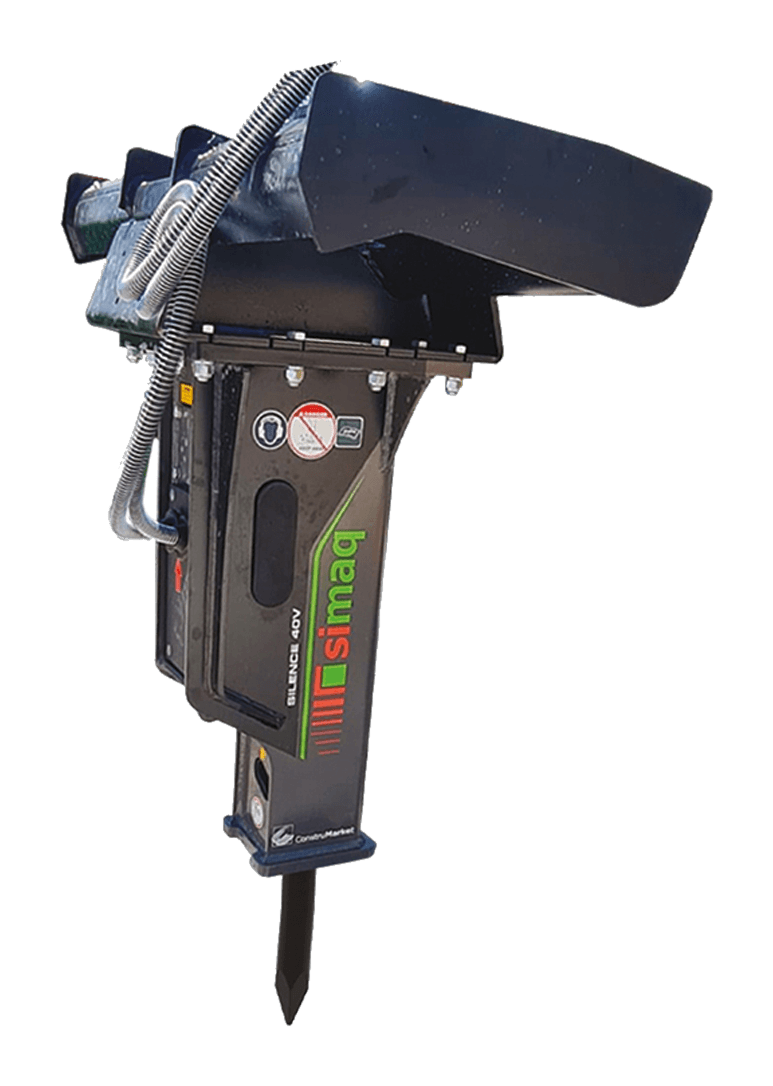
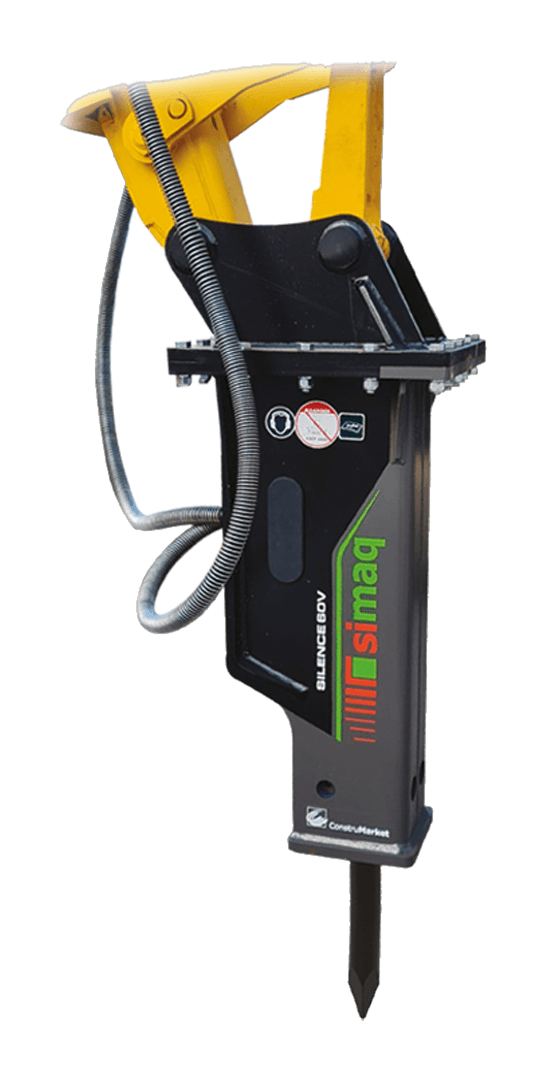
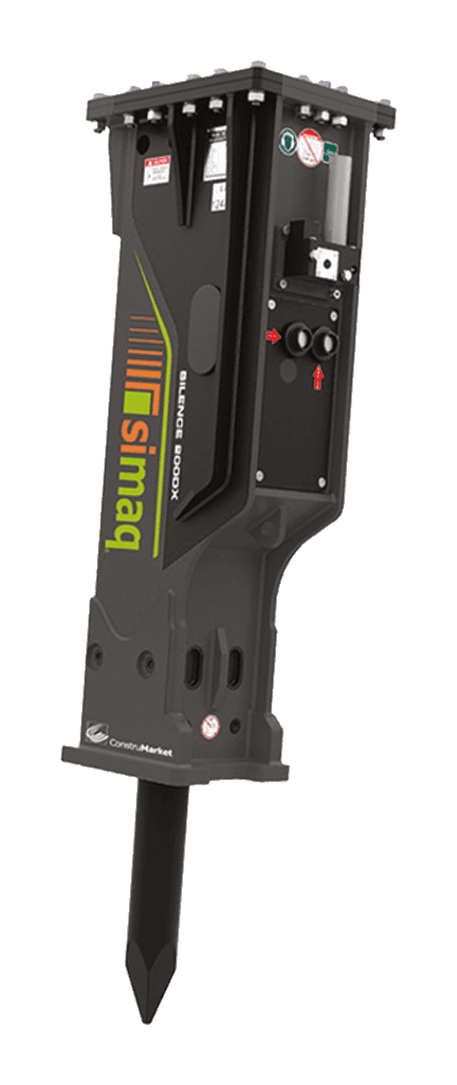
5 minRun a hydraulic breaker with the chisel at 90°, down-pressure before you fire, breaking from an edge and moving the chisel if it hasn't broken in 15–30 seconds. SIMAQ has three, by carrier: DB 40V for skid steers, DB 60V for backhoes and DB 200DX for 20 t excavators. What damages it most is dry-firing, with no material under the chisel.
Also called: hydraulic hammer, rock breaker
The hydraulic breaker shatters concrete and rock mounted on your carrier. Chisel technique —and never dry-firing— is what protects the tool. If the breaker doesn't match your machine's weight and flow, no technique will save it.
The DB 40V needs 35–70 L/min (skid steer), the DB 60V 40–110 L/min (backhoe) and the DB 200DX 120–170 L/min (20 t excavator). If your machine can't supply that flow it underperforms; too much and it overheats.
Rest the chisel at 90° to the surface and apply down-pressure (preload) before percussing.
Break from a free edge inward, in bites. Find the fracture plane; don't punch one deep hole.
If it hasn't broken by then, move the chisel. Pounding one spot overheats and glazes the steel.
With the breaker vertical and the chisel resting on the ground, grease until you see it come out under the housing. Without grease, the bushing and chisel wear out fast.
Do this
Avoid this
Safety
Test yourself
Each practice: do it or avoid it? Tap your answer.
Don't percuss more than ~30 s on the same spot.
Don't use the chisel as a pry bar to move rubble.
Always keep down-pressure (preload) while percussing.
Grease the bushing every 2 hours, with the tool vertical.
If it hasn't broken in 15–30 s → move and find a free edge.
NEVER dry-fire (no material under the chisel): it wrecks the breaker.
Don't work with the carrier's cylinders at the end of their stroke: the shock goes into the machine.
Equipment in this training
Buying guides
Skid steer, backhoe or excavator: a hydraulic breaker is chosen by the carrier's weight and oil flow. The three SIMAQ DB breakers side by side and the technique that keeps them from breaking.
Read Guide · 6 minWhen a wheelbarrow is enough, when a 4×4 dumper like the Urban 1500 multiplies progress and when you need a skid steer. Simple criteria and common mistakes.
Read Guide · 7 minCutting asphalt and concrete step by step: the right diamond blade, wet cutting, depth in passes and signage. With the SQ16 PRO saw (up to 130 mm).
ReadFAQ
It depends on your machine's weight and hydraulic flow: DB 40V for skid steers (35–70 L/min), DB 60V for backhoes (40–110 L/min) and DB 200DX for 20 t excavators (120–170 L/min). The guide on choosing a breaker for your machine has the detail.
Every 2 working hours, with the breaker vertical and the chisel resting down, until grease shows under the housing. Inspect the chisel and its pins every 10 hours or weekly.
It's firing when the chisel isn't loaded against material, or still hammering after the piece has broken. All the energy bounces back into the breaker and its pins instead of going into the rock.
Because you've stayed too long on one spot. If it hasn't broken in 15–30 seconds, move and look for a free edge or the fracture plane.
No. Prying or sweeping with the chisel bends it and damages the bushings; move rubble with the bucket.
Get a quote without leaving
Want to work it out with an advisor?
Tell us about the job and we'll build the package. A rep replies during business hours.