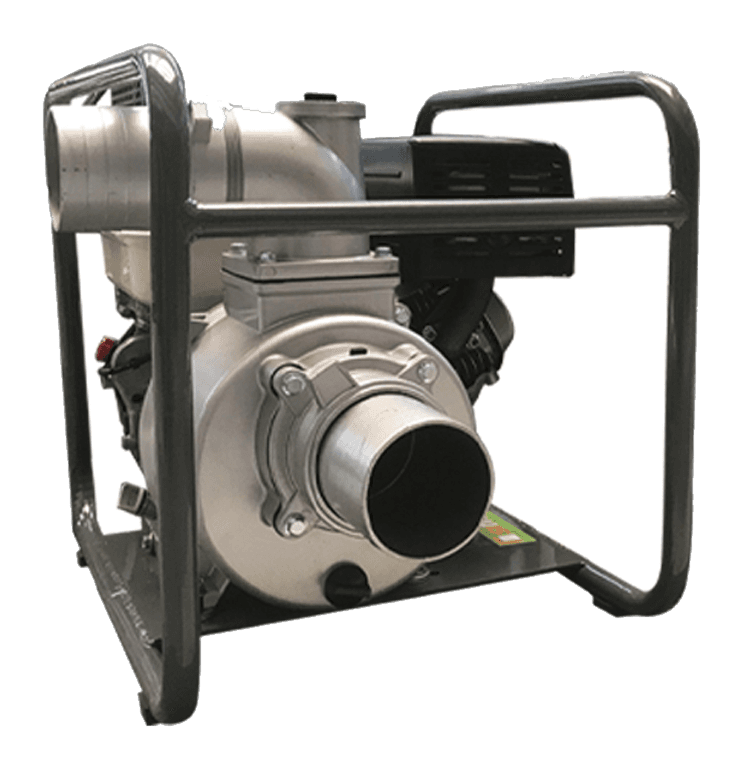

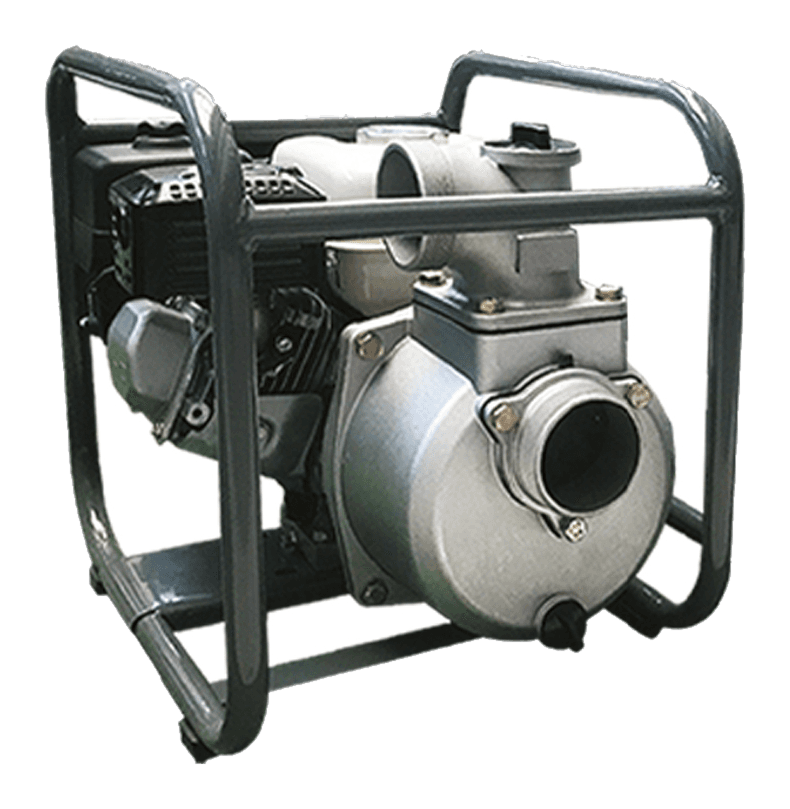
SQWP30 PRO
Water pump SQWP30 PRO
Gets water off the site, fast.
View details5-minute training
5 minTo use a water pump: set it close to the water and as low as possible, fill the casing through the priming plug, fit the strainer on the suction hose, start it and send the discharge well away from the excavation. SIMAQ's SQWP30 PRO (3″, 30 m³/h) and SQWP40 PRO (4″, 40 m³/h) pumps lift up to 8 m on the suction side. Never start it dry: that's what damages pumps most.
Also called: trash pump, dewatering pump, motor pump
The pump dewaters trenches, basements and excavations. Nearly every problem comes from the suction side: a long or soft hose, joints sucking air or the pump sitting too high above the water. The discharge can be long; the suction, the shorter the better.
Firm, level ground, as close and as low as possible relative to the water. If the pump sits more than 8 m above the water, it won't pull: move it lower.
Reinforced suction hose (one that won't collapse), tight joints with their gaskets and the strainer on the end. The strainer hangs in the water, not buried in the mud.
With the pump off, remove the priming plug, fill the casing with water to the brim and close it again. A pump run dry overheats and damages the seal.
Start and give it a few seconds: steady water should come out the discharge. If not, shut it off, prime again and look for air leaks in the suction.
Send the water well away from the excavation so it won't flow back. If the level drops to the strainer, shut it off: the pump would start sucking air and mud.
Do this
Avoid this
Safety
Test yourself
Each practice: do it or avoid it? Tap your answer.
Don't run it dry, not even a minute.
Always prime the casing before starting.
Don't set it higher than the maximum suction lift (8 m).
Short suction, as low as possible; the discharge can be long.
Don't pump without a strainer or with the strainer buried in mud.
Don't use a soft suction hose: it collapses and starves the pump.
If the pump won't pull → look for air at joints and gaskets before blaming the engine.
Choose 3″ or 4″ by flow and head: 30 m³/h for the SQWP30 PRO, 40 m³/h for the SQWP40 PRO.
Equipment in this training
Buying guides
In the dry season dust clogs the air filter and heat punishes the engine; and whatever sits idle (pumps, rainy-season gear) gets damaged if stored badly. What to check, how often, and how to store fuel, oil and battery according to the Honda manuals.
Read Guide · 6 minSwitch, fuel, oil, choke, filter and plug: the in-order check for plate compactors, rammers, mixers and pumps, and when to take it in for service.
Read Guide · 7 minLight towers, 3″ and 4″ dewatering pumps, cutting, demolition and compaction: the flood equipment worth having ready, how much water each pump moves and how to check it all before the season.
ReadFAQ
With the pump off, remove the priming plug, fill the casing with water to the brim and close it. Make sure the suction hose and its joints are tight: if air gets in, the pump won't prime.
Almost always the suction side: the casing isn't full, a joint is sucking air, the strainer is clogged or the pump sits too high above the water. On SQWP pumps the maximum suction lift is 8 m; the closer to the water, the better.
A regular trench or basement → 3″ (SQWP30 PRO, 30 m³/h). Lots of water or a fast drain-down → 4″ (SQWP40 PRO, 40 m³/h and 16 m total head). Choose by flow and total head, not just diameter.
It depends on the total head it has to beat: the SQWP30 PRO lifts up to 13 m and the SQWP40 PRO up to 16 m, adding suction, discharge and hose friction. The site-dewatering lesson shows how to work it out.
On the SQWP30 PRO and SQWP40 PRO: first change at 20 hours or one month, then every 100 hours or 6 months, whichever comes first. Check the level before every use.
Get a quote without leaving
Want to work it out with an advisor?
Tell us about the job and we'll build the package. A rep replies during business hours.